 UW CSE startup Skytap was identified as one of “10 start-ups to watch in ’09” by NetworkWorld. Skytap offers cloud-based virtual lab solutions that reduce IT costs, accelerate lab provisioning time, and enable global team collaboration via the Web. Skytap was founded by UW CSE faculty members Brian Bershad, Steve Gribble, and Hank Levy, plus UW CSE graduate student Dave Richardson; it was funded by our friends at Madrona Venture Group, Ignition Partners, Bezos Expeditions, and Washington Research Foundation Capital. Read more →

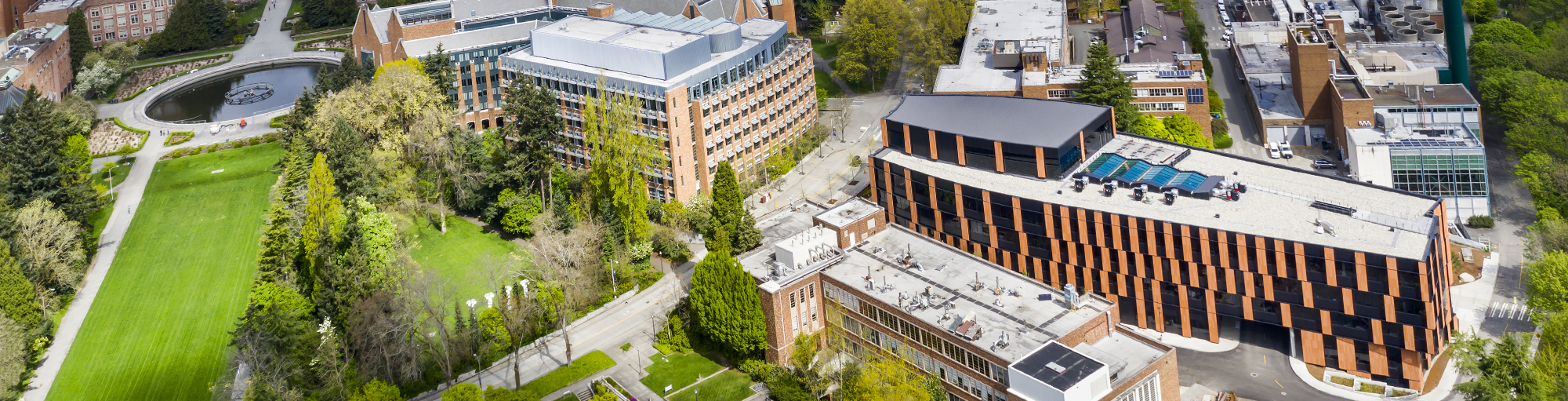
Skytap one of “10 start-ups to watch in ’09”
TechFlash: Some tech firms are actually hiring staff in 2009
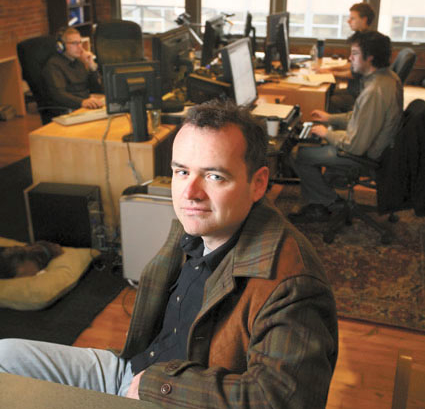 John Cook’s Venture Blog today discusses some of the bright spots in the local tech hiring scene. UW CSE’s Mark Oskin, co-founder of PetraVM, is highlighted, as well as other CSE Industrial Affiliate partners.
Read the full TechFlash piece here.
A corresponding article in the Puget Sound Business Journal features a photo of the brains behind PetraVM, Moe. Read more →
There are still jobs out there
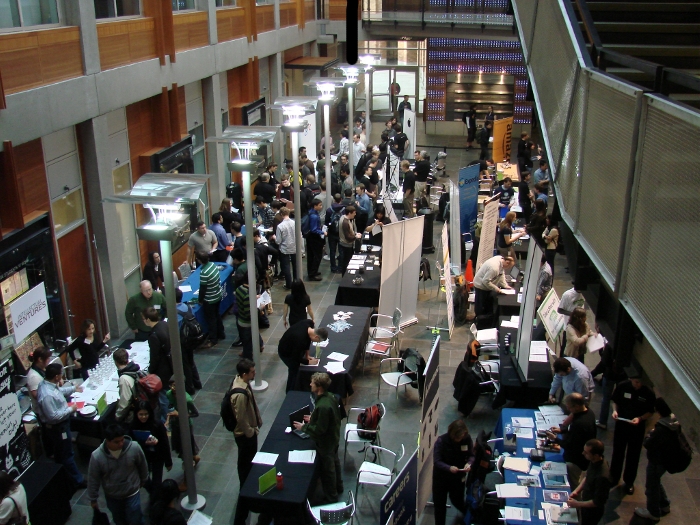 UW CSE hosted its Industrial Affiliates Winter Recruiting Fair on January 28th. Proving that there are still jobs out there, twenty companies participated in this event, with opportunities for both interns and full-time positions. The Winter Recruiting Fair is an annual “reduced” version of our main Recruiting Fair, which is held in conjunction with our October Industrial Affiliates meeting. Participation is restricted to UW CSE students and UW CSE Industrial Affiliates Program member companies. Read more →
“Intel Researchers Demo RF Energy Harvester”
At the recent Rawcon Conference in San Diego, Intel Research Seattle staff member and UW CSE affiliate professor Joshua Smith described the scavenging of 60 microwatts of RF power from a TV tower 4.1 kilometers distant. The power was used to drive a thermometer/hygrometer and its LCD display. The approach harvested enough energy to drive many Wireless Identification and Sensing Platform (WISP) applications. A WISP is essentially an RF identification (RFID) tag with a microcontroller on it, according to Smith. He says the increase in integration and decline in power consumption of digital circuitry has led to improved functionality per microwatt of scavenged energy. “The range at which you can power a device [with a given amount of ambient RF energy] should double every four years,” he says. Power-harvesting could lead to a perpetual sensing platform that does not need batteries.
Read the complete EE Times article here. Read more →
“A Tool to Verify Digital Records, Even as Technology Shifts”
 A group of UW researchers, led by Batya Friedman, an iSchool professor and CSE adjunct faculty member, will release the first component of a public system to preserve and authenticate digitized materials that document historical events, such as the Rwanda war crimes. Research by CSE Ph.D. students Alexei Czeskis and Karl Koscher and CSE professor Tadayoshi Kohno played a critical role in the technical aspects of the project.
See the full New York Times article here.
[Update Feb. 7: Friedman was interviewed about the project on the New Hampshire Public Radio show Word of Mouth on February 5th. You can listen to the show here. -SMR] Read more →
Mark Squillante, Rick Szeliski named ACM Fellows
UW CSE Ph.D. alumnus Mark Squillante (who has spent his career at IBM Research) and UW CSE Affiliate Professor Rick Szeliski (Microsoft Research) were among 44 leading computer scientists named to the 2008 class of Fellows of the Association for Computing Machinery. Squillante was recognized “for contributions to the theory and practice of stochastic modeling.” Szeliski was recognized “for contributions to computational photography.”
Thirteen UW CSE faculty members are Fellows of the ACM. Read more →
New York Times on the marketing of SongSmith
 Randall Stross devotes his Digital Domain column in the Business section of the Sunday New York Times to a look at the ham-handed marketing of SongSmith, based on work from Dan Morris and Sumit Basu from Microsoft Research and UW CSE graduate student Ian Simon that generates instrumental accompaniment to match users’ vocal input.
A four-minute video promoting the product has been the target of derision, attracting (at this writing) more than half a million views and several thousand comments. But hey, buzz is buzz!
Stross notes the emergence a new genre of parody video, where YouTube content mashers feed the vocals from famous rock videos into SongSmith, remix the generated instrumentals with the vocals, and replace the audio with what, in combination, kills the buzz dead. An example.
We previously covered SongSmith here. Read more →
“Microsoft cuts not even a ‘hiccup,’ Seattle tech leaders optimistic”
“As speculation built over the past few weeks about the possibility of Microsoft layoffs, one theory that gained some traction in Seattle’s startup community was that a sizable cutback could actually spur entrepreneurial energy in the region.”
“‘I don’t even think of it as a hiccup to be honest,’ said Lazowska, an adviser to Microsoft who believes the company will keep hiring. ‘I just think this is continual renewal, rather than something catastrophic.'”
Read the full TechFlash article here. Read more →
PetraVM secures funds to make software cheaper, more reliable
PetraVM, a new start-up founded by CSE’s Mark Oskin and Luis Ceze, raised $1.5M from Madrona Venture Group and WRF. PetraVM is out to improve the cost and reliability of software the people use every day — developing technology to enable effective and reliable use of now ubiquitous multi-core systems.
Read the Xcomony article here.
Read the TechFlash article here.
(Update: also see Brier Dudley’s Blog post Stealthy UW multicore software spinoff gets Madrona funding, which has an abundance of detail. -SMR) Read more →
Seattle’s technology universe
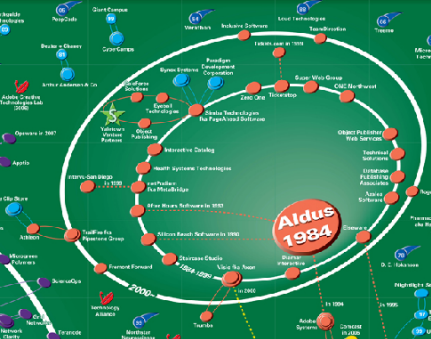 About a year ago, the Washington Technology Industry Association (WTIA) set out to map hundreds of high-tech companies in the region and their connections to one another. The resulting poster and website shows 781 companies from the region scattered in a virtual universe. The WTIA will debut the poster and website on at a morning reception on Thursday, January 22. CSE’s Ed Lazowska will be part of panel that will be on hand to share some of the early war stories of the Seattle tech region.
See the full article in TechFlash here.
[Update 23 January: also covered at Xconomy Seattle here. -SMR] Read more →