 The New York Times‘s Steve Lohr discusses smart infrastructure.
“Smart infrastructure is a new horizon for computer technology. Computers have proven themselves powerful tools for calculation and communication. The next step, experts say, is for computers to become intelligent instruments of control, linking them to data-generating sensors throughout the planet’s infrastructure. ‘We are entering a new phase of computing, in which computers will be interacting with the physical world as never before,’ said Edward Lazowska, a professor of computer science at the University of Washington.”
Read the full article here. Read more →
A paper co-authored by UW CSE post-doctoral researcher Wenjun Hu has won the 2009 William R. Bennett Prize, given annually by the IEEE Communcations Society to the best paper published in IEEE/ACM Transactions on Networking in the preceding calendar year.
The paper, XORs in the Air: Practical Wireless Network Coding proposes COPE, a new architecture for wireless mesh networks that uses network coding techniques to increase throughput.
A UW CSE paper also won the 2005 William R. Bennett Prize: Rocketfuel, co-authored by Neil Spring, Ratul Mahajan, David Wetherall, and Tom Anderson. Read more →
 The BBC reports on CSE professor Raj Rao‘s efforts to use machine learning techniques to support the hypothesis that the Indus Script is a written language.
“The Indus people lived around 4000 years ago, on what is now the border between Pakistan and India. They are said to have been extremely advanced in the fields of science and maths but arguments still rage over whether they had a written language. We look at new research into the symbols they left behind.”
Broadcast begins at 16:30 here. Read more →
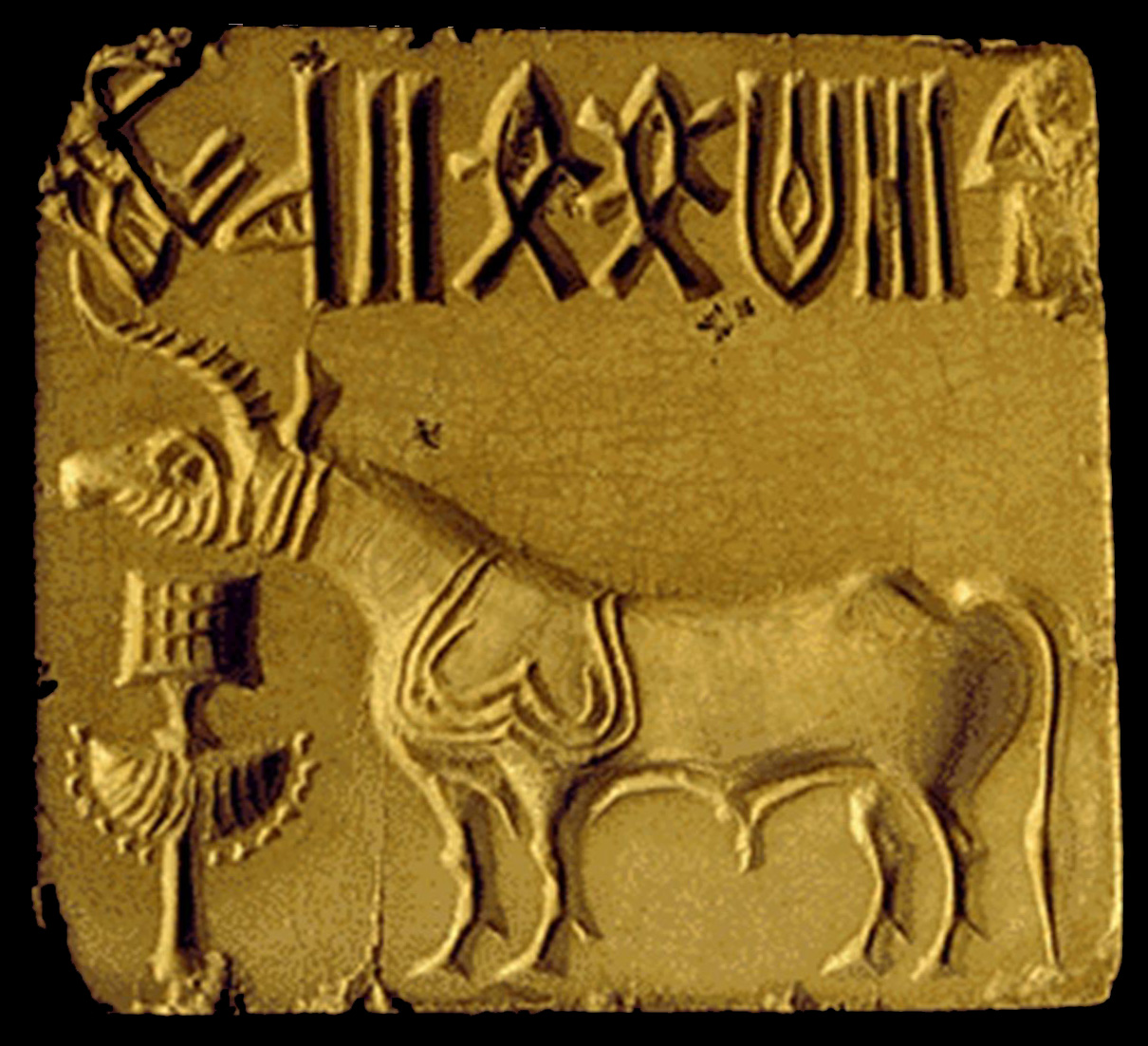 Articles in University of Washington News and other periodicals look at the work of University of Washington Computer Science & Engineering professor Raj Rao, who is using machine learning techniques to support the hypothesis that the Indus Script is a written language.
According to the UW News article, “While the Rosetta Stone enabled scholars to translate symbols left by ancient civilizations which helped decipher Egyptian hieroglyphics, symbols left on other ancient artifacts have remained a mystery. The mystery remains around an as yet undeciphered script found on relics from the Indus valley. The Indus script, used between 2,600 and 1,900 B.C. in what is now eastern Pakistan and northwest India, belonged to a civilization as sophisticated as its Mesopotamian and Egyptian contemporaries. However, it left fewer linguistic remains.
“‘We applied techniques of computer science, specifically machine learning, to an ancient problem … At this point we can say that the Indus script seems to have statistical regularities that are in line with natural languages’ said Rao.”
UWeek article here.
The Guardian article here.
The New Scientist article here.
Wired Science article here.
Discover article here.
Washington Post article here.
UW Daily article here. Read more →
 Nature explores the potential of mobile phones. Their role as merely an accessory may be waning. Mobile phones – many of which now have cameras, GPS receivers, accelerometers, and internet access – are now starting to be used to collect data in an increasing number of disciplines. Among the research projects discussed in this article is work by UW CSE’s Gaetano Borriello about mobile phone applications in the developing world.
“‘For those of us working in the developing world, that’s the platform of choice,’ says Gaetano Borriello, a computer engineer at Google and [professor at] the University of Washington in Seattle who explores how technology can improve health care in underserved populations.”
Read the full article here. Read more →
 On April 15, ABC News’ Nightline television program took a look a the UW’s “genius school” for thirteen-year-old gifted students, who enter the University of Washington as fourteen-year-old freshmen after participating in the year-long program. UW CSE student Raymond Zhang, whose parents moved here from New Jersey so that he could participate, is interviewed.
View the 7:40 video here. Read more →
 A really engaging Wired article about Foldit, the protein folding game designed by David Baker, Zoran Popovic, David Salesin, and their collaborators.
“More than 100,000 people have downloaded Foldit since last summer, turning the game into massively multiplayer competition – global online molecular speed origami …
“Baker’s lab is developing targets for cancer, AIDS, and Alzheimer’s, and the folders’ task is to build a small protein drug with the right shape and binding properties. This isn’t just an intellectual exercise. Baker says he will synthesize the most promising structures and test them in his lab. These proteins could actually have therapeutic value in the real world, outside the game. And if they do, the Foldit players will share the credit. It might be the first time that a computer game’s high score is a Nobel Prize.”
Read the article here! Read more →
 Xconomy reports on the major UW presence at the IEEE/ACM International Conference on Information and Communication Technologies and Development, in Qatar.
“Seattle-area researchers, specifically from the UW, made quite a showing at the meeting. Several Microsoft projects were presented too, and Bill Gates showed up to give the keynote talk.”
“‘Technology is naturally mixing with global health as there is much low-hanging fruit where a little tech can make a big difference,’ Gaetano Borriello, a University of Washington computer science professor, said in an email. ‘Seattle is a hub for both, so it is a natural place for this new development to be happening.'”
Read the full article here. Read more →
 The New York Times offers a followup to a previous article regarding Amazon.com’s temporary de-listing of more than 50,000 books a week ago.
“‘Whenever something like this happens, people immediately blame it on conspiracy,’ said Ed Lazowska, professor of computer science and engineering at the University of Washington. ‘There are all kinds of ways for things to go wrong that are what I would call unintended consequences of either computer algorithms or human behavior.'”
Unfortunately, however, in typical “he said, she said” fair-and-balanced style, the article still gives weight to a number of conspiracy theorists. “If it bleeds, it leads.” See the full article here. Read more →
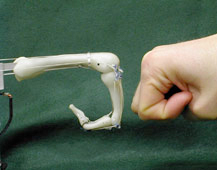 UW CSE’s Yoky Matsuoka is the Computing Community Consortium’s “Computing Research Highlight of the Week.”
“At the University of Washington, MacArthur ‘genius’ award-winner Yoky Matsuoka is leading an effort to build robotic hands and other devices that will take commands directly from the human brain – and revolutionizing the opportunities for people with disabilities to function more fully.”
See the complete post here. Read more →