Jump to Navigation

UW CSE News

CSE’s Rob Gens wins NIPS Best Student Paper Award

Congratulations to Rob Gens, who received the 2012 NIPS (Neural Information Processing Systems) Best Student Paper Award for his paper “Discriminative Learning of Sum-Product Networks.”

NIPS is one of the top two machine learning conferences, and this is the only award it gives.  (UW CSE is two for two with papers on sum-product networks to date – Hoifung Poon won the UAI-11 Best Paper Award for the previous one.)

December 5, 2012

UW CSE computer security card game “Control-Alt-Hack” released

Control-Alt-Hack is a computer security-themed card game designed to be entertaining, give a glimpse into white hat hacking, and highlight some of the more surprising aspects of computer security.  It targets kids age 14 and up.  It’s fun, and also educational / awareness-building.  The game designers – Tamara Denning, Tadayoshi Kohno, and Adam Shostack from UW CSE – are computer security experts, and took care to include as much juicy and accurate(ish) content as possible.  Game mechanics were provided by gaming powerhouse Steve Jackson Games (Munchkin and GURPS).

Control-Alt-Hack is newly available on Amazon.com.  The University of Washington will also be shipping some free copies out to educators (in industry and academia). If you’re an educator and are interested in a copy, please see the “request an educational copy” page here.

A big thank you to Intel Labs, NSF, and ACM SIGCSE for supporting the development and distribution of this game, and to Steve Jackson Games for licensing the Ninja Burger mechanics!

UW C4C press release here.

December 3, 2012

UW CSE team selected to compete in DARPA Robotics Challenge

The DARPA Robotics Challenge kicked off this week with the announcement of 18 teams – 8 from universities and 10 from industry – who will be funded by DARPA to participate in the DRC.  Over the next two years, these teams will compete to develop and put to the test hardware and software designed to enable robots to assist humans in emergency response when a disaster strikes.

A UW CSE team led by Emo Todorov and including Dieter Fox, Zoran Popovic, and Steve Seitz is among the competitors selected by DARPA.

Learn more about the work of UW’s Movement Control Laboratory here.

October 28, 2012

Annual CSE pumpkin carving TGIF

UW CSE’s most successful Industry Affiliates meeting ever was followed by our most successful graduate student pumpkin carving TGIF ever, with 54 jack-o-lanterns produced, and countless pounds of guck on the floor of the atrium.  (Thanks to Kyle Rector for organizing the event … and the cleanup.)

October 27, 2012

Best Paper at ASSETS 2012

CSE Ph.D. students Shiri Azenkot and Kyle Rector, along with CSE professor Richard Ladner and iSchool (and CSE adjuct) professor Jake Wobbrock won the ASSETS 2012 Best Paper Award at the 14th International ACM SIGACCESS Conference on Computers and Accessibility for their paper “PassChords:  Secure multi-touch authentication for blind people.”

The paper presents a new non-visual technique, PassChords, for user authentication on a touch screen using mult-finger taps, rather than entering a traditional PIN on a virtual keypad.   In a study with 13 blind participants, PassChords was 3 times faster for entering a PIN than using a traditional PIN keypad with a screen reader.  The PIN strength, measured in empirical entropy, was about the same for both methods.

Congratulations to Shiri, Kyle, Richard, and Jake!

October 25, 2012

“Mobile app that measures lung functions headlines UW computer science show”

A terrific GeekWire article, with a huge number of great photos, on the UW CSE Open House held on Wednesday evening:

“We all remember school science fairs – lots of posters, people and presentations packed into a large area.  Consider Wednesday evening at University of Washington Computer Science & Engineering something similar, but instead a souped-up version hosted by computer science buffs.

“As part of UW CSE’s Industry Affiliates Annual Meeting, 89 research groups made up of over 150 grad students set up shop in rooms within the UW’s high-tech Paul G. Allen Center for Computer Science & Engineering to show off their latest work in a poster and demo session.  Industry representatives, regional alumni and friends of the department were on hand to see everything from animated learning games to candid portrait selection derived from video.”

Read more, and see lots of terrific photos, here.

October 25, 2012

Congratulations to the winners of the Madrona Prize and the People’s Choice Awards!

Matt McIlwain (center) congratulates Madrona Prize winners Eric Larson and Mayank Goel

The research day of the UW CSE Industry Affiliates Meeting concludes with an open house (reception, posters, lab tours) for Affiliates attendees and regional alumni and friends.

For the 7th year, Madrona Venture Group awarded the Madrona Prize to the students whose research had the greatest commercial potential.  In addition, the People’s Choice Awards were given to the most popular research poster or demo in each lab.

Congratulations to all the winners – and to all the participants (89 posters/demos involving more than 150 students).  And thanks to Madrona for their long-standing encouragement of our entrepreneurial activities.

(Students are denoted by * in the list below)

Madrona Prize

Winner

SpiroSmart: Using a Microphone to Measure Lung Function on a Mobile Phone, by * Eric C. Larson, * Mayank Goel, Gaetano Borriello, Sonya Heltshe (Children’s Hospital), Margaret Rosenfeld (Children’s Hospital), Shwetak N. Patel.

Runners up

FreeDOM: a New Baseline for the Web, by * Raymond Cheng, * Will Scott.

Wireless Power for Left Ventricular Assist Device, by * Ben Waters, * Scott Wisdom, * Brody Mahoney, * Chen Shi, Joshua Smith.

Hank Levy with People’s Choice Award winners

People’s Choice Awards

Candid Portrait Selection from Video, by * Juliet Fiss, Aseem Agarwala, Brian Curless.

Serving Massive Earth Simulations over the Internet, by * Scott Moe, Bill Howe.

RGB-D Mapping: Using Kinect-style Depth Cameras for Dense 3D Modeling of Indoor Environments, by * Peter Henry, * Michael Krainin, * Evan Herbst, * Xiaofeng Ren, Dieter Fox.

Rethinking Storage for Non-Volatile Memory, by * Peter Hornyack, * Katelin Bailey, Luis Ceze, Steve Gribble, Hank Levy.

ODK Sensors: A Sensor Integration Framework for Android at the Application-Level, by * Waylon Brunette, * Rohit Chaudhri, * Mayank Goel, Gaetano Borriello.

Extremer Extraction: Interactive Learning of Relation Extractors with Weak Supervision, by * Raphael Hoffmann.

Fine-Grained Entity Recognition, by * Xiao Ling, Dan Weld.

Gesture Coder: Programming Multi-Touch Gestures by Demonstration, by * Hao Lü, Yang Li (Google).

Origin-Bound Certificates: A Fresh Approach to Strong Client Authentication for the Web, by * Alexei Czeskis.

Prefab: Modifying an Graphical Interface, by * Morgan Dixon, James Fogarty.

User Interface Toolkit Mechanisms for Securing Interface Elements, by * Franziska Roesner, James Fogarty, Tadayoshi Kohno.

October 24, 2012

UW CSE’s Yoshi Kohno, students featured on David Pogue’s PBS NOVA Science NOW

David Pogue’s PBS NOVA Science NOW featured the work of UW CSE’s Yoshi Kohno and the UW CSE Security and Privacy Research Lab as the final segment of the episode “Can Science Stop Crime?”

In addition to Yoshi, those featured include Yoshi’s wife Taryn Kohno, UW CSE Ph.D. alum Dan Halperin, and UW CSE Ph.D. students Karl Koscher, Franzi RoesnerAlexei “Crash” Czeskis – and the work of these and others.

Watch this terrific 12-minute PBS NOVA Science NOW segment!

October 24, 2012

UW Women @ Microsoft Research

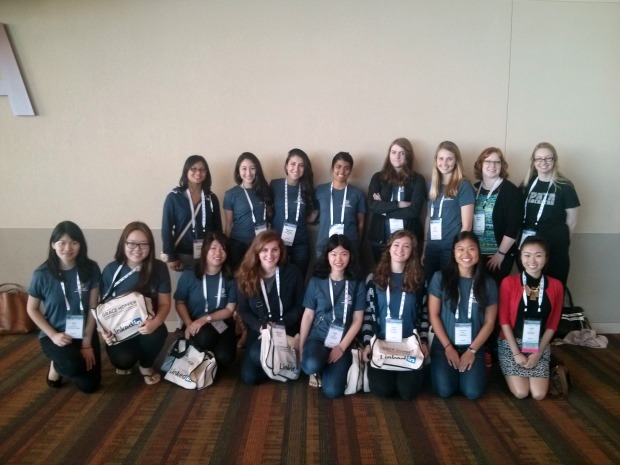
On Wednesday, 75 women Ph.D. students from UW Computer Science & Engineering, Electrical Engineering, Human Centered Design & Engineering, and the iSchool spent the afternoon at Microsoft Research discussing research with women Ph.D.s working at Microsoft.

Among the 9 Microsoft participants were UW CSE Ph.D. alums Saleema Amershi, Kate Everitt, Julie Letchner, and Maya Rodrig, and UW CSE affiliate professors Merrie Morris; and Karin Strauss (who is also the partner of UW CSE professor Luis Ceze).

Thanks to Microsoft (particularly Rane Johnson) for organizing a terrific event!

October 18, 2012

UW CSE’s Yoshi Kohno to be featured Wednesday on PBS TV NOVA scienceNOW

The Seattle Times describes this Wednesday’s PBS TV NOVA scienceNOW:

“For most people, computer security means just that: Keeping viruses off your desktop or laptop, your PC or your Mac.

“But when Tadayoshi Kohno thinks of computers and security, he thinks about the vulnerabilities inherent in a whole range of devices that are increasingly connected wirelessly to the Internet, to cellphones or to each other.

“A computer scientist at the University of Washington, Kohno has proved that you can hack and take over the circuitry of a pacemaker, an implantable defibrillator, a child’s toy, a mileage-tracking device for runners, and — perhaps most chilling of all — a car.

“Kohno, 34, is so good at what he does that government regulators and manufacturers habitually beat a path to his door, in the UW’s computer science and engineering department, where he is an associate professor.

“Kohno will be featured Wednesday on PBS’s NOVA scienceNOW, in an episode that examines whether science can help solve crime.”

Read more here.  Watch NOVA scienceNOW on PBS TV on Wednesday (in Seattle, 10 p.m. on KCTS-9)!

October 13, 2012

« Newer PostsOlder Posts »