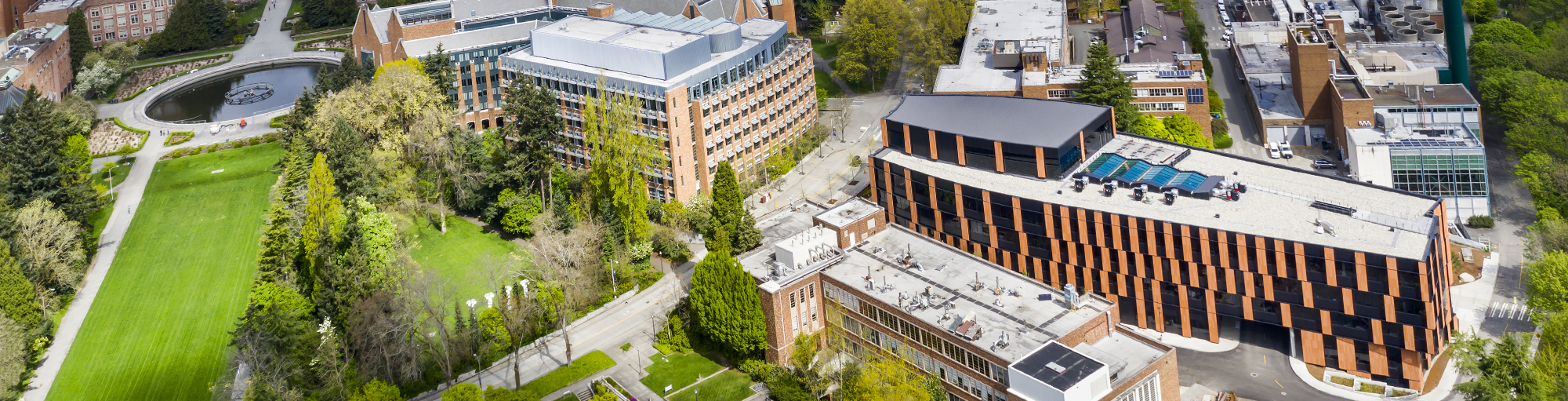
 VLDB 2011 – the 37th International Conference on Very Large Databases – was held in Seattle this week.
As previously noted here, the VLDB 10-year Award, recognizing the paper that appeared in the VLDB conference 10 years ago and has had the greatest impact on database research since then, was received by Jayant Madhavan (a UW CSE Ph.D. alum, currently at Google) and Phil Bernstein (a UW CSE Affiliate Professor, working at Microsoft Research), along with their co-author Erhard Rahm, for their VLDB 2001 paper “Generic Schema Matching with Cupid.”
New news: The VLDB 2011 paper “Data Markets in the Cloud: An Opportunity for the Database Community” by UW CSE’s Magdalena Balazinska, Bill Howe, and Dan Suciu won 2nd place in the “Best Paper Award” competition for the Challenges and Visions Track at VLDB 2011.
The Challenges and Visions Track, organized in cooperation with the Computing Community Consortium, focuses on visionary ideas, long term challenges, and opportunities in data-centric research that are outside of the current mainstream topics of the field; submissions were judged on the extent to which they expand the possibilities and horizons of the field. Similar tracks have been organized at a number of major conferences in the past year.
Congratulations to Magda, Bill, and Dan!
Read more →
 From the “any publicity is good publicity” department …
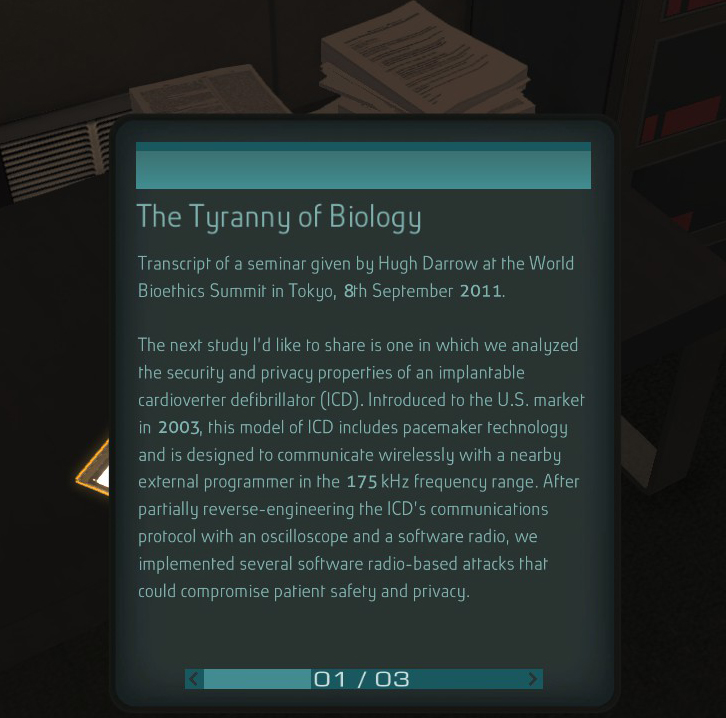
The game developers of Deus Ex have lifted text from the Oakland 2008 paper “Pacemakers and Implantable Cardiac Defibrillators: Software Radio Attacks and Zero-Power Defenses” for their dystopian video game shoot up.
Check out a Deus Ex screenshot here. Compare it to the highlighted section of the research paper here. And, for those of you who are researchers rather than gamers, check out the Medical Device Security Center website here.
The Oakland paper was co-authored by Daniel Halperin and Yoshi Kohno (University of Washington), Thomas S. Heydt-Benjamin, Benjamin Ransford, Shane S. Clark, Benessa Defend, Will Morgan, and Kevin Fu (University of Massachusetts Amherst), and William H. Maisel (BIDMC and Harvard Medical School). Read more →
 “Dr. Etzioni, a computer scientist at the University of Washington in Seattle who has founded four firms in all, says Decide relies on three main data sources: pricing data, news and rumours, and technical specifications. Pricing data comes from a variety of sources. Most are the company’s trade secret, though they always include current prices of goods and sales data. The model also uses feedback about how its predictions fare over time to fine-tune their probability estimates. With news and chatter, Decide scores sites by how accurate their scoops are for particular categories of goods. The algorithm discounts rumour-mongers and gives a greater weight to reliable sources. So far, the firm has amassed a year’s worth of data, many thousands of gigabytes in total.
“These reveal unexpected consumer behaviour. For example …”
To read the exciting conclusion, check out the full article in The Economist here. Read more →
 “Decide uses sophisticated data-mining and analysis techniques to predict whether prices will change for a given product, giving consumers a better window into volatile retail prices. If this sounds familiar, it’s the same basic idea behind Farecast, another [UW CSE professor Oren] Etzioni company that predicted price changes for airline tickets. Microsoft bought Farecast in 2008 for a reported $115 million, and has incorporated the technology into its Bing search engine.
“But where Decide gets really futuristic is its ability to advise consumers whether new models are about to debut, helping them avoid the kind of regret swallowed by all those poor folks who were just a little too late in buying the first-generation iPad …”
Read the full article here. Read more →