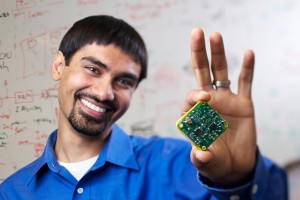
 UW’s Shwetak Patel, a faculty member in Computer Science & Engineering and Electrical Engineering, has been named a 2011 MacArthur Fellow – colloquially known as the MacArthur “Genius” Award.
Each year, the MacArthur Fellows Program awards unrestricted fellowships of $500,000 to roughly twenty “talented individuals who have shown extraordinary originality and dedication in their creative pursuits and a marked capacity for self-direction. There are three criteria for selection of Fellows: exceptional creativity, promise for important future advances based on a track record of significant accomplishment, and potential for the fellowship to facilitate subsequent creative work.”
Shwetak’s research interests are in the areas of Human-Computer Interaction, Ubiquitous Computing, and User Interface Software and Technology. He is particularly interested in developing easy-to-deploy sensing technologies and approaches for activity recognition and energy monitoring applications. He is a founder of Zensi, Inc., a demand side energy monitoring solutions provider, which was acquired by Belkin, Inc. in 2010.
Shwetak is UW CSE’s second MacArthur Fellow – professor Yoky Matsuoka was honored in 2007.
CONGRATULATIONS SHWETAK!
See also Seattle Times, Xconomy. Read more →
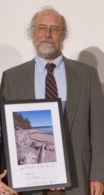 In our recent post about the recognition of OneBusAway with a VISION 2040 Award from the Puget Sound Regional Council, we failed to note the most amazing aspect of the ceremony: Alan Borning in a suit!
But, who is the guy in the pink shirt and tie? Read more →
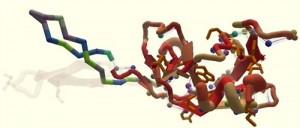 An excellent MSNBC Cosmic Log article on UW’s Foldit game for protein folding and protein structure calculation.
“For more than a decade, an international team of scientists has been trying to figure out the detailed molecular structure of a protein-cutting enzyme from an AIDS-like virus found in rhesus monkeys. Such enzymes, known as retroviral proteases, play a key role in the virus’ spread — and if medical researchers can figure out their structure, they could conceivably design drugs to stop the virus in its tracks.”
“One floppy loop of the molecule, visible on the left side of this image, was particularly tricky to figure out. But players belonging to the Foldit Contenders Group worked as a tag team to come up with an incredibly elegant, low-energy model for the monkey-virus enzyme.”
“‘People have spatial reasoning skills, something computers are not yet good at,’ Seth Cooper, a UW computer scientist who is Foldit’s lead designer and developer, explained in a news release. ‘Games provide a framework for bringing together the strengths of computers and humans.'”
Read the MSNBC article here. Article on this breakthrough from The Scientist here. PCMag here.
Play Foldit here. Read more →
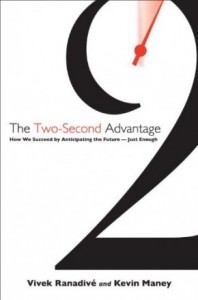 The work of UW CSE professor Raj Rao is featured in the new book The Two-Second Advantage:
“The robots in Rajesh Rao’s lab at the University of Washington could be the cousins of the robot from Lost in Space, Rosie from The Jetsons, and C-3Po. They have square, electronics-laden heads, human-shaped bodies, lights, buttons, and herky-jerky movements. They look like toys but are nothing of the sort. The robots were created to help Rao learn about human brains …”
Read an excerpt here. Read more →
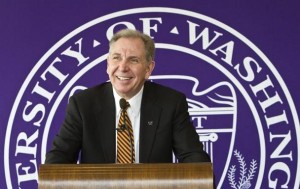
University of Washington President Michael K. Young
From the President’s Page of the September 2011 issue of Columns, the University of Washington alumni magazine – an issue celebrating the 150th Anniversary of the University of Washington:
“Along the way, there were a number of momentous developments that would help shape the University we see today… Then in 1975, the University took yet another step into the future by establishing the Department of Computer Science, a far-sighted step that would attract some of the world’s best computer scientists to Seattle.”
Read President Young’s article here. Read more →
 ZDNet reports: “At the Intel Developer Forum in San Francisco, Intel CEO Paul Otellini demos how the company’s processors are being used to render a 3D model from millions of user-generated images taken from photo-sharing sites like Flicker and Picasa. The work is being done at the University of Washington, where researchers have crowd-sourced images from the Web and created 3D re-construction of St. Peter’s Basilica in Vatican City.”
Watch a video of Otellini’s presentation here.
This work is from the Rome in a Day project of UW CSE’s Graphics and Imaging Laboratory. The video of St. Peters shown by Otellini is from Yasu Furukawa’s work. The other demo he showed – the interactive creation of the model – is Changchang Wu’s latest work. Read more →
 UW CSE sponsors dozens of certificate programs through UW Professional and Continuing Education – multi-course themed clusters targeted at professionals. The latest – in which CSE collaborated with the UW eScience Institute – is the Certificate in Cloud Computing. UW CSE’s Bill Howe, who worked with an expert industry advisory board and UW PCE staff to create the program and will teach the capstone course, says “Today, the analysis of data – not the collection of it – is the bottleneck. You can now fill your hard drive with more data than you’ll ever be able to look at.”
Learn more here. Read more →
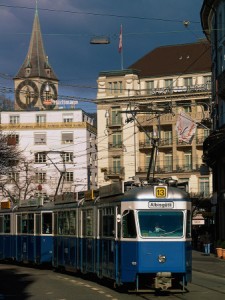 UW CSE’s Brian Ferris, the brains and brawn behind the OneBusAway transit application, may have received his Ph.D. and left for Google Zurich where the trams run like a Swiss watch … but OBA remains behind, continuing to garner awards – this time from the Puget Sound Regional Council.
PSRC’s VISION 2040 Award “recognizes innovative projects and programs that help ensure a sustainable future as the region grows.” Said Mukilteo Councilmember Jennifer Gregerson, Chair of the VISION 2040 Awards Selection Committee, “Access to real time information in a variety of mobile formats has taken some of the uncertainty out of using transit, making it an even more convenient way to get around.”
Congratulations, once again, to Brian and the OneBusAway team. Read the PSRC press release here. Try OneBusAway here. Read more →
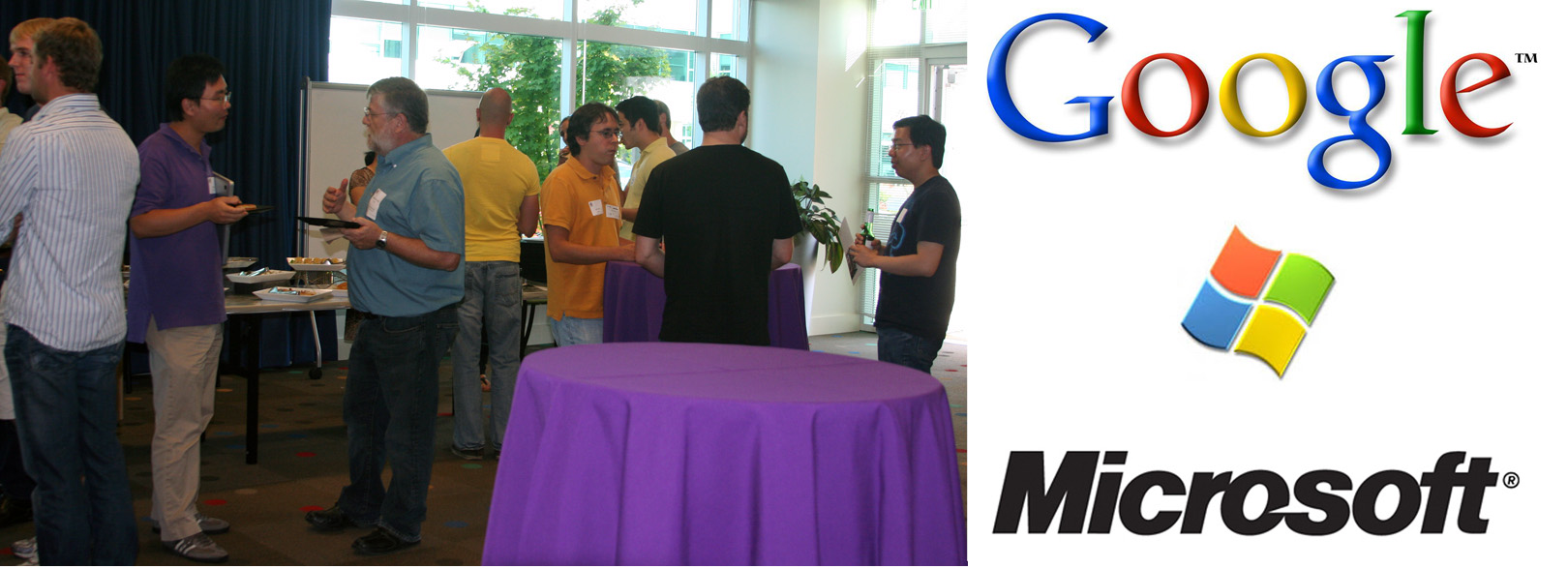
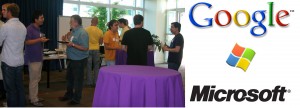 Last week UW CSE hosted alum happy hours at Microsoft, Google Kirkland, and Google Fremont. More than 200 alums and interns and 20 faculty turned out. Many thanks to our terrific Microsoft and Google recruiters for facilitating these events, and to our terrific alums for turning out. (We apologize for coming away with nothing more than a couple of crummy cell phone photos – we promise to do better next time!) Read more →
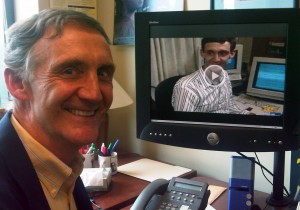
Ed Lazowska, now and then ...
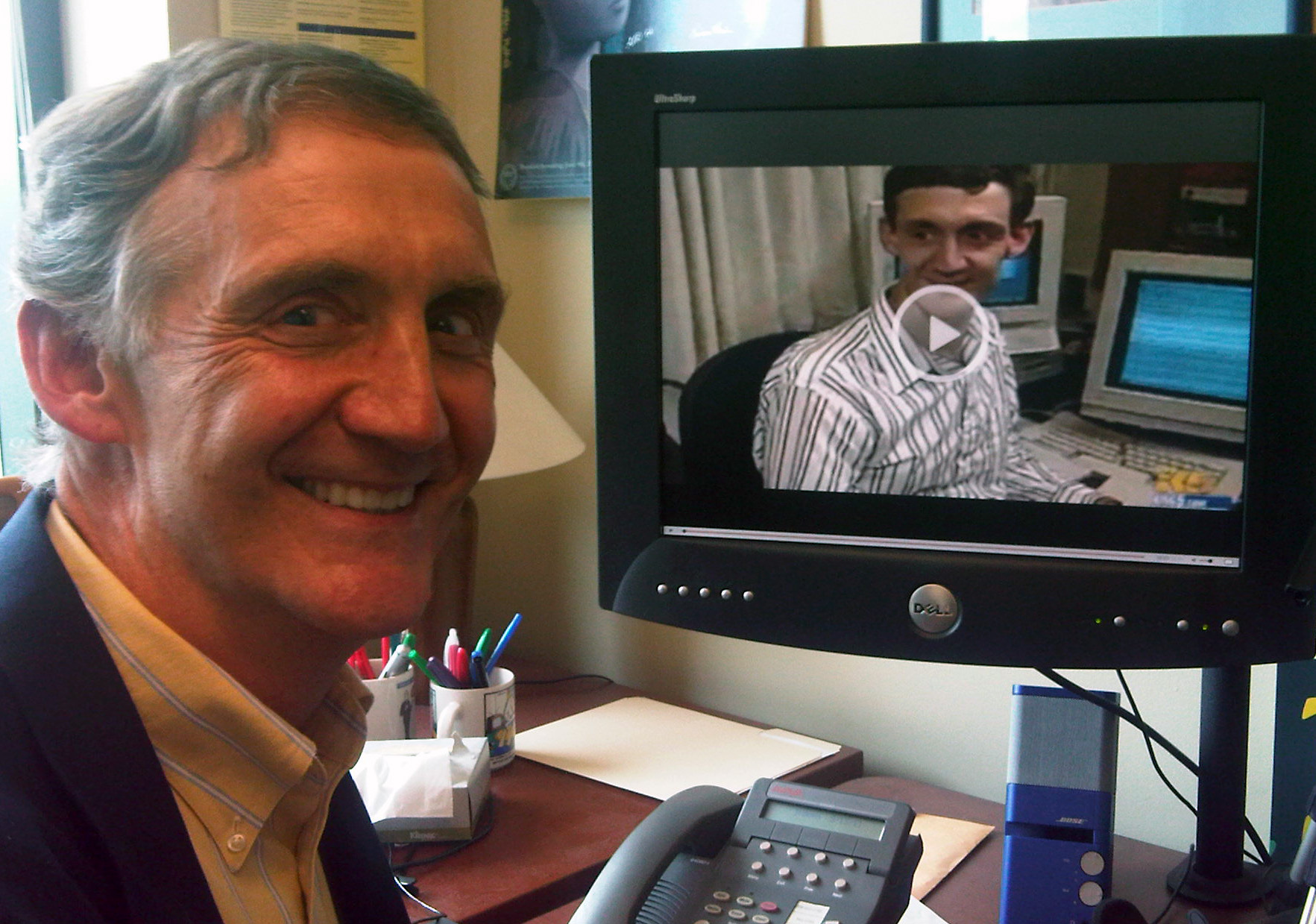
The first mention of the word “Internet” on Seattle’s KING-5 News was a 1994 interview with UW CSE’s Ed Lazowska. Recently, KING-5 News anchor Allen Schauffler compelled Ed to revisit that interview. It’s worth watching, here. Main conclusion: “The past 17 years have been a lot kinder to the Internet than to me.” Allen took the Wayback Machine photograph to the right. Read more →