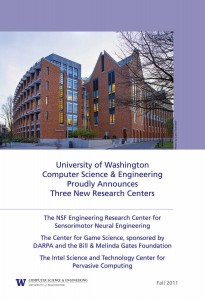
 The National Science Foundation press release on the Engineering Research Center for Sensorimotor Neural Engineering, directed by UW CSE professor Yoky Matsuoka, is out. According to NSF:
“The National Science Foundation announces an award to the University of Washington and its partners to establish a new NSF Engineering Research Center. The ERC will pursue interdisciplinary research and education to address questions important to both human health and robotics, and to provide the foundation for new industries through innovation. NSF will invest $18.5 million in the Center over the next five years.
“The NSF ERC for Sensorimotor Neural Engineering will create devices to restore or augment the body’s capabilities for sensation and movement. The foundation for the new devices will be new mathematical and structural understanding of the nervous system. Center researchers will combine this new understanding with improved communication and interface design and with advanced control and adaptation technologies.”
Read the NSF press release here. Visit the CSNE website to learn more about the research here. Computing Community Consortium blog post here. Read more →
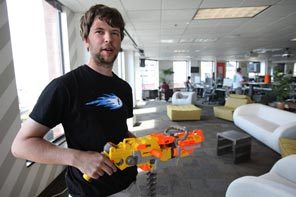
UW CSE undergraduate and Facebook intern Cullen Walsh, "loaded with a Nerf gun and looking for a battle" (Seattle Times)
The Seattle Times profiles Seattle’s Facebook office on its first anniversary:
“The office — Facebook’s first development center outside of its Palo Alto, Calif., headquarters — ends its first year Tuesday …
“Ed Lazowska, the Bill & Melinda Gates Chair in Computer Science & Engineering at the University of Washington … said the wave of Californians is ‘all to the good,’ though he said it makes it even more important for the state to adequately fund education and prepare students.
“‘Microsoft and Amazon will lose some people, but they’ll hire some other people,’ he said. ‘There will be people brought in from other states, and students who graduate here will have a much broader choice of what they can do. The only gap is, we’re failing to prepare enough kids who grow up here for these opportunities.’
“All these companies are appealing to UW computer science graduates. Over the past two years 35 percent went to Microsoft, Amazon and Google, and 30 percent went to startups and smaller companies, including Facebook …”
Read the article here. Read more →
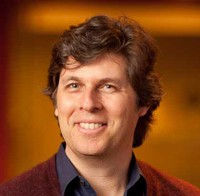 In an article in the August 4 issue of Nature, UW CSE professor Oren Etzioni calls on experts to, literally, think outside the search box. In the article, he writes that the main obstacle to progress “seems to be a curious lack of ambition and imagination.” Etzioni proposes that instead of simply looking for strings of text, a web search engine would identify basic entities – people, places, things – and uncover the relationships between them. This is the goal of the UW’s Turing Center, which he directs.
Read the Nature article here. Read an excellent New York Times followup here. Read a UW press release here. Learn about the Turing Center’s research program here. Read more →
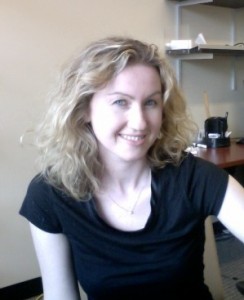 “Exploring Photobios” – a SIGGRAPH 2011 paper by UW CSE postdoc Ira Kemelmacher along with Eli Shechtman (Adobe Systems), Rahul Garg (UW CSE and Google), and Steve Seitz (UW CSE and Google) – is featured in this story on KING5 news.
The research, which automatically integrates sequences of images of the same person over time, is the basis of the Face Movie feature in Google’s Picasa.
Watch the KING5 video here. Read about the research here. See a UW press release here.
Read more →
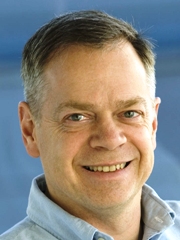 Rick Szeliski, a Microsoft Research staff member and long-time Affiliate Professor in UW CSE, has been named the recipient of the 2011 SIGGRAPH Computer Graphics Achievement Award “given each year to recognize an individual for an outstanding achievement in computer graphics and interactive techniques.”
Rick’s extensive involvement with UW CSE includes, most recently, co-advising Ph.D. student Noah Snavely, whose thesis research included the technology underpinning Photosynth.
Previous UW CSE “friends and family” recipients of the SIGGRAPH Computer Graphics Achievement Award include Ph.D. alumnus Hugues Hoppe (2004), faculty member David Salesin (2000), faculty member Tony DeRose (1999), Affiliate faculty member Michael Cohen (1998), and Ph.D. alumnus Loren Carpenter (1985).
Congratulations Rick! Read more →
 Cory Doctorow at BoingBoing is reporting on UW CSE grad student Franzi Roesner‘s latest project, ShareMeNot. Cory writes: “[ShareMeNot is] a Firefox Add-On that defangs social media buttons like the Facebook ‘Like’ button (and others) so that they don’t transmit any information about your browsing habits to these services until (and unless) you click on them. That means that merely visiting a page with a Like or a Tweet or a +1 button (like this one) doesn’t generate a data-trail for the companies that operate those services, but you still get the benefit of the buttons, that is, if you click them, they still work. Smart.”
Also involved are UW CSE faculty members Yoshi Kohno and David Wetherall. Read more →
 The “Dark Silicon” paper presented in June at the International Symposium on Computer Architecture is profiled in the New York Times:
“Even today, the most advanced microprocessor chips have so many transistors that it is impractical to supply power to all of them at the same time. So some of the transistors are left unpowered … The phenomenon is known as dark silicon. As early as next year, these advanced chips will need 21 percent of their transistors to go dark at any one time … And in just three more chip generations — a little more than a half-decade — … as many as half of them will have to be turned off to avoid overheating.”
Dave Patterson has the last word: “It’s one of those ‘If we don’t innovate, we’re all going to die’ papers … I’m pretty sure it means we need to innovate, since we don’t want to die!”
The paper was written by Hadi Esmaeilzadeh, Emily Blem, Renée St. Amant, Karthikeyan Sankaralingam, and Doug Burger. The work began when Burger was a faculty member at UT Austin; he is now at Microsoft Research and an Affiliate Professor in UW CSE; Esmaeilzadeh is a UW CSE graduate student.
Read the New York Times article here. Read more →
 The paper Proactive Detection of Collaboration Conflicts by UW CSE’s Yuriy Brun, Mike Ernst, and David Notkin, along with Reid Holmes from the University of Waterloo, has received a SIGSOFT Distinguished Paper Award. The paper will be presented in September at ESEC/FSE 2011: The 8th joint meeting of the European Software Engineering Conference (ESEC) and the ACM SIGSOFT Symposium on the Foundations of Software Engineering (FSE).
Congratulations to Yuriy, Mike, David, and Reid!
(This is the 5th ACM SIGSOFT Distinguished Paper Award for Ernst!) Read more →
 UW CSE professor Mike Ernst and postdoctoral research associate Werner Dietl have won the Best Paper Award at ECOOP 2011, the 25th European Conference on Object-Oriented Programming, for their paper Tunable Static Inference for Generic Universe Types.
Congratulations to Mike and Werner!
Also at ECOOP 2011, UW CSE faculty alumnus Craig Chambers won the Dahl-Nygaard Prize.
Congratulations to Craig!
Read more →
 Recently launched:
Learn more here! Read more →

