CSE’s Oren Etzioni in NY Times on the future of search

0404-biz-webSEARCHThe New York Times explores the future of search – influenced by mobile experience, and by focused search such as shopping.  UW CSE professor Oren Etzioni – a leading proponent and inventor of new approaches to search – is quoted:

“No longer do consumers want to search the Web like the index of a book — finding links at which a particular keyword appears. They expect new kinds of customized search, like that on topical sites such as Yelp, TripAdvisor or Amazon, which are chipping away at Google’s hold …

“‘What people want is, ‘You ask a very simple question and you get a very simple answer,” said Oren Etzioni, a professor at the University of Washington who has co-founded companies for shopping and flight search. ‘We don’t want the 10 blue links on that small screen. We want to know the closest sushi place, make a reservation and be on our way.'”

Read the article here.  Learn about Etzioni’s research here. Read more →

CSE’s Richard Anderson in NY Times on ICT for Development

02fixes-img-blog427A wonderful New York Times essay on Digital Green – information and communications technology to aid development in rural India – quotes UW CSE professor Richard Anderson, a pioneer in the field:

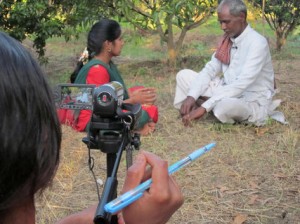
“What’s intriguing about Digital Green is how it uses videos to start public conversations and elicit leadership within communities. What’s unexpected is that it has been able to produce locally made videos in India’s regional languages at scale, something Gandhi notes is cheaper and faster than using professional filmmakers. ‘Digital Green’s approach is kind of the MOOC model turned upside down,’ observes Richard Anderson, a professor in the department of computer science and engineering at the University of Washington, who is working with PATH to adapt its model to public health. ‘With a MOOC you have one centralized video reaching hundreds of thousands. With Digital Green, it’s very localized videos reaching locals within the region.'”

Read the article here.  Learn about Anderson’s research here. Read more →

CSE faculty and students win 2013 NSDI “Best Paper” Award

nsdiNSDI – the USENIX Symposium on Networked Systems Design and Implementation – is one of the two top conferences in computer systems.  In 2013, 170 research papers were submitted.  38 were accepted.  2 were designated “Award Papers.”  One of these is the paper “A Fault-Tolerant Engineered Network” by UW CSE graduate students Vincent Liu and Dan Halperin and faculty members Arvind Krishnamurthy and Tom Anderson.

This marks the 4th time that a UW CSE paper has received the NSDI “Best Paper” award in the 10 years of the conference.

Congratulations to Vincent, Dan, Arvind, and Tom.  See the NSDI announcement here.  Read the paper here. Read more →

Seattle Times: “Help schools with more money, not empty chatter”

2020491715Seattle Times columnist Danny Westneat writes:

“It’s not often that talk gets exposed for being empty as swiftly as it was last week.

“On Wednesday, the state’s business community issued a clarion call to not only stop slashing our college system, but to expand it dramatically …

“But then the very next day, Gov. Jay Inslee proposed ending some tax exemptions to, among other things, boost science and health-care enrollment in the state college system. Yet here’s how the Association of Washington Business, a group that had joined in Wednesday’s clarion call, responded to that:

“‘While we understand and support Gov. Inslee’s desire to increase funding for education, we do not support raising taxes …’

“I don’t know that I’ve seen a case of cognitive dissonance as acute as what’s going on with business leaders and our higher education system.

“Unlike in the K-12 system, where there’s a major debate about reform, nobody is suggesting the computer science or engineering programs at the UW need big overhauls. Yet last year computer science turned away an astonishing 75 percent of UW students who wanted to major in it. The reason? Not enough funding for more slots. End of story …

“The national State Higher Education Executive Officers, which looked at how states financially support their public colleges, reports we ranked 49th out of 50 last year. By two dollars per student we barely beat Florida for dead last. Bow down to Washington!

“With the economy recovering, if we can’t find some real money — not study money — for these schools, then maybe we should stop talking about how we value them so much.”

Go Danny!  Read more here. Read more →

7 NSF Graduate Research Fellowships to UW CSE students

nsfGraduate Research Fellowships from the National Science Foundation are among the most prestigious awards available to graduate students in the sciences and engineering.

Three UW CSE graduate students and four UW CSE undergraduates have just been announced as winners of 2013 NSF GRF’s:  graduate students Lilian de Greef, Ben Hixon, and Irene Zhang, undergraduate seniors Sam Hopkins and David Colmenares, and former CSE undergraduates Gabriel Pratt (currently a graduate student in Bioinformatics and Systems Biology at UC San Diego) and Ada Zhang (currently a graduate student in Computer Science at Carnegie Mellon).

Congratulations! Read more →

Apps with a Humanitarian Side: Nafundi featured on NPR

branding_main-145eb25ca00acff04e540202da68b169a7d1eba8On March 27th, NPR’s Morning Edition of all tech considered featured a story on the growing trend of combining business and smartphone apps for social good.  Highlighted is the work done by Nafundi, a startup led by UW CSE alums Yaw Anokwa and Carl Hartung.  Nafundi develops software for challenging environments and grew from the work done by Yaw and Carl on the Open Data Kit project.

“For those willing to really invest the time,” Anokwa says, “there are more opportunities these days to make a living doing social good with technology.”

NPR story here.  Learn more about Nafundi here. More information on Open Data Kit here. Read more →

Blast from the past!

John Torode and the Sigma 5

1972 UW CSE Ph.D. alum Gary Sager recently discovered this 42-year-old photo of 1972 Ph.D. alum John Torode ministering to CSE’s then-state-of-the-art SDS Sigma 5 computer, whose computational power is undoubtedly dwarfed by your wristwatch. Read more →

Seattle Times: “Report: 25,000 high-skill jobs unfilled; prompts request for more ed funding”

timesThe Seattle Times reports on the Washington Roundtable’s new workforce study:

“It’s never been easy — and it may be getting harder — to find an unemployed computer-science major in Washington state.

“Just ask Steve Singh, the CEO of a company with 700 job openings worldwide — 300 of them in Washington.

“‘We have a standing discussion with University of Washington computer science — anybody you graduate, we’ll take,’ said Singh, CEO of Redmond-based Concur Technologies.”

Read more here. Read more →

“We Are the World” – Science Career Q&A with Ed Lazowska

Science-AAAS-300x162But wait!  There’s more!  Today, Science has an extensive interview with UW CSE’s Ed Lazowska on careers in computer science.  An example:

Q: What’s new and emerging in computer science? If you were in training today, about to choose a thesis area, what subfields would you look at?

E.L.: Computer science is a field of limitless opportunity, and limitless impact. We are terrible at predicting the future: We overestimate what can be achieved in 10 years, and we underestimate what can be achieved in 50. Look back 10 or 12 years. Did we foresee the revolutions in search, Web-scale systems, digital media, mobility, e-commerce, the cloud, social networking, and crowdsourcing? No way! These were barely on the horizon in 2000, and they are part of our everyday lives today.

Here’s one thing that’s certain in the next 10 years: We will put “the smarts” in everything:  smart homes, smart cars, smart health, smart robots, smart science (confronting the data deluge), smart crowds and human-computer systems, smart interaction (virtual and augmented reality).

And here’s another thing that’s certain: Every field of discovery will become an “information” field. That’s the “big data” story: Data-driven discovery will become the norm, driven by advances in computer science. Think about biology. [James] Watson and [Francis] Crick discovered the biochemistry of DNA. But what they really discovered is that the human genome is a digital code, which can be read, deciphered, and rewritten. Over several decades, this transformed biology into an information science. Today, if you’re a biologist who is not deeply rooted in “computational thinking,” you’re collecting tadpoles in some swamp. The same is true of an increasing number of fields.

These advances draw upon all of computer science. Today, machine learning is hot. Tomorrow, it will be something else. The only thing for sure is that it will be computer science.

Read more here!  (Some of it is perhaps a bit too candid …) Read more →

Science: “Want a Great Scientific Career? Choose Computer Science”

Science-AAAS-300x162Science – flagship publication of the American Association for the Advancement of Science – extensively quotes UW CSE’s Ed Lazowska in this article about job opportunities in scientific fields:

“Lazowska notes that the President’s Council of Advisors on Science and Technology (PCAST) examined similar data from 2 years earlier and produced a report, signed by John P. Holdren, assistant to the president for science and technology and Director of the Office of Science and Technology Policy; Eric Lander, president and founding director of the Broad Institute; Shirley Ann Jackson, president of the Rensselaer Polytechnic Institute; and Eric Schmidt, executive chair (and former CEO) at Google, that reached the following conclusions:

“Finding: All indicators—all historical data, and all projections—argue that [computer science] is the dominant factor in America’s science and technology employment, and that the gap between the demand for [computer science] talent and the supply of that talent is and will remain large … While there will be inevitable variations in demand for every field, the long-term prospects for employment in [computer science] occupations in the United States are exceedingly strong. All other S&T fields pale by comparison.”

Ayup.  Read more here. Read more →

« Newer PostsOlder Posts »