UW CSE again hosts CS4HS

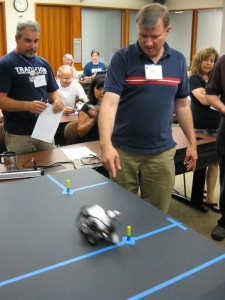
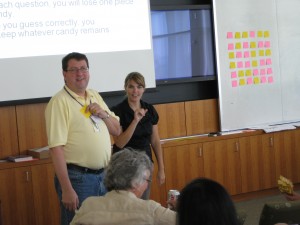
UW CSE hosted 50 high school math, science, and computer science teachers on August 2-4 in our fourth annual “CS4HS” (Computer Science for High Schools) summer workshop.  Funded by Google, CS4HS was originally conceived by Carnegie Mellon University, UW, and UCLA, and now involves roughly 20 universities from across the country.

Teachers learn a wide variety of ways in which computer science concepts can be introduced into their courses, and participate in hands-on workshops in Mindstorm robots and visual programming using Scratch.  A “Computing Careers Panel” featuring recent UW CSE alums working in the software and gaming sectors is always a highlight.

UW CSE’s CS4HS offering continues to be a collaboration with CMU; many thanks to Tom Cortina for traveling to Seattle once again to help make our program a huge success!

CS4HS website here.  Agenda here.  Photographs here.  Ed Lazowska’s introductory presentation here; Ed’s other slides here (all course materials from all speakers will be posted on the CS4HS website eventually).

Wonderful interview with Helene Martin here. Read more →
MIT Stata Center equipped with colostomy bag

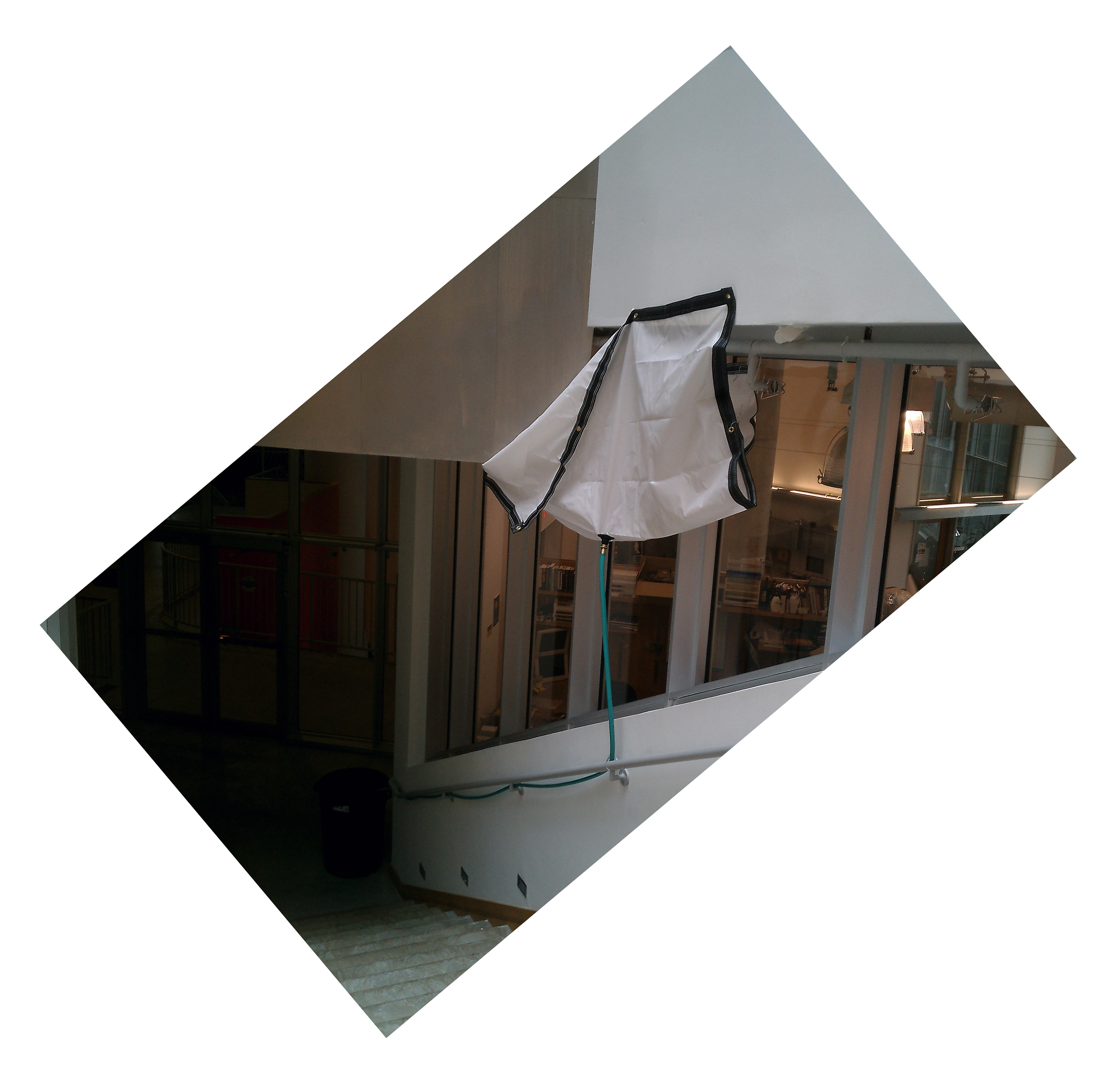
In the latest desperate attempt to deal with leaks, a plastic bag collects water that drips through a 4th floor skylight and directs it to a hose, attached to a stairway railing by means of cable ties, which terminates at a trash can at the foot of the stairs.  Engineering ingenuity in action! Read more →

“Refraction” wins Grand Prize in Disney Learning Challenge

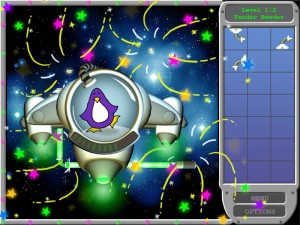
Refraction, an online puzzle game for teaching fractions created by UW CSE professor Zoran Popovic and his students, has won the Grand Prize in the Disney Learning Challenge!

Refraction is a research project of UW CSE’s Center for Game Science — focused on games for learning and for science. Read more →

“Ocean Observatories Will Make Use of CENIC and Pacific NorthWest GigaPoP 10-Gigabit Peerings with Amazon Web Services”

“When a national network of ocean observatories begins streaming environmental sensor data in March 2012, researchers … will be able to use … high-speed academic networks to transmit some of that data to storage and computing clouds operated by Amazon Web Services.

“CENIC and PNWGP today announced two 10 Gigabit per second (Gbps) connections to Amazon Simple Storage Service (Amazon S3) and Amazon Elastic Compute Cloud (Amazon EC2) for the use of CENIC’s members in California, as well as PNWGP’s multistate K-20 research and education community. With these new ultra-high-performance peering connections, members of CENIC and PNWGP can take full advantage of those services, whether for K-12 education or for university-based research …

“’21st century discovery will be driven by the automated analysis of massive amounts of sensor data captured from the world around us,’ said Ed Lazowska, the Bill & Melinda Gates Chair in Computer Science & Engineering and Director of the eScience Institute at UW.  ‘The focus is on data, more than cycles. Cloud resources are an essential component.  The direct connections to the Amazon Web Services cloud from CENIC and PNWGP provide scientists with the bandwidth they need to utilize these resources.'”

Read the full announcement here. Read more →

UW CSE Ph.D. alum Doug Downey is 2010 Microsoft Research Faculty Fellow

Each year, roughly half a dozen faculty members from across the nation are selected as Microsoft Research Faculty FellowsDoug Downey, a Ph.D. student of Oren Etzioni’s now on the faculty at Northwestern University, has just been announced as a 2010 recipient of this significant distinction.

“Doug Downey studies methods for automatically extracting knowledge from the World Wide Web. His work aims to enable advanced Web search engines, capable of answering complex questions by synthesizing information across multiple Web pages. Building on techniques from natural language processing, machine learning, and artificial intelligence, Downey is currently investigating how to harness human interaction to improve knowledge extraction systems.”

Congratulations Doug! Read more →

“Revolutionary Evolution: Will Consumer Apps Replace Specialized AT?”

The June 2010 newsletter of The Family Center on Technology and Disability is devoted to a comprehensive overview of the access technology (assistive technology) work of UW CSE professor Richard Ladner and his students.

“‘Much of the consumer technology that surrounds us can be adapted for classroom and non-classroom educational use for children with disabilities in the K-12 range and beyond,’ Dr. Ladner insists. ‘As less expensive consumer technology takes on universal use,’ he adds, ‘parents and teachers will eventually come to see that the academic horizons of many children with disabilities need not be limited to the K-12 timeframe.’ In fact, Dr. Ladner, who has worked closely with deaf and blind students for many years, sees the advent – and acceleration – of consumer apps use by students with disabilities ultimately resulting in a dramatic increase in the number of deaf and blind students achieving Ph.D. status in the years ahead. Rather than simply being consumers he envisions that students with disabilities will become computer professionals who will be creators of apps that make life easier for themselves and others like them.”

Read this terrific article here. Read more →

UW CSE’s “Morphy” makes the NY Times

“In a lab at the University of Washington, Morphy, a pint-size robot, catches the eye of an infant girl and turns to look at a toy.

“No luck; the girl does not follow its gaze, as she would a human’s.

“In a video the researchers made of the experiment, the girl next sees the robot “waving” to an adult. Now she’s interested; the sight of the machine interacting registers it as a social being in the young brain. She begins to track what the robot is looking at, to the right, the left, down. The machine has elicited what scientists call gaze-following, an essential first step of social exchange.

“‘Before they have language, infants pay attention to what I call informational hotspots,’ where their mother or father is looking, said Andrew N. Meltzoff, a psychologist who is co-director of university’s Institute for Learning and Brain Sciences. This, he said, is how learning begins …

“‘It turns out that making a robot more closely resemble a human doesn’t get you better social interactions,’ said Terrence J. Sejnowski, a neuroscientist at University of California, San Diego. The more humanlike machines look, the more creepy they can seem.

“The machine’s behavior is what matters, Dr. Sejnowski said. And very subtle elements can make a big difference.”

Read the full article here.  Research web page here. Read more →

Who da man?

As a prelude to its annual “Brainstorm Tech” conference in Aspen (July 22–24), Fortune magazine has anointed “The 50 smartest people in tech” — five people in each of ten categories “whose collective intelligence propels us into a future that looks nothing like the present.”

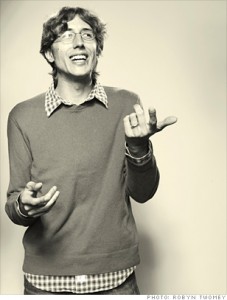
The winner in the “Engineer” category — the “Smartest Engineer”?  UW CSE bachelors alumnus, former Googler and founder of Cloudera Christophe Bisciglia!

“What kinds of problems could we solve if everyone had access to the computing heft that powers Google? Christophe Bisciglia joined the search giant as a software engineer when he was just out of college and quickly realized that if he shifted his digital workload from an individual computer to a cluster of networked computers, he could crunch data faster. Problem was, most scientists didn’t have access to the kind of web-based, or “cloud,” computing power of Google.

“After teaching a class called Google 101, which taught software engineers at the University of Washington to program on a cloud-size scale, Bisciglia, 29, became obsessed with the possibilities emerging from an open-source project called Hadoop. Hadoop lets engineers take advantage of the massive computing efficiencies that come from networking hundreds of computers. He left Google in 2008 to help start Cloudera, which makes it easier for customers to turn their data into insights using Hadoop. Bisciglia resigned from Cloudera in June but tells Fortune he remains committed to harnessing the massive power of the cloud in new ways. Brains and brawn are definitely a potent combination.” Read more →

More from the ACM Awards Banquet

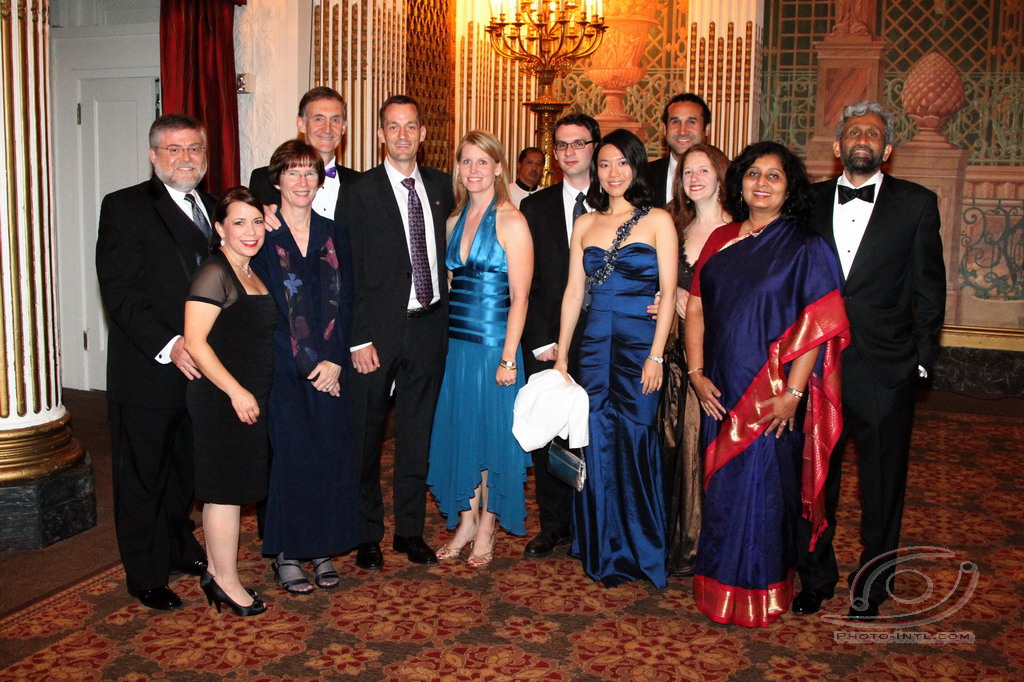
UW CSE faculty, alumni, and spouses at the ACM Awards Banquet at the Westin St. Francis on June 26th.

L-R:  Gaetano Borriello (new ACM Fellow) and Melissa Westbrook; Lyndsay Downs and Ed Lazowska (ACM Distinguished Service Award winner); Jeff Dean (new ACM Fellow) and Heidi Hopper; Noah Snavely (ACM Doctoral Dissertation Award runner-up) and Beth Xie; John Davis and Jessica Davis; Radhika Thekkath and Chandu Thekkath (new ACM Fellow).  At the banquet but missing from the photo:  Thomas Kwan. Read more →

Magda Balazinska receives HP Labs Innovation Research Award

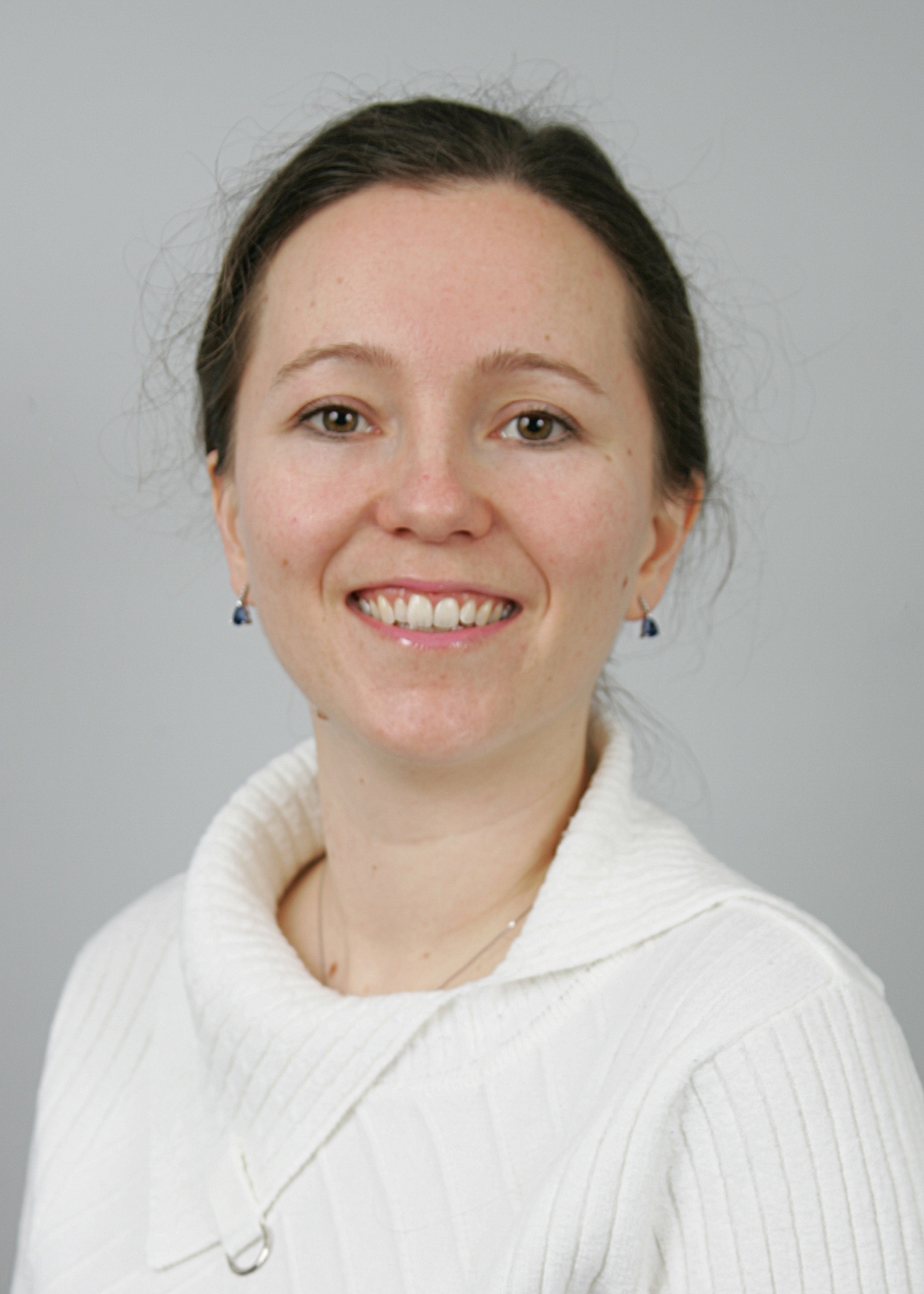
UW CSE professor Magda Balazinska has been selected to participate in the prestigious HP Labs Innovation Research Program.  The program is designed to provide colleges, universities and research institutes around the world with opportunities to conduct breakthrough collaborative research with HP.

HP reviewed more than 375 proposals from 202 universities across 36 countries, choosing 52 to receive 2010 Innovation Research awards.

Congratulations Magda! Read more →

« Newer PostsOlder Posts »