UW CSE’s Gaetano Borriello, students featured in Columns

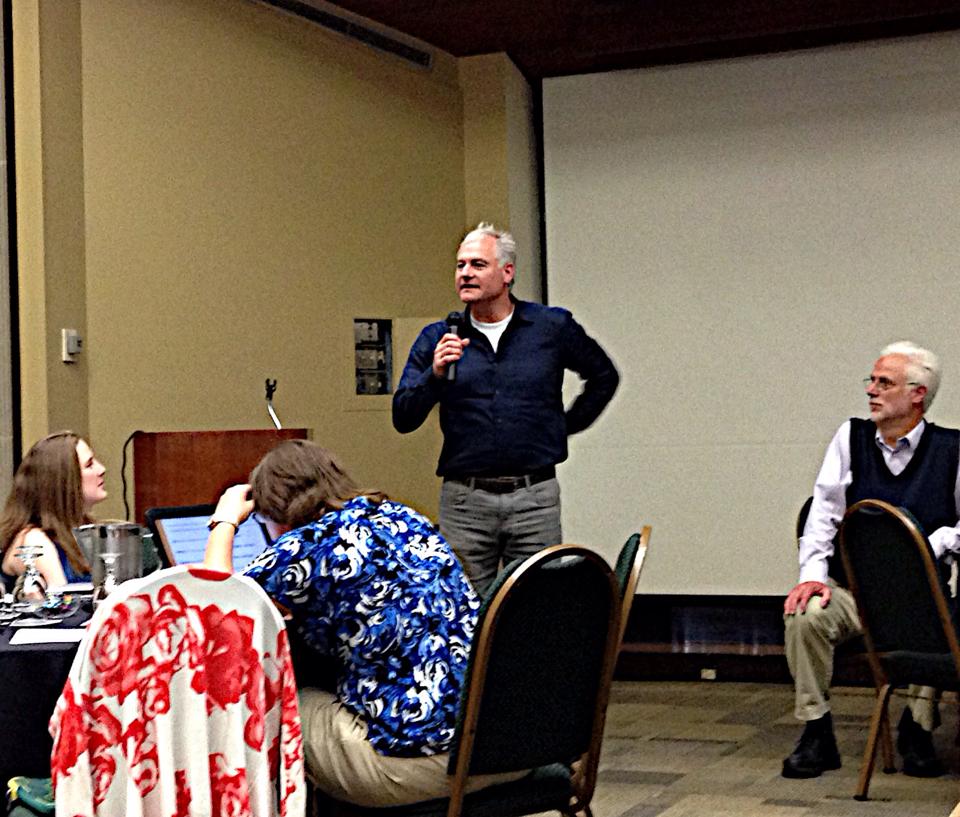
researchThe June issue of Columns – the University of Washington Alumni Magazine – features work by CSE professor Gaetano Borriello and students including Rohit Chaudhri, Brian DeRenzi, and Saloni Parikh, in the article “Mobile Medicine”:

“For infants in sub-Saharan Africa who are born pre-term, with low birth weight or with HIV, access to human breast milk can mean the difference between life and death. Human milk banks have been established to solve this problem, but they tend to be expensive, requiring electricity, computer access and clean water. These are often scarce commodities in this part of the world.

“Faculty and students at the UW are rapidly innovating to solve problems like this. The prevailing attitude among these motivated faculty and students: a good idea is a good idea regardless of the source and collaboration – especially novel collaboration – produces better solutions than a scientist working in isolation.

“A collaboration between UW Computer Science & Engineering (CSE) and PATH, a Seattle-area non-governmental organization, has led to a simple, ingenious solution to the breastfeeding dilemma.”

The article closes with this inspiring message:

“Borriello, who has taught at the UW for 25 years, says that students are quite different now. Like Parikh, DeRenzi and Chaudhri, they want to use technology to work on things that really matter. ‘During the dotcom boom, people were in it for the money. They wanted the degree to get into that world and cash in,’ says Borriello. He says there undoubtedly will be more projects emerging from the UW that help research efforts and provide answers that contribute to improved global health.”

Read more in Columns here. Learn more about Open Data Kit, a tool that provides the data collection foundation for this work, here. Read a related recent article – about the collaboration between UW CSE and the global health care provider AMPATH – here.

Gaetano was also recognized in the June issue of Columns as the recipient of the 2014 Marsha L. Landolt Distinguished Graduate Mentor Award. UW CSE department chair Hank Levy is quoted:

“Gaetano once told me that he treats every student as a peer. He sees graduate students as our future colleagues, and therefore he treats them with the respect and collegiality that a colleague would deserve. This is true at every level – graduate student, undergraduate, or high-school student – all are potential future colleagues and deserve the same respect.”

Read about Gaetano and UW’s other 2014 faculty award winners here. Read more →

Global health care provider AMPATH reaches one millionth person powered by ODK

ampath-enumeratorIn 2009, global health care provider AMPATH began deploying community health workers in rural villages and communities in Western Kenya as part of a home-based HIV/AIDS counseling and testing program.

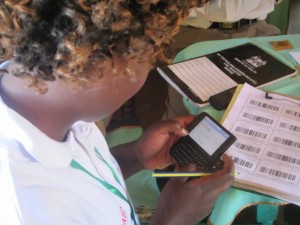
Armed with a bag of testing and counseling supplies and a smartphone with a GPS and AMPATH’s electronic medical record system, the community health workers travel by foot door-to-door assuring that every person over the age of 13 and every at-risk child was tested for HIV.

AMPATH’s smartphone-based data collection capabilities are based on Open Data Kit (ODK), a joint project of UW CSE and Google. “The ability to collect data in electronic form and integrate it with the rest of the system is the most important tool we have to successfully implement the pHCT program,” said Martin Were, Chief Medical Information Officer for the AMPATH Consortium. “Open Data Kit has been instrumental in this data collection.”

This week, the pHCT program reached its one millionth person, using ODK.

Read more here.  Learn about ODK here. Read more →

The value of diversity in the tech workforce

diversity2Stimulated by Google’s release of its workforce diversity statistics, USA Today describes the generally dismal under-representation of women and minorities in the tech workforce.

UW CSE’s Ed Lazowska is quoted on the importance:

“Doing so isn’t about window dressing. It actually makes it a better and more profitable company, says Ed Lazowska, a professor of Computer Science & Engineering at the University of Washington.

“‘Engineering (particularly of software) is a hugely creative endeavor. Greater diversity – more points of view – yields a better result,’ he said.”

Here is what Lazowska actually said to the reporter, in an email exchange:

“Google’s willingness to publish these less-than-rosy statistics reflects wonderfully well on the company and on its commitment to increasing the diversity of its workforce. A company that didn’t care deeply about the issue probably wouldn’t collect this data, and certainly wouldn’t put it on the web for all to see.

“Under-representation of women and minorities is a long-standing problem in the tech industry. All of us have been working extremely hard to turn this around, and progress is being made. It’s not only a matter of social equity, or of staffing. Engineering (particularly of software) is a hugely creative endeavor. Greater diversity – more points of view – yields a better result.

“Kudos to Google.”

Read USA Today‘s version here. Read more →

“Meet the algorithm that can learn ‘everything about anything'”

herolGigaom waxes ecstatic about research at Seattle’s Allen Institute for Artificial Intelligence (AI2), led by UW CSE’s Oren Etzioni:

“Researchers from Allen Institute for AI have built a computer system capable of teaching itself many facets of broad concepts by scouring and analyzing search engines using natural language processing and computer vision techniques.”

The system, LEVAN (Learn EVerything about ANything), is a collaboration between AI2 and UW CSE, involving (among others) AI2’s  Santosh Divvala (a UW CSE postdoc alumnus and CMU Ph.D. alumnus) and UW CSE professor Carlos Guestrin.

Read more here. Read more →

UW CSE workshop connects blind college students with professionals

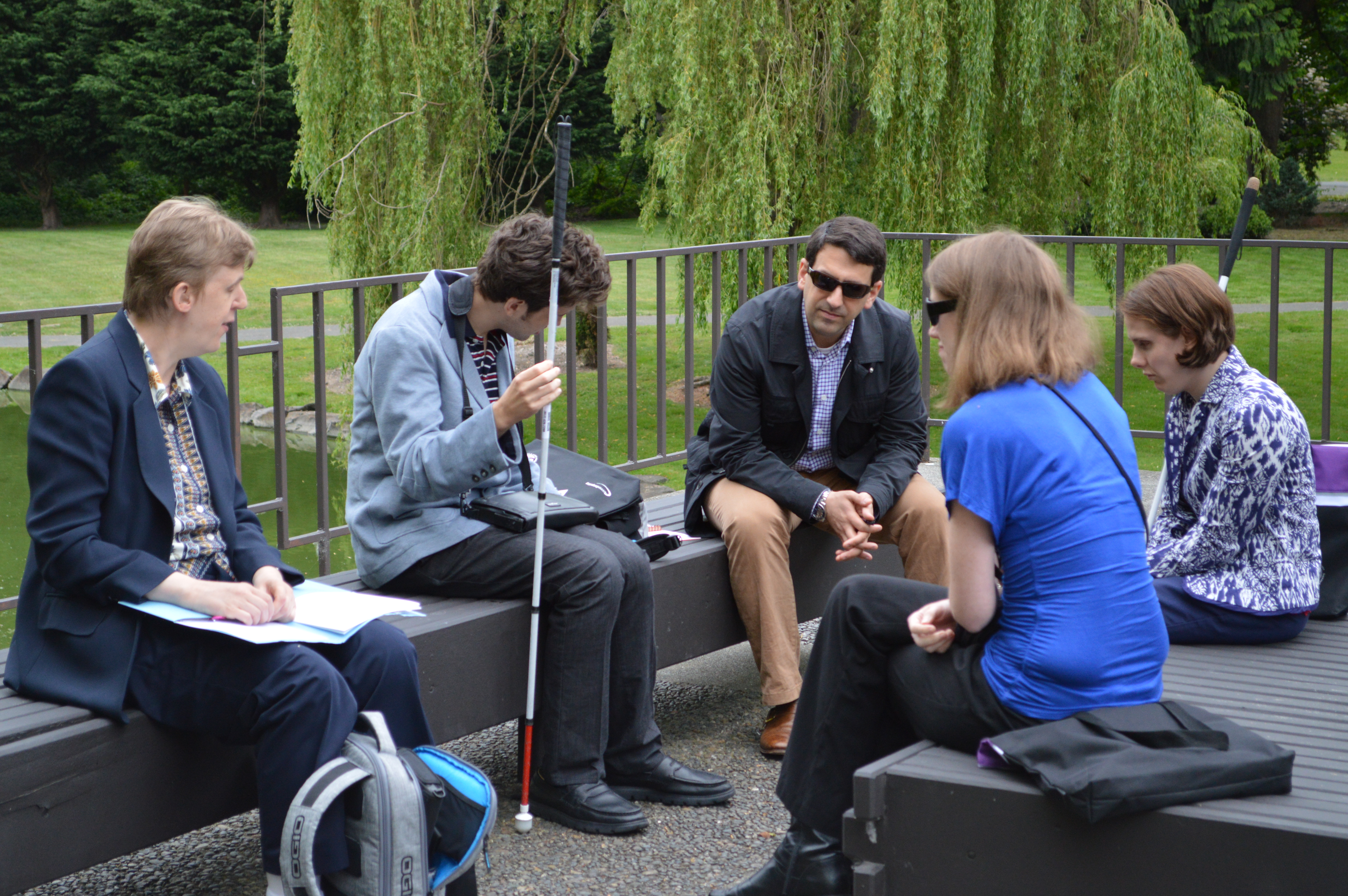
UW CSE logoOn June 2-3, the Empowering Blind Students in Science and Engineering workshop will be held at the Talaris Conference Center. This one-of-a-kind workshop brings together 18 blind undergraduate students from around the country and professionals from a broad range of field – some blind, some not – for one-on-one mentoring and networking. The program will focus on learning from each other to maximize chances for a successful career and on raising awareness of the potential of blind professionals in the workplace.

The event is the brainchild of UW CSE Professor Richard Ladner, who has worked for years in accessibility research.

Learn more about the workshop here. UW Today post here. Read more →

“Shocker! The historians are against change!”

indexThat was the comment of CSE professor Ed Lazowska’s younger son – a lawyer who majored in economics and political science as an undergraduate, so hardly a “true believer” – upon reading a Washington Post column attacking Lazowska’s recent letter in the New York Times regarding the move to offer computer science in K-12 schools across the nation.

Read Lazowska’s letter here.  Read the Washington Post column here. Learn about Neanderthals here. Read more →

Trifacta – a big data startup with UW ties – secures $25 million Series C round

Trifacta logoTrifacta, a San Francisco big data company co-founded by UW CSE professor Jeffrey Heer and UC Berkeley professor Joe Hellerstein – has completed a $25 million Series C financing round, led by Seattle-based Ignition Partners.

Trifacta provides a way to approach the bottlenecks in data analytics from a human perspective.  The company is pioneering a Data Transformation Platform to prepare data for analysis.

Read more in Venture Beat here; TechCrunch here.  Press release from Trifacta here. Read more →

DARPA unveils hack-proof drone based on UW, UCSD research

Reaper-Landed-490x349Defense Tech writes:

“The Pentagon’s research arm unveiled a new drone built with secure software that prevents the control and navigation of the aircraft from being hacked.

“The program, called High Assurance Cyber Military Systems, or HACMS, uses software designed to thwart cyber attacks. It has been underway with the Defense Advance Research Project Agency for several years after originating at the University of California, San Diego and the University of Washington, said Kathleen Fisher, HACMS program manager for DARPA.

“‘The software is designed to make sure a hacker cannot take over control of a UAS. The software is mathematically proven to be invulnerable to large classes of attack,’ Fisher said.”

UW CSE professor (and UCSD Ph.D. alum) Yoshi Kohno and UCSD CSE professor (and UW CSE Ph.D. alum) Stefan Savage were the PIs.

Read more here. Read more →

UW CSE honors inspirational teachers

IMG_2906In every student’s academic life, there are some truly special teachers who provide life-changing inspiration – who cause the student to recognize what s/he can achieve and what s/he should aspire to.

UW CSE invites our undergraduates to nominate their most inspirational teachers from middle school, upper school, or community college.  We host these teachers, their partners, and the students who nominated them at a dinner in the spring.

All teachers – from preschool to graduate school – are in the same business. Parents entrust us with their most prized possession – their children. We do the best we can, for a few short years, to nurture their creativity and guide their development, then we send them on to the next stage of their lives.  Later on, we see what they’ve become, and we take joy and pride in having played at least a small role in the development of these amazing young people.

UW CSE is proud to honor our 2013-14 Inspirational Teachers – 57 remarkable individuals, listed here.  Thanks for all you do. Read more →

Xconomy on AnswerDash and the UW Information School

AnswerDash-logoA nice article in Xconomy discusses AnswerDash, a startup based on a four-year research effort by then-iSchool Ph.D. student Parmit Chilana (now a professor at the University of Waterloo) and her faculty advisors, iSchool professors (and CSE adjunct professors) Jake Wobbrock and Andy Ko:

“The University of Washington Information School has more than a century of history, and now, it’s first startup company, AnswerDash, which aims to improve self-service online help for e-commerce, government, and other Websites.

“While startup companies and technologies with commercial potential regularly emerge from the larger UW Computer Science & Engineering department, that hasn’t been the case with the iSchool, which fosters technology innovation in areas such as human-computer interaction and information management and science.”

Read more here. Read more →

« Newer PostsOlder Posts »