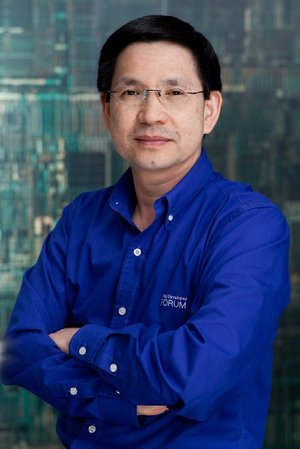
 Our exceptionally modest and exceptionally accomplished 1989 Ph.D. alum Wen-Hann Wang has been named Vice President and Managing Director of Intel Labs, succeeding Justin Ratner, who has retired from Intel.
Here’s a profile of Wen-Hann from the Autumn 2011 issue of Most Significant Bits, the UW CSE alumni publication. And another profile from Wen-Hann’s receipt of UW CSE’s 2012 Alumni Achievement Award.
Wen-Hann gives great credit to his UW CSE Ph.D. advisor, Jean-Loup Baer, for influencing his career. Interestingly (but not surprisingly), at his UW CSE Distinguished Lecture ten days ago, Berkeley’s Dave Patterson credited Jean-Loup for pointing him towards computer science graduate school when Dave was an intellectually wandering undergraduate at UCLA and Jean-Loup – then a UCLA Computer Science Ph.D. student – befriended him.
Hearty congratulations to Wen-Hann on this latest of many achievements! Read more →
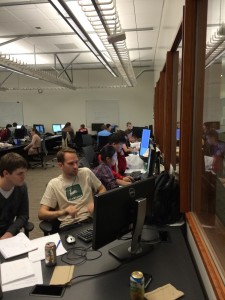 A good time was had by all! Read more →
 UW CSE’s networking research group has swept the Best Paper Awards at the three top venues this year: NSDI, SIGCOMM, and now Mobicom. (Not to mention Shyam Gollakota’s receipt of the SIGCOMM Doctoral Dissertation Award and the ACM Doctoral Dissertation Award!)
Go team! Read more →
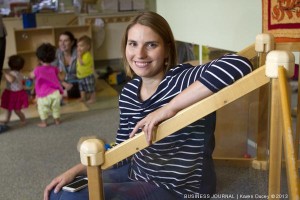 TechFlash interviews HCDE professor (and CSE adjunct professor) Julie Kientz:
“Julie Kientz wants to make technology more human. Not by creating human-like robots or apps that talk like people, but by taking existing technology and finding ways to use it to better people’s lives.”
Read more here. Read more →
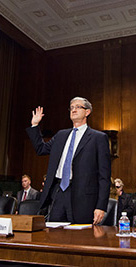 Seemingly minor bits of information collected by the National Security Agency, such as the phone numbers that citizens dial, can reveal far more personal information than is commonly believed, Princeton University professor and UW CSE Ph.D. alum Ed Felten told the U.S. Senate Judiciary Committee on Tuesday, Oct. 1.
Felten said that searching for patterns in large collections of metadata “can now reveal startling insights about the behavior of individuals or groups.”
“It is no longer safe to assume that this ‘summary’ or ‘non-content’ information is less revealing or less sensitive than the contents it describes,” Felten said. “Just by using new technologies such as smart phones and social media, we leave rich and revealing trails of metadata as we move through daily life. Many details of our lives can be gleaned by examining those trails.”
Felten told the committee members that it was critical for legislators who make the laws and judges who review them to have a firm grasp of the technical implications of their decisions. He urged them to take advantage of the nation’s technological experts when grappling with the policy implications of advancing technology.
Felten – Professor of Computer Science and of Public Affairs at Princeton, Director of Princeton’s Center for Information Technology Policy, and first Chief Technologist of the Federal Trade Commission from 2001-12 – received the UW CSE Alumni Achievement Award in 2013. He is a Member of the National Academy of Engineering and a Fellow of the American Academy of Arts & Sciences.
Read more here.
Read more →
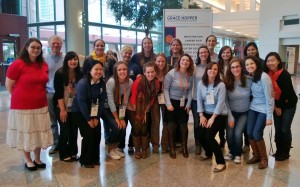
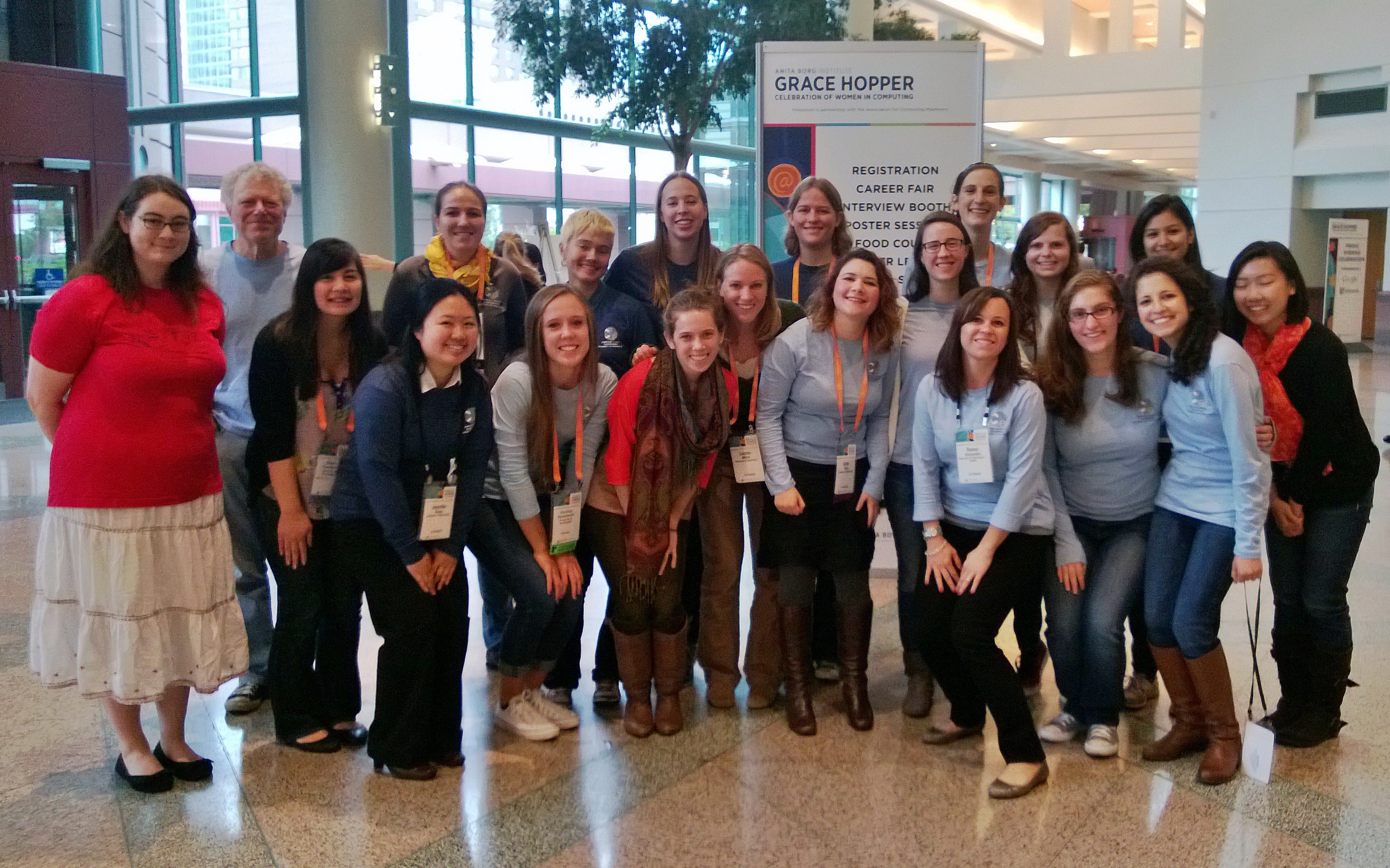
UW CSE attendees at the 13th Grace Hopper Celebration of Women in Computing
The Grace Hopper Celebration of Women in Computing is a series of conferences, dating back to 1994, designed to bring the research and career interests of women in computing to the forefront. This year’s conference – the 13th – was held in Minneapolis, MN, with an estimated 4,000 attendees.
UW’s strong commitment to diversity is reflected in our perennial position among the best-represented schools at the Hopper conference, regardless of location. This year was no exception. UW participants were a mix of graduate students, undergraduate students, faculty, and staff members – the vast majority from CSE, but also with participation from EE and HCDE. HCDE professor (and CSE adjunct professor) Cecelia Aragon participated in a panel discussion about building leadership skills. CSE presenters include graduate students Shiri Azenkot and Kyle Rector, undergraduate alum Kristine Delossantos (now at WhitePages), and graduate student Nicki Dell, who led a project for Saturday’s Open Source Day. In the “friends and family” department, Fiona Condon – daughter of UW CSE Ph.D. alum (and UBC department head) Anne Condon and UW CSE technical staff member (and CSE Masters alum) Scott Rose – chaired a panel; Fiona is a Brown alum now crafting code at Etsy.
Why choose CSE? Check it out here! Read more →
 The paper “Whole-Home Gesture Recognition Using Wireless Signals” by CSE’s Qifan Pu, Sidhant Gupta, Shyam Gollakota, and Shwetak Patel has received the Best Paper Award from Mobicom 2013.
The paper describes WiSee, a novel interaction interface that leverages ongoing wireless transmissions in the environment (e.g., WiFi) to enable whole-home sensing and recognition of human gestures. In a nutshell, your motion distorts the ambient signal in ways that can be detected, interpreted, and used to control devices.
Read the paper here. Learn about WiSee here. Read more →
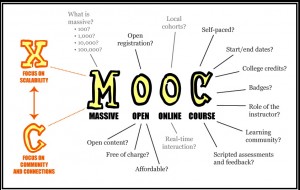 UW News features a report on 2012-13 UW MOOC experience. Three of the four courses examined were CSE courses: Programming Languages (Dan Grossman), Computer Networks (David Wetherall, Arvind Krishnamurthy, and John Zahorjan), and Introduction to Data Science (Bill Howe).
Read the article here – lots of interesting material is linked. Read more →
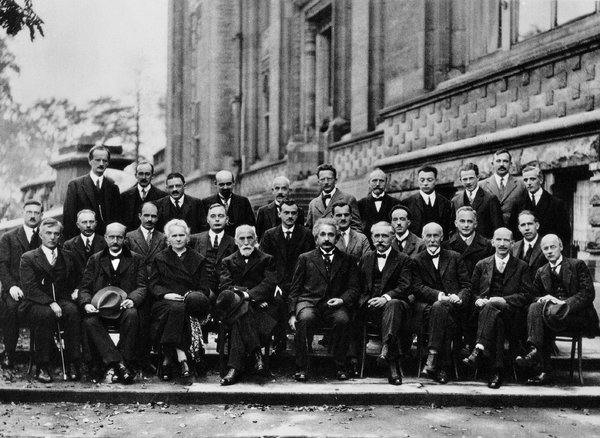 A New York Times article that should be required reading for everyone.
“In the end, I graduated summa cum laude, Phi Beta Kappa, with honors in the major, having excelled in the department’s three-term sequence in quantum mechanics and a graduate course in gravitational physics, all while teaching myself to program Yale’s mainframe computer. But I didn’t go into physics as a career. At the end of four years, I was exhausted by all the lonely hours I spent catching up to my classmates, hiding my insecurities, struggling to do my problem sets while the boys worked in teams to finish theirs. I was tired of dressing one way to be taken seriously as a scientist while dressing another to feel feminine. And while some of the men I wanted to date weren’t put off by my major, many of them were.
“Mostly, though, I didn’t go on in physics because not a single professor — not even the adviser who supervised my senior thesis — encouraged me to go to graduate school. Certain this meant I wasn’t talented enough to succeed in physics, I left the rough draft of my senior thesis outside my adviser’s door and slunk away in shame. Pained by the dream I had failed to achieve, I locked my textbooks, lab reports and problem sets in my father’s army footlocker and turned my back on physics and math forever.”
Not enough has changed in the 35 years since then.
Read the article here. Read more →
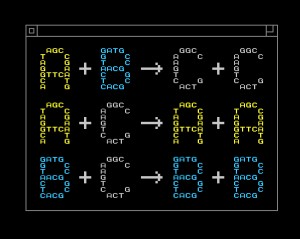 UW CSE professor Georg Seelig and collaborators have developed a programming language for chemistry that they hope will streamline efforts to design a network that can guide the behavior of chemical reaction mixtures in the same way that embedded electronic controllers guide cars, robots and other devices. In medicine, such networks could serve as “smart” drug deliverers or disease detectors at the cellular level.
UW News article here. Pentagon Post article (milliseconds before the shutdown …) here. Read more →