 UW CSE’s Oren Etzioni was interviewed today on NPR’s “Morning Edition” regarding the forthcoming Jeopardy match pitting IBM’s Watson AI system against two human champions.
“Artificial intelligence experts say that even with the occasional error, Watson has what it takes to perform very well against humanity’s best. Etzioni expects to see a Watson win in the competition, which will air Feb. 14, 15 and 16. ‘Does that mean that it’s ‘Game Over’ for humans, that robots will keep us as pets? Absolutely not,’ Etzioni says. ‘But it does mean it’s a demonstration that we’ve significantly expanded the envelope of what computers can really achieve.'”
Listen to the interview here. Read a transcript here. (Former UW CSE faculty member Henry Kautz is also quoted.)
Related: An interesting New York Times article by John Markoff on “Artificial Intelligence” vs. “Intelligence Augmentation,” dating back to John McCarthy vs. Doug Engelbart, mentions UW CSE’s Foldit protein folding game. Read more →
 UW CSE undergraduate Golf Sinteppadon, in collaboration with KEXP’s Rachel Ratner and musician Keith Whiteman, has released Seattle Band Map, an interactive website that showcases the Pacific Northwest’s vibrant music scene by documenting the thousands of bands who have performed throughout the decades, and exploring how these bands are interconnected through personal relationships and collaborations. Read more →
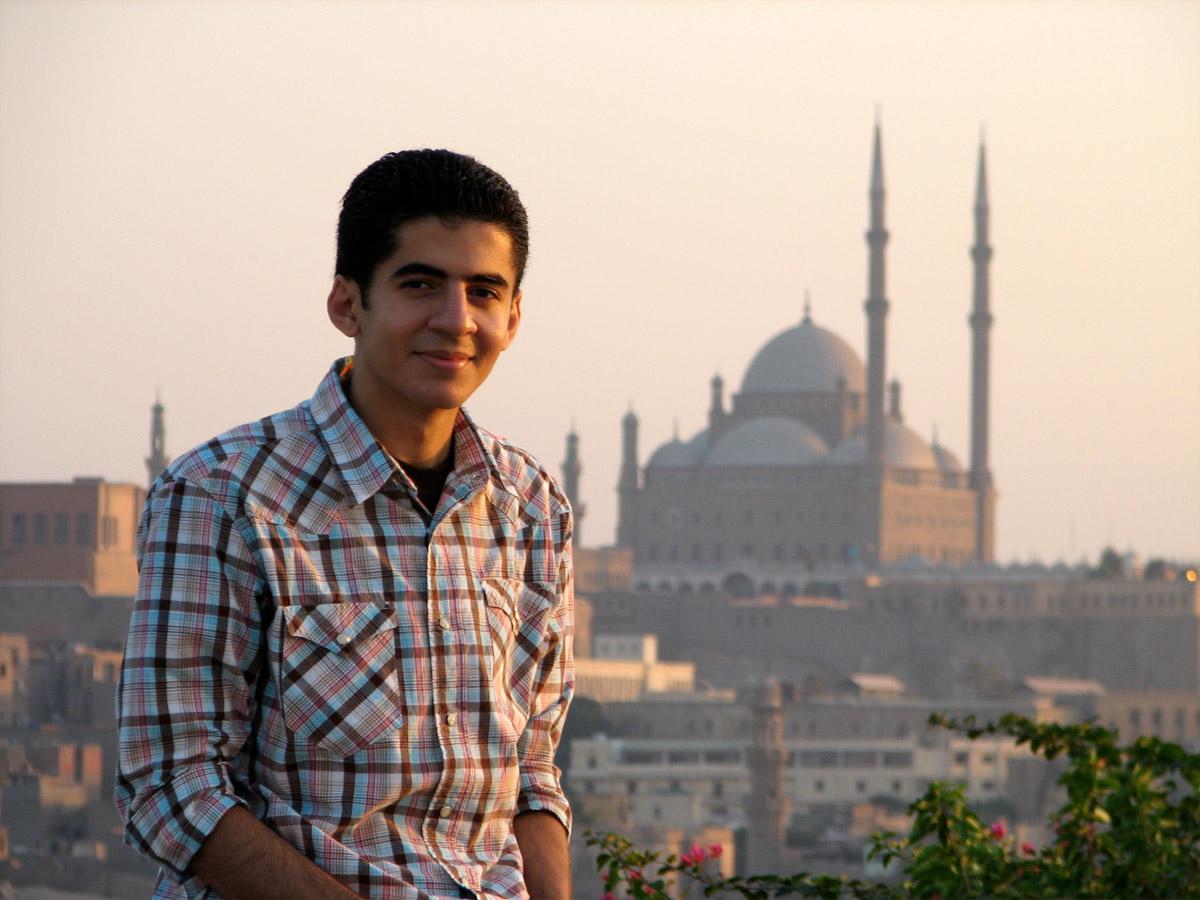
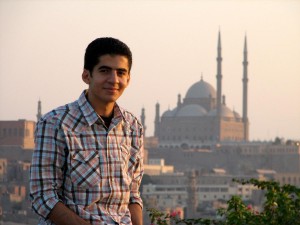 A recent TechCrunch post describes UW CSE 2007 alum Mohamed El-Zohairy‘s return to Egypt to participate in the revolution with his family. Mohamed’s Facebook page contains fascinating posts from before and after his return to Egypt. Read more →
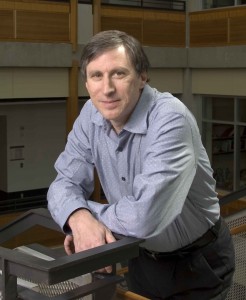 Hank Levy, Wissner-Slivka Chair in Computer Science & Engineering and CSE department chair, has been elected to the National Academy of Engineering, one of 9 leading computer scientists and computer engineers elected in the NAE class of 2011, announced today.
Hank was recognized “For contributions to the design, implementation, and evaluation of operating systems, distributed systems, and processor architectures.”
Quoting from the NAE: “Members are elected to NAE by their peers (current NAE members). Election to membership is one of the highest professional honors accorded an engineer. Members have distinguished themselves in business and academic management, in technical positions, as university faculty, and as leaders in government and private engineering organizations.”
Hank joins Susan Eggers and Ed Lazowska as UW CSE members of NAE.
See UW press release here; NAE press release here. Read more →
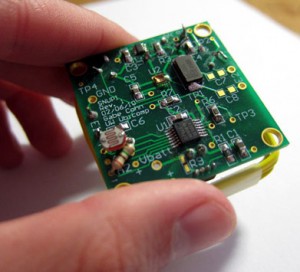 SNUPI (Sensor Nodes Utilizing Powerline Infrastructure) nodes are ultra-low-power, general-purpose wireless sensor nodes that transmit their data by coupling over the powerline to a single receiver attached to the powerline in the home. SNUPI nodes provide whole-home coverage while consuming less than 1 mW of power when transmitting (one order of magnitude lower than existing nodes), and a new custom CMOS transmitter consumes only 65 µW (two orders of magnitude lower than existing nodes). SNUPI was one of five technologies features at the Technology Alliance “Innovation Showcase.” Read more →
 In 1997, an IBM Artificial Intelligence system named Deep Blue defeated the human world champion in a chess match.
The game of Jeopardy! – which requires 3-second responses and the understanding of English questions, puns, and a massive knowledge base of facts – is a much harder challenge. On February 14th, 15th, and 16th, an IBM AI system named Watson will be pitted against two human champions.
UW CSE will host a viewing event on the second of these nights – Tuesday February 15th. The event will take place from 7:00-8:15 in EE105. Professors from UW Computer Science & Engineering and experts from IBM and Microsoft will be on hand to provide commentary.
Please join us! Win, lose, or draw, this is a monumental step for computer science.
Here’s an announcement of the viewing event. Read more →
The January issue of New Scientist features an article on the resurgence of artificial intelligence. Key to the renaissance is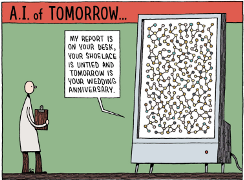 combining probabalistic programming with classical AI techniques. UW CSE Professor Pedro Domingos is quoted and UW AI research is featured.
Read the full article here. Read more →
 At the 2011 Computers, Privacy & Data Protection conference in Brussels, Belgium, UW CSE PhD students had a strong showing, winning both the Multidisciplinary Privacy Award award and an honorable mention.
The goal of the CPDP multi-disciplinary privacy research award is to promote the need for and reward the results of multidisciplinary research, with the participation of the representative of diverse constituencies engaged in the investigation of the new ideas in data protection. Any paper published or accepted for publication in 2010 was eligible to win.
UW CSE grad student Alexei Czeskis and alumni Iva Dermendjieva and Hussein Yapit won the award for their work on balancing privacy and value tensions in mobile parenting technologies (published at SOUPS 2010 with co-authors Alan Borning, Batya Friedman, Brian Gill, and Tadayoshi Kohno). UW CSE PhD student Tamara Denning won an honorable mention for her work on analyzing human values and security for wireless implantable medical devices (published at CHI 2010 with co-authors Alan Borning, Batya Friedman, Brian Gill, Tadayoshi Kohno, and William Maisel).
Congratulations! Read more →
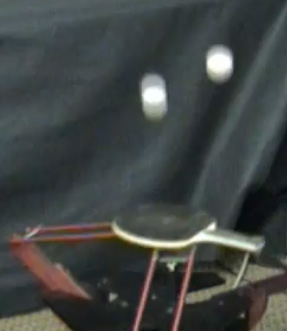 This video, from Paul Kulchenko and Emo Todorov in UW CSE’s Movement Control Laboratory, is pretty amazing. The accompanying text provides background. Read more →
 An editorial in the Tacoma News Tribune:
“A recent story in The Seattle Times vividly illustrated the tight connection between college opportunity and the state economy.
“The engineering site director for Google in the Seattle region, Brian Bershad, told the Times that he can’t get enough computer scientists and computer engineers from the University of Washington. ‘If the UW could produce 1,000 amazing engineers every year,’ he said, ‘we’d find a way to hire them.’ …
“When a state starts to strangle its universities, bad consequences follow. Students with limited means get frozen out of school. Bright students go to school elsewhere, and they often never come back to enrich the economy back home. Competing out-of-state universities start spiriting away the most talented faculty members, sometimes pulling big grants and private R&D money along with them. High-tech companies that want a university nearby decide to locate elsewhere.
“These are among the reasons the cash-strapped Legislature must give Washington’s universities more leeway …”
Read the editorial here. Read the original Seattle Times story here. Check out photos of UW CSE’s recent Winter Recruiting Fair here. Read more →