UW CSE alum Judy Maleng hosted CSE faculty and students from the early years (when UW CSE was purely a graduate program) to celebrate the 80th birthday of Hellmut Golde, who played an instrumental role in launching UW CSE. Photos of the event are posted here.
The same group convened at Judy’s 7 years ago to celebrate the 80th birthday of Jerre Noe, founding chair of UW CSE. Photos of that event can be seen here.
Our warm thanks go out to Judy for being a key component of the “glue” that keeps “the UW CSE family” together!
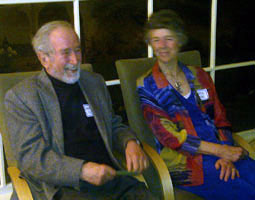
Among the faculty and alum attendees at the Golde celebration were Jean-Loup Baer (faculty), Janet Geoffroy (M.S. 1970), Hellmut Golde (faculty), Dick Hamlet (Ph.D. 1971), Bob Herriot (ex-faculty), Garry Kampen (Ph.D. 1973), Tom Kuffel (1970’s CSE ski day participant), Ed Lazowska (faculty), Judy Maleng (M.S. 1971), Margarete Noe (Jerre’s wife), David Notkin (faculty), Gary Sager (Ph.D. 1972), Alan Shaw (faculty), Sally Swedine (M.S. 1971), Steve Tanimoto (faculty), John Torode (Ph.D. 1972), and Mary Zosel (Ph.D. 1971). Read more →
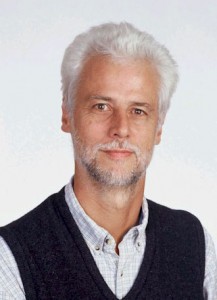 CSE’s Richard Ladner has been selected to deliver the 2010 Samuel E. Kelly Distinguished Faculty Lecture. The event will take place on April 22 at 6:30 p.m. (reception at 5:30 p.m.) in Johnson Hall 102 on the UW campus.
Named in honor of the University of Washington’s first Vice President for the Office of Minority Affairs, the Samuel E. Kelly Distinguished Faculty Lecture is dedicated to acknowledging the work of UW’s distinguished faculty by spotlighting nationally recognized research focusing on diversity and social justice.
Ladner is being recognized for his outstanding research and service in creating accessible technology for the blind, sight-impaired, deaf, and hearing-impaired. This work has been recognized by a number of national awards.
Congratulations Richard! See the lecture announcement here. Read more →
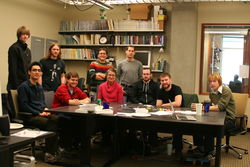 Beneath their smooth exteriors, modern computers behave in wildly unpredictable ways. UW CSE faculty members Luis Ceze, Mark Oskin, and Dan Grossman and UW grad students Owen Anderson, Tom Bergan, Joseph Devietti, Brandon Lucia, and Nick Hunt have found a way to “tame” multiprocessor computers.
“‘With older, single-processor systems, computers behave exactly the same way as long as you give the same commands. Today’s computers are non-deterministic. Even if you give the same set of commands, you might get a different result,’ Ceze said.”
The team has developed a way to get modern, multiple-processor computers to behave in predictable ways, by automatically parceling sets of commands and assigning them to specific places. Sets of commands get calculated simultaneously, so the well-behaved program still runs faster than it would on a single processor.
Read the full UWeek article here. More info on the group’s research is here. Read more →
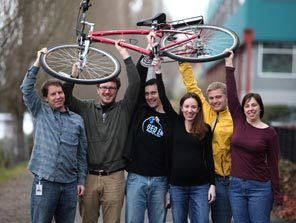 Google’s new bicycle route mapping feature, launched today, bears a strong UW CSE imprint.
The project was conceived by UW CSE alum Andy Schwerin. Among the 7 engineers on the team were UW CSE alums Scott Shawcroft and Ryan Sturgell. The Site Director of the Google Seattle engineering office, where the work was done, is former UW CSE faculty member Brian Bershad.
Read a Seattle Times article here. Read more →
 OneBusAway, a suite of tools to make using public transit easier for King County riders, has won the Washington Technology Industry Association’s 2010 Industry Achievement Award in the category “Best Use of Technology in the Government, Non-Profit, or Education Sector.”
OneBusAway is the passion of UW CSE graduate student Brian Ferris.
Congratulations to Brian and the OneBusAway team! Try it! Read more →
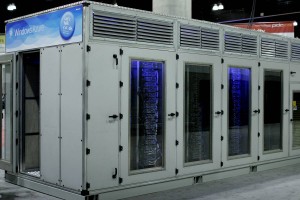
Microsoft ITPAC
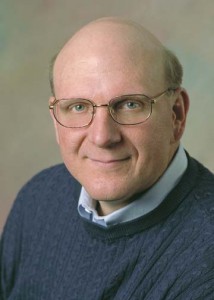
Steve Ballmer
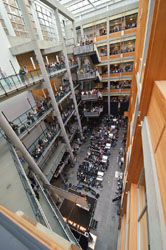
CSE Atrium
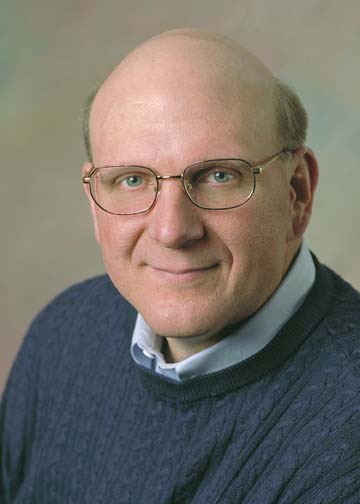
Steve Ballmer, Microsoft CEO, will discuss what’s ahead for computing, with a particular focus on how cloud computing will change the way people and businesses use technology. The event will take place on Thursday March 4 at 10 a.m. in the Microsoft Atrium of the Paul G. Allen Center for Computer Science & Engineering. Plentiful open seating and standing room will be available. Please join us for what’s sure to be an interesting talk about the world of tech.
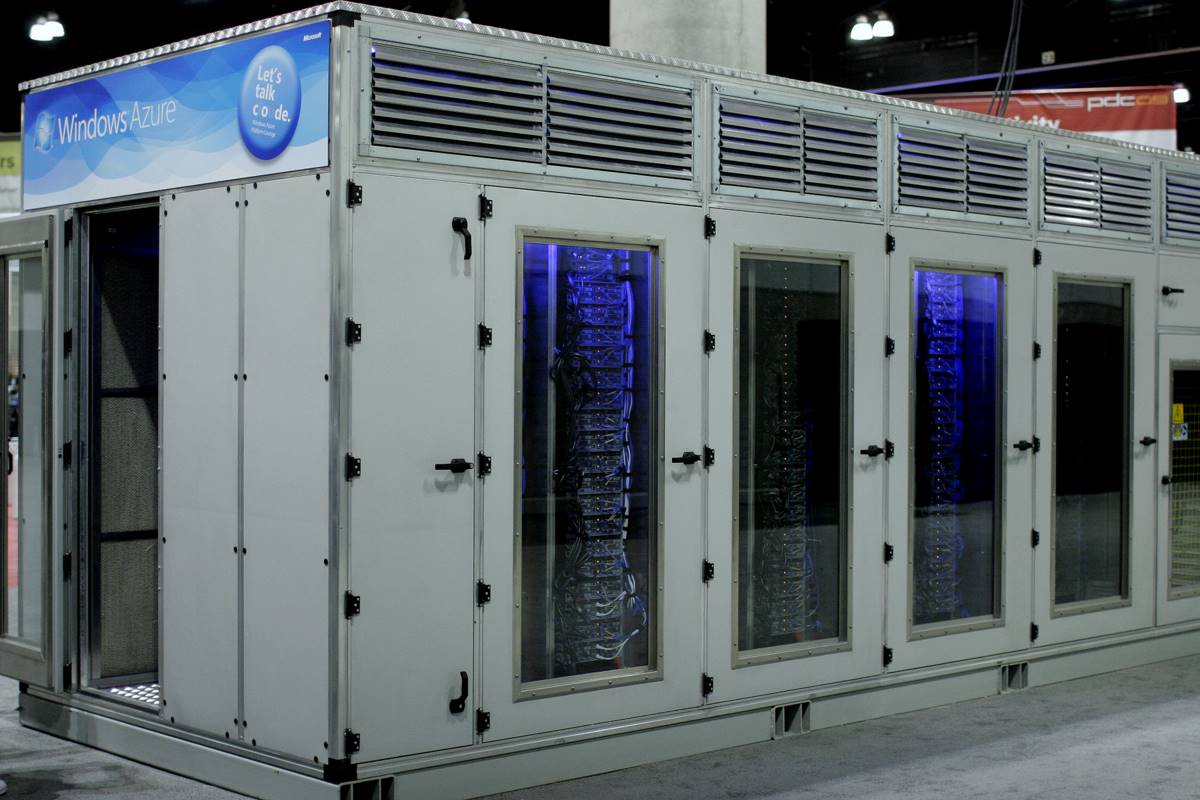
A portable Microsoft datacenter, housed in a cargo container, will be available for tours all day long. Microsoft’s IT Pre-Assembled-Component (ITPAC) is one example of the company’s strategy to modularize the entire datacenter. During the tour, learn about the design decisions and functionality that will power the next generation of technology.
See Microsoft information on the talk, plus webcast information, here. Dan Reed blog post here. Microsoft “Azure cloud science” TechFest web page, including a UW oceanography collaboration, here. TechFlash post here. Xconomy post here.
Maps and directions here. UW webcast information here. Web-archived videos of the event will be linked here and from the Microsoft site.
Following the event: TechFlash post here. Xconomy post here. Seattle Times article here. Seattle PI article here. c|net here. eCommerce Times here. Photographs by Bruce Hemingway here. Photographs by Microsoft here. Read more →
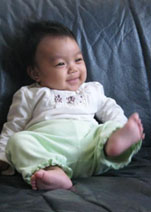
Trinh Huynh
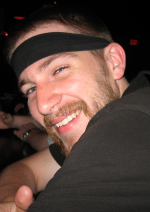
Brandon Lucia
Congratulations to UW CSE’s Brandon Lucia and Trinh Huynh, who have just received IBM Graduate Fellowships! Brandon works on computer architecture with Luis Ceze, and Trinh works with Paul Beame on theoretical computer science. Read more →
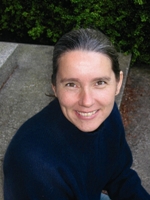
Anne Condon
Anne Condon, Professor of Computer Science and Associate Dean for Faculty Affairs and Strategic Initiatives at the University of British Columbia, and a UW CSE Ph.D. alumna, has received the 2010 Computing Research Association A. Nico Habermann Award. Anne was recognized for her long-standing and impactful service toward the goal of increasing the participation of women in computing research.
This award honors the late A. Nico Habermann, who led Carnegie Mellon’s computer science department and NSF’s Computer and Information Science and Engineering Directorate, and who was deeply committed to increasing the participation of women and underrepresented minorities in computing research.
The 2008 recipient of the Habermann Award was UW CSE professor Richard Ladner, Anne’s Ph.D. advisor!
Read the CRA post here. Read more →
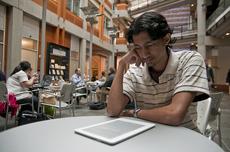 The UW Daily reports on UW CSE’s participation in the Amazon.com Kindle educational pilot project.
“The Kindle went through a pilot test at seven universities across the nation to see how students would react to the product as a tool for school. The CSE Department handed out 42 Kindles this year to the department’s graduate students as part of the trial program … Overall, the responses of CSE graduate students highlighted just how often students take for granted the layout and effectiveness of regular, physical textbooks.”
Read the article here. Read more →
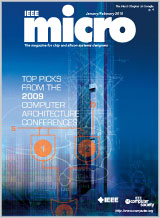 Annually, IEEE Micro re-prints a small number of “Top Picks” from the preceding year’s research publications in computer architecture. One of this year’s “Top Picks” was the paper “DMP: Deterministic Shared-Memory Multiprocessing” by UW CSE’s Joseph Devietti, Brandon Lucia, Luis Ceze, and Mark Oskin.
Special issue table of contents here. DMP paper here.
Congratulations to Joseph, Brandon, Luis, and Mark! Read more →