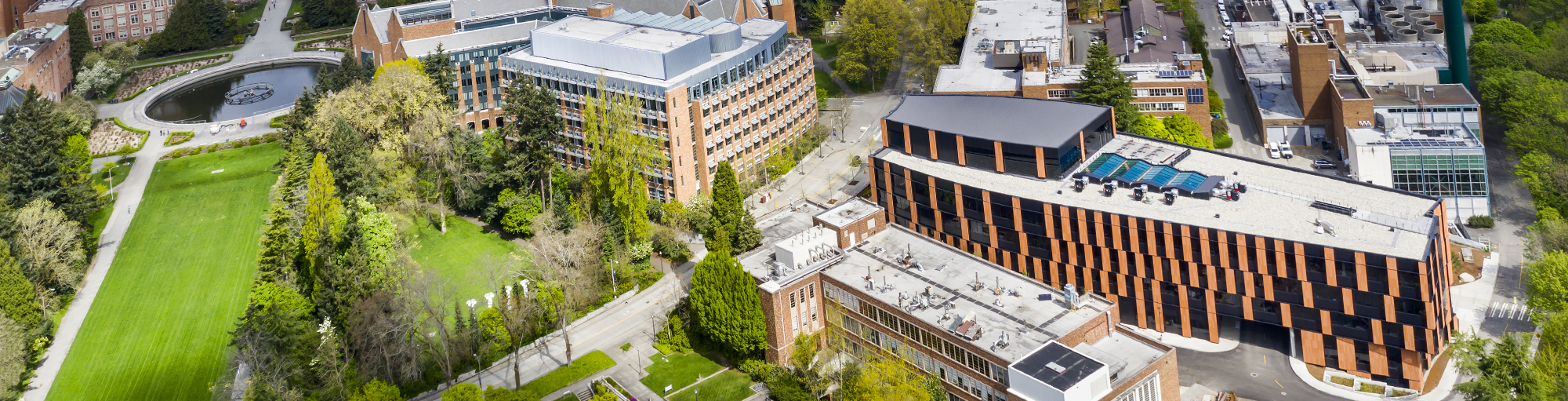
 The New York Times features several projects from UW CSE’s Graphics and Imaging Laboratory.
“Rome wasn’t built in a day, but in cyberspace it might be. Computer science researchers at the University of Washington and Cornell University are deploying a system that will blend teamwork and collaboration with powerful graphics algorithms to create three-dimensional renderings of buildings, neighborhoods and potentially even entire cities …
“The PhotoCity game is already being played by teams of students at the University of Washington and Cornell, and the researchers plan to open it to the public in an effort to collect three-dimensional renderings in cities like New York and San Francisco. Contestants will be able to use either an iPhone application that uses the phone’s camera, or upload collections of digital images.
“In adopting what is known as a social computing or collective intelligence model, they are extending an earlier University of Washington research effort that combined computing and human skills to create a video game about protein folding.
“The game, Foldit, was released in May 2008, allowing users to augment computing algorithms, solving visual problems where humans could find better solutions than computers. The game quickly gained a loyal following of amateur protein folders who became addicted to the challenges that bore a similarity to solving a Rubik’s Cube puzzle.”
Read the article here. Play PhotoCity here. Play Foldit here. See all the great work from UW CSE’s Graphics and Imaging Laboratory here. Read more →
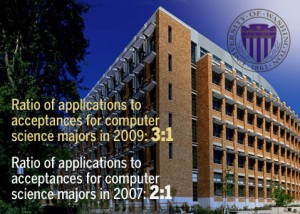 Network World profiles “10 hot computer science schools,” including the University of Washington.
“Enrollment in the top U.S. computer science programs as well as applications for next year are up significantly, as more college students discover that their job prospects are better — and their starting salaries higher — if they have a computer-related degree. Here are the latest enrollment figures from 10 of the hottest computer science schools in the nation.”
The article starts here. The UW profile is here. Read more →
 Dr. Arun Majumdar became the first Director of the Advanced Research Projects Agency – Energy (ARPA-E), the country’s only agency devoted to transformational energy research and development, in October 2009.
His visit to UW CSE includes one-on-one meetings and a roundtable with scientists and engineers, a roundtable with entrepreneurs and investors, a public lecture “ARPA-E: Addressing the Sputniks of our Generation,” a meeting with United States Senator Maria Cantwell, and a meeting with the Washington Clean Energy Leadership Council.
Majumdar’s visit to UW CSE closely follows visits by Peter Lee, Director of the DARPA Transformational Convergence Technology Office, and Dan Kaufman, Director of the DARPA Information Processing Techniques Office.
Further information here. UW energy-related research here. TechFlash post reporting on the event here. Xconomy post here.
Web archive of talk here. Read more →
Luis Ceze
Li Zhang
Karen Liu
The 2010 class of Sloan Research Fellowship recipients has been announced. Once again, the UW CSE family is well represented!
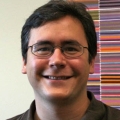
UW CSE faculty member Luis Ceze, a computer architect, was recognized — the seventeenth (17!) UW CSE faculty member to have received this honor.
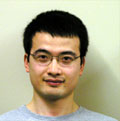
Additionally, UW CSE Ph.D. alums Karen Liu (a faculty member at Georgia Tech) and Li Zhang (a faculty member at the University of Wisconsin, following a postdoc at Columbia University) were recognized. Both did their doctoral work in UW CSE’s outstanding Graphics and Imaging Laboratory (GRAIL).
Congratulations to Luis, Karen, and Li!
See the Sloan Foundation announcement here. University Week article here. Read more →
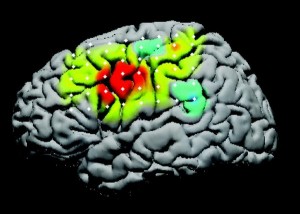 “Harnessing brain signals to control keyboards, robots or prosthetic devices is an active area of medical research. Now a rare peek at a human brain hooked up to a computer shows that the two can adapt to each other quickly, and possibly to the brain’s benefit.”
UW CSE’s Raj Rao, his grad student Kai Miller, and a team of researchers looked at signals on the brain’s surface while using imagined movements to control a cursor. Electrodes attached to the surface of the human brain show that imagining movements to control a computer cursor generates larger-than-life brain signals in less than 10 minutes of training.
“People have been looking at imagined movements as a way to control computers for a long time. This study provides a glimpse of the underlying neural machinery,” said Rao.
Read the full paper in the Proceedings of National Academy of Sciences here.
Read the UWeek article here. Read more →
 As noted in a previous post, Mattel has been running a web-based contest to choose Barbie’s next career.
The results are in! “You voted! We listened!!” (Even if “you” is a bot …) The winner of the popular vote is … Computer Engineer Barbie!
The New York Times reports: “Barbie has come a long way since 1992, when the blond bombshell of a doll was programmed to say, ‘Math class is tough.’ Barbie, whose various careers have taken her from aerobics instructor to supermodel to business executive, will next be a computer engineer, a career chosen by half a million Barbie fans.” Read the full article here. Read more →
 A TechFlash article on the overlapping businesses of Microsoft and Amazon.com
“‘I don’t view this as ‘competition vs. cooperation.’ There is plenty of business out there,’ said Ed Lazowska, computer science professor at the University of Washington. ‘Users — customers — are going to prefer different approaches. What’s great for us, for our future as a tech region, is that Amazon.com has emerged as one of the nation’s great technology companies, and that two of the three big players in ‘cloud infrastructure services’ are headquartered here. The third, Google, also has a major presence in the region.”
Read the full article here. Read more →
 UW CSE will host a half-day Xconomy forum on March 29th. Titled “What’s Your Breakthrough Idea?,” the event will feature Lee Hood, Nathan Myhrvold, and UW CSE’s Steve Seitz and Dan Weld, among others. Read all about it here. Read more →
 UW CSE’s Dave Bacon has the cover article in this month’s Communications of the ACM.
“It is impossible to imagine today’s technological world without algorithms: sorting, searching, calculating, and simulating are being used everywhere to make our everyday lives better. But what are the benefits of the more philosophical endeavor of studying the notion of an algorithm through the perspective of the physical laws of the universe? This simple idea, that we desire an understanding of the algorithm based upon physics seems, upon first reflection, to be nothing more than mere plumbing in the basement of computer science. That is, until one realizes that the pipes of the universe do not seem to behave like the standard components out of which we build a computer, but instead obey the counterintuitive laws of quantum theory. And, even more astoundingly, when one puts these quantum parts together, one gets a notion of the algorithm—the quantum algorithm—whose computational power appears to be fundamentally more efficient at carrying out certain tasks than algorithms written for today’s, nonquantum, computers. Could this possibly be true: that there is a more fundamental notion of algorithmic efficiency for computers built from quantum components? And, if this is true, what exactly is the power of these quantum algorithms?”
Read the full article here. Read Dave’s Quantum Pontiff blog here. Read more →
 Five months ago, Peter Lee took a leave of absence as Head of the Computer Science Department at Carnegie Mellon University to begin a stint at DARPA as the Director of the new Transformational Convergence Technology Office (DARPA/TCTO). TCTO is re-establishing basic research programs in a broad range of rapidly emerging computing-enabled technology areas such as social media, synthetic biology, high-performance computing, and networking, as well as employing a diverse range of innovation strategies including broad community programs, competitions/challenges, and crowd sourcing.
Peter spoke on DARPA and TCTO at the University of Washington on February 2. The talk is inspiring and informative. Watch the streaming video here. Read more →