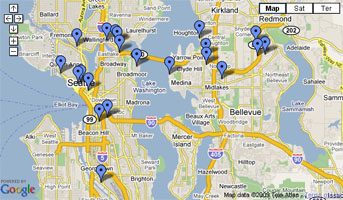
 Our friends at TechFlash have just published a wonderful “Geek’s Guide to Seattle” – twenty “must see” tourist stops for techies. Among the hotspots:
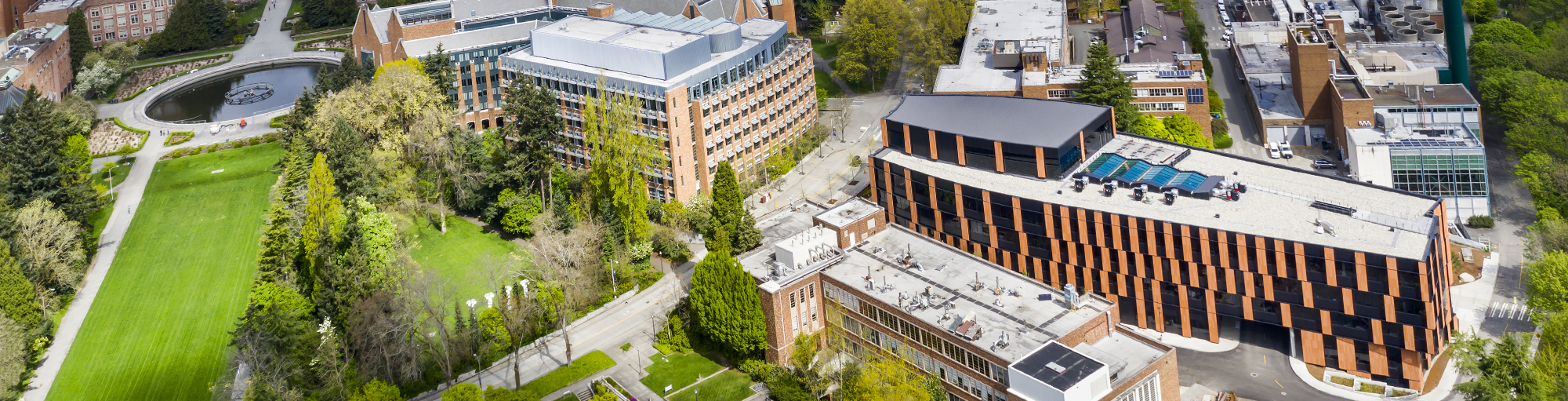
Paul G. Allen Center for Computer Science & Engineering, University of Washington – “This building, named after Microsoft’s co-founder, is the region’s nerve center for computer science education, sending graduates to Microsoft, Google, Amazon and many others.”
Wilcox Hall, University of Washington – “This was the UW computer center, known as Roberts Hall Annex, 40 years ago when two kids named Paul Allen and Bill Gates hung out here, honing their programming skills using punched cards on a CDC 6400 and a Burroughs 5500. Walking through the aging building’s halls today, it’s not hard to picture.”
Birthplace of LiveJournal, Mercer Hall East, University of Washington – “This dorm was at the forefront a social media revolution. Brad Fitzpatrick was a University of Washington Computer Science & Engineering student in 1999 when he developed the pioneering LiveJournal blog service, working primarily in this building.”
See the full Geek’s Guide to Seattle here! Jumbo-sized interactive map version here. Handy printable PDF here. TechFlash article describing the project here. Read more →
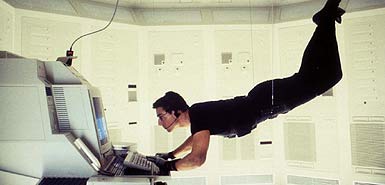 “Imagine if every time you sent a letter, the postman made a copy … This isn’t 1950s Russia but the internet today. Every e-mail you send is stored on not only your computer but also the recipient’s machine; your internet service provider (ISP) will have one too, as will the many servers that have handled your message in its travels across cyberspace … It’s this Big Brother vision that has inspired researchers in Seattle to create the world’s first self-destructing e-mails.”
Read the full article here. Learn more about Vanish here. Read more →
 You can’t make up stuff like this! RFID chips from UW CSE startup Impinj (co-founded by CSE professor Chris Diorio and his now-living-in-Seattle mentor, legendary Caltech professor Carver Mead) are apparently integral to Coca Cola’s new “Freestyle” vending machine. Makes about as much sense as putting an Ethernet in a Xerox machine …
Read the TechFlash post here. Read more →
 Since 1999, the editors of Technology Review have honored the young innovators whose inventions and research they find most exciting; today that collection is the TR35, a list of technologists and scientists, all under the age of 35. Selected from more than 300 nominees by a panel of expert judges and the editorial staff of Technology Review, the TR35 is an elite group of accomplished young innovators who exemplify the spirit of innovation. Their work – spanning medicine, computing, communications, electronics, nanotechnology, and more – is changing our world.
Once again, UW CSE friends and family have scored big in the TR35:
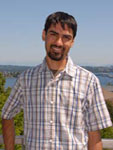 UW CSE professor Shwetak Patel is recognized for using simple sensors to detect residents’ activities. Patel has shown that each electrical appliance in a house produces a signature in the building’s wiring; plugged into any outlet, a single sensor that picks up electrical variations in the power lines can detect the signal made by every device as it’s turned on or off. This monitoring ability could be particularly useful for elder care or for residential or business power conservation, but there was previously no practical way to achieve it, because it would have required numerous expensive sensors. (See TR35 article here.)
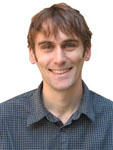 UW CSE’s recent Ph.D. alumnus Jeff Bigham, who will join the University of Rochester as a faculty member this month, is recognized for his work on WebAnywhere, a free screen reader for the sight-impaired that can be used with practically any Web browser on any operating system – no special software required. Users start at webanywhere.cs.washington.edu; from there, they can use keyboard commands to navigate to any Web page. (See TR35 article here.)
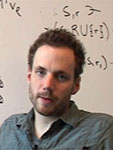 UW CSE’s recent Ph.D. alumnus Adrien Treuille, who joined the Carnegie Mellon faculty last fall, is recognized for his work on complex physics simulations for computer animation and games that can run on everyday PCs. While a grad student, he and fellow CSE grad student Seth Cooper worked with CSE professor Zoran Popovic and UW biochemist David Baker to design a web game called Foldit (http://fold.it/) that allows players to compete in finding minimum-energy folds in proteins, aiding Baker’s world-reknowned research. More than 90,000 users have registered and played since the game’s launch in May 2008. Treuille wonders if someone – most likely even an amateur, since teenage gamers are beating the pants off Ph.D. biochemists at the game – might someday use Foldit to help discover a protein that cures cancer. (See TR35 article here.)
University of Massachusetts professor Kevin Fu was also recognized for work on the security and privacy of implantable medical devices, a collaboration with UW CSE professor Yoshi Kohno, who was recognized by the TR35 two years ago. (See TR35 article here.)
Congratulations to Shwetak, Jeff, Adrien, and Kevin! It’s been a great few years for UW CSE in the TR35. In 2008, the TR-35 recognized UW CSE affiliate faculty members Tanzeem Choudhury (Dartmouth) and Merrie Morris (Microsoft Research), and close collaborator Blaise Aguera y Arcas (Microsoft LiveLabs). In 2007, the TR-35 recognized UW CSE professor Yoshi Kohno, UW CSE graduate student Tapan Parikh (now a faculty member at UC Berkeley), UW CSE Ph.D. alumna Karen Liu (now a faculty member at USC), and UW CSE affiliate faculty member Desney Tan (Microsoft Research).
Go team! See the full list of this year’s winners here. Read more →

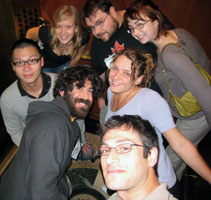 A team representing UW CSE placed second in the USENIX Security Grand Challenge, held during the USENIX Security Conference, August 12-14 in Montreal.
On the day of the competition, each team received a virtualized server, with a number of services. The services were implemented in different languages (e.g., C, Java, or Python) and were both web-based and stand-alone. However, each service had a number of hidden security flaws, which were implanted by the organizers. The task of the participants was to modify and improve their servers so that they become resilient to attacks. During the competition, an automated scoring system kept track of what services were functional. At the same time, an automated attack system performed disruptive attacks against the services. At the end of the competition, the team whose server was able to provide the highest service level won.
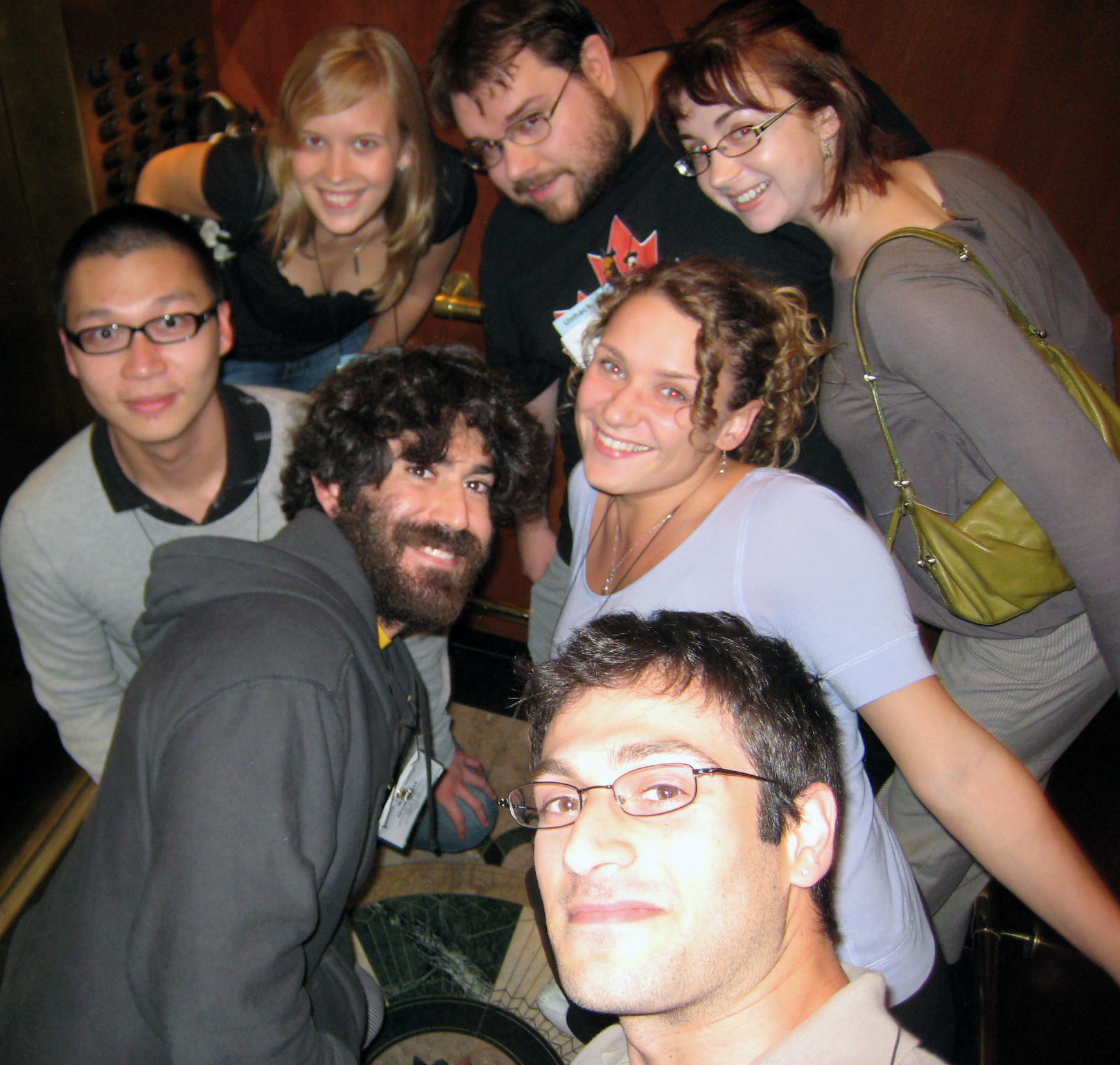
The UW CSE team consisted of Alexei Czeskis (PhD student), Iva Dermendjieva (undergraduate), Sam Guarnieri (PhD student), Karl Koscher (PhD student), Franzi Roesner (PhD student), and Hussein Yapit (undergraduate). Read more →
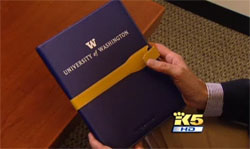 A KING-5 Television report on the UW CSE Kindle DX pilot project. UW – Computer Science & Engineering and the Foster School of Business – is one of seven universities participating in an educational pilot project to understand the strengths and limitations of electronic textbooks. See the TV news video here. Learn more about the UW CSE Kindle DX pilot project here. Read more →
 Cloudera is a cloud computing company founded by UW CSE alumnus Christophe Bisciglia, who while working at Google created UW’s highly-regarded cloud computing course, the first in the nation. On-leave UW CSE graduate student Aaron Kimball was the company’s first employee, and UW CSE professor Ed Lazowska serves on the company’s technical advisory board.
A post on the New York Times Bits blog on Monday covers Doug Cutting’s departure from Yahoo to join Cloudera. Cutting created Hadoop, an open-source software framework used to manipulate large volumes of data. (Cutting’s collaborator during the early stages of Hadoop, and on a predecessor system, was Mike Cafarella. Mike – a consultant to Cloudera – just completed his Ph.D. at UW CSE and is joining the EECS faculty at the University of Michigan. Mike is mentioned in the New York Times blog post.)
Read the full post here. Read more →
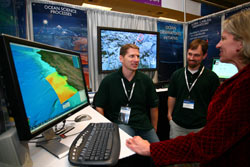 For more than two years, Microsoft Research and oceanographers have worked to develop Project Trident, an open-source “scientific workflow workbench,” which compiles, crunches and spits out scientific data in ways that make large-scale research findings easy to share, visualize, and replicate. It’s highly extensible. The Collaborative Ocean Visualization Environment (COVE), an extension developed by UW CSE graduate student Keith Grochow, lets scientists visualize their findings on a Google Maps-like atlas of the ocean floor.
Read the full SeattlePI.com piece here. Read more →
 UW CSE graduate student Roxana Geambasu and undergraduate student Amit Levy have received the Outstanding Student Paper Award at the 18th USENIX Security Symposium for their paper “Vanish: Increasing Data Privacy with Self-Destructing Data.” Vanish has received widespread attention; see some links here and here. Learn more about Vanish here. The work was co-advised, and the paper co-authored, by UW CSE faculty members Yoshi Kohno and Hank Levy.
Read more →
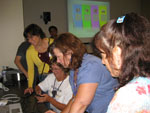
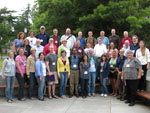
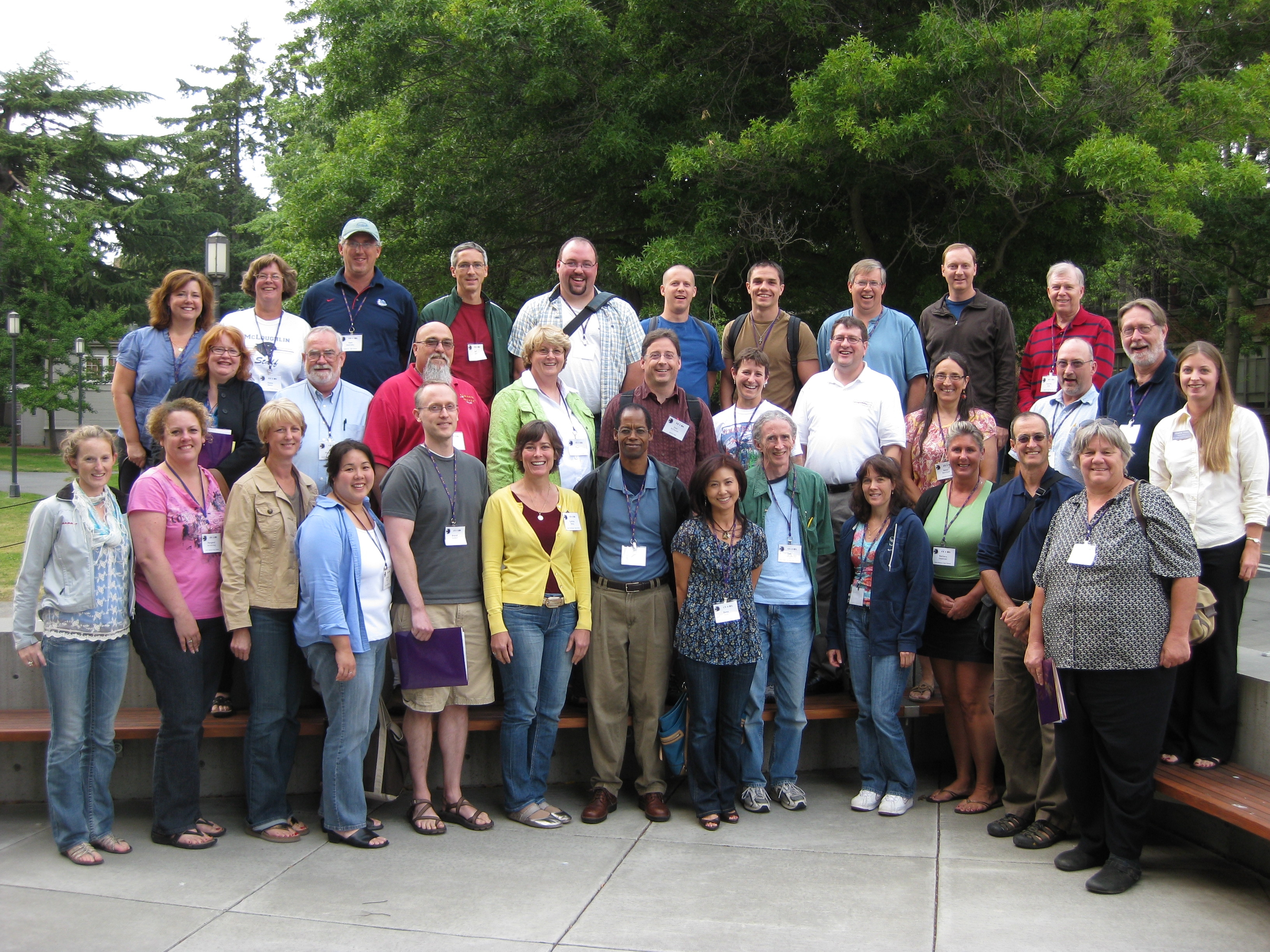
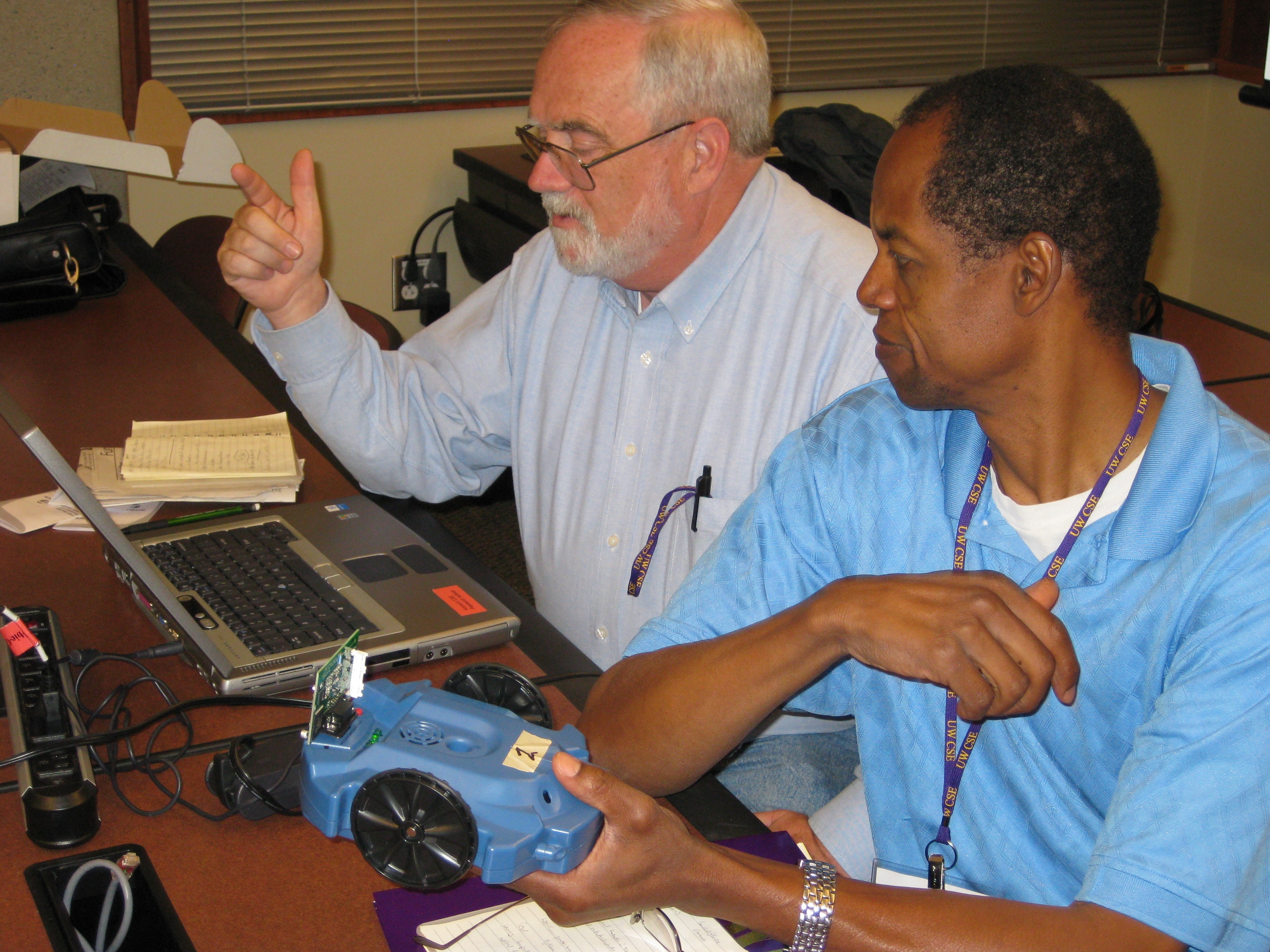
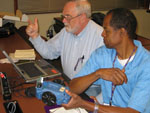 August 6-8 marked the third offering of CS4HS at the University of Washington, a computer science workshop for high school teachers of math and science.
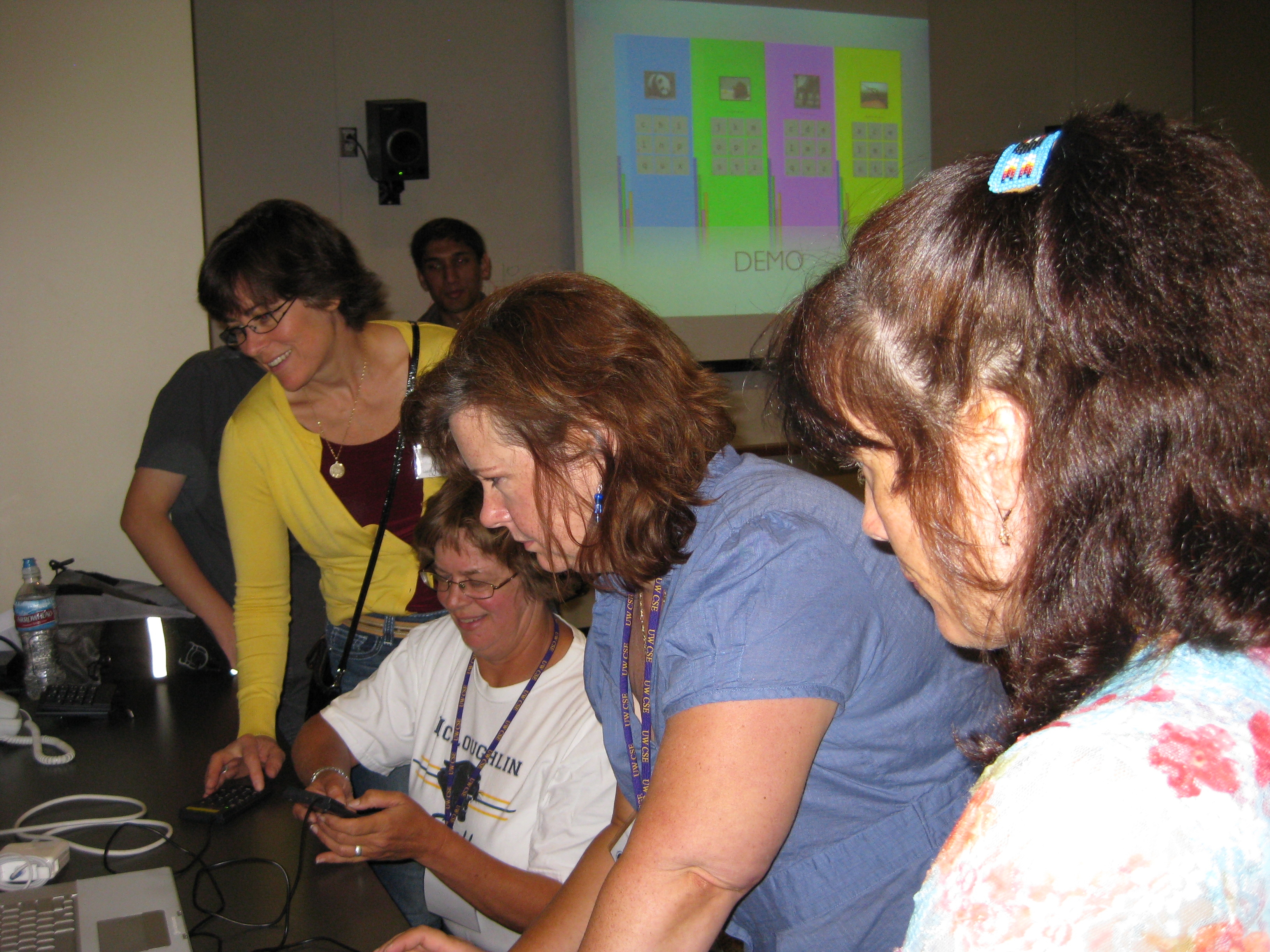
CS4HS is offered jointly by the University of Washington, Carnegie Mellon University, UCLA, the University of Texas at Austin, and Western Oregon University, and sponsored by Google. This year, at the UW offering, more than 30 teachers spent 3 days exploring topics such as synthetic biology, cryptography, computational thinking (using CS Unplugged), debunking stereotypes, careers in computing, visual programming using Squeak, robotics, recursion, and computing for individuals with disabilities.
 The UW CS4HS web page, including curricular materials, is here. Photos from this year’s workshop are here. Read more →