 Finally, the big time! A Reader’s Digest article titled “How to Hide Anything” describes “19 ingenious new ways to conceal everything from your personal info on the Internet to a few extra pounds on your hips.”
#4, after “Kitchen Problems,” “A Few Extra Pounds,” and “A Few Extra Years,” is “Personal Info on your Laptop,” which includes a description of the UW CSE and UCSD Adeona software.
#7 (with “Anxiety” and “Your Medical Identity” intervening) is “Your Tracks Online,” which includes a description of the UW CSE and ICSI Web Integrity Checker.
Shortly thereafter we came to “Bad Breath” and didn’t have the courage to read further. But you can, here. Read more →
According to an article in the Seattle PI today, computer science classes are getting their groove back. According to the new Taulbee Report from the Computing Research Association, computer science enrollment rose 6.2 percent over last year, counting majors and pre-majors.
“Speaking from a computing symposium in Washington, D.C. on Thursday, UW CSE’s Ed Lazowska was fired up about computing enrollments and eager to talk about the promise of the field. But he also expressed frustration that UW caps its computer science and computer engineering enrollments at 160.
”There’s much more demand than there is capacity in the program and that’s an issue for the state,’ Lazowska said. ‘We’re among the nation’s leading states in the percentage of the population that holds bachelor degrees. We’re among the lowest ranked states in our capacity to grant bachelor degrees by population.'”
Read the full article here. Read more →
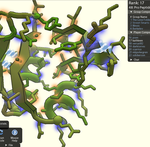 CSE’s Zoran Popovic and his UW Biochemistry colleague David Baker are interviewed on NPR’s “Studio 360” regarding their protein folding game “Foldit.”
“It turns out that humans are a lot smarter at this than supercomputers … As Studio 360’s Sarah Lilley discovered, it’s a lot more fun than it sounds.”
Listen to the complete interview here. Help science by playing the game here. Read more →
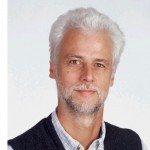 CSE professor Richard Ladner has received the 2009 University of Washington Outstanding Public Service Award, “presented to a faculty or staff member to honor extensive local and/or national and international service.” Richard was recognized for his decades-long efforts focused on under-represented groups, particularly the deaf-blind community.
Congratulations Richard! Read more →
An Xconomy post on a symposium on “Contemporary Topics in the Energy Field” held in conjunction with a regional meeting of the National Academy of Engineering organized by CSE’s Ed Lazowska.
Xconomy article here.
Symposium agenda and presentations here. Read more →
 After reading The New Times report on increasing enrollment in the nation’s computer science programs (reporting on the latest CRA Taulbee Survey), The Seattle Times’ Ben Romano pinged UW CSE’s Ed Lazowska to hear how things are looking here.
“‘Our numbers are in fact much stronger than the national numbers,’ he said via e-mail, introducing a chart, which plots rolling enrollment in the UW’s introductory computer science course over the last four and a half years. (Incidentally, the data was compiled earlier this year at the request of Google.)”
Read the full post here. Read more →
 UW CSE startup Skytap successfully completed a second round of funding in this difficult venture capital market. Founded by UW CSE faculty members Brian Bershad, Hank Levy, and Steve Gribble and UW CSE graduate student Dave Richardson, and funded by our friends at Madrona Venture Group, Ignition Partners, WRF Capital, and Bezos Expeditions, Skytap offers an online service that allows corporations to easily test software and hardware configuration in the cloud.
Read the full TechFlash article here. A Seattle Times article is here, quoting Ignition partner Brad Silverberg: “Since Skytap has been in the market they have met or exceeded every customer, bookings and revenue goal and they are off to a great start in 2009.” Read more →
 Cloudera, a Silicon Valley startup, was founded by UW CSE bachelors alumnus and ex-Googler Christophe Bisciglia. (See a wonderful December 2007 Business Week cover story on Christophe here.) UW CSE on-leave graduate student Aaron Kimball was the first employee. In many ways, it’s an outgrowth of Google’s academic Hadoop initiative that Christophe launched at UW, currently reflected in courses such as CSE490H. Hadoop was co-created by Doug Cutting and graduating UW CSE Ph.D. student Mike Cafarella. (Neither Aaron nor Mike are mentioned in the article.)
(For those of you who can’t decipher the name, it’s “Cloud Era.” The color logo makes it clear.)
Read the full New York Times article here. There’s additional detail in an article in The Register here, and in an earlier New York Times blog post here. Read more →
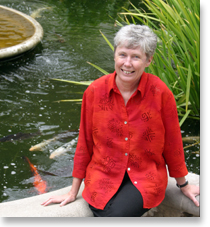 Xconomy interviews Maria Klawe, a new addition to the Board of Directors of Microsoft Corporation.
Klawe, the President of Harvey Mudd College, is a computer scientist who was previously Dean of Engineering at Princeton University, Vice President and CS head at the University of British Columbia, and a group leader at IBM Research.
Klawe makes a number of interesting comments on innovation in the Pacific Northwest. “I had an interesting conversation with Google. Google wanted to invest more in the Northwest corridor because they were getting better work out of that area than any other site around the world. It’s partly the presence of really good universities, like UW and UBC.”
She also comments on UW CSE’s role in helping to strengthen UBC’s computer science program. “UW and UBC both deliberately built a culture of support. Take any faculty member there, and you’ll get a good human being.”
UW CSE’s Ed Lazowska is quoted: “‘She’s impatient and persistent in the best sense – she wants things to be done right, and she wants them to be done right now. She’s very strong on gender equity, which will be good medicine for Microsoft — although she’s by no means a one-issue person. Her only idiosyncrasy is that she paints watercolors during meetings.'” Read more →
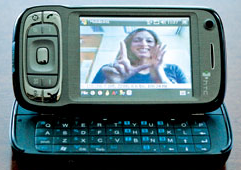
Photo: Mary Levin
Columns, the magazine of the University of Washington Alumni Association, reports on the long and fruitful work that Boeing Professor in Computer Science and Engineering Richard Ladner has done making technology and opportunity more available to blind and deaf people.
Dr. Ladner had two deaf parents, which helped him understand the challenges faced by those with sensory disabilities and motivated him to work to help lower barriers
A notable project to come out of Ladner’s advocacy work is WebAnywhere (previous CSE News reporting here), which allows blind users to have web pages read to them using a standard PC, eliminating the requirement for an expensive “screen reader” program. This project is developed by CSE PhD student Jeffrey Bigham. Another is MobileASL (previous CSE News reporting here), a collaboration with Electrical Engineering professor Eve Riskin, which allows deaf users to have American Sign Language conversations using unmodified cellphones. Another: the cross-disciplinary Tactile Graphics project, which has developed software to speedily create tactile versions of visual graphics, which are accessible to unsighted users.
Read the full article here. Read more →