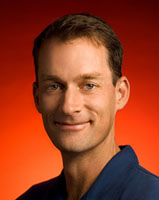
Jeff Dean, 1996 UW CSE Ph.D. alumnus, has been elected to the National Academy of Engineering — one of the highest honors accorded to engineers. Jeff was one of 65 individuals — 12 in the Computer Science & Engineering section — elected to membership in the 2009 class, announced on February 6.
Jeff began his career at DEC WRL, and moved to Google in 1999. At Google, Jeff and MIT EECS Ph.D. alumnus Sanjay Ghemawat — also elected to NAE this year — led the conception, design, and implementation of much of Google’s revolutionary computing infrastructure. Jeff was elected to NAE “for contributions to the science and engineering of large-scale distributed computer systems.”
Also elected in the NAE class of 2009 — both in the Bioengineering section — were UW Dean of Engineering Matt O’Donnell, and former UW Electrical Engineering professor and current UW Bioengineering affiliate professor David Auth. Read more →
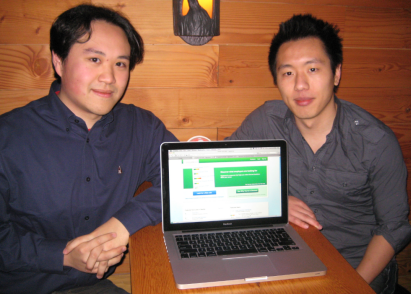 Former UW whizzes Brian Ma, 22, a graduate of Computer Science & Engineering and Electrical Engineering, and Hsu Ken Ooi, 25, a graduate of Mathematics and Statistics, are launching Eggsprout with the help of CSE’s Oren Etzioni. The Bellevue startup is planning to transform the way people find jobs online.
Read the TechFlash article here.
Read the Techvibes entry here.
Read the Cheezhead article here.
Read more →

UW TechTransfer, the unit that facilitates the commercialization of UW research, has hired Todd Alberstone as director of intellectual property management and Ed Cummings as a licensing officer focused on computing technologies. Both have experience in the local high-tech industry.
“We’re excited to have somebody with Ed’s skills and experience at UW TechTransfer,” said Hank Levy, professor and chair of CSE. “He will play a major role in helping us to move technologies quickly out of the university to where they can have impact in the community.”
Read the full University Week article here. Read more →
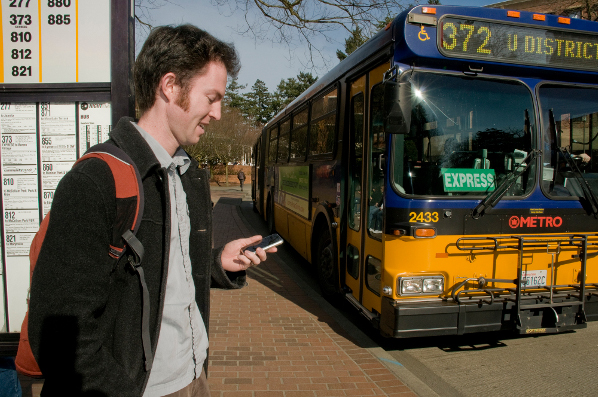 “It’s a question heard at countless bus stops: ‘Have you seen the number 48 go by?'”
After spending countless rainy nights waiting for his bus to go by, Brian Ferris, a UW CSE grad student, decided to do something about it. Over the past year, he created a tool, OneBusAway, that allows King County bus riders to use a cell phone, iPhone, or computer to keep tabs on their bus. OneBusAway’s website averages 1,000 hits a day, and the system has processed over 20,000 automated calls since June. Ferris programs the site in his spare time and is gradually adding more features. For Ferris, he says this project fits with his philosophy of using technology to support social causes, and it’s a chance to create something that people like to use.
Read the University Week article here. Read more →
 UW CSE startup Skytap was identified as one of “10 start-ups to watch in ’09” by NetworkWorld. Skytap offers cloud-based virtual lab solutions that reduce IT costs, accelerate lab provisioning time, and enable global team collaboration via the Web. Skytap was founded by UW CSE faculty members Brian Bershad, Steve Gribble, and Hank Levy, plus UW CSE graduate student Dave Richardson; it was funded by our friends at Madrona Venture Group, Ignition Partners, Bezos Expeditions, and Washington Research Foundation Capital. Read more →
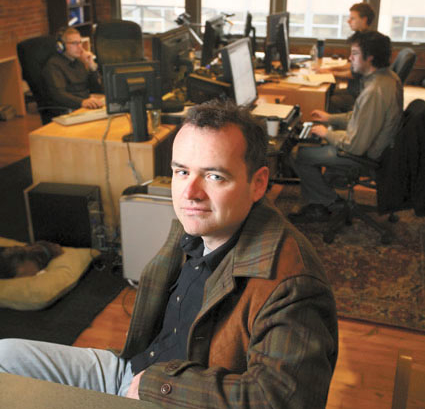 John Cook’s Venture Blog today discusses some of the bright spots in the local tech hiring scene. UW CSE’s Mark Oskin, co-founder of PetraVM, is highlighted, as well as other CSE Industrial Affiliate partners.
Read the full TechFlash piece here.
A corresponding article in the Puget Sound Business Journal features a photo of the brains behind PetraVM, Moe. Read more →
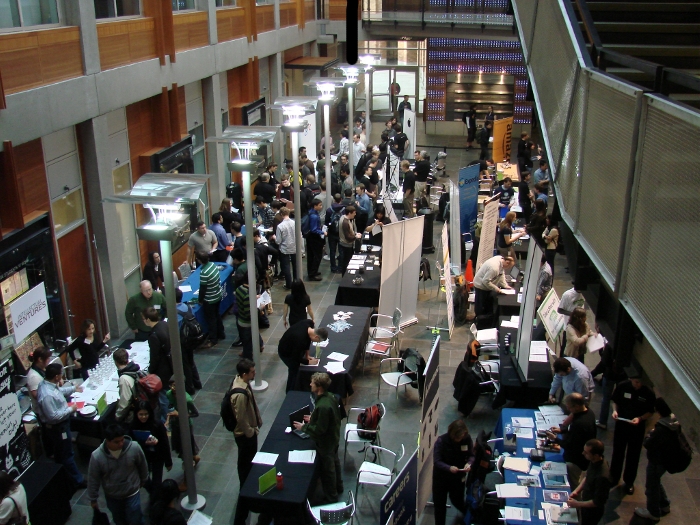 UW CSE hosted its Industrial Affiliates Winter Recruiting Fair on January 28th. Proving that there are still jobs out there, twenty companies participated in this event, with opportunities for both interns and full-time positions. The Winter Recruiting Fair is an annual “reduced” version of our main Recruiting Fair, which is held in conjunction with our October Industrial Affiliates meeting. Participation is restricted to UW CSE students and UW CSE Industrial Affiliates Program member companies. Read more →
At the recent Rawcon Conference in San Diego, Intel Research Seattle staff member and UW CSE affiliate professor Joshua Smith described the scavenging of 60 microwatts of RF power from a TV tower 4.1 kilometers distant. The power was used to drive a thermometer/hygrometer and its LCD display. The approach harvested enough energy to drive many Wireless Identification and Sensing Platform (WISP) applications. A WISP is essentially an RF identification (RFID) tag with a microcontroller on it, according to Smith. He says the increase in integration and decline in power consumption of digital circuitry has led to improved functionality per microwatt of scavenged energy. “The range at which you can power a device [with a given amount of ambient RF energy] should double every four years,” he says. Power-harvesting could lead to a perpetual sensing platform that does not need batteries.
Read the complete EE Times article here. Read more →
 A group of UW researchers, led by Batya Friedman, an iSchool professor and CSE adjunct faculty member, will release the first component of a public system to preserve and authenticate digitized materials that document historical events, such as the Rwanda war crimes. Research by CSE Ph.D. students Alexei Czeskis and Karl Koscher and CSE professor Tadayoshi Kohno played a critical role in the technical aspects of the project.
See the full New York Times article here.
[Update Feb. 7: Friedman was interviewed about the project on the New Hampshire Public Radio show Word of Mouth on February 5th. You can listen to the show here. -SMR] Read more →
UW CSE Ph.D. alumnus Mark Squillante (who has spent his career at IBM Research) and UW CSE Affiliate Professor Rick Szeliski (Microsoft Research) were among 44 leading computer scientists named to the 2008 class of Fellows of the Association for Computing Machinery. Squillante was recognized “for contributions to the theory and practice of stochastic modeling.” Szeliski was recognized “for contributions to computational photography.”
Thirteen UW CSE faculty members are Fellows of the ACM. Read more →