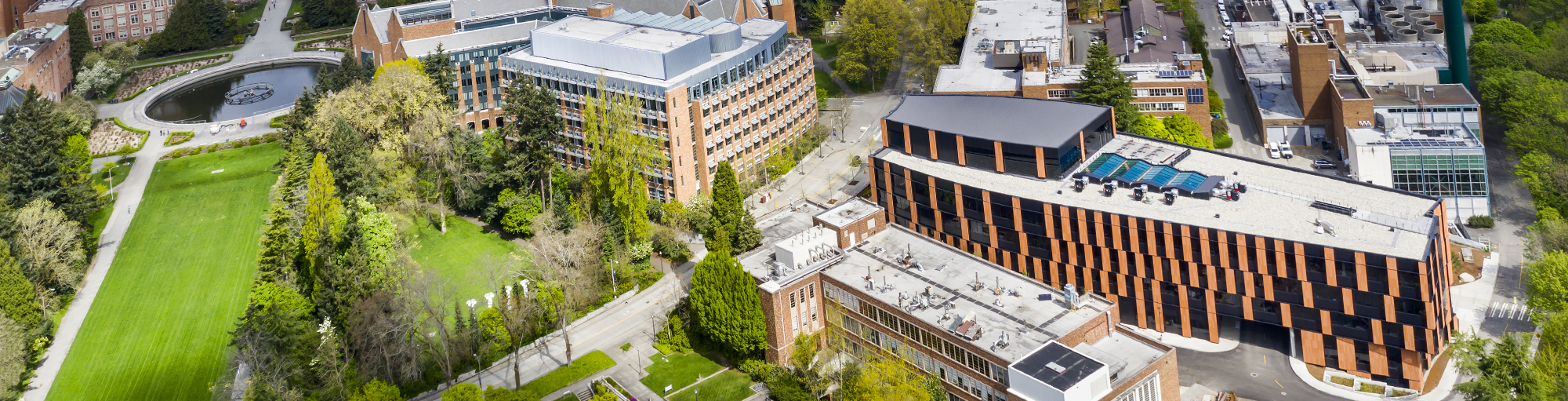
 Each year, UW Computer Science & Engineering and Microsoft Research host a Summer Research Institute in Computer Science, bringing together dozens of the world’s top researchers for several days to discuss an important emerging topic.
This year’s UW-MSR Summer Research Institute is taking place July 24-27 at Suncadia Resort, located in the Cascades, ninety minutes southeast of Seattle. The topic is “Security and Privacy for a Consumer, Cloud World.” The goal is to identify new directions for consumer and cloud computing, discuss the challenges for protecting security and privacy in a consumer and cloud computing world, and explore directions for mitigating those challenges. The Institute brings together researchers and practitioners from diverse but relevant areas such as computer security, cryptography, mobile systems, cloud computing, systems and networking, and HCI. The organizers are Yoshi Kohno (UW CSE), David Molnar (MSR), and Helen Wang (MSR).
This is the fifteenth UW-MSR Summer Research Institute. The pattern of forward-looking interdisciplinary topics was established in the very beginning: “Data Mining” in 1997, “Intelligent Systems: Biological and Computational Perspectives” in 1998, and “Technologies for Invisible Computing” in 1999.
Learn more about this year’s UW-MSR Summer Research Institute here. Learn about previous Institutes here. Trying to decide whether to do computer science on the east coast or the west coast? Read today’s blog post from our UW Atmospheric Sciences colleague Cliff Mass here. Read more →
 The Institute has profiled UW CSE professor Raj Rao, stimulated by his TED ’11 presentation on his work deciphering Indus script. “‘This analysis, along with other pieces of evidence, led us to conclude that the script might be versatile enough to encode an unknown language,’ Rao says.”
Read the profile here. Watch the TED ’11 talk here. Learn about the research here. Read more →
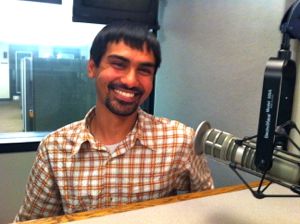
 UW CSE’s and EE’s Shwetak Patel is the guest on this week’s GeekWire Radio broadcast.
“Our guest in the studio is Shwetak Patel, an assistant professor of computer science and electrical engineering from the University of Washington, who has figured out how to use voltage noise on home electrical systems to monitor the energy usage of specific appliances and devices, and also how to use home wiring as an antenna to receive signals from sensors around the home.”
Give it a listen here. Read more →
If we’re to believe Business Insider, two of Seattle’s 14 hot startups are UW CSE spinouts:
(A third of the 14, Apptio, is led by Sunny Gupta, formerly a VP at UW CSE startup Performant, which was acquired by Mercury Interactive.) Read more →
 UW CSE Ph.D. student Tom Bergan is among 14 students from North America to win 2011-12 Google Ph.D. Fellowships. Tom works with Luis Ceze, Dan Grossman, and Steve Gribble on improving multiprocessor programmability.
Congratulations Tom!
Read more →
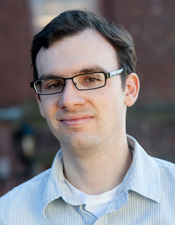 Noah Snavely, a 2008 UW CSE Ph.D. alumnus now on the faculty at Cornell University, joined UW CSE professor Shwetak Patel in the 2011 class of Microsoft Research Faculty Fellows.
Noah, who studied with professor Steve Seitz in UW CSE’s Graphics and Imaging Laboratory, is interested in using massive collections of images on the web to better understand and visualize the world. A portion of his Ph.D. work was embodied in Microsoft’s amazing Photosynth offering.
(Another UW CSE GRAIL alum, Aaron Hertzmann – now on the faculty at the University of Toronto – was in the 2006 class of Microsoft Research Faculty Fellows.)
Congratulations Noah! Read more →
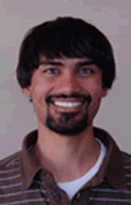 Each year since 2005, Microsoft Research has honored a small number of the world’s most innovative young faculty members as Microsoft Research Faculty Fellows.
The 2011 class of Microsoft Research Faculty Fellows – announced today – includes Shwetak Patel, Assistant Professor of CSE and EE at the University of Washington. Shwetak’s research concerns Human-Computer Interaction, Ubiquitous Computing, and User Interface Software and Technology. He is particularly interested in developing easy-to-deploy sensing technologies and approaches for activity recognition and energy monitoring applications.
Shwetak is the third UW CSE faculty member to be honored as a Microsoft Research Faculty Fellow. Luis Ceze was one of five individuals honored in 2009. Magda Balazinska was one of five individuals honored in 2007. The MSR Faculty Fellows are an amazing group!
Congratulations to Shwetak, and thanks to Microsoft for their many-faceted partnership! Read more →
 “‘The first rule of thumb is that privacy is hard to get right,’ says Dan Grossman … ‘Don’t do anything online you don’t want people to see.’ That said, here are his tips for keeping your passwords to yourself when using somebody else’s computer.
- When the computer’s browser asks if you want it to remember your password, say no.
- Turn on the Web browser’s ‘privacy’ mode.
- Log off.
Read the article here.
Read more →
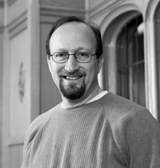
Tom Daniel
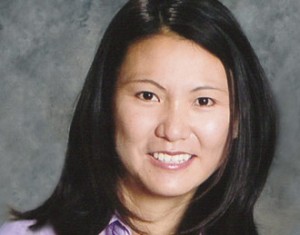
Yoky Matsuoka
The National Science Foundation today announced an $18.5 million grant to establish a new Engineering Research Center for Sensorimotor Neural Engineering (CSNE) based at the University of Washington.
The Director of CSNE is UW CSE professor Yoky Matsuoka. Deputy Director is UW Biology professor Tom Daniel. Partner institutions are the Massachusetts Institute of Technology and San Diego State University. (Joel Voldman from MIT and Kee Moon from SDSU are co-PIs.) Also partnering are historically minority-serving institutions Spelman College and Morehouse College, both in Atlanta, and Southwestern College in Chula Vista, Calif. International partners are the University of British Columbia and the University of Tokyo.
Matsuoka comments, “The center will work on devices that interact with, assist, and understand the human sensory and nervous systems. It will combine advances in robotics, neuroscience and computer science to restore or augment the body’s ability for sensation and movement.”
Daniel comments, “I think the really interesting development is literally where the silicon meets the collagen. It remains an open challenge.”
Learn about CSNE on its web page, here. Read the UW press release here. Read the NSF press release here. Read more →