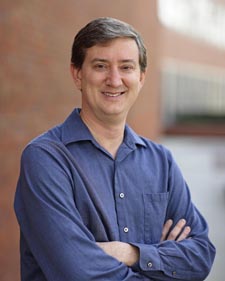
 UW CSE Ph.D. alumnus Ed Felten – currently on leave from Princeton University to serve as the first Chief Technologist of the U.S. Federal Trade Commission – has been elected as a member of the 2011 class of Fellows of the American Academy of Arts & Sciences.
The Academy was founded during the American Revolution by John Adams, James Bowdoin, John Hancock, and other leaders who contributed prominently to the establishment of the new nation, its government, and its Constitution. Its purpose was to provide a forum for a select group of scholars, members of the learned professions, and government and business leaders to work together on behalf of the democratic interests of the republic.
Felten is a Professor of Computer Science and of Public Policy at Princeton, and Founding Director of Princeton’s Center for Information Technology Policy. He is an expert in computer security and privacy, and public policy issues relating to information technology. He received his Ph.D. from UW CSE in 1993.
Paul Allen, co-founder of Microsoft and namesake of our Paul G. Allen Center for Computer Science & Engineering, was also elected to the American Academy today, as was Affiliate faculty member Eric Horvitz of Microsoft Research. Read more →
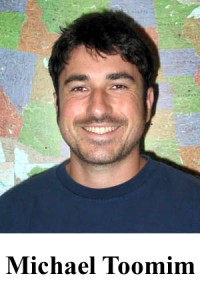
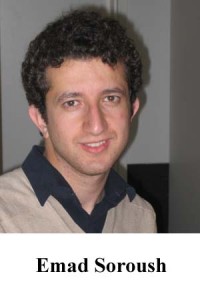
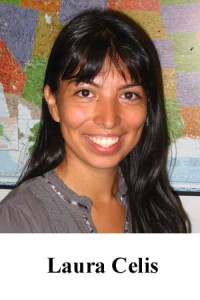 UW CSE Ph.D. students Elisa Celis, Emad Soroush, and Michael Toomim are among 22 students from across the nation to win 2011 awards in the Yahoo! “Key Scientific Challenges” program.
Elisa works with UW CSE professor Anna Karlin on algorithmic game theory, internet economics, and social networks.
Emad works with UW CSE faculty member Magda Balazinska on data management.
Michael works with UW CSE professor James Landay on human-computer interaction.
In 2010, UW CSE Ph.D. students Yaw Anokwa and Yingyi Bu were among the 23 winners. In 2009, UW CSE Ph.D. student Raphael Hoffman was among the 21 winners. Next year we’re shooting for four!
Congratulations to Elisa, Emad, and Michael! And thanks to Yahoo! for recognizing our students. Read more →
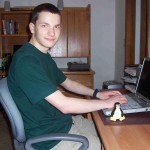 UW CSE’s David Rosenbaum, a first year grad student studying quantum computing with Dave Bacon and Aram Harrow, has received a 2011 National Defense Science & Engineering (NDSEG) Graduate Fellowship. He is the department’s 14th recipient of this fellowship.
David also recently won an NSF Graduate Fellowship, as reported here.
Congratulations to David! Read more →
 UW CSE Ph.D. student Yaw Anokwa discusses his work on information technology for the developing world in this terrific UW College of Engineering video.
“Computer scientists and computer engineers change the world by designing, building, and deploying innovative solutions to real-world problems …”
Watch the video here. Learn more about Yaw and his research here. Read more →
 Todd Bishop and John Cook host UW CSE’s Ed Lazowska on GeekWire:
“This week on the GeekWire Podcast, we talk about the time we spent with a ’60 Minutes’ crew, the opening of Zynga’s new office in Pioneer Square, and the city’s plan to bring better Internet connectivity to the Seattle neighborhood, to the potential benefit of the many startups headquartered there.
“Our guest in the studio is Ed Lazowska, the longtime University of Washington computer science professor, who talks about the latest trends he’s seeing in computer science research, his take on Paul Allen vs. Bill Gates, the state of funding for computer science education, the rising demand for top-notch engineers, and the areas he would focus on if he were just starting out in the field.”
Listen to the podcast here. Read more →
 UW CSE Ph.D. student Joe Devietti has been recognized with a 2011-12 Intel Graduate Fellowship.
Devietti works with UW CSE faculty members Luis Ceze and Dan Grossman on the Sampa project, seeking to make multiprocessors easier to program by leveraging changes in both computer architectures and parallel programming models. Read more →
 Computerworld reports on the symposium “Computation and the Transformation of Practically Everything,” held in commemoration of the 150th anniversary of the Massachusetts Institute of Technology. The article (here) includes extensive references to a talk by UW CSE’s Ed Lazowska – slides here. Read more →
 A post on the Babbage science and technology blog at The Economist looks at work by UW CSE/EE professor Joshua Smith et al. on wireless power for left ventricular assist devices (LVAD). LVAD, implanted in failing human hearts, is a life-saving technology that suffers from problems with high patient infection rates and maintenance overhead due to the need for external power. Smith’s new power system will be announced formally at the American Association for Thoracic Surgery annual meeting in May.
“The Free-Range Resonant Electrical Energy Delivery System, or FREE-D, as Smith calls it, is powered by induction. Specifically, it exploits a phenomenon called resonant coupling, in which metal coils that resonate at the same electrical frequency can exchange energy particularly efficiently. The process transfers the power using a tuned magnetic field, which is considered less hazardous to human health than the radio waves (or even lasers) that other wireless power systems rely on. Smith’s version has a transmitter coil 26cm in diameter, which that can beam up to 15 watts of power to a receiver coil that is just 4.3cm across. The transmitter coil can thus be worn in a vest that also holds a battery pack while the receiver tucks nicely into the patient’s chest.”
Smith and his team are also looking at implanting the transmitter in beds and walls to eliminate the need for the patient to wear a vest.
Read the full post – complete with Dick Cheney references – here.
Read more →
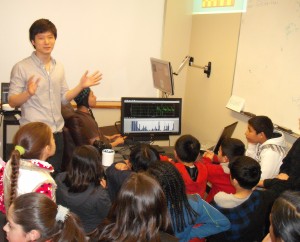 UW CSE faculty and grad students hosted 37 school kids from the Latino Achievers Academy last week. After seeing several research demos, including brain-computer interfaces, the group noshed a pizza lunch in the Atrium.
Photos may be viewed here. Read more →
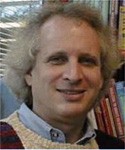
Phil Bernstein
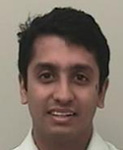
Jayant Madhavan
UW CSE Ph.D. alum Jayant Madhavan (now at Google) and UW CSE adjunct professor Phil Bernstein (at Microsoft Research), along with their collaborator Erhard Rahm, have been announced as the winners of the VLDB 2011 “10-year Best Paper Award.”
The award recognizes their paper “Generic Schema Matching with Cupid” as the most influential paper presented at the 2001 International Conference on Very Large Data Bases, with the benefit of a decade’s hindsight.
Congratulations! Read more →