Google blogs UW’s Wireless Ambient Radio Power project

photoGoogle just did a blog post on Josh Smith’s WARP project – a sensor with E-Ink display powered by ambient RF.  The post was based on work presented at a conference held at Google way back in June.  It highlights the fact that the work was funded by a Google Faculty Research award.

Read the Google blog post (including video) here.  Learn more about WARP here. Read more →

UW CSE @ Andreessen Horowitz Academic Roundtable

AHAn exciting event, with a great representation of UW CSE faculty, former faculty, and Ph.D. alums:  Ed Felten, Yoky Matsuoka, Zoran Popovic, Stefan Savage.  Information here. Read more →

UW CSE startup Decide acquired by eBay

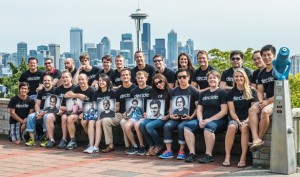
DecideTeamPhotoFullUW CSE startup Decide has been acquired by eBay.

Co-founded by UW CSE professor Oren Etzioni and four students, Decide uses machine learning and text mining algorithms on billions of price points across millions of products, blog posts, and articles on the web to enable shoppers to make the best buying decisions possible.

Decide had raised $17M in venture capital from Madrona Venture Group, Maveron, Vulcan Capital, and angel investors.

Read the Decide announcement hereGeekWire here.  Seattle Times here. Read more →

UW CSE’s Oren Etzioni to lead Paul Allen’s new Allen Institute for Artificial Intelligence

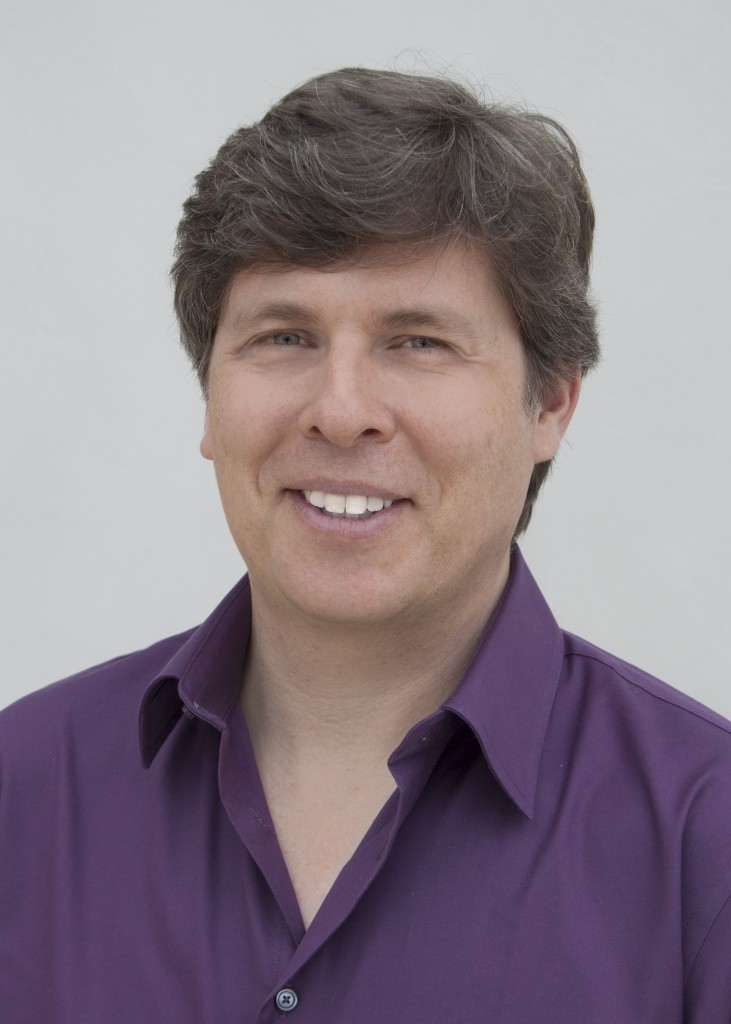
oren

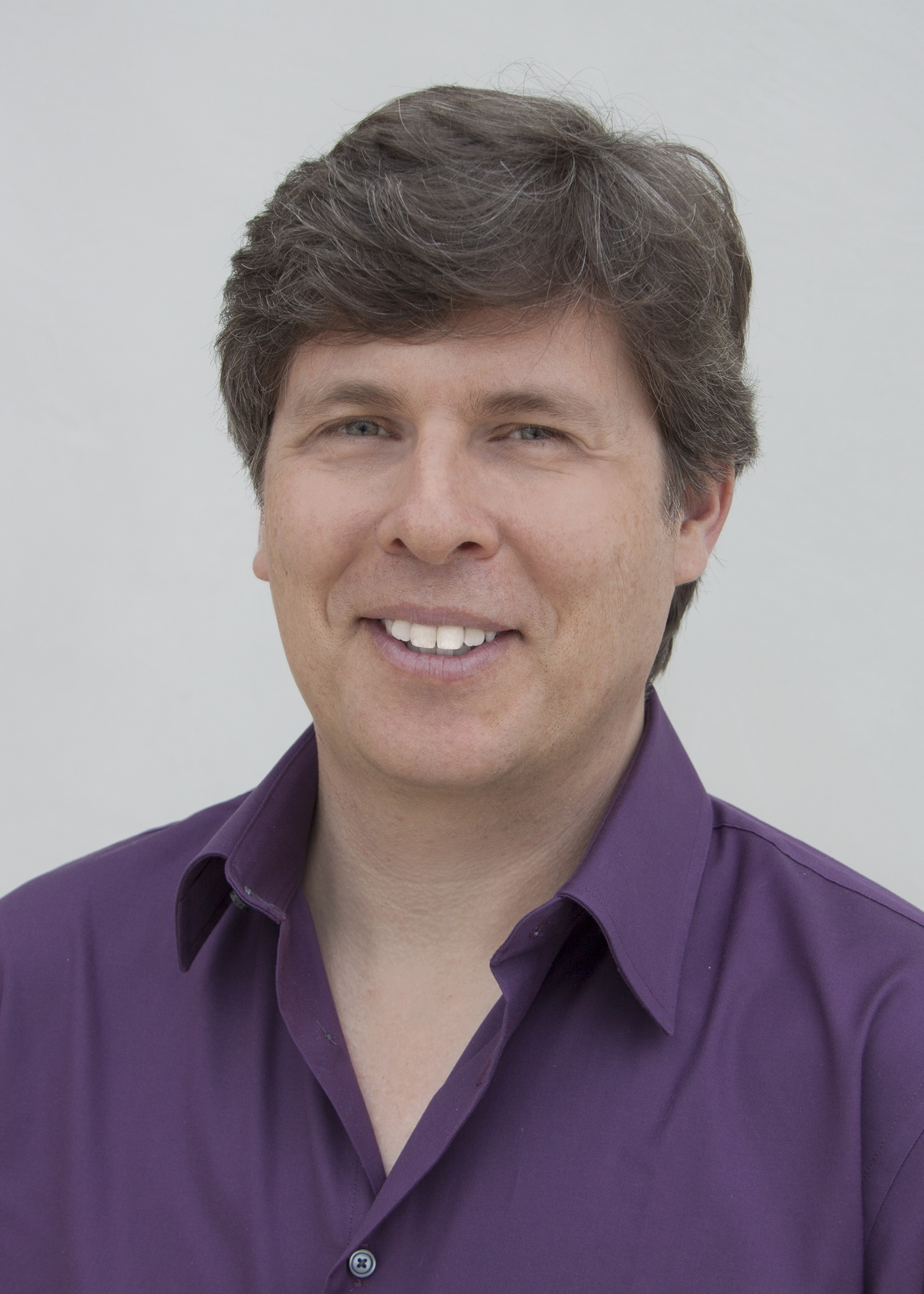
Oren Etzioni

Oren Etzioni – UW’s Washington Research Foundation Entrepreneurship Professor in Computer Science & Engineering – has been selected to lead Microsoft co-founder Paul G. Allen’s new Allen Institute for Artificial Intelligence (AI2).

“I’m thrilled to have the opportunity to launch a major AI research institute in Seattle,” said Oren.  “Our goal is to revolutionize the field, and with Paul’s vision and support, the sky’s the limit.”

Oren joined the UW CSE faculty in 1991, after receiving his Bachelors degree from Harvard and his Ph.D. from Carnegie Mellon. A recognized leader in AI, he is a AAAI Fellow, recipient of the Robert S. Engelmore Memorial Award, and founder and director of the University of Washington’s Turing Center. He also is an active entrepreneur – the founder of four companies (most recently Decide.com) and a Venture Partner at Madrona Venture Group.  His work has been featured in the New York Times, the Wall Street Journal, NPR, Science, The Economist, Business Week, Newsweek, Discover, Forbes, Wired, the NBC Nightly News, and even Pravda.

Paul has broad interests in scientific discovery. With his SpaceShipOne effort, private enterprise crossed the threshold into human spaceflight, previously the domain of government programs.  SpaceShipOne won the $10 million Ansari X Prize for repeated flights in a privately developed reusable spacecraft, the Collier Trophy for greatest achievement in aeronautics or astronautics in 2004, and the National Air and Space Museum Trophy for Current Achievement.  His Allen Institute for Brain Science, which celebrates its tenth anniversary this year, takes on large-scale initiatives designed to push brain research forward, enabling the global scientific community to more efficiently make discoveries that bring real-world utility.  Paul has a long-standing interest in AI; for many years he has supported Project Halo, whose vision is the creation of a “Digital Aristotle” – a computer that contains large amount of knowledge in machine-computable form and can answer questions, explain those answers, and discuss those answers with users.
Z61

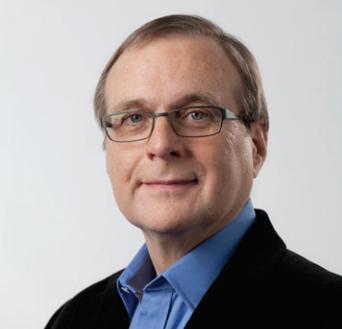
Paul G. Allen

The creation of AI2 and the selection of Oren to lead it is fantastic news for UW CSE, for Seattle, and for the field of AI.  Paul has been considering the general idea of some sort of AI institute for a number of years, but it wasn’t a “given” that AI2 would happen at all … or that it would happen in Seattle … or that tight connections to the University of Washington would be assured because the person leading AI2 has spent 20 years on the UW CSE faculty.  All of these things are happening, though – it’s a dream come true.  AI2 has the potential to transform Seattle into a world center of AI research in the same way that the Allen Institute for Brain Science has transformed Seattle into a world center of brain research.

Says Oren:  “AI2 is an opportunity to take AI – worldwide and here in the Puget Sound region – to the next level by launching ambitious research projects, attracting the best and brightest to the region, and offering both permanent positions and internships to UW CSE students.”

A gigantic win – another step in making Seattle a center of the tech universe!

See a terrific GeekWire article hereSeattle Times hereXconomy here. Read more →

Imitation is the sincerest form of flattery!

G-Give Thank YouRecently UW Vice President for University Advancement Connie Kravas received an email from a colleague in the UC Berkeley advancement office, forwarding an email he had received from a Berkeley donor, which had been sent to draw his attention a video that her husband, a UW CSE donor, had received from UW CSE. (Apologies – you may need to diagram this in order to comprehend the cast of characters …)

The Berkeley donor wrote: “Check out the great video UW sent back to us – I loved it! I got to see how my $ were used, it was not time intensive, and I got a real feel for the program and its impact. Might be an interesting way to both ‘scale’ and ‘personalize’ donor thank you’s.”

The Berkeley donor’s husband is Alan Eustace, Google’s Senior Vice President, Knowledge. Alan had been a sponsor of the 2012 G-Give program for UW CSE. Alan himself, in follow-up email to UW, said: “The video was a fantastic idea. It really personalized the gift. It wasn’t just a check to a nameless bureaucracy. There was a student on the other side that really appreciated it, and that made all the difference! Congratulations!”

G-Give itself is a wonderful story of the power of UW students. The goal of G-Give is to activate first-time donors – recent Google employees who are not yet using their Google corporate match for gifts. For a 1-week period each December, G-Give features one or two non-profits each day. Gifts to those non-profits made via G-Give are matched twice – once by Google, and once by one or more Googlers who agree to match gifts (up to some limit). (That’s the role that Alan played last year for UW CSE, which is a major supplier of talent to Google. Matching funds were also provided by UW CSE alums Jeff Dean, Brad Fitzpatrick, Ruben Ortega, Charlie Reis, and Bill Brougher.)

G-Give was created in 2011 by UW CSE alums Jessan Hutchison-Quillan and Krista Davis, with help from UW CSE alum Jeff Prouty, all of whom work in Google’s Seattle office. They did it as a “20% project” – Googlers are allowed to spend 20% of their time on projects of their own devising. In 2011, through G-Give, UW CSE’s Google Scholarship endowment – created several years earlier by alums at Google’s Mountain View CA office – was increased by $127,000 through gifts from 100 friends and alumni at Google. In 2012, UW CSE’s Google Scholarship was again featured, and an additional $157,000 was raised from 159 Googlers. G-Give has now become the Google-wide employee giving platform, and Jessan’s full-time assignment.

It all goes to show what can happen when a few UW alums have a great idea and apply the skills they’ve learned to execute a solution!

Take a few minutes to watch the video! Read more →

UW CSE’s eight “DawgBytes” summer day camps for middle and high school students

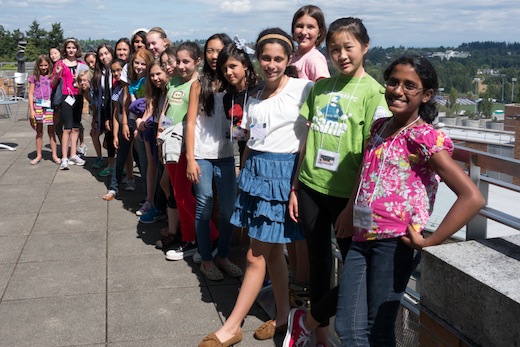
2013MS2croppedLast week UW CSE concluded this year’s summer programs for middle and high school students.  Under the DawgBytes (“a taste of UW CSE” – our overall K-12 outreach effort) umbrella, we introduced more than 160 kids from across the state to computer science, which they now associate with fun, creativity and making friends!

This summer we hosted 4 week-long introductory day camps for girls, 3 co-ed day camps on mobile development, and 1 co-ed day camp on physical computing.

Infinite thanks to Hélène Martin (whose passion and dedication makes all of this happen), Allison Obourn (who taught the mobile development camps), Brett Wortzman (a teacher at Issaquah High School who taught the physical computing camp), our camp counselors (Stefan Dieraf from UW, Megan Fu from Holy Names, Claire Illich from Holy Names -> Northeastern, Genevieve Payzer from Lakeside, and Karolina Pyszkiewicz from Holy Names -> UW), Jeremy Munroe (our DawgBytes assistant), Google (for the donation of Android phones), Microsoft Research (for the donation of .NET Gadgeteer kits), and CSE’s wonderful support staff.

See photos from all of this summer’s camps on the DawgBytes Facebook page.

Learn about our many other K-12 outreach activities on the DawgBytes web page.

If you have kids in your life who might be interested in our future opportunities or if you might be willing to participate in our outreach activities, join the DawgBytes mailing list. Read more →

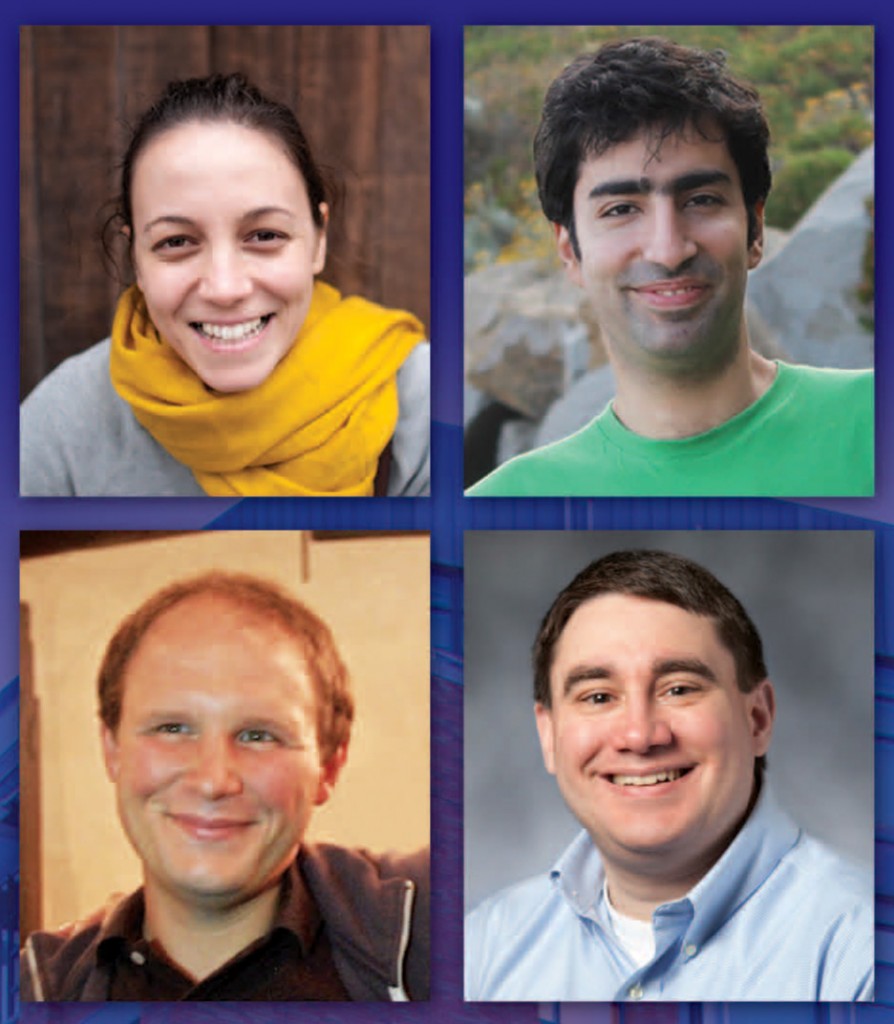
Maya Cakmak, Shayan Oveis Gharan, Matt Reynolds, and Zach Tatlock join the UW CSE faculty

Pages from CSE_new_hires_2013A new brochure highlights UW CSE’s 2013 faculty hires:

  • Maya Cakmak, a robotics Ph.D. from Georgia Tech via Willow Garage.
  • Shayan Oveis Gharan, an optimization algorithms Ph.D. from Stanford who will spend a year as a Miller Fellow at Berkeley before joining us.
  • Matt Reynolds, a Duke ECE faculty member in ultra-low power sensing and computation with an MIT Ph.D., who will have appointments in UW CSE and EE.
  • Zach Tatlock, a software reliability and security Ph.D. from UCSD.

In addition, Jeff Heer, the last of 2012’s amazing “big data” hires – currently a faculty member at Stanford – will also arrive this fall.

Exciting times!  Check out the brochure here. Read more →

Ed Felten and the ACLU vs. the NSA

Ed_Felten_rdax_150x187UW CSE Ph.D. alum Ed Felten is getting a lot of coverage for his latest foray into the legal realm: filing a legal brief in support of an ACLU lawsuit against the NSA, in which Felten argues that phone call metadata can be more revealing than content, and that the NSA is building a database that could reveal some of the most intimate secrets of American citizens.

(Felten is Professor of Computer Science and of Public Policy at Princeton University, and recently spent 18 months on leave as the first Chief Technologist of the Federal Trade Commission.  He is a Member of the National Academy of Engineering, a Fellow of the American Academy of Arts & Sciences, and – the capper – co-recipient (with Anne C. Dinning of D. E. Shaw) of the 2013 UW CSE Alumni Achievement Award.)

Business Insider hereNew York Times hereWashington Post here.

You go, guy! Read more →

The world’s best Internet cities …

seattle-supermoonAs usual, we only publicize the rankings where we rock …

Quoth GeekWire:

UBM’s Future Cities, a blog that focuses on how cities are developing, just put together a list of its ten best Internet cities in the world and the findings may surprise you.

“The only U.S. city to make the cut was not New York City, San Francisco, Boston or Austin — it was Seattle …

“In its description of Seattle, UBM actually didn’t have great things to say about Internet speed [Editorial note:  thank you, Comcast and CenturyLink, you morons!] and public WiFi. But they noted the growing startup scene and also loved two aspects of the city: Plans to bring fiber Internet to Seattle and the city’s Startup Seattle program [Editorial note: both are recent initiatives of the Mayor’s Office!].”

Read more here. Read more →

UW CSE’s Rajesh Rao demonstrates first non-invasive human-to-human brain interface

B2B-imageUW CSE researchers have performed what they believe is the first noninvasive human-to-human brain interface, with one researcher able to send a brain signal via the Internet to control the hand motions of a fellow researcher.

Using electrical brain recordings and a form of magnetic stimulation, Rajesh Rao sent a brain signal to Andrea Stocco on the other side of the UW campus, causing Stocco’s finger to move on a keyboard.

While researchers at Duke University have demonstrated brain-to-brain communication between two rats, and Harvard researchers have demonstrated it between a human and a rat, Rao and Stocco believe this is the first demonstration of human-to-human brain interfacing.

Read the UW News article, and watch an amazing video, here.

Press coverage:  NBC News, San Francisco Chronicle, Popular Science, GeekWire, Q13 FOX, NY Times, USA Today, Bloomberg (video) … we’re tired, find the rest on your own … Read more →

« Newer PostsOlder Posts »