UW pioneers a wireless device powered by changes in temperature

DSC02564“A centuries-old clock built for a king is the inspiration for a group of computer scientists and electrical engineers who hope to harvest power from the air.

“The clock, powered by changes in temperature and atmospheric pressure, was invented in the early 17th century by a Dutch builder. Three centuries later, Swiss engineer Jean Leon Reutter built on that idea and created the Atmos mechanical clock that can run for years without needing to be wound manually.

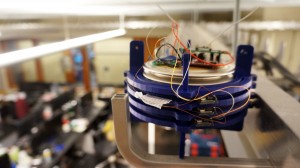
“Now, University of Washington researchers have taken inspiration from the clock’s design and created a power harvester that uses natural fluctuations in temperature and pressure as its power source. The device harvests energy in any location where these temperature changes naturally occur, powering sensors that can check for water leaks or structural deficiencies in hard-to-reach places and alerting users by sending out a wireless signal.”

Read the UW News article here. Read the research paper here. Read more →

Life Sciences Discovery Fund supports SpiroSmart

150px-SpiroUIThe Washington Life Sciences Discovery Fund supports the translation of health-related technologies from the laboratory to the commercial marketplace.

LSDF has just awarded $250,000 to Shwetak Patel’s SpiroSmart technology – support for finalizing the development and conducting clinical testing of a mobile app for monitoring lung function and progression of obstructive lung diseases.

Learn about SpiroSmart here. Read more →

VLDB 10-year Best Paper Award to UW CSE’s Dan Suciu, Nilesh Dalvi

logoEach year VLDB – the International Conference on Very Large Databases – gives an award to the paper that appeared in the conference ten years previously and felt, with the benefit of hindsight, to have had the greatest impact.

UW CSE’s Dan Suciu and Nilesh Dalvi have just been named as the recipients of the VLDB 2014 10-year Best Paper Award for their paper “Efficient Query Evaluation on Probabilistic Databases,” which appeared in VLDB 2004.

Dan was (and is) a UW CSE faculty member. Nilesh, in 2004, was a UW CSE Ph.D. student working with Dan; Nilesh received his Ph.D. in 2007 and worked at Yahoo! Research and Facebook before founding Troo.ly this past December.

Congratulations to Dan and Nilesh!

(The VLDB 2011 10-year Best Paper Award also went to CSE authors – Jayant Madhavan (a UW CSE Ph.D. alum, currently at Google) and Phil Bernstein (a UW CSE Affiliate Professor, working at Microsoft Research), along with their co-author Erhard Rahm, for their VLDB 2001 paper “Generic Schema Matching with Cupid.”) Read more →

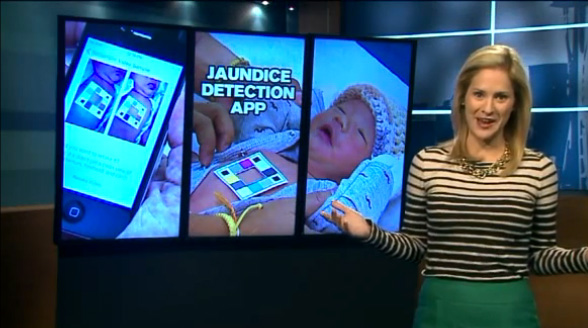
Q13 TV features UW Bilicam app: “Detecting newborn jaundice with just the click of a phone”

Untitled“A new app, developed by doctors and engineers our own backyard, could help detect newborn jaundice and ease the fears of new parents …

“Simply place the phone near the baby’s stomach and take a picture. The app analyzed the skin color to see if it’s at an appropriate level.”

Check out the story and video here. Learn more about the Bilicam research here.

Short article in The Economic Times and The Times of India here. Read more →

We need a UW CSE songbook!

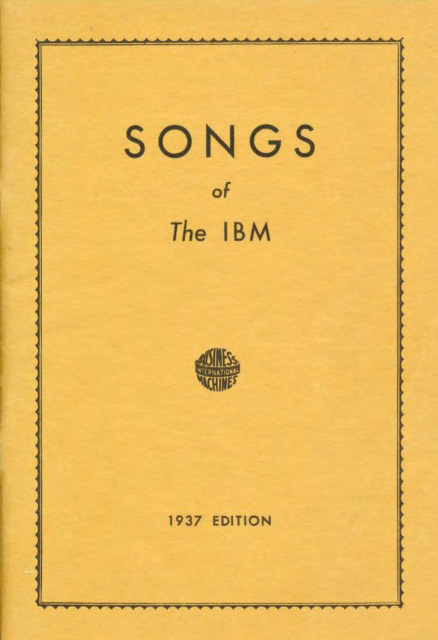
ibmWith apologies to IBM (and to Hank):

Hank Levy is our inspiration,
Head and soul of our splendid CSE.
We are pledged to him in every nation,
Our Chair and most beloved man.
His wisdom has guided each division
In service to all humanity
We have grown and broadened with his vision,
None can match him or our great CSE.
Hank Levy, we all honor you,
You’re so big and so square and so true,
We will follow and serve with you forever,
All the world must know what CSE can do.

Read more here.

Hank responds:

But we have this, thanks to The CSE Band!

More CSE Band information and videos here. Read more →

UW CSE @ Facebook Seattle

FB-SeattleFacebookUW CSE hosted an event on Thursday for alums at Facebook’s Seattle engineering office.

Exactly four years ago – in August 2010 – Ari Steinberg opened a one-person Facebook engineering office in Seattle.  Today it boasts roughly 400 employees – roughly 90 of whom are from UW.  (It also boasts a killer view!) Read more →

WSU “Academic Planner” features UW on the cover!

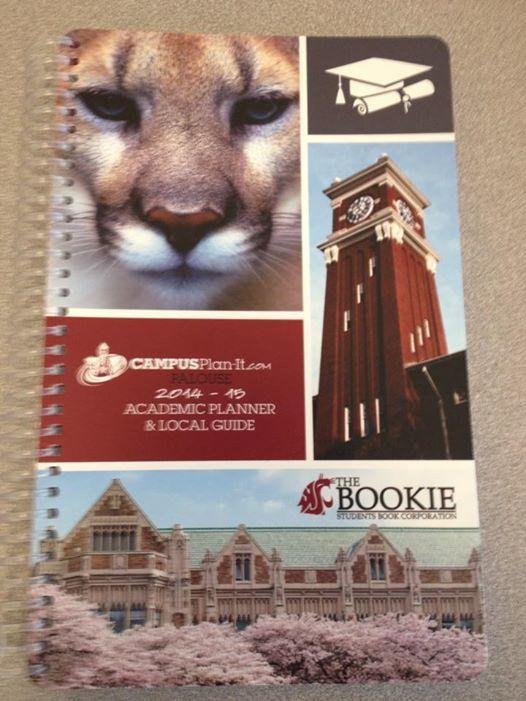
pullman plannerWe can’t make up stuff that’s this great:

“Students at Washington State University did a double-take when they received their free student planners from The Bookie this week. The cover features a picture of a cougar, the iconic Bryan clock tower and a building that was a little harder to identify.

“Down at the very bottom of the cover, with beautiful brick and elegant cherry trees is Savery Hall, a building located at the heart of the campus of WSU’s sworn rival – the University of Washington.

“Distraught manager Leslie Martin at WSU’s bookstore The Bookie says they are aware of the problem and are working with the vendor to come to a solution. The planners are no longer being handed out, but the ones that have been released are not being collected.”

Read about it from KLXY, KOMO, the Seattle Times, the Spokesman Review

  Read more →

UCSD student publishes nude photos of advisor in top security conference

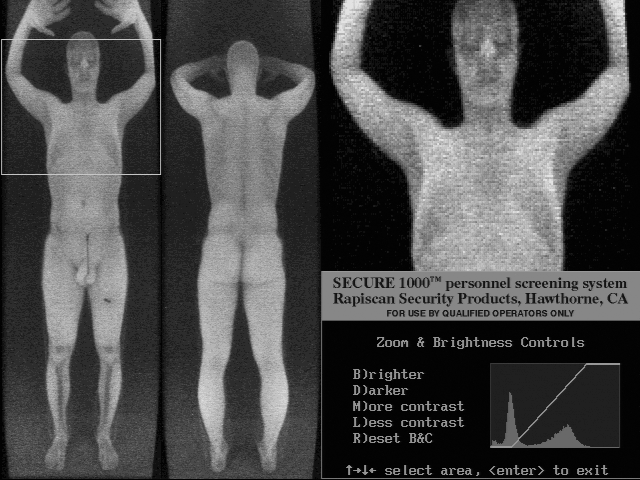
zoom-nearThis doesn’t have much to do with UW CSE (well, one of the co-authors is the Ph.D. alum of a Ph.D. alum of ours, and another is a Bachelors alum of ours), but it’s too good to pass up. (Plus, we figure Savage and Voelker must have had their fingers in it somewhere …)

Read about it here. More photos here.

(Thanks to Dan Ports for the tip.) Read more →

Looking to the Future of Data Science

27bits-etzioni-articleInline-v2Steve Lohr, in the New York Times, features UW CSE’s Oren Etzioni (now CEO of Seattle’s Allen Institute for Artificial Intelligence), with cameos by UW CSE’s Ed Lazowska and UW CSE affiliate professor Eric Horvitz (Microsoft Research). Etzioni and Horvitz delivered keynotes earlier this week at KDD, the ACM Conference on  Knowledge Discovery and Data Mining.

“Mr. Etzioni acknowledged the gains made possible by big data methods – identifying patterns and calculating statistical probabilities – in tasks like speech recognition and computer vision. But he then proceeded to underline the limits of the big data approach …

“At the Allen Institute, financed by Microsoft co-founder Paul Allen, Mr. Etzioni is leading a growing team of 30 researchers that is working on systems that move from data to knowledge to theories, and then can reason. The test, he said, is: ‘Does it combine things it knows to draw conclusions?’ This is the step from correlation, probabilities and prediction to a computer system that can understand, in its way. That seems a steep climb of the semantic ladder of meaning. ‘We are trying to build these semantic models,’ Mr. Etzioni noted …

“Mr. Etzioni, other scientists say, makes a good point, but the current enthusiasm for big data methods is understandable. ‘The dramatic successes of big data have caused everyone to rush over to that side of the boat,’ said Edward Lazowska, a professor at the University of Washington, who is on the board of the Allen Institute …

AI2LogoEric Horvitz, a computer scientist at Microsoft Research, emphasized all that can be done with big data tools … Mr. Horvitz described several projects he and his team were working on. One involves using patient, treatment and historical data to predict which hospital patients are most at risk of being readmitted within 30 days, and suggest follow-up monitoring. Studies show that 20 percent of Medicare patients return to the hospital within 30 days at an estimated cost of $17.5 billion a year, in addition to the toll in human suffering …

“In an interview, Mr. Horvitz, who is an academic adviser to the Allen Institute, agreed with Mr. Etzioni that the long-range goal is computer systems that can reason rather than merely recognize patterns and correlations and make predictions. But Mr. Horvitz chose a different emphasis. ‘I think we can have a huge impact in so many fields, in the shorter term, along the way to reasoning systems,’ Mr. Horvitz said.”

Read more here. Read more →

New smartphone app can detect newborn jaundice in minutes

bcam

“Plus, it gets the kid used to watching TV at an early age …”

UW News describes a UW CSE cellphone app, Bilicam, developed by Shwetak Patel’s students Lilian de Greef and Mayank Goel:

“Skin that turns yellow can be a sure sign that a newborn is jaundiced and isn’t adequately eliminating the chemical bilirubin. But that discoloration is sometimes hard to see, and severe jaundice left untreated can harm a baby.

“University of Washington engineers and physicians have developed a smartphone application that checks for jaundice in newborns and can deliver results to parents and pediatricians within minutes. It could serve as a screening tool to determine whether a baby needs a blood test – the gold standard for detecting high levels of bilirubin.”

Read more here.  Learn about the project here. Read more →

« Newer PostsOlder Posts »