“Tuesdays with T4A”: UW CSE’s Ed Lazowska

ed-lazowskaT4A (Tech for America) is a non-partisan organization that is creating a network of entrepreneurs committed to redefining the public/private sector relationship. At T4A’s TechTables, current and former elected officials and tech industry thought leaders engage in substantive dialogue in safe, off-the-record, non-partisan settings.

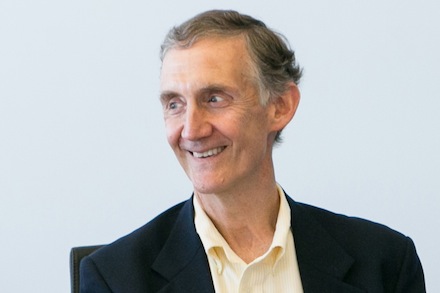
UW CSE’s Ed Lazowska, a member of the Seattle Convening Board of T4A, is profiled in an interview this week:

“T4A: Just about everyone (regardless of political affiliation) sees a large gap between our politics (Washington DC as well as state capitals) and the reality on the issues we face as a country. Why do you think that is? I know it’s a tough question, but what do you think can be done to close that gap?

“EL: The word ‘reality’ is critically important. Partisanship has caused us to lose our grip on reality. Not long ago, residents of the 34 OECD nations were surveyed to learn their response to the statement, ‘Human beings, as we know them, developed from earlier species of animals.’ Rounding to the nearest 5%, the statement was believed to be true by three quarters of those surveyed in Iceland, Denmark, Sweden, France, Japan, the UK, Norway, Belgium, Spain, and Germany. Among respondents in the US, only 40% believed the statement to be true! 40% believed it to be flat-out false, and 20% were not sure. The US was next to last among the 34 OECD nations in the proportion who believed the statement to be true – ahead of only Turkey. This sort of skepticism/ignorance is not restricted to evolution, of course – another example is global warming and climate change. I’m going to say something that sounds really partisan: the aspect of the Bush presidency that will have the longest-lasting negative impact is the manipulation of science and the exploitation of science skepticism/ignorance for political ends. As Daniel Patrick Moynihan had been fond of saying, ‘Everyone is entitled to his own opinions, but not to his own facts.’

“T4A: Are political parties becoming less relevant today, particularly for young adults? Whatever your answer, why do you think that is?

“EL: Of course. Political redistricting has led to extremism. (I happen not to believe that this extremism is equally distributed across the political spectrum, but let’s not get into that.) That’s why T4A.org – off-the-record conversations about issues that really should not be partisan – is so important. At one of our TechTables, the guest said that there are easily 70 Senators who could agree on sane immigration revisions and sane tax/budget revisions if they could do so behind closed doors. Somehow we need to create ‘safe places for people to stand’ if we’re to make progress. At the same time, we need to put a stop to the sort of ‘fair and balanced’ approach that gives equal weight to conflicting positions even when one of them is clearly based on a distortion of the evidence.”

Read more here. Read more →
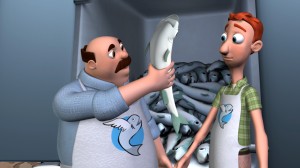
CSE animated short “Catch and Release” at Children’s Film Festival Seattle

catch_and_release_still_1“Catch and Release,” the 2011 animated short produced by students in the digital animation capstone course sequence directed by UW CSE’s Barbara Mones, will be shown at Children’s Film Festival Seattle on the evening of Saturday February 1.

Learn more about “Catch and Release” and other UW Animation Research Labs shorts here.  Purchase tickets to the CFFS showing here. Read more →

UW CSE rocks at IEEE International Conference on Robotics and Automation

logo-rasUW CSE robotics faculty (Maya Cakmak, Dieter Fox, Raj Rao, Josh Smith (joint with EE), and Emo Todorov (joint with Applied Mathematics)) and their students have 14(!) papers accepted at this year’s IEEE International Conference on Robotics and Automation (ICRA), the major conference in robotics. The research cover a large variety of areas in robotics, including biologically inspired microrobots, optimal control, computer vision, human robot interaction, machine learning, hardware design, and manipulation.  The papers:

  • A Wirelessly Powered, Biologically Inspired Ambulatory Microrobot. M. Karpelson, B. Waters, B. Goldberg, B. Mahoney, O. Ozcan, A. Baisch, P.-M. Meyitang, J.R. Smith, R. Wood.
  • Accelerating Imitation Learning through Crowdsourcing. M. Chung, M. Forbes, Maya Cakmak, R.P.N. Rao.
  • Analytically-Invertible Dynamics with Contacts and Constraints: Theory and Implementation in MuJoCo. E. Todorov.
  • Control-Limited Differential Dynamic Programming. Y. Tassa, N. Mansard, E. Todorov.
  • Real-Rime Behavior Synthesis for Dynamic Hand Manipulation. V. Kumar, Y. Tassa, T. Erez, E. Todorov.
  • Design, Optimization, Calibration and a Case Study of a 3D-Printed, Low-Cost Fingertip Sensor for Robotic Manipulation. Z. Xu, S. Kolev, E. Todorov.
  • Learning Predictive Models of a Depth Camera and Manipulator from Raw Execution Traces. B. Boots, A. Byravan, D. Fox.
  •  Space-Time Functional Gradient Optimization for Motion Planning. A. Byravan, B. Boots, S. Srinivasa, D. Fox.
  • Multi-Task Policy Search for Robotics. M. Deisenroth, P. Englert, J. Peters, D. Fox.
  • Toward Online 3D Object Segmentation and Mapping. E. Herbst, P. Henry, D. Fox.
  • Unsupervised Feature Learning for 3D Scene Labeling. K. Lai, L. Bo, D. Fox.
  • ST-HMP: Unsupervised Spatio-Temporal Feature Learning for Tactile Data. M. Madry, L. Bo, D. Kragic, D. Fox.
  • Hierarchical Sparse Coded Surface Models. M. Ruhnke, L. Bo, D. Fox, W. Burgard.
  • Learning to Identify New Objects. Y. Sun, L. Bo, D. Fox.

Go team! Read more →

UW’s AccessComputing helps code.org make their inspirational videos accessible

logosUW’s AccessComputing – the Alliance for Access to Computing Careers – has worked with code.org to make their inspirational videos accessible to blind students by adding audio description. Audio description provides additional audio to the video to describe what is visually happening.  The added audio is in a different voice to distinguish it from the voices in the original video.

AccessComputing, a joint effort by CSE and DO-IT (Disabilities, Opportunities, Internetworking, and Technology) at the University of Washington,  is an NSF-funded alliance with the goal of increasing the participation of students with disabilities, nation-wide, in computing fields. Read more →

CSE’s Yoav Artzi wins 2014 Microsoft Research Ph.D. Fellowship

photoAnd in late-breaking news (“nobody ever tells me anything”), UW CSE Ph.D. student Yoav Artzi has also been named a recipient of a 2014 Microsoft Research Ph.D. Fellowship.

Yoav, who is advised by Luke Zettlemoyer, works at the intersection of natural language processing, machine learning, and learning through interaction. Read more →

CSE’s Mayank Goel wins 2014 Microsoft Research Ph.D. Fellowship

MayankUW CSE Ph.D. student Mayank Goel has been named one of 12 recipients (from 181 nominees!) of 2014 Microsoft Research Ph.D. Fellowships.

Mayank is advised by professors Gaetano Borriello and Shwetak Patel. His research concerns ubiquitous computing and ICTD (information and communication technology for development).

Other recent UW winners of this hugely competitive fellowship are Gabe Cohn and Franzi Roesner in 2012, Morgan Dixon in 2011, Kayur Patel in 2009, and Pravin Bhat, Scott Saponas, and Jon Froehlich in 2008.

Hearty congratulations to Mayank, and warm thanks to Microsoft Research for an extraordinary partnership going back more than two decades. Read more →

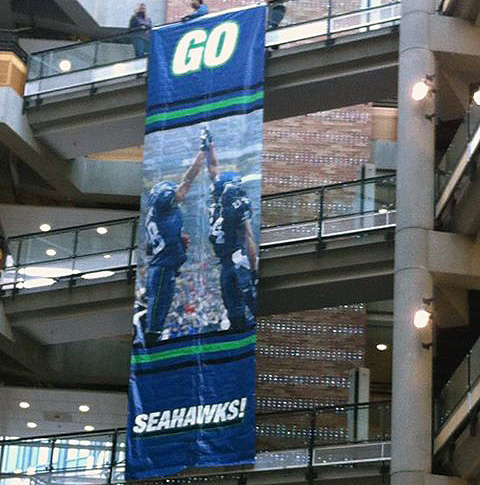
The Paul G. Allen Center for Computer Science & Engineering bids farewell to the 49ers

1555353_10151864302242091_1858035170_nCoffee or hot tubs?

Software or croissants?

You make the call!

Go ‘Hawks! Read more →

Games for Learning: The Norwegian Algebra Challenge

header2Remember last spring’s Washington State Algebra Challenge?  In a partnership between UW CSE’s Center for Game Science and the Technology Alliance, 4,192 Washington State K-12 students solved over 390,000 algebra equations during the first week of June, using an adaptive version of the game DragonBox.

This week marks the Norwegian Algebra Challenge. Those of us who live in Ballard are excited to report that on the first day, all previous records were shattered: over 1.6 million equations were solved. With one day to go, we’re at more than 7 million equations and more than 35,000 participating students – plus the Norwegian Prime Minister!

Next up for the Center for Game Science: the Minnesota Algebra Challenge (“Yah, sure, you betcha!”) during the week of February 3. Read more →

DawgBytes update – UW CSE’s K-12 outreach program

so.1e93bb8DawgBytes (“A Taste of CSE”) is UW’s Computer Science & Engineering K-12 outreach program – we introduce students, parents, and teachers to the exciting world of computing.

Learn about recent activities and upcoming events here! Read more →

UW startup SNUPI on KING5 TV

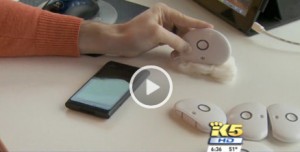
Untitled“Whatever you call it – the Internet of Things, connected homes, smart homes – Jacquelyn Jaech knew it would become one of the big themes from the recent International Consumer Electronics Show in Las Vegas …

“Jaech and her husband, SNUPI CEO Jeremy Jaech, hope WallyHome ends up as the must-have hardware for homeowners looking to spare themselves the expensive grief of mold and water damage. The $299 kit includes six sensors that monitor moisture, humidity and temperature around the home. SNUPI (Sensor Network Utilizing Powerline Infrastructure) uses the existing wiring in homes to create a wireless network, all controlled by a hub that plugs into a standard outlet.”

Jeremy – one of Seattle’s most successful serial entrepreneurs – is a CSE alum. SNUPI’s technology comes from the lab of UW CSE and EE professor Shwetak Patel.

Watch the KING5 report here.  Learn about SNUPI’s first product, Wally, here. Read more →

« Newer PostsOlder Posts »