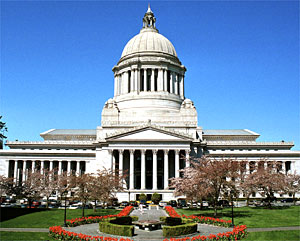
CS4HS 2015

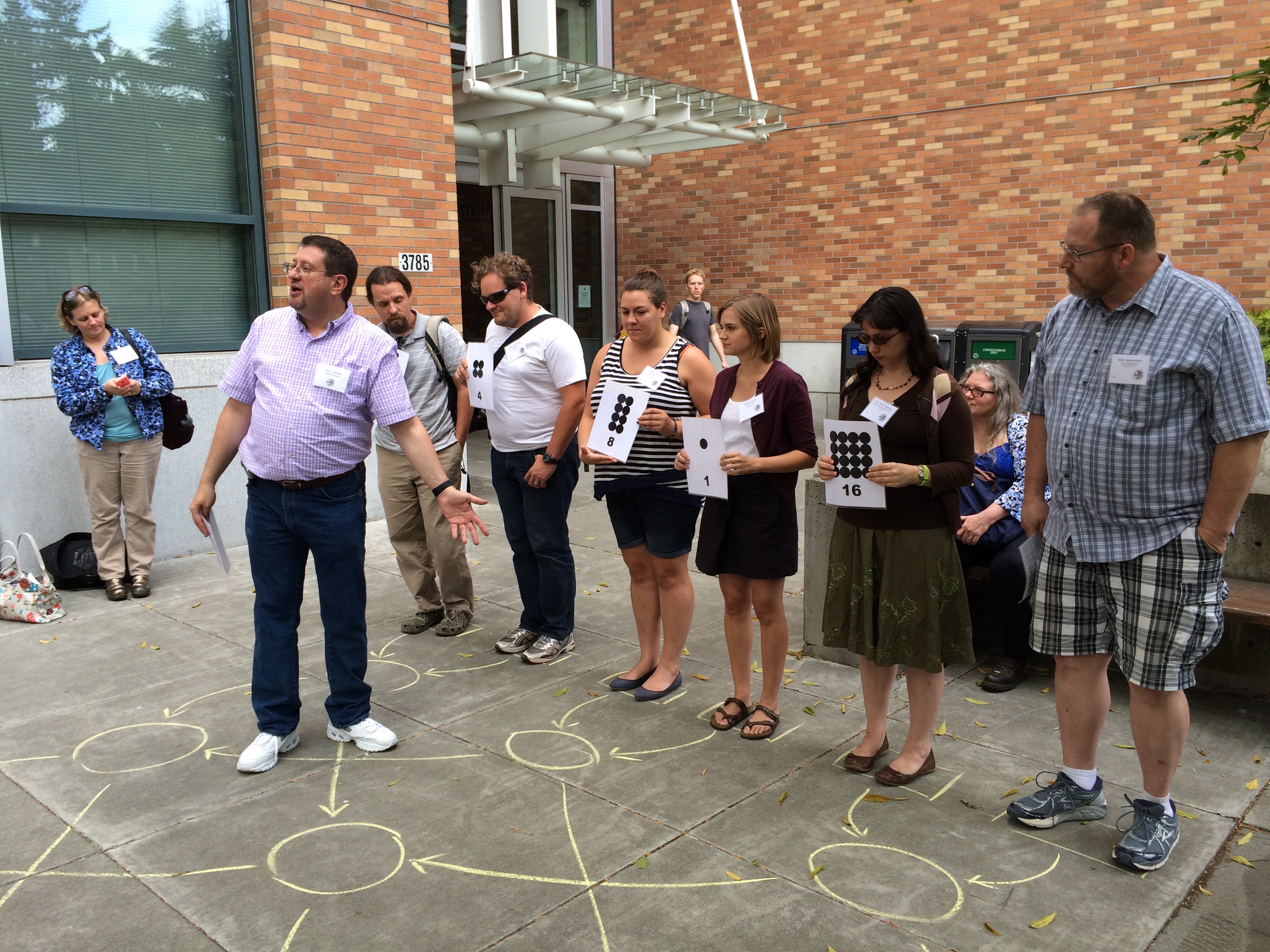
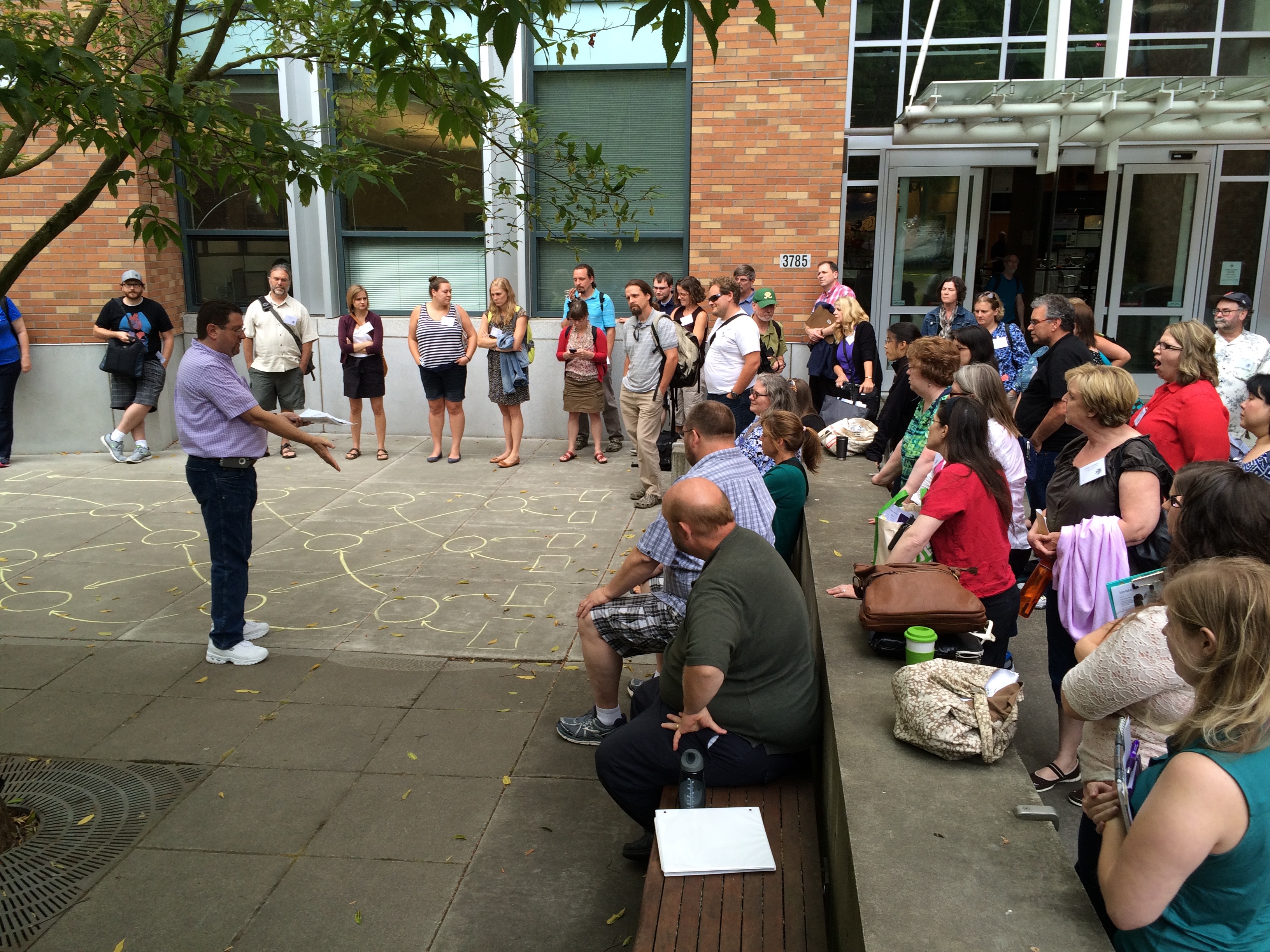
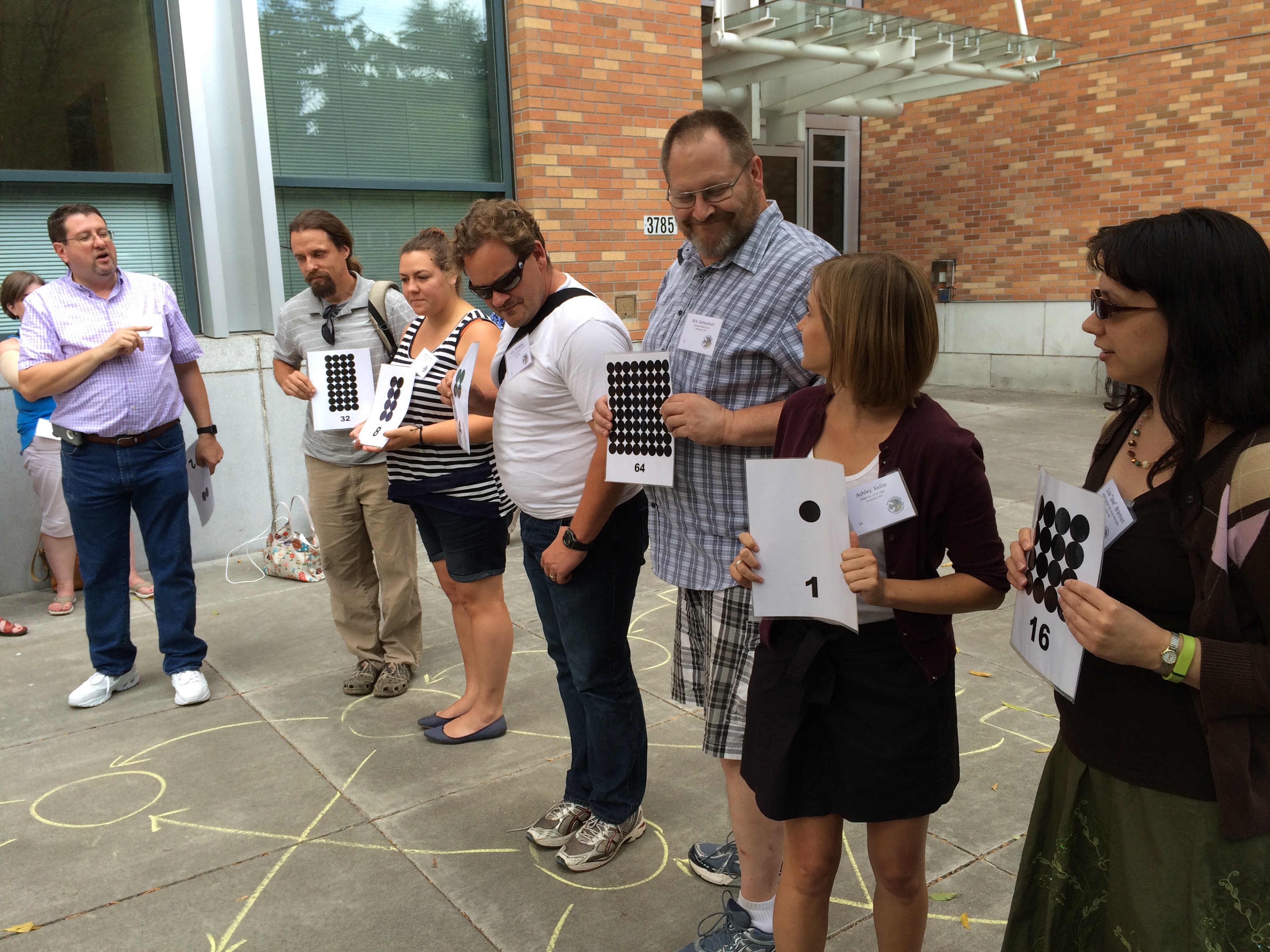
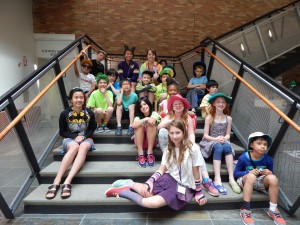
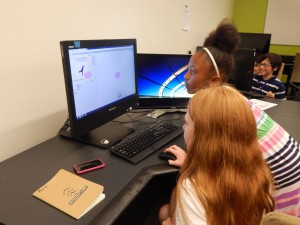
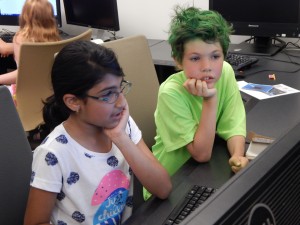
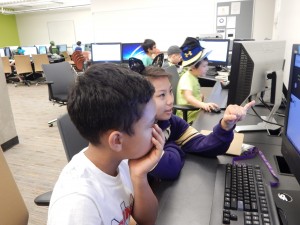
IMG_5366IMG_5363IMG_5368This is the 9th year of UW CSE’s CS4HS, a 3-day summer workshop on computer science for middle school and upper school math and science teachers from the Puget Sound region.

In the photos, Tom Cortina, our long-time collaborator from Carnegie Mellon University (co-originator of CS4HS, along with UW and UCLA) walks the teachers through the basics of sorting networks!

Learn all about CS4HS here. Learn about DawgBytes (“A Taste of CSE”), UW CSE’s extensive K-12 outreach program, here. Read more →

UW Daily: “CSE applicants at all-time high”

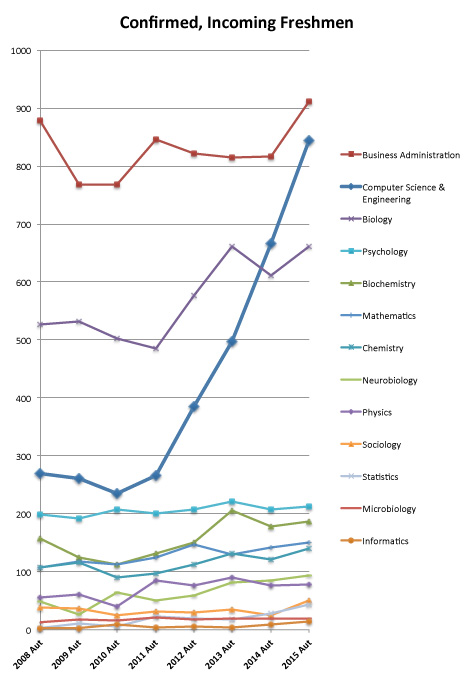
Other STEMThe UW Daily reports on exploding interest in Computer Science & Engineering on the part of UW applicants, incoming freshmen, and current students.

The number of incoming freshmen choosing CSE as their intended major increased by approximately 900 people this year, with 3,679 applicants total. Of those applicants, 2,264 were admitted to the UW for the 2015-16 academic year, making CSE the second most popular major at UW behind business …

“While applications to the CSE major are at an all-time high, many students don’t realize their interest in the subject until much later. For example, 58 percent of women who are CSE majors didn’t intend to enter the program upon enrolling at the UW. This means freshman intent underestimates the actual demand the CSE program should expect.

“‘I definitely didn’t have experience beforehand,’ senior CSE major Stephanie Shi said. ‘I was very against [CSE] … but it turned out to be the complete opposite of what I expected.'”

Read more here. Read more →

UW CSE’s GRAPPA wins Best Paper Award at 2015 USENIX Annual Technical Conference

atc15_button_125The paper Latency-Tolerant Software Distributed Shared Memory describing UW CSE’s GRAPPA system was recognized today as a Best Paper at the 2015 USENIX Annual Technical Conference.

GRAPPA is a modern take on software distributed shared memory (DSM) for in-memory data-intensive applications. GRAPPA enables users to program a cluster as if it were a single, large, non-uniform memory access (NUMA) machine. Performance scales up even for applications that have poor locality and input-dependent load distribution. GRAPPA addresses deficiencies of previous DSM systems by exploiting application parallelism, trading off latency for throughput.

The paper compares the performance of GRAPPA with an in-memory map/reduce framework (10X faster than Spark), a vertex-centric framework inspired by GraphLab (1.33X faster than native GraphLab), and a relational query execution engine (12.5X faster than Shark).

Congratulations to the GRAPPA team: Jacob Nelson, Brandon Holt, Brandon Myers, Preston Briggs, Luis Ceze, Simon Kahan, and Mark Oskin.

Learn more about GRAPPA here. Read more →

Jake Wobbrock profiled in NY Times

05-CORNER-blog427Jake Wobbrock – iSchool professor, CSE adjunct professor, and founding CEO and now chief scientist of AnswerDash, a provider of automated customer service for websites – is profiled in today’s New York Times in the “Corner Office” feature. A few excerpts:

“There’s no genuine opportunity to be a hero without the opportunity to be a goat, too. So if you’re on the free throw line at the end of the basketball game with one second left and two shots to win the game, you can be the hero, but it comes with the chance of being the goat. The point is not to fear being the goat because if you shy from that, you’ll never be the hero.”

“Your purpose or calling in life is really at the intersection of your great passion and the world’s great need. It’s not just about following your passion. Spend some time looking at the world, not just yourself.”

Read more here. Read more →

UW CSE’s Pedro Domingos, Geoff Hulten win KDD2015 Test of Time Award

UntitledUW CSE professor Pedro Domingos and his Ph.D. alum Geoff Hulten (now at Microsoft Research) have received the KDD2015 Test of Time Award – presented at the 21st ACM SIGKDD Conference on Knowledge Discovery and Data Mining to a paper from a KDD conference beyond the last decade that has had an important impact on the data mining research community.

KDD is the flagship conference of the ACM Special Interest Group on Knowledge Discovery and Data Mining, and the top international conference in data science. Pedro and Geoff’s paper, “Mining High-Speed Data Streams,” was presented at KDD2000.

Congratulations Pedro and Geoff! Read more →

UW CSE’s computer science summer day camps kick off!

DSCN0152This week marked the kickoff of UW CSE’s extensive set of computer science summer day camps for elementary, middle, and high school students.

We hosted a co-ed camp for students entering grades 3-5 for “Scratch Adventures,” and a co-ed camp for students entering grades 10-12 for “Physical Computing.”

During the week of July 7 we’ll again host “Physical Computing.”

During the weeks of July 21 and August 11 we’ll host students entering grades 7-9 for “Building Android Apps.”

DSCN0090During the weeks of July 27 and August 3 we’ll host girls camps using Processing for students entering grades 10-12.

And during the weeks of August 10 and August 17 we’ll host girls camps using Processing for students entering grades 7-9.

Learn more about our summer day camps here.

Learn more about Dawgbytes (“A Taste of CSE”), UW CSE’s broad-based K-12 outreach program, here.


DSCN0164DSCN0139 Read more →

Washington State invests in Computer Science education!

Olympia1

All-in-all, the Washington State legislature’s session that draws to a close this week (after its second overtime period – thank god they didn’t have to resort to penalty kicks) was a great one for Computer Science!

With extraordinary leadership from Reps. Drew Hansen and Chad Magendanz, and with strong backing from Code.org, Microsoft, the Washington Tech Industry Association, and many others, the Washington State Legislature passed HB 1813, establishing standards for learning and teaching computer science in K-12.

In the operating budget, Drew and Chad’s work and the backing of a strong coalition paid off once again, supported by Rep. Ross Hunter (Appropriations) and Sen. Andy Hill (Ways & Means), with funding for K-12 teacher preparation, expansion of AP Computer Science courses, a new computer science program at Bellevue College, a data analytics program at Washington State University’s Everett campus, a 4-year cybersecurity degree at Western Washington University’s Olympic Peninsula campus, and a significant expansion of UW Computer Science & Engineering. (Drew and Chad have a plan to increase UW CSE’s annual degree production to 600 from last year’s 300; 3/8ths of their goal was achieved in this session, with more hopefully to come in future biennia.) This is huge.

Here’s the bad news: Unfortunately and inexplicably, despite broad support and despite tireless efforts by Microsoft, WTIA and UW, funding for UW CSE’s building – essential to accommodating program growth – went off the tracks in the end-game of the session. UW had requested $40M from the state for what is anticipated to be a $110M project, with the rest to be raised privately. (Microsoft kicked off the private fundraising campaign in fine style several weeks ago – as they had done for our current building – with a $10M commitment.) The Governor supported this request. The House, in its preliminary budget, provided $6M. The Senate, in its preliminary budget, provided $32.5M. It appeared that we were on track to receive $32.5M in the final budget. In fact, it even appears that way in the budget document. But in the fine print, the Legislature provided $17.5M in funding, and directed UW to provide an additional $15M from something called the UW Building Fund – local funds derived largely from a “facilities” portion of student tuition and intended for essential maintenance of existing facilities, not for capital projects.

Tough to figger. UW CSE prepares Washington’s students for jobs at Washington’s leading-edge companies at a level that vastly exceeds that of any other program. Both student demand and employer demand are exploding. Washington’s students, and Washington’s leading-edge companies, badly need an expanded program. The overall capital budget was $2.2B, and the higher education portion was $540M, but somehow our project didn’t make the cut. Back to the drawing board – hopefully this can be redressed in the supplemental session.

Code.org has a nice post on the overall outcome of the session, here.

Thanks to all who continue to support increased investment in Computer Science education in Washington! Read more →

The fastest growing AP exam in the past 5 years: Computer Science!

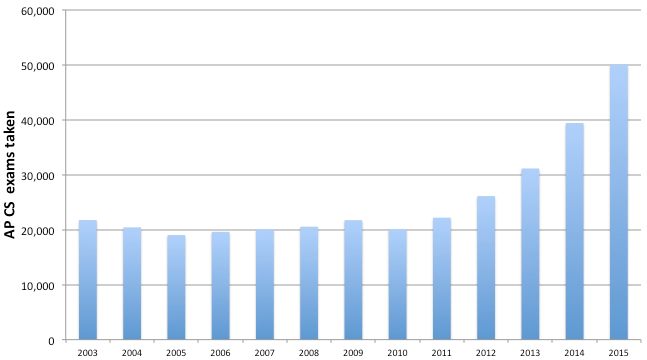
apGranted, we had (and still have) a pretty deep hole to climb out of, but between 2010 and 2015, Computer Science AP exams are up by 150% – from 20,000/year to 50,000/year.

This is particularly remarkable since only 5% of schools offer AP Computer Science. Let’s fix that!

Visit the Code.org website here; check out their blog post on AP growth here. Read more →

What does the founder of a tech startup look like?

02UP-Startups-superJumboWhat does the founder of a tech startup look like? Not like the photo to on the right!

Claire Cain Miller reports in the New York Times on a study by researchers at Berkeley’s Haas School of Business. The average founder is 38, with a master’s degree and 16 years of work experience.

And while only 12 percent of current founders are women, when the researchers searched for potential founders based on matches with other characteristics of successful founders, 20 percent of the people they found were women. “If you look at just the professional histories of the people who got funded, then it suggests people who share those histories are much more diverse than the people who get funded.”

“It’s true that start-up investing will never be a science. It depends too much on timing, luck and human judgment. But a more diverse set of founders might be financed by doing more than waiting for a kid in a hoodie to show up at the door.”

Read more here. Read more →

Happy retirement, Scott Rose!

20150630-_DSF3546

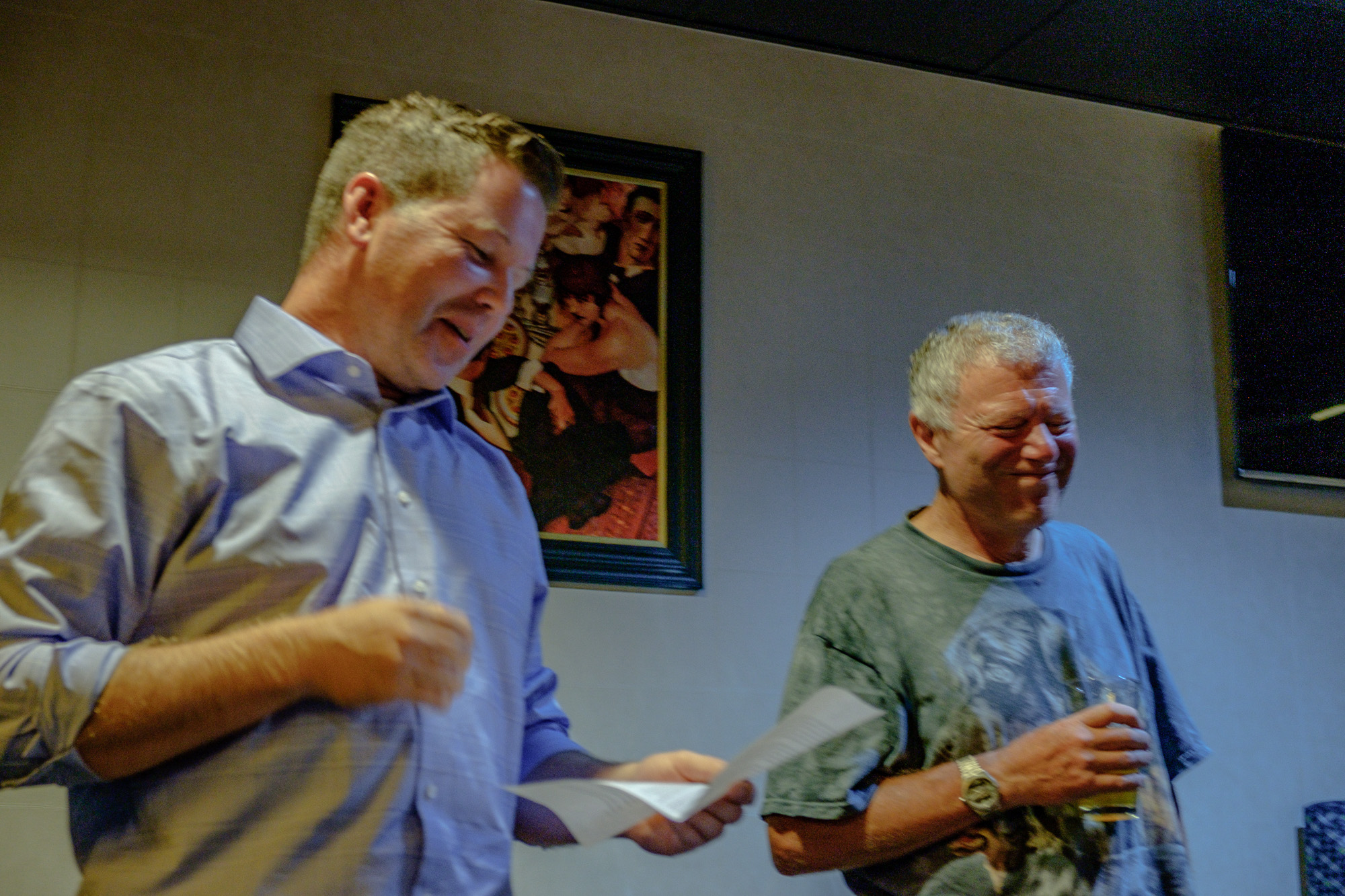
Scott grimaces as UW CSE Director of Computing Aaron Timss reads a tribute

UW CSE M.S. alum Scott Rose has been CSE’s extraordinary webmaster-in-exile for more than 20 years – working first from Madison WI and then from Vancouver BC as he accommodated the career of his academic superstar wife, UW CSE Ph.D. alum Anne Condon.

Anne has a sabbatical coming up (Caltech, New Zealand, and Ireland are on the agenda), and Scott took the opportunity to pull the ripcord.

20150630-_DSF3586

Da man!

Thanks, Scott, for your decades of superb work!

(Additional Bruce Hemingway photos here.) Read more →

« Newer PostsOlder Posts »