“The Master Algorithm” reaches #7!

wapoPedro Domingos’ popular book about machine learning, The Master Algorithm: How the Quest for the Ultimate Learning Machine will Remake our World, is #7 on the Washington Post‘s best seller list!

Watch out, The Martian – can a feature film be far behind?

Late to the party? Buy it from Amazon here!

Check out Pedro on the big screen here and here, and watch the video of his appearance at Seattle’s Town Hall here. Read more →

UW spinout SNUPI and Sears make a deal for WallyHome technology

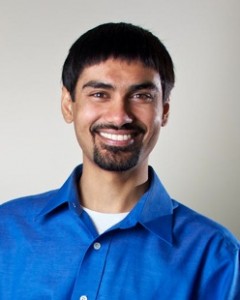
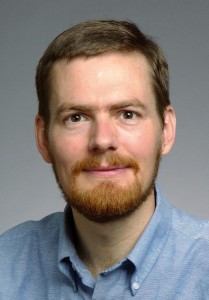
Shwetak Patel

Shwetak Patel

SNUPI Technologies, the startup resulting from the research of  UW CSE and EE professors Shwetak Patel and Matt Reynolds and graduate student Gabe Cohn, and led by serial entrepreneur (and UW CSE alum) Jeremy Jaech, has sold its WallyHome sensing technology to Sears. SNUPI, which stands for “Sensor Network Utilizing Powerline Infrastructure,” also plans to license related technology to the company and to consult on the development of future products. As part of the deal, Sears announced it is opening an engineering office in Seattle — on the UW campus.

From the GeekWire article:

“The deal gives Sears technology that can sense changes in moisture, temperature and humidity — alerting property owners to water leaks and other potential problems. The technology promises to bolster the company’s lineup of Connected Solutions smart home devices.

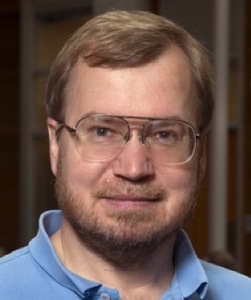
Reynolds_0618

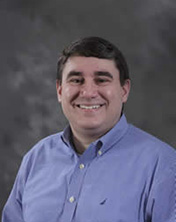
Matt Reynolds

“As part of the acquisition, Sears will also assume a 10,000-square-foot lease on the University of Washington campus, where the retail and home services giant will operate a new tech development center….”

“Patel, who sold a previous startup to Belkin, said in a statement that the deal with Sears ‘further amplifies the University of Washington’s leadership in the research and commercialization of IoT solutions.’ ”

This is the second corporate engineering office located in Seattle as a result of Patel’s research: a year ago Belkin located the headquarters of its WeMo home automation division in Seattle after acquiring Patel’s earlier startup Zensi.

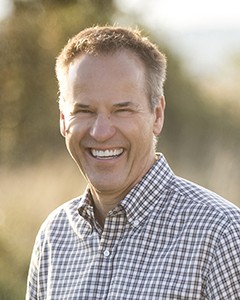
Jeremy Jaech

Jeremy Jaech

Read the full article here. Read more →

Artificial intelligence researchers invited to take the Allen AI Science Challenge

AI2 logoPaul G. Allen, founder of the Allen Institute for Artificial Intelligence (AI2), aims to spur the development of artificial intelligence that can understand and answer general questions about the world. Today, AI2 CEO (and UW CSE professor) Oren Etzioni announced the creation of the Allen AI Science Challenge – inviting academic and industry researchers to demonstrate that their AI system can outperform all others on an 8th grade multiple choice science test.

“IBM has announced that Watson is ‘going to college’ and ‘diagnosing patients’…But before college and medical school — let’s make sure Watson can ace the 8 th grade science test. We challenge Watson, and all other interested parties — take the Allen AI Science Challenge,” Etzioni said in the press release announcing the competition.

The institute has partnered with Kaggle, an online community of data scientists that holds competitions to encourage the solution of complex data science problems, to administer the challenge. In addition to gaining serious cred in the computing community, competitors have a shot at a top prize of $50,000 for the AI system that answers the most questions correctly, with second and third prizes of $20,000 and $10,000, respectively. AI2 will announce the winners next February at the AAAI 2016 conference in Phoenix, Arizona.

Learn more and enter the competition here. Read the GeekWire article about the announcement here. Check out the recent breakthrough in AI research by AI2 and UW – which tested an AI system’s ability to solve SAT math questions – here. Read more →

UW CSE’s Tom Anderson recognized with ACM SIGOPS “Hall of Fame” Award

tomA number of major technical conferences have introduced “Test of Time” awards recognizing research papers that have had the greatest impact with the benefit of (typically) ten or more years of hindsight.

The “ACM SIGOPS Hall of Fame” is the “Test of Time” award for the operating systems community.

At this week’s ACM Symposium on Operating Systems Principles, UW CSE professor Tom Anderson’s 1993 ACM SOSP paper “Efficient Software-Based Fault Isolation” – co-authored with Robert Wahbe, Steve Lucco, and Susan Graham when Tom was on the faculty at UC Berkeley – was inducted into the ACM SIGOPS Hall of Fame. The citation reads:

This paper demonstrated that compiler or code-rewriting techniques could isolate untrusted code modules, preventing them from writing or jumping to addresses outside their “fault domain,” without the overhead of crossing hardware-enforced address space boundaries, and without much increase in execution time of code within a domain. The paper inspired substantial subsequent research, and the basic techniques have been implemented in widely-deployed software, such as Web browsers.

(We also note with pride that two other papers inducted this week to the ACM SIGOPS Hall of Fame were co-authored by UW CSE Ph.D. alums: “The Google File System” from the 2003 SOSP, co-authored by Shun-Tak Leung, and “MapReduce: Simplified Data Processing on Large Clusters” co-authored by Jeff Dean.)

UW CSE faculty and students have an extraordinary record of “Award Paper” and “Test of Time” recognition at the leading networking and operating systems conferences:

Award Papers

ACM Symposium on Operating Systems Principles (SOSP): 1979, 1985, 1987, 1989, 1991, 1995, 1997, 1999, 2003

ACM Special Interest Group on Communications and Computer Networks Conference (SIGCOMM): 1993, 2002 (Student Paper), 2008, 2011, 2013, 2015 (Student Paper)

USENIX Symposium on Operating Systems Design and Implementation (OSDI): 2002 (Student Paper), 2004, 2014

USENIX Symposium on Networked Systems Design and Implementation (NSDI): 2007 (Student Paper), 2008, 2010, 2013, 2015

Test of Time Awards

ACM SIGOPS Hall of Fame: 2009 (for a 1985 paper),2015 (for Tom’s 1993 paper)

ACM Special Interest Group on Communications and Computer Networks Conference (SIGCOMM) Test of Time Award: 2014 (for a 2002 paper) Read more →

UW CSE Ph.D. alumna A.J. Brush of Microsoft Research to lead CRA-W virtual town hall

AJ BrushUW CSE alumna A.J. Brush (Ph.D., ’02) is kicking off the CRA-W’s new series of virtual undergraduate town halls on Thursday, October 8th at 2:00 pm with a talk on inventing technology for homes and families.

The CRA-W virtual town hall series offers undergraduate students an opportunity to interact with leading women in the field of computing and get answers to their questions on topics ranging from how to get involved in undergraduate research, to professional development, to how to prepare for graduate school.

A.J., who focuses on human-computer interaction and co-leads the Lab of Things project at Microsoft Research, is a terrific role model for young women contemplating a career in computing. She serves as co-chair of CRA-W, a committee of the national Computing Research Association that works to increase the number of women engaged in computing research. In 2010, A.J. was recognized with the Borg Early Career Award for her positive contributions to the advancement of women in computing.

In a happy coincidence, A.J.’s town hall will be followed later in the day by a reception for women of the UW CSE community – an annual tradition in advance of the Grace Hopper Celebration of Women in Computing. Learn more and register to participate in the virtual town hall here. Read more →

UW CSE @ SOSP

image1(1)

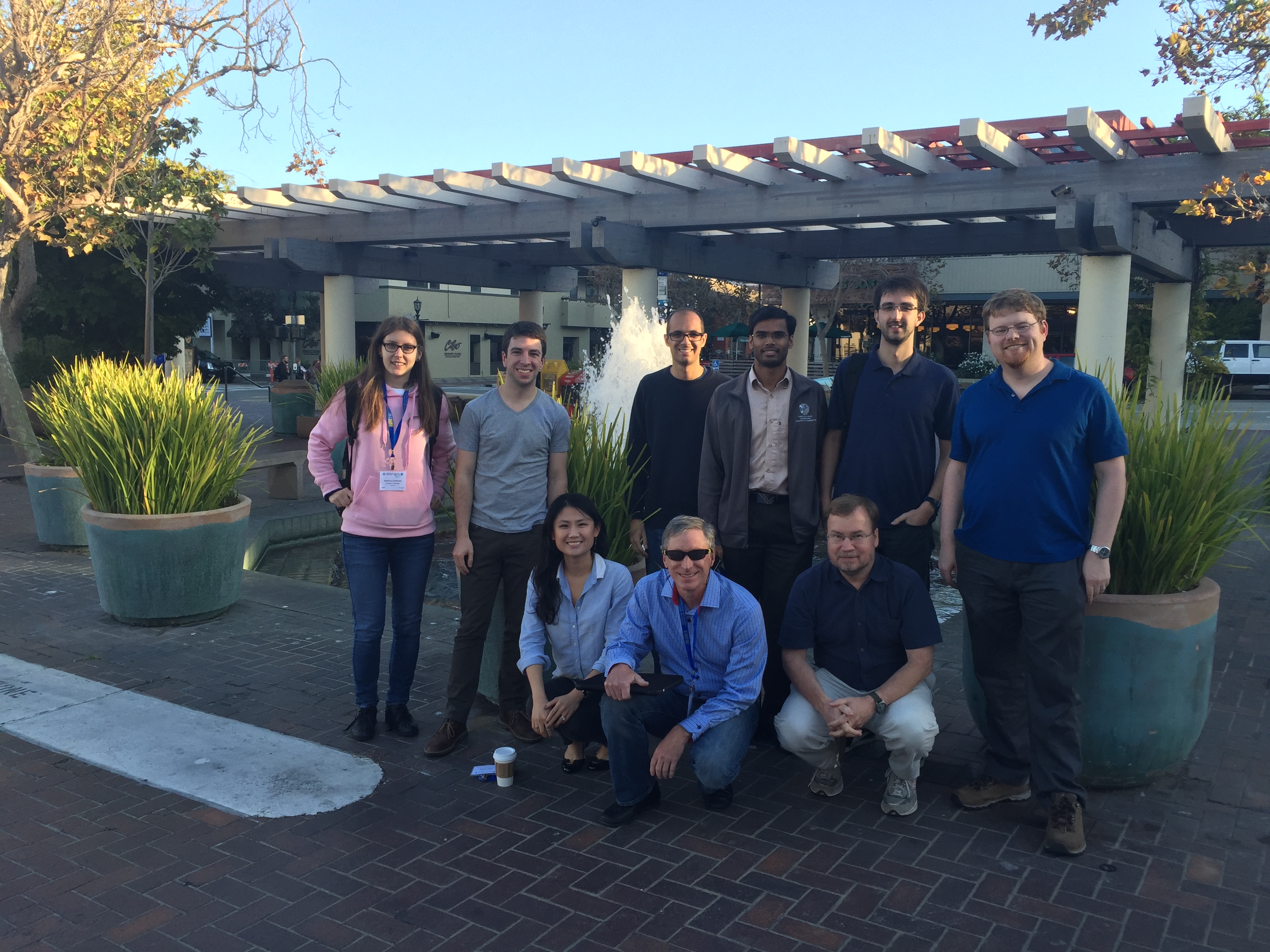
The 2015 UW CSE SOSP contingent: Adriana Szekeres, Ellis Michael, Niel Lebeck, Naveen Kr. Sharma, Pedro Fonseca, Dan R. K. Ports / Irene Zhang, Hank Levy, Tom Anderson

As always, UW CSE was well represented at the biennial ACM Symposium on Operating Systems Principles. This was the 25th SOSP – the 50th anniversary of this premier operating systems conference.

Learn about UW CSE’s research in systems and networking here. Read more →

UW CSE’s Kurtis Heimerl and Endaga joining Facebook

Kurtis HeimerlUW CSE alum and soon-to-be faculty member Kurtis Heimerl (UW CSE B.S. ’07, UC Berkeley Ph.D. ’13) co-founded startup company Endaga to help under-served communities in remote areas of the world to build small-scale, independent cellular networks that they own and run themselves. The company – which was spun out of UC Berkeley, where Kurtis completed his Master’s, Ph.D. and postdoc working with another UW CSE alum, Tapan Parikh (Ph.D., ’07) – epitomizes the potential for technology to meaningfully improve quality of life around the globe.

Now, thanks to Facebook, Kurtis and the Endaga team are starting a new chapter as they work to improve connectivity for people everywhere.

While this means that we have to wait a little longer for his official homecoming, we are excited to see what comes out of this new partnership. We are also delighted to report that Kurtis intends to spend a couple of days a month at UW CSE engaging with our faculty and students between now and when he takes up his faculty position next September.

Read more about the new partnership on the Endaga blog here.

Congratulations to Kurtis and his colleagues – we will enjoy watching their progress and look forward to the day Kurtis brings his considerable talents full-time to UW CSE! Read more →

UW CSE news “back to school” edition

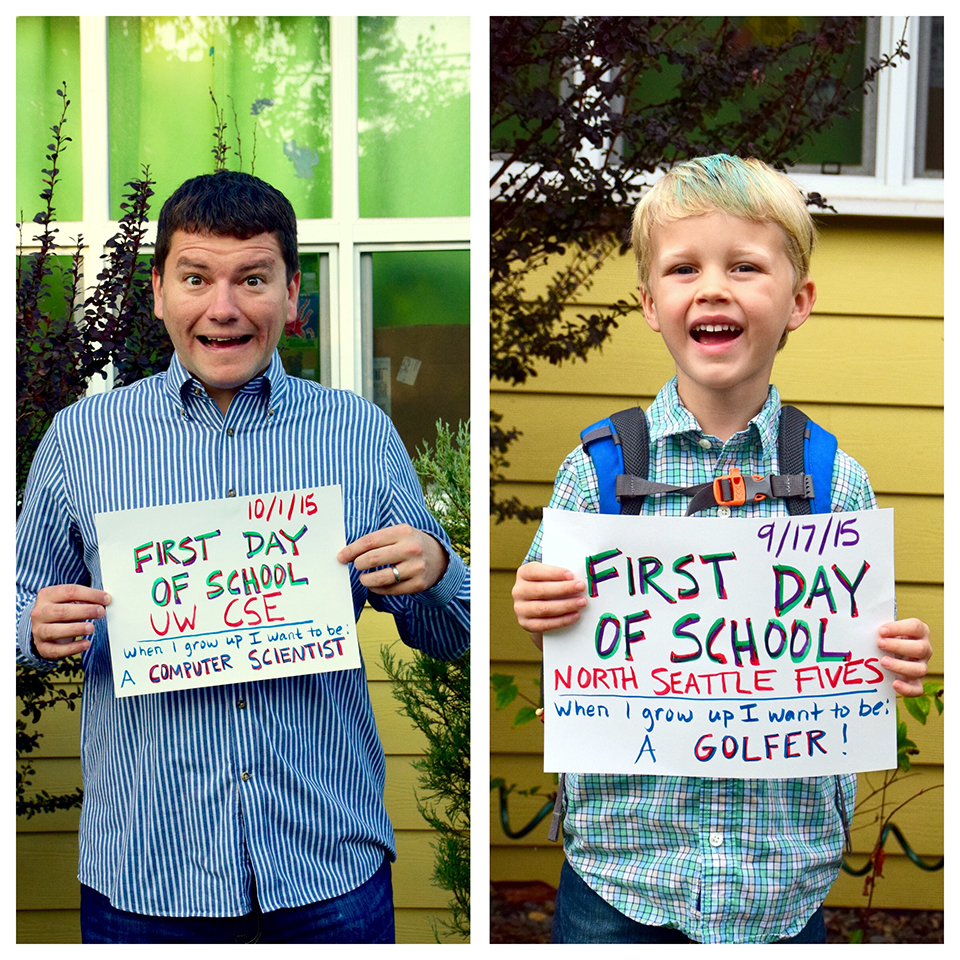
Classes started this week on the beautiful UW campus – and in K-12 schools across the region. To mark the occasion, UW CSE professor James Fogarty and his son posed for the traditional back-to-school photo.

James Fogarty and his son go back to school

As James said, “Excited for the first day of classes. Awesome staff, awesome students. Let’s make stuff!”

Welcome back, everyone – we hope you had a great first week! Read more →

Friends of UW CSE take to the high seas!

IMG_5693Well, it was actually more of a drifting match, but a good time was had by all!

Spencer Rascoff, Michael and Cari Schutzler, Rob Short, Brad Smith, and John and Patti Torode join Tom Alberg, Ed Lazowska, Hank Levy, and Judy Mahoney aboard Tom’s 77′ sloop Cascadia for a lovely evening on Puget Sound!


IMG_5708 Read more →

Study rates UW CSE software engineering research most practically relevant of the past five years

Michael Ernst

Michael Ernst

A UW CSE research paper on proactive conflict detection, part of the speculative analysis project led by professors Michael Ernst and David Notkin, was rated the most practically relevant software engineering research of the last five years in a recent industrial relevance study.

The study, which was conducted by Microsoft Research and Singapore Management University, asked more than 500 software developers to rate the relevance of 571 research papers in order to determine how relevant software engineering research is to practitioners in the field. The greatest number of respondents rated the UW CSE project, which helps developers to collaborate more effectively and prevents potentially costly conflicts, as “essential” to software development practice.

When developers on a team work in parallel, they may make changes that are independently good but which, when combined, break the software. The UW CSE research team developed a tool, Crystal, that helps developers to identify, manage and prevent such conflicts by continuously merging people’s changes, before the software developers do so and without interfering with the developers. If the changes are in conflict, developers learn about them and can address them immediately, before wasting time on code that will later have to be reworked or discarded. If the changes are not in conflict, then developers can proceed with confidence, without having to worry about potentially negative consequences. In both cases, developers can spend less time coordinating with their teammates and more time getting their work done.

The project was conducted by Yuriy Brun (then a postdoc at UW CSE, now a professor at University of Massachusetts) and Reid Holmes (previously a postdoc at UW CSE, now a professor at University of British Columbia) alongside Michael Ernst and the late David Notkin of UW CSE’s Programming Languages & Software Engineering group.

To learn more about proactive conflict detection, watch this video and read the research paper here. Read the complete results of the industrial relevance study, which was published at the ESEC/FSE conference last month, here.

Michael Ernst’s name keeps cropping up in the search for excellence in software engineering: in 2013, Microsoft Academic Search ranked him 2nd among software engineering researchers worldwide, based on his work over the previous 10 years.

We have known for some time, of course, that our PLSE group is among the best. But it’s always nice to have external validation! Read more →

« Newer PostsOlder Posts »