
Each year, the MIT Technology Review recognizes science and technology trailblazers whose work is helping solve global problems. Three members of the Allen School community were named part of this year’s MIT Technology Review Innovators Under 35 Asia Pacific — professors Simon Shaolei Du and Ranjay Krishna, along with alum Sewon Min (Ph.D., ‘24), now a faculty member at University of California, Berkeley and research scientist at the Allen Institute for AI (Ai2).
The three were recognized as pioneers for their innovative research that is advancing our understanding of artificial intelligence, large language models, computer vision and more.
Simon Shaolei Du: Tackling core AI challenges from a theoretical perspective
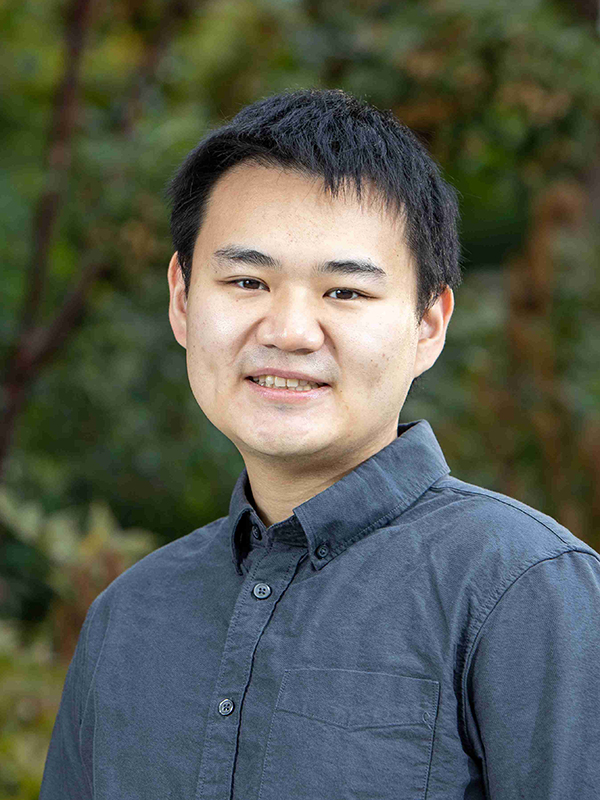
Recent innovations in large-scale machine learning models have transformed data-driven decision making, from the rise of self-driving cars to ChatGPT. However, we still don’t understand exactly how these powerful models work, and Du is interested in unraveling some of the mysteries behind machine learning.
“My work focuses on building the theoretical foundations of modern artificial intelligence, establishing a systematic research path around deep learning’s trainability and generalization, as well as sample complexity in reinforcement learning and representation learning,” Du said.
Du’s research has already provided theoretical explanations for some of deep learning’s black boxes. He and his collaborators provided one of the first proofs for how over-parameterized machine learning models and neural networks can be optimized using a simple algorithm such as gradient descent. The researchers found that, with enough over-parameterization, gradient descent could find the global minima, or the point where the model has zero error on the training data, even if the objective function is non-convex and non-smooth. He also established the connection between deep learning and kernel methods, explaining how these models are able to generalize so well despite their large size. Beyond demystifying how these models work, Du is helping make over-parameterized models more mainstream. In 2022, he received a National Science Foundation CAREER Award to support his research in designing a resource-efficient framework to help make modern machine learning technologies more accessible.
He has also tackled core challenges in reinforcement learning, such as its high data requirements. Because agents learn through trial-and-error interactions with the environment, it can take many interactions, and data points, to build up a comprehensive understanding of the environment’s dynamics. To make the process more efficient, Du and his collaborators introduced a new algorithm to address an open problem on sample complexity that had remained unsolved for almost three decades. In their paper, the researchers prove that their algorithm can achieve optimal data efficiency and show that its complexity is not dependent on whether the planning horizon is long or short. Du also provided the first theoretical results showing that a good representation as well as data diversity are both necessary for effective pre-training.
Prior to his TR35 recognition, Du was named a 2022 AI Researcher of the Year, 2024 Sloan Research Fellow and a 2024 Schmidt Sciences AI2050 Early Career Fellow.
Ranjay Krishna: Developing ‘visual thinking’ for vision-language models
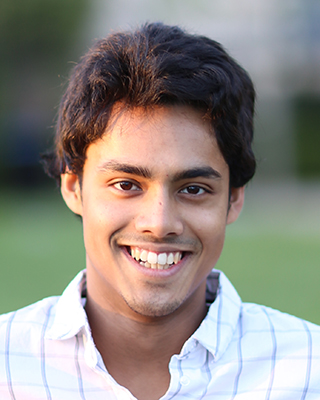
Krishna’s research sits at the intersection of computer vision and human computer interaction and integrates theories from cognitive science and social psychology. Through this multidisciplinary approach, his work enables machines to learn new knowledge and skills through social interactions with people and enhances models’ three-dimensional spatial perception capabilities.
“I design machines that understand the world — not just by recognizing pixels, but by reasoning about what they see, where they are and how to act to change the world around them,” said Krishna, who directs the UW RAIVN Lab and leads the PRIOR team at Ai2.
Krishna addresses large vision-language models’ deficiencies in compositional reasoning due to their inability to combine learned knowledge on the spot to handle new problems. Krishna proved that simply scaling up the models is not an effective solution. Instead, he and his collaborators introduced an iterated learning algorithm which is inspired by the cultural transmission theory in cognitive science. This method periodically resets and retrains the model, encouraging visual representations to evolve toward compositional structures. By combining this technique with the PixMo dataset, Krishna helped develop the Molmo series of models, Ai2’s family of open source and state-of-the-art multimodal models that can both understand and generate content using text and images.
He is also interested in tackling multimodal models’ challenges with spatial reasoning. While these models can often perform well in basic tasks like object detection, they struggle with tasks requiring a deeper understanding of geometric transformations and spatial context, such as sketching. Krishna and his collaborators developed Sketchpad, a framework that gives multimodal language models a visual sketchpad and tools to draw on it. Using this technique, a model can “think visually” like humans can by sketching with auxiliary lines and marking boxes, which helps it improve its reasoning accuracy and break down complex spatial and mathematical problems. He has taken this approach a step further with a training method that augments multimodal language models with perception tokens, improving their three-dimensional spatial perception.
Krishna has received the 2025 Samsung START Faculty Award to study “Reasoning with Perception Tokens” as well as the 2024 Sony Faculty Innovation Award to research “Agile Machine Learning,” in addition to his TR35 Asia Pacific recognition.
Sewon Min: Enabling models to find answers from the external world
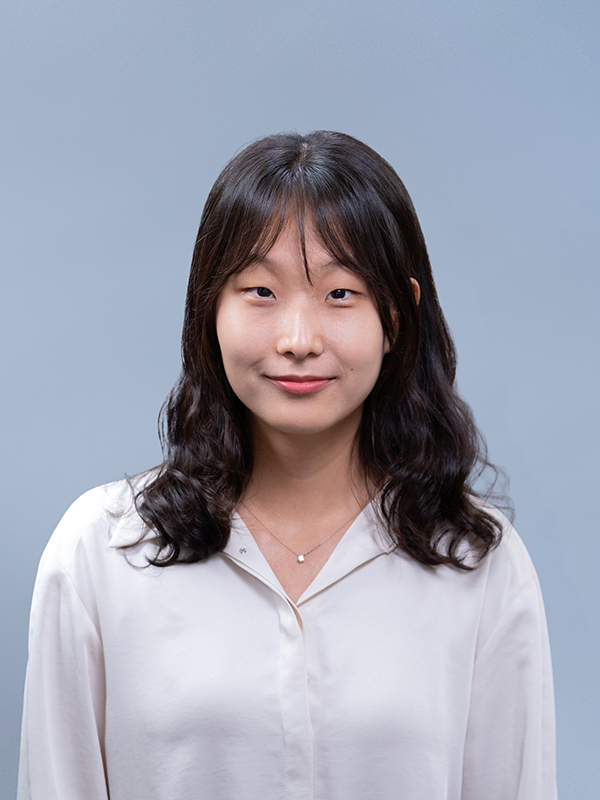
Min aims to build the next generation of AI systems that feature flexibility, superior performance and increased legal compliance. In her Allen School Ph.D. dissertation, she tackled fundamental challenges that current language models (LMs) face, such as factuality and privacy, by introducing nonparametric LMs. Her other work has only further driven the development of more open, controllable and trustworthy LMs.
“My research explores new ways of building models that use data creatively — for instance, by using retrieval (nonparametric LMs) and by designing modular LMs trained in a non-monolithic manner,” Min said.
Min has advanced retrieval-augmented and nonparametric language models on different fronts. She and her collaborators scaled a retrieval datastore, MassiveDS, to more than one trillion tokens — the largest and most diverse open-source datastore to date. The researchers also found that increasing the scale of data available at inference can improve model performance on various downstream tasks, providing a path for models to move from parametric memory toward data pluggability. At the systems interface level, Min helped develop REPLUG, a retrieval-augmented language modeling framework that augments black-box LMs with a tuneable retriever. This simple design can be applied to existing LMs and helps improve the verifiability of text generation.
She has also developed techniques to address reliability issues and legal risks that LMs run into. While the legality of training models on copyrighted or other high-risk data is under debate, model performance significantly declines when only trained on low-risk texts due to the limited size and domain coverage, Min and her collaborators found. So the researchers introduced the SILO framework, which manages the risk-performance tradeoff by putting high-risk data in a replaceable datastore. To help quantify the trustworthiness of LM generated text, Min developed FACTSCORE, a novel evaluation that breaks a generation down into atomic facts and then computes the percentage of these facts that are corroborated by a reliable knowledge source. Since its release, the tool has been widely adopted and used to evaluate and improve the reliability of long-form LM text generation.
The TR35 recognition is only the latest in a series of recent accolades Min has received, after her Allen School Ph.D. dissertation earned the Association for Computing Machinery Doctoral Dissertation Award honorable mention and the inaugural Association for Computational Linguistics Dissertation Award.
Read more about this year’s TR35 Asia Pacific honorees.