Smartphone-based tympanometry system from UW researchers offers a pocket-sized solution for testing middle ear function

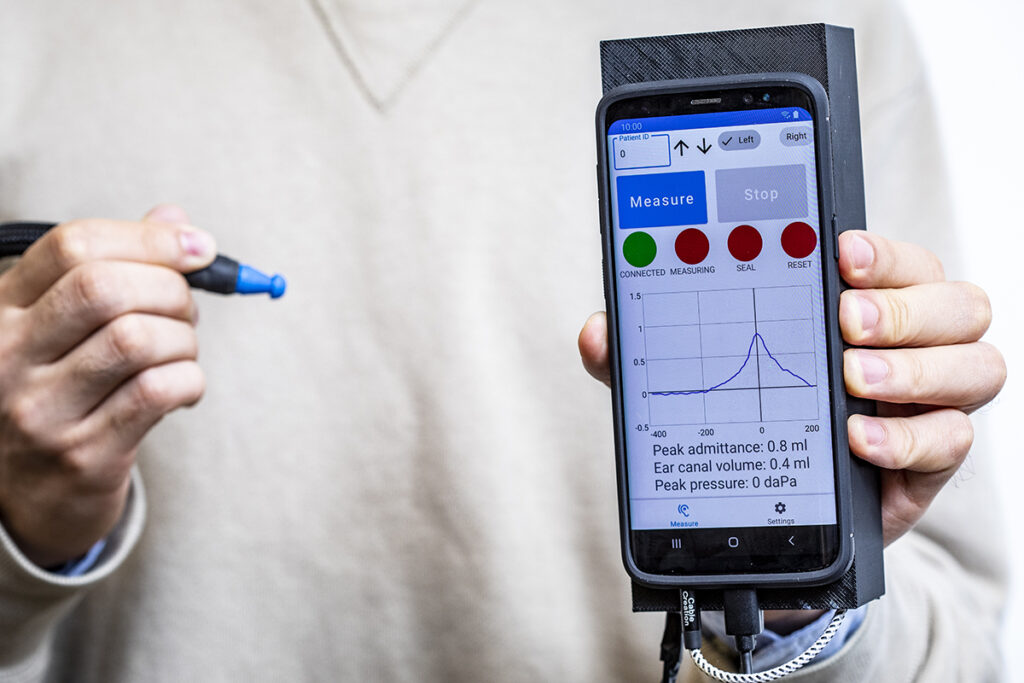
Closeup of person’s hands holding rubber-tipped ear canal probe and smartphone attached to 3D-printed casing. Smartphone screen shows tympanometry software interface displaying current action as “Measure,” with “Stop” grayed out, and a peaking line graph with x axis scale from -400 to 200 and y axis scale of -0.5 to 1.5. Above the graph is a row of color-coded circles with indicators for “connected” (green), and “measuring,” “seal, ”and “reset” (red). Below the graph is text: “Peak admittance: 0.8 ml, Ear canal volume: 0.4 ml,” Peak pressure: 0 daPa.”
Computer scientists and clinicians at the University of Washington and Seattle Children’s developed a system that turns a smartphone into a handheld tympanometer for testing middle ear function. Dennis Wise/University of Washington

According to the World Health Organization, more than 430 million people around the globe live with a disabling hearing loss — including 34 million children, the majority of whom experience hearing loss that is due to preventable causes. Nearly 80% of people with disabling hearing loss live in low- or middle-income countries where they may encounter barriers to routine medical care, which includes screening for ear disorders to support early detection and intervention.

Tympanometry is a test of middle ear function that can be used in conjunction with otoscopy and other tests to diagnose middle ear disorders that, if left untreated, could lead to complications such as permanent hearing loss. Although it is a relatively simple test to perform, there are barriers for widespread use in resource-constrained communities — not only are they not designed for portability, but they carry a price tag ranging from $2,000 to $5,000 each.

In a paper published today in Nature Communications Medicine, researchers at the University of Washington’s Paul G. Allen School of Computer Science & Engineering, UW Medicine and Seattle Children’s present a lightweight alternative to conventional tympanometry devices that is also lighter on the wallet. News of the team’s system, which turns a smartphone into a handheld tympanometer, should be music to the ears of those working in public health.

“Conventional desktop tympanometry is expensive, bulky, and requires a source of wall power, which makes it less than ideal for use in mobile clinics and rural communities. Consequently, in some areas, people may have to travel long distances to obtain a test — if they are able to travel, that is,” said lead author Justin Chan, a Ph.D. student in the Allen School. “Our open-source system is inexpensive, portable, easy to use, and works with any Android smartphone.”

During tympanometry, a probe is inserted into the ear canal to alter the air pressure and measure the mobility of the tympanic membrane and ossicular chain. The resulting tympanogram is analyzed to determine if there is a buildup of fluid behind the eardrum — also known as middle ear effusion — or other conditions that may require treatment.

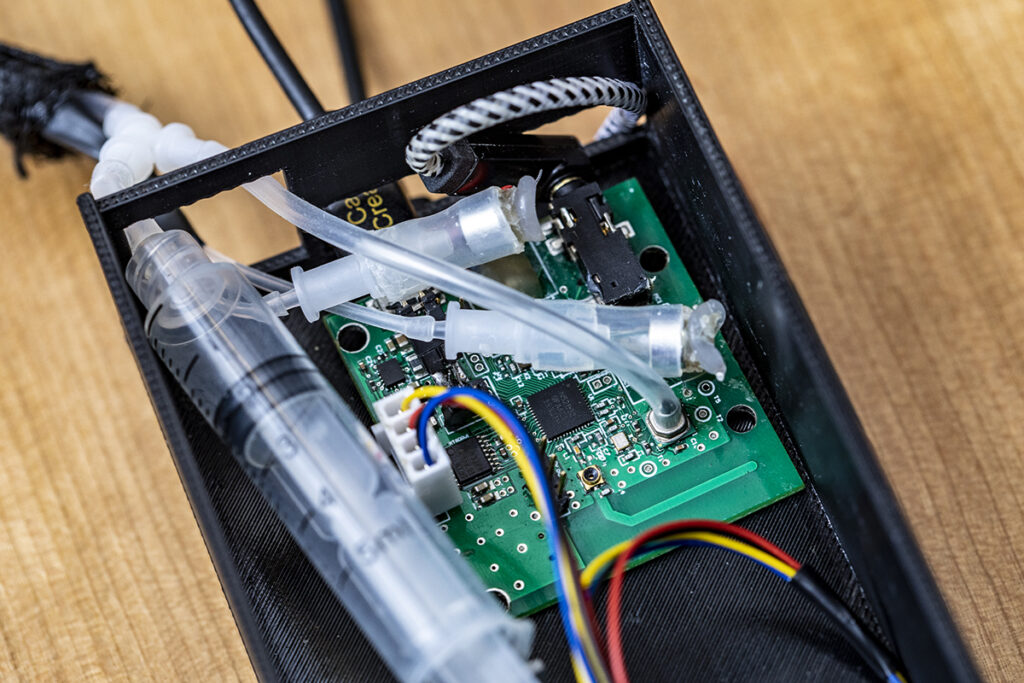
Closeup of the inside section of the 3D-printed casing showing a portion of a syringe connected to a pressure sensor and multi-colored wires connected to a printed circuit board.
The electronic components of the tympanometry device are encased in a 3D-printed housing and connected to the smartphone via a headphone jack.

The UW-designed system follows a similar approach, albeit packaged in a smaller form factor. A rubber-tipped probe for insertion into the ear canal is connected to a 3D-printed housing that contains the electronic components, which are connected directly to the smartphone via a headphone jack. Those components include a printed circuit board with a tiny speaker and microphone that sends and receives the audio signal, and a stepper motor connected to a syringe and plunger for altering the air pressure inside the ear canal during the test.

When the probe is inserted into the patient’s canal, the smartphone software automatically detects when a seal is established. At that point, the motor automatically — and gently — moves the plunger of the syringe, guided by feedback from an onboard pressure sensor, while the microphone emits a 226 Hz audio tone into the canal. Once the test cycle is complete, the onboard microcontroller instantly transmits the recorded acoustic reflections and pressure data to the smartphone via a built-in wireless Bluetooth radio to generate a tympanogram in real time.

The software can be programmed on the smartphone to adjust testing parameters such as pressure limits, pressure speed, audio frequency and volume, and the entire hardware configuration, minus the smartphone, can be assembled for around $28. The team is making the code freely available to anyone interested in building their own device.

“We designed our system to be safe and comfortable for the patient as well as economical and easy to use. For example, the probe rests lightly yet securely in the patient’s ear without any force applied, and it’s compatible with the same rubber ear tips already used with conventional tympanometers,” noted co-senior author Shyam Gollakota, director of the Networks & Mobile Systems Lab and the Torode Family Professor in the Allen School. “We also built in a fail-safe mechanism — which we haven’t yet needed — that will automatically terminate the test in the unlikely event of a pressure sensor malfunction to avoid large changes in pressure within the ear.”

The researchers evaluated the system on a group of patients scheduled to undergo tympanometry with audiologists at Seattle Children’s. The patients, who were between one and 20 years of age, were each screened using the smartphone system and a commercial tympanometer. The audiologists tested a total of 50 patient ears. A separate panel of audiologists were then asked to classify each of the 100 tympanograms generated by the tests into Liden and Jerger classifications — a scale used to describe the level of mobility of the tympanic membrane that could indicate a middle ear disorder — to compare how the smartphone-based test measured up to the existing standard.

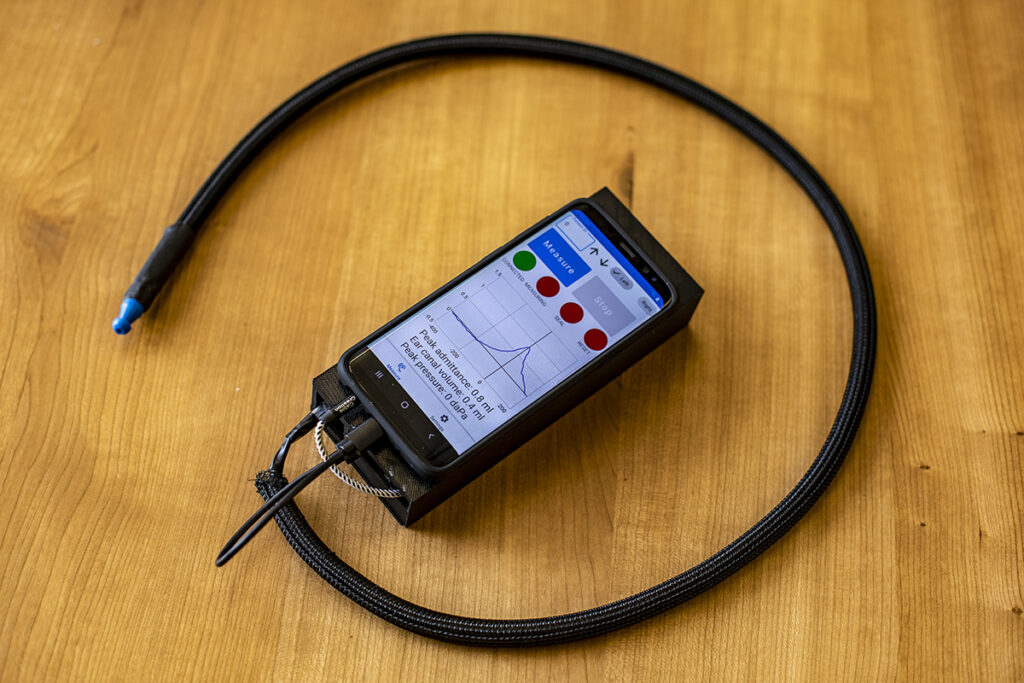
Smartphone attached to a 3D-printed casing with a long, thin rubber-tipped probe curled around the phone and laid flat on a wooden table. Smartphone screen shows tympanometry software interface displaying current action as “Measure,” with “Stop” grayed out, and a peaking line graph with x axis scale from -400 to 200 and y axis scale of -0.5 to 1.5. Above the graph is a row of color-coded circles with indicators for “connected” (green), and “measuring,” “seal, ”and “reset” (red). Below the graph is text: “Peak admittance: 0.8 ml, Ear canal volume: 0.4 ml,” Peak pressure: 0 daPa.”
The tympanometer, minus the smartphone, can be assembled for a material cost of around $28. The hardware design and software code are open-source and freely available.

“For the clinical study, we directly compared the results of our smartphone-based tympanometry to the commercial device,” explained co-senior author Dr. Randall Bly, an assistant professor in UW Medicine’s Department of Otolaryngology – Head and Neck Surgery and a pediatric otolaryngology specialist at Seattle Children’s. “There was significant agreement — roughly 86% — between the results of the two screening methods. Most importantly, when there was an abnormal finding such as a Type B tympanogram, there was 100% agreement. Our goal was to develop an accessible device that can accurately assess the middle ear, providing clinicians critical diagnostic information. These results show promise towards achieving this goal.”

Additional studies will be needed to determine efficacy for screening infants under one year of age.

Other co-authors of the paper include Ali Najafi, Ph.D. student in the UW Department of Electrical & Computer Engineering; Mallory Baker and Julie Kinsman, audiologists at Seattle Children’s; Dr. Susan Norton, professor emeritus in UW Medicine’s Department of Otolaryngology – Head and Neck Surgery who served as chief of Audiology Programs and Research at Seattle Children’s; and Lisa Mancl, affiliate faculty member in the UW Department of Speech & Hearing Sciences.

Read the paper in Nature Communications Medicine here, and visit the project website here. Watch a demo video here. Read a related article in STAT News here.

All photos: Dennis Wise/University of Washington Read more →

Shine on! Allen School alumni Stefan Savage and Justine Sherry receive College of Engineering Diamond Awards

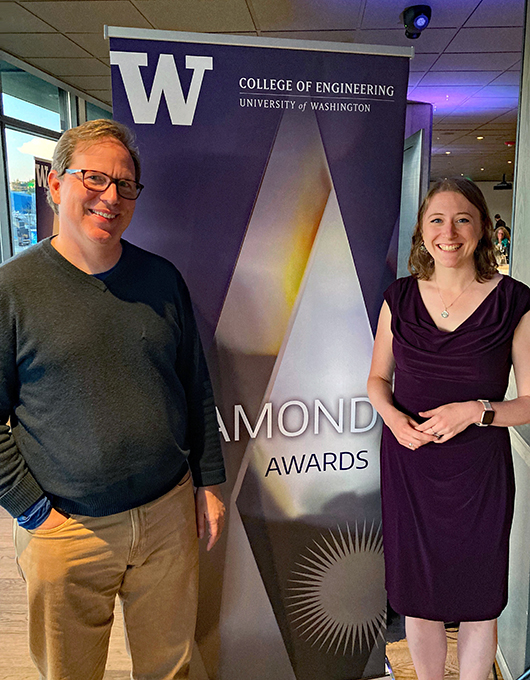
Stefan Savage (left) and Justine Sherry (right) stand either side of a large sign with UW block "W" logo, College of Engineering logo and partially visible text "Diamond Awards" superimposed on diamond graphic.
Stefan Savage (left) and Justine Sherry. Ed Lazowska

Each year, the University of Washington’s College of Engineering recognizes alumni and friends who have made outstanding contributions to the field of engineering through its Diamond Awards. Among the 2022 honorees are two Allen School alumni whose cutting-edge research has helped steer the future of computer networking with far-reaching impacts: Stefan Savage (Ph.D., ’02), recipient of the Distinguished Achievement in Academia Award, and Justine Sherry (B.S., ‘10), recipient of the Early Career Award.

Stefan Savage: Distinguished Achievement in Academia

Those who say “crime doesn’t pay” might have crossed paths with University of California San Diego professor Stefan Savage — or at least, come across the results of his work. It was Savage who led a team of researchers in demonstrating how to disrupt the global web of electronic criminals by analyzing the economic, as well as technical, aspects of the problem. Before he helped to untangle the connections between email spam and the financial services used to monetize it, attempts to combat such networks amounted to a game of “whack a mole”: shut down one domain name, for example, and the criminals could easily and cheaply switch to another.

Savage and his colleagues developed an infrastructure to track on the order of hundreds of millions of spam emails, which enabled them to piece together the entire value chain of these illicit enterprises. This led them to discover a weak link: payment processing. Unlike much of the computing network infrastructure that the criminals relied on, the handful of financial institutions hosting their merchant accounts and processing the credit card payments that allowed them to profit off of their activities were not so easy or inexpensive to replace. Banks, law enforcement, the International Anti-Counterfeiting Coalition, and regulatory agencies such as the U.S. Food and Drug Administration and Federal Trade Commission have since applied the lessons learned through Savage’s work to combat online drug trafficking and the sale of counterfeit goods.

Savage was also instrumental in advancing the field’s understanding of the scope and mechanics of internet denial of service attacks, worms and other malware — along with effective countermeasures. For example, he co-led the development of a technique called backscatter analysis that uses packets sent from the victim in response to spoofed packets from an attacker to measure the number, duration and focus of denial of service attacks. He and his team then applied the technique to provide the first-ever estimate of denial of service activity worldwide. According to Allen School professor Ed Lazowska, Savage’s contributions to the safety and security of modern computing cannot be overstated.

“Stefan is the most creative person working in the hugely important fields of network security, privacy, and reliability today,” said Lazowska, who is the Bill & Melinda Gates Chair Emeritus at the Allen School. “He has an uncanny ability to ask exactly the right question, devise exactly the right methodology to explore that question, propose exactly the right solution, and see that solution through to impact.”

That uncanny ability was on full display when Savage and Allen School professor Tadayoshi Kohno co-led a team of researchers in exploring how the increasing computerization of automobiles introduced the potential for new security threats. After showing how they could physically infiltrate a vehicle’s onboard networks to gain control of critical systems, Savage and his collaborators followed up by demonstrating how the same systems were also vulnerable to remote wireless attacks — including, at one point, using a laptop to interfere with a car’s braking system as it cruised down an abandoned airstrip. 

By turning their students loose on a pair of Chevy Impalas, Savage and Kohno ultimately helped turn the entire automobile industry in a new direction and, as Savage himself put it, influenced “how products are built and how policies are written.” As part of those changes, manufacturers began hiring dedicated security teams, while regulatory bodies established new security standards and devoted resources to addressing emerging threats. It is yet another example of how Savage’s combination of curiosity, creativity and technical excellence has had a tangible impact in the field of computer security and beyond — an impact that has earned not one but two Test of Time Awards from the IEEE Symposium on Security and Privacy recognizing the enduring influence of his electronic crime-fighting and automobile cybersecurity work.

“Stefan is somebody who very much embodies the values of the University of Washington,” said Geoffrey Voelker (Ph.D., ‘00), Savage’s UCSD colleague and fellow Allen School alum. “He is a world-class researcher who has had tremendous impact in his field. He’s also just an amazing person who is very generous and positively affects everybody he comes in contact with.”

Justine Sherry: Early Career

Justine Sherry may still be in the first decade of her faculty career at Carnegie Mellon University, but she has already established herself as a consummate researcher and sought-after thought leader when it comes to the design and implementation of networked systems that can handle the scale and complexity of the modern internet. Since graduating from the UW with bachelor’s degrees in computer science and international studies, she has produced a succession of groundbreaking contributions that have advanced network performance, reliability, security and fairness.

“Justine is among the very best young computer science researchers in the world,” said Dan Grossman, professor and vice director of the Allen School. “Her work is hard to pigeonhole because it spans much of modern networking, from algorithms, to measurements, to arguments on how to evaluate a network policy’s ‘goodness.’ Justine’s leadership among computer networking experts is impressive for someone of any age, and truly extraordinary for someone so early in their career.”

That extraordinary early leadership was evident in her Ph.D. research at the University of California, Berkeley, where she devised a method for managing network traffic in the cloud that came to be known as network function virtualization. Conventional enterprise network management relied on a collection of hardware devices dedicated to various functions, from intrusion detection to load balancing. The entire system was expensive to assemble, complicated to manage, difficult to scale, and vulnerable to security breaches. Sherry developed an architecture to support outsourcing middlebox functions to the cloud, accompanied by practical approaches for addressing concerns such as latency and fault tolerance to meet performance demands. Network function virtualization has grown into a $12 billion business — and is projected to triple over the next few years.

Sherry has also emerged as an expert in the theory and practice of congestion control, which is essential to maintaining fairness and reliability of internet services by managing demand for total available bandwidth. As part of this work, she and her team explore fundamental questions about what makes congestion control algorithms “good” — including what properties matter most under which conditions — and how to evaluate whether one algorithm is better than another. These issues are particularly salient as cloud operators’ congestion control algorithms, which are generally proprietary, affect the experience of billions of internet users. 

For example, traditional algorithms are designed to reduce the portion of bandwidth their service is using in proportion to the number of other services seeking a share. Using a combination of experiments and mathematical modeling, Sherry and her colleagues discovered that Google’s newly released BBR algorithm for YouTube consumed a fixed portion of available bandwidth regardless of the level of demand from other services — leading to one experiment where a single BBR connection took up 40% of the network, with 16 competing services attaining less than 4% each. She and the team developed an evaluation framework based on a metric of “harm” to evaluate new algorithms in relation to the status quo prior to deployment.

“Justine was described by one of her colleagues as being fearless, and that fearlessness shows itself in her problem formulations, in the questions that she asks.” said Christopher Ramming, senior director of research and innovation at VMWare. “It’s that combination of properties that makes her stand out.”

That fearlessness prompted Sherry and her collaborators to question the conventional approach to intrusion detection and prevention processing. The goal was to determine whether it was possible to use a single software server to manage these critical workloads — among the most demanding network functions — for networks on the order of 100 Gbps and involving hundreds of thousands concurrent connections and more than 10,000 rules. Sherry and her team demonstrated that it is not only feasible, but also practical, with Pigasus, a FPGA-first architecture capable of handling the majority of intrusion detection and prevention processing for a 100 Gbps network using five cores and a single FPGA. In addition to being more cost-effective, they demonstrated that their FPGA-first model consumes 38x less energy than existing CPU-based approaches. This work has opened up new research directions in energy-efficient large-scale computing and the performance of network-intensive computation on hybrid software/hardware platforms in the cloud.

Sherry, Savage and their fellow award recipients were formally honored at an event hosted by the College last month. Learn more about the 2022 Diamond Award recipients here.

Congratulations, Stefan and Justine, and thank you for being such wonderful ambassadors for UW, the College and the Allen School! Read more →

“Professor, leader scientist, teacher, colleague, friend”: New $4.7 million UW professorship fund celebrates Ed Lazowska’s enduring legacy and impact

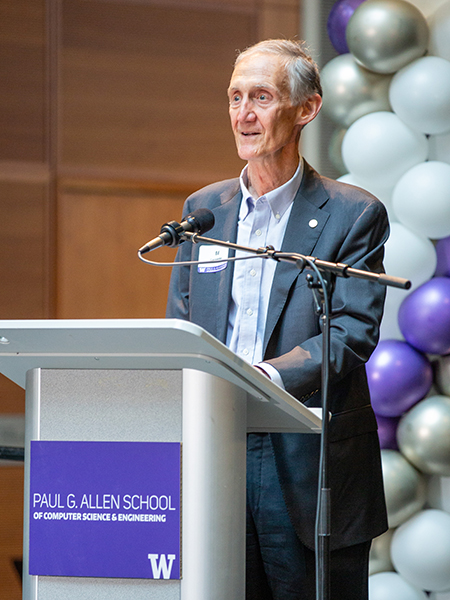
Ed Lazowska stands speaking into a microphone attached to a silver podium with purple and white sign with text "Paul G. Allen School of Computer Science & Engineering" and UW block "W" logo. A column of purple, gold and white balloons is behind him off to the right. Wood paneling is visible in the background.
Ed Lazowska: “This is a community in which we lift one another up.” Matt Hagen

In 2020, four couples who are longtime friends of the Allen School joined forces to create a new endowed professorship fund named for professor Ed Lazowska to honor his wide-ranging impact on the field of computing, Washington higher education, and the technology community. They seeded the fund with a combined gift of $1 million, and then began inviting other friends and alumni of the school to contribute — quietly, at first, and then more openly once they had revealed their intentions to Lazowska himself to mark his 70th birthday. 

To date, more than 230 individuals, families or organizations have pledged a total of $4.7 million to the Endowed Professorships in Computer Science & Engineering in Honor of Edward D. Lazowska. Once those commitments are fully realized, the Lazowska Professorships will be one of the largest professorship funds at the University of Washington.

The enthusiastic response will come as no surprise to anyone who knows Lazowska, whose impact over his 45 years of service to the UW and the broader community has influenced everything from the direction of national technology policy, to a significant increase in the number of Washington high school students who can earn a degree in computer science. Along the way, he transformed the landscape for computing at UW — literally and figuratively — as one of the driving forces behind not one but two dedicated buildings and the elevation of the former Department of Computer Science & Engineering into the Paul G. Allen School of Computer Science & Engineering, with support from the late Paul Allen and Microsoft.

At a recent event celebrating the community of supporters who made the professorships possible, UW President Ana Mari Cauce observed that his leadership, vision and commitment helped mold the Allen School into one of the top computer science programs in the nation and in the world. But that is only part of his extraordinary legacy.

“It would really be impossible to overstate Ed’s impact on the lives of his students, his colleagues, our university, and actually the entire field of computer science,” Cauce said. “Ed’s efforts have transformed how we think about the power of computer science to innovate for greater equity, for economic opportunity, and for discovery.”

The idea for the Lazowska Professorships can be traced back to December 2019. That’s when Peter Lee, corporate vice president of research and incubations at Microsoft, and Allen School alumnus Jeff Dean (Ph.D., ‘96), a Google Senior Fellow and senior vice president of Google Research and Google Health, decided the best way to honor their friend and colleague’s legacy would be to enhance the Allen School’s ability to attract and retain other world-class faculty. Their original plan was to engage the community in the tribute, assemble the professorship fund, and host an in-person celebration to mark Lazowska’s 70th birthday the following summer. After the COVID-19 pandemic hit, the pair changed tack. They teamed up with two of Lazowska’s other longtime friends and associates, Microsoft emeritus researcher Harry Shum and Microsoft president and vice chair Brad Smith, to fund the first of what they hoped would be multiple professorships; instead of a cake and candles, Lazowska received the surprise news over Zoom.

After this inaugural Lazowska Professorship was awarded to Luis Ceze, co-director of the Molecular Information Systems Laboratory (MISL) and co-founder and CEO of Allen School spinout OctoML, the broader campaign began in earnest. The subsequent outpouring of support will ultimately enable the Allen School to award no fewer than four professorships bearing Lazowska’s name. The outcome is a testament to the high regard and deep affection for Lazowska and his stature in the local tech community — summed up by Allen School professor Hank Levy, who worked alongside him first as department chair and then inaugural director of the school, as “professor, leader, scientist, teacher, colleague and friend.” As Lazowska made clear to the assembled crowd, the feeling is mutual.

“The Allen School has been blessed to grow up alongside and in partnership with the region’s tech industry and its people, and it’s been a completely magical ride that has brought all of us to the forefront of this incredibly competitive field,” Lazowska said. “I really want this evening to be not about me, but about you: about your generosity, your loyalty and the investment that you — led by Peter and Jeff and Brad and Harry — have made in the Allen School.

“And I want it to be about the Allen School itself,” he continued. “The distance we’ve traveled, the potential for the future — and about the University of Washington and the region. We really are leaders, and we’re a true community. That’s been the most heartwarming thing about the 45 years I’ve spent here. This is a community in which we lift one another up.”

To learn more and view a list of donors, visit the Lazowska Professorships webpage here. To contribute to the Lazowska Professorships, visit the giving page here. Read our previous story on the Lazowska Professorship here, and a related GeekWire article here.

We are profoundly grateful to our founding donors — Peter and Susan Lee, Jeff Dean and Heidi Hopper, Harry Shum and Ka Yan Chan, and Brad Smith and Kathy Surace-Smith — for bringing the community together to pay tribute to Ed while supporting the Allen School. Thank you to all of our donors for your generosity and friendship!

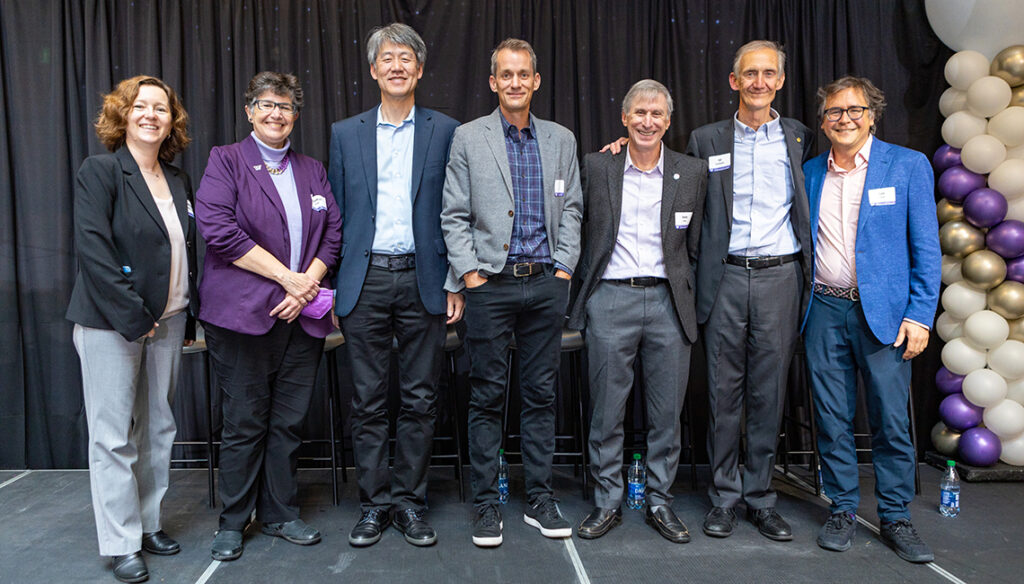
Seven people standing smiling side-by-side wearing jackets and trousers on a black stage with black draping behind them and a purple, gold, and white balloon tower off to the right.
Giving thanks (left to right): Allen School Director Magdalena Balazinska, UW President Ana Mari Cauce, founding donors Peter Lee and Jeff Dean, former Allen School Director Hank Levy, Ed Lazowska, and first Lazowska Professorship holder Luis Ceze. Matt Hagen
Read more →

Allen School’s Leilani Battle earns TCDE Rising Star Award for advancing new tools and techniques for exploring massive datasets

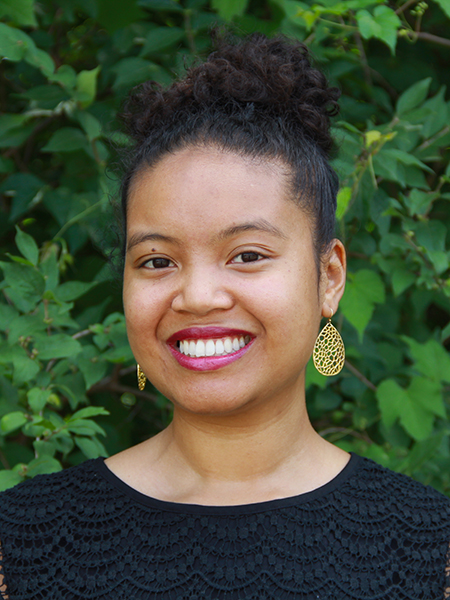
Portrait of Leilani Battle with her hair up in front of green leaves

Allen School professor and alumna Leilani Battle (B.S., ‘11) is building a career out of building better ways to deal with data. Her research, which looks beyond conventional data management techniques to incorporate human behavior and preferences, enables analysts to spend more time engaging with the data they need, and less time searching and waiting for it to load. Recognizing the transformational impact and future potential of Battle’s work, the IEEE Computer Society’s Technical Committee on Data Engineering recently recognized her with its TCDE Rising Star Award for “contributions to interactive data-intensive systems for exploratory data analysis.”

Battle joined the Allen School faculty in the summer of 2020 after spending three years as a professor at the University of Maryland, College Park. The move was akin to a second homecoming; having earned her bachelor’s degree at the University of Washington, she later went on to complete a postdoc working with professor Jeffrey Heer in the Interactive Data Lab — of which she is now co-director — in between earning a Ph.D. from MIT and launching her faculty career. Shortly before her return to Seattle, Battle was named one of MIT Technology Review’s 35 Innovators under 35; according to Heer, she is pushing the state of the art across multiple areas of computer science.

“Leilani is transforming how people explore and analyze data on a massive scale through her pursuit of a deeper understanding of users’ goals, strategies and behaviors, which she then leverages to develop novel systems and optimization methods,” said Heer. “She has shown a remarkable ability to bridge several subfields, from databases to visualization to human-computer interaction. By combining them in new and interesting ways to provide practical tools for scientists and analysts, she is advancing all three.”

Since the early days of her research career — she got her start as an undergraduate research assistant in the UW Database Group — Battle has been interested in how people interact with data and ways to reduce friction in those interactions. One of her initial and highly influential contributions was ForeCache, a user-friendly tool that reduces lag time, or latency, in interactive data visualization systems following an approach that Battle describes as “behavior-driven optimization.” This optimization is driven by ForeCache’s built-in prediction engine, which enables more efficient data exploration by anticipating and prefetching the results of queries it deems the user is most likely to want next based on past interaction patterns. The system also adapts its predictions based on actual usage patterns over time to improve future performance. In their paper presented at the Association for Computing Machinery’s 2016 Conference of the Special Interest Group on Management of Data (SIGMOD), Battle and her co-authors highlighted ForeCache’s dramatic improvements in latency compared to systems that do not rely on prefetching — reducing lag time by up to 430% — and significant improvements in both latency (88%) and accuracy (25%) over existing state-of-the-art prefetching techniques.

“Modeling user behaviors during interactive data exploration enables us to predict what interactions analysts will want to perform in our visualization interface,” Battle explained. “We can then use these models to preemptively execute database queries ahead of users as they explore. This helps analysts to focus more on their data and less on latency issues.”

Battle was keen to understand just how influential those latency issues are — and what other elements may be at play. By carefully studying how users interacted with visualization interfaces in the performance of different tasks, she and her collaborators have debunked some of the prevailing wisdom around what and how various factors shape users’ experiences with such systems. 

For example, in a paper presented at EuroVis 2019 organized by the Eurographics Working Group on Data Visualization and IEEE Visualization and Graphics Technical Committee, Battle and Heer examined the impact of latency on exploratory visual analysis performed in Tableau. They compared their findings to the existing literature that reinforced the assumption that slower interfaces lead analysts to perform fewer interactions and gain fewer insights from their data. Battle and Heer discovered that, in practice, the issue is more nuanced; while latency does have an impact, it has been overstated relative to other factors such as the difficulty of the task users are trying to perform and the pacing of interactions based on “think time.” In another paper, this one appearing at the IEEE Information Visualization conference (InfoVis 2019), Battle and a multi-institutional team of researchers analyzed the impact of latency on visual search through a series of studies on Amazon Mechanical Turk. They found that while latency is a statistically significant predictor of user behavior under some conditions, in other cases, factors such as task type, task complexity and total interactions performed render latency virtually meaningless.

“What this research showed is that latency can have a more subtle and gradual effect than previously believed,” said Battle. “It’s still a factor, but it’s not the only one. This is a useful insight for designing better evaluations that reflect how people interact with these systems in the real world.”

Another previous belief that Battle subsequently turned on its head was the presumption that optimization schemes for well-researched use cases such as online analytical processing (OLAP) are also applicable to interactive scenarios. In a paper that appeared at SIGMOD 2020, she and her colleagues presented a novel benchmark for evaluating the suitability of database systems for supporting ad-hoc, real-time data exploration. Unlike other benchmarks for measuring database system performance, the new framework captures the cadence and flow of real users’ data explorations to more accurately reflect the dynamic nature of the associated queries.

“The patterns of queries we see issued to database systems are fundamentally different between the interactive and OLAP scenarios. The performance expectations are also different,” Battle noted. “Our paper provided the first empirical evidence of this mismatch, which had already been informally observed in the industry.”

Some of Battle’s latest work has focused on another potential mismatch, this time between users and designers of automated visualization recommendation systems. One of the selling points of these systems is that they alleviate some of the decision-making burden for analysts by suggesting which variables to focus on; by pointing users to the most salient visualizations and insights, the system speeds up the exploration process. In a paper published at the ACM Conference on Computer-Human Interaction (CHI 2021), Battle and her colleagues assessed how people actually use auto-generated visualizations to understand how user attitudes and expectations shape their results. While their findings partially backed up assumptions about users’ trust in algorithmically generated visualizations, the team pointed to a number of ways to make these systems more useful to different user profiles, including designing for different “foraging” patterns and taking into account the potential for biases about source and quality to influence the behavior of a subset of users. 

Despite the proliferation of visualization recommendation systems, there has been no way to rigorously evaluate their suitability for various tasks. That is, until last year’s VIS 2021 conference, where Battle and her co-authors earned a Best Paper Honorable Mention for presenting the first framework for fairly and rigorously comparing visualization recommendation systems. And in work that appeared at CHI 2022 earlier this month, Battle and her collaborators explored user preferences in a specific domain, public health, to understand what that category of analysts values most from visualization recommendation systems. She recently received a CAREER Award from the National Science Foundation to build on this line of work by developing new tools for evaluating how well different systems can help analysts meet their particular data exploration goals.

“By making it easier and faster for analysts to explore their data, recommendation systems can improve the accuracy and rigor of the insights they take away from these sessions,” said Battle. “But if we can’t formally compare them, then we have no idea whether new ones we build actually provide any benefits over the old ones. We also lack an empirical understanding of which systems are best suited to specific users’ goals. Both are essential for making data visualizations more relevant and more useful to people.”

Battle was formally honored by the TCDE community during the 38th IEEE International Conference on Data Engineering (ICDE 2022) held earlier this month in Kuala Lumpur, Malaysia.

Congratulations, Leilani! Read more →

New Meta AI Mentorship Program enables Allen School Ph.D. students to collaborate with industry while advancing open research

Image of Meta Seattle office exterior with patio, path and vegetation under a wooden lanai against a backdrop of downtown Seattle skyline
Ph.D. students participating in the Meta AI Mentorship Program will spend part of their time working alongside researchers in Meta’s Seattle office. Credit: Netta Conyers-Haynes

The University of Washington and Meta are launching a new partnership today that will support graduate student research while providing opportunities to collaborate with industry-leading scientists and engineers. The Meta AI Mentorship Program is designed to enable Allen School Ph.D. students who are interested in artificial intelligence, machine learning or natural language processing to advance their dissertation research under the guidance of both their faculty advisor and researchers in Meta’s Seattle office by collaborating on projects of mutual interest.

“The Meta AI Mentorship Program encourages students to tackle ambitious research projects that will enable them to make progress toward their degree while enjoying the opportunity to work side by side with industry researchers,” said Luke Zettlemoyer, a professor in the Allen School’s Natural Language Processing group and a research director at Meta AI. “I think this program will yield exciting results and new lines of inquiry in our field. I’m thrilled to be able to bring this program to our students and colleagues.”

There are a variety of potential synergies between UW and Meta research that students and their mentors might choose to explore, including but not limited to representation learning, natural language generation, machine translation, question answering, semantic parsing and large-scale optimization. In keeping with the principles of academic freedom and open research, participating students will not only be permitted, but encouraged to publish the results of their work with their advisors and Meta mentors — and to incorporate that work into their dissertation research.

“Our goal is to encourage students to think big and to make progress on important research questions, so we intentionally designed the mentorship program with open research in mind,” Zettlemoyer explained. “We want to ensure that students not only have a great experience, but also come away with results they can build off of to advance their careers.”

The program is currently open to Allen School Ph.D. students who are in their second year or later, with the potential to expand to students in other units on campus in subsequent years. Participants in the inaugural cohort, which will number up to five students, will receive sponsored research support that will cover their tuition along with a stipend. In addition, the students will spend eight paid hours per week working with researchers at Meta’s Seattle office during the academic year, and 40 hours per week paid during the summer. The expected duration of each student’s participation will be one year, with the option to extend it for up to an additional year.

“This program offers students the best of both worlds: the excitement of discovery under the guidance of their faculty advisor, and the opportunity to work alongside industry leaders — all of whom are at the forefront of their respective fields,” said Magdalena Balazinska, professor and director of the Allen School. “Our school has already enjoyed the benefits of multiple collaborations with Meta. I look forward to seeing how this latest partnership drives innovation and enriches our students’ early research careers.”

The Allen School and Meta have enjoyed a long and fruitful partnership leading up to today’s announcement, including Meta researchers who are affiliate professors in the Allen School, Allen School professors who have deep engagement with Meta, student fellowships and internships, and Meta’s support for the UW Reality Lab focused on another area of mutual interest: augmented and virtual reality.

The UW–Meta AI Mentorship program is part of a portfolio of employment-based, collaborative, open research programs the company has launched around the country since 2020. The others are with Carnegie Mellon University and New York University.

Interested students have until June 17 to apply to be part of the first cohort of the Meta AIM Program at the UW, which will get underway in October. Read more →

A necessary conversation: Social Impact Award winner Jennifer Mankoff inspires the SIGCHI community to take a more expansive view of inclusion

Jennifer Mankoff wearing button-down sweater with hair pulled back with wood and concrete in the background

Eight years ago, Allen School professor Jennifer Mankoff and a group of like-minded researchers who cared about, or needed, accessibility put their heads together after coming to a realization about SIGCHI, the Association for Computing Machinery’s Special Interest Group on Computer-Human Interaction. While a growing swath of researchers in the community had begun to focus on the design and evaluation of technologies for diverse users, including those with disabilities, Mankoff and her colleagues noted that the venues for showcasing that work — including the group’s flagship annual conference, CHI — were not themselves accessible to many of these same audiences. And thus, AccessSIGCHI was born.

“Around the time we launched, nearly one-tenth of the papers presented at CHI were related to accessibility or disability in some way, yet only about 20% of conferences included accessibility support,” recalled Mankoff, who holds the Richard E. Ladner Professorship in the Allen School where she directs the Make4All Group. “I and Jennifer Rode, who founded AccessSIGCHI, asked ourselves, ‘how can we ensure that our community’s publications and events and procedures make accessibility a priority?’ It’s a necessary conversation, if not always a comfortable one. And it’s ongoing.”

In 2015, Mankoff and her colleagues in AccessSIGCHI (originally known as the SIGCHI Accessibility Community) released a seminal report documenting the state of accessibility within the SIGCHI community and laying out a vision for the future. In it, the authors noted, “​SIGCHI​ ​can​ ​attract​ ​new​ ​members,​ ​and​ ​make​ ​current​ ​members feel​ ​welcome​ ​by​ ​making​ ​its​ ​events​ ​and​ ​resources​ ​more​ ​inclusive.​ ​This​ ​in​ ​turn​ ​will​ ​enrich SIGCHI,​ ​and​ ​help​ ​it​ ​to​ ​live​ ​up​ ​to​ ​the​ ​ideal​ ​of​ ​inclusiveness​ ​central​ ​to​ ​the​ ​concept​ ​of user-centered​ ​design.​” The group has since released three subsequent reports on a biennial basis assessing current conditions and issuing recommendations for improvement. This month, in recognition of Mankoff’s efforts to make not only technologies but also the community that creates them more accessible to members with diverse needs and experiences, that same community honored her with its 2022 SIGCHI Social Impact Award.

“Jen exemplifies the meaning of the SIGCHI Social Impact Award,” said colleague and previous award recipient Richard Ladner, professor emeritus in the Allen School. “Her career has been driven by her desire for social impact in multiple ways, including but not limited to improving the lives of people with disabilities through technology, improving the lives of everyone through technology to support environmental sustainability, and improving the accessibility of CHI sponsored conferences for the benefit of the entire CHI community.”

Mankoff is known for her holistic approach to research, including an understanding of how structural factors can impede people’s access to technologies in addition to the technologies themselves. She and her collaborators at Carnegie Mellon University, where she was a faculty member before she joined the Allen School in 2017, helped to document and advance the potential for consumer-grade fabrication tools and techniques, combined with a wider variety of materials, to support “medical making.” 

Says graduate student Megan Hofmann, who led much of this work and starts as faculty at Northeastern University in the fall, “At the onset of the COVID pandemic, medical making suddenly took on a new urgency. Jen encouraged me to engage with this through my contacts in Colorado, my home state, while she worked to support efforts at the University of Washington.” This work resulted in the delivery of hundreds of PPE (personal protective equipment) devices in Washington and over 100,000 PPE devices in Colorado. It also led to a series of conference publications, including an examination of the role of medical makers in resolving acute and chronic shortages of PPE while upholding standards of clinical safety, and recommendations for building a more robust infrastructure to support medical making communities in meeting local needs — both of which earned honorable mentions at CHI 2021.

Another area in which Mankoff has been a leader is in the development of tools and materials for fabrication that are accessible to — and relevant to — people with disabilities. Her work in this area has ranged from machine knitting to 3D printing, and helped to establish the importance of tools that allow re-use and design by domain experts who are not also fabrication experts.

Mankoff has also been instrumental in bridging the gap between disability studies and assistive technology research. Her work to apply the theoretical underpinnings of the former to promote a more inclusive and self-advocating model for the latter earned the 2021 SIGACCESS ASSETS Impact Award from the ACM Special Interest Group on Accessible Computing for a paper 10 years or older with lasting impact. More recently, Mankoff has advanced mixed-method approaches, including interviews and biometric data, for understanding university students’ mental health and well-being on a large scale via the cross-disciplinary UW EXP study, such as the impact of discrimination, pandemic-driven remote learning, and accessibility innovations and challenges of the same.

In an effort to promote cross-campus collaboration and community partnerships to advance accessibility research, education and translation, Mankoff was one of the driving forces behind the establishment of the UW Center for Research and Education on Accessible Technology and Experiences (CREATE). She currently serves as founding co-director of CREATE with her colleague Jacob O. Wobbrock, a professor in the UW’s Information School and adjunct professor in the Allen School. Seeded with a $3 million from Microsoft, CREATE’s mission is “to make technology accessible and to make the world accessible through technology.”

Beyond her contributions in accessibility research spanning almost three decades, Mankoff helped to steer the SIGCHI community in new directions through her research linking sustainability issues with HCI. It was a connection that few had made before she began co-organizing conference workshops on the topic in 2007; in the process, she and Ph.D. student Tawanna Dillahunt, now a tenured professor at the University of Michigan, also set a new standard for HCI and sustainability research by deliberately engaging underserved populations as part of this work.

“Jen was one of the first in HCI, and the first among sustainability researchers, to specifically seek out people from low-income communities to help uncover new concerns such as how sustainability plays out in the landlord-tenant relationship,” Ladner noted. “Jen’s work emphasized the importance of working with diverse populations at the intersection HCI and sustainability, and her research with underserved communities continues to this day.” 

While she has never shied away from pushing her colleagues to take into account perspectives and experiences different from their own, Mankoff’s activism recently took a more personal turn. Last fall, she suddenly lost her voice. With her primary means of sharing information cut off, she resorted to her rudimentary knowledge of American Sign Language — something she and her son had begun learning by chance just two months prior — and tools such as a portable whiteboard. Mankoff, whose first experience with inaccessibility came during graduate school due to a repetitive strain injury before she was later diagnosed with Lyme disease while building her research career, was already keenly aware that the world is not organized for people with disabilities. But suddenly, she understood the ableism and artificial obstacles that people face when going about their daily lives in a whole new way:

“In essence, this is the first disability experience I’ve had that is defined entirely by the numerous barriers put up by others,” Mankoff wrote in a candid blog post about the episode. “I will admit to being surprised by the sheer amount of discrimination I’ve encountered in a single month.” She goes on to describe gatekeeping practices that threatened her ability to obtain services, ableist jokes and disbelieving and dismissive health care providers. Mankoff ends by saying “I suspect this is mostly about being in a new situation. But I’d argue that is exactly when compassion and support are most needed!”

Mankoff has since recovered her voice; it would surprise no one who knows and works with her to learn that this recent experience has galvanized her intent to use it to speak up even more forcefully for those whose voices, too often, still go unheard.

“Jennifer has contributed significantly to accessibility through both her research and her activism, from creating technologies and tools that empower others to ensuring conferences are inclusive and accessible to all,” said Wobbrock. “She is a highly deserving recipient of the SIGCHI Social Impact Award, and I am proud to call her a colleague, collaborator and friend.”

Mankoff was formally recognized during the CHI 2022 conference that took place as a hybrid-onsite event earlier this month. She previously was elected to the CHI Academy in 2019.

Congratulations, Jen! Read more →

Allen School’s Husky 100 honorees combine academic excellence and service to build a more equitable and inclusive society

Display of gold and purple enamel lapel pins in the shape of "W" with "Husky 100" underneath on a white tablecloth

One is defying traditional gender-based norms through her choice of career path while making it easier for her peers to do the same. Another was motivated to turn tragedy into triumph and dedicate his research to making the world more accessible to people with disabilities. And still others are working to unlock the mysteries of disease, empowering communities through data, and questioning how we can ensure that emerging technologies are designed to serve diverse people and communities.

What all five have in common is that they are Allen School students who are seeking ways to apply their education to benefit others — and the distinction of being named to the 2022 class of the Husky 100. This annual honor recognizes students across the three University of Washington campuses who are making the most of their Husky experience. Read on to learn more about how these students exemplify the UW’s ethos of “we > me” while demonstrating how computing can contribute to a more equitable and inclusive society.

Nuria Alina Chandra

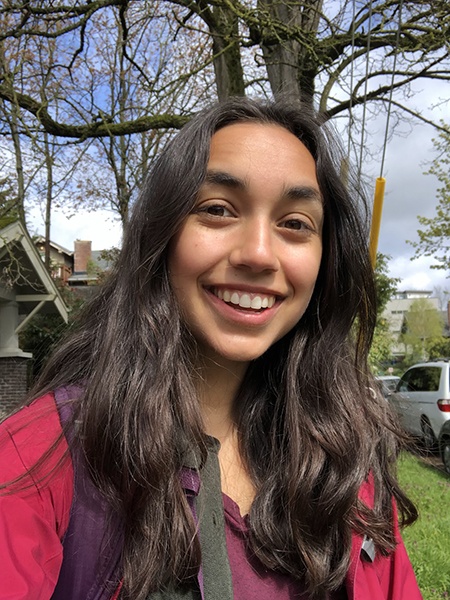
Portrait of Nuria Alina Chandra with trees, a house and a car in the background

Nuria Alina Chandra is making the most of her Husky experience in part by helping others on their journey through her roles as an Undergraduate Research Leader and Honors Peer Mentor. Currently pursuing a major in computer science with a minor in global health, she has taken what could be described as the scenic route. The Olympia, Washington native entered the UW with a clearly defined plan: study biochemistry, go to graduate school, devote her career to investigating the causes of and cures for chronic disease. Before the end of her first year, during which she earned the distinction of being named a Presidential Freshman Medalist, she began to question her direction.

It was around the same time that Chandra enrolled in a global health class, where she learned how demographic and socioeconomic factors, as well as physical factors, influence health. That revelation, combined with the growing urgency to reckon with structural racism in the United States following the murder of George Floyd by police in Minneapolis, inspired Chandra to dig deeper into data about morbidity and mortality. Her findings caused her to reevaluate the path she had set for herself.

“As my time as a Husky progressed, I realized that my true path is far from a clean line, but is, in fact, a branching and twisting tree,” she said.

Those twists included enrolling in a computer science course on a whim, which led Chandra to realize that what drew her to biochemistry was the quantitative and algorithmic thinking involved. As Chandra discovered her passion for computer science, she also became excited by its potential impact on the world’s most complex problems. She found an opportunity to combine computation with her burgeoning interest in the social determinants of health as an undergraduate researcher at Seattle Children’s Hospital. As part of a project led by Dr. Jennifer Rabbitts investigating the development of chronic and acute pediatric pain, Chandra applied her newfound computational skills to analyzing clinical trial data in combination with data on family income and race. She also discovered the power of storytelling to advance both science and social justice while writing for the student-run publications Voyage and The Daily.

Chandra recently branched out again, this time into research focused on the development of new machine learning and statistical methods for studying human health and disease under the guidance of Allen School professor Sara Mostafavi. This and her previous work with Dr. Rabbitts has helped Chandra to realize that she needn’t abandon her original goal; she just discovered a new and exciting way to reach her destination. 

“I will research the root causes of chronic diseases, as I planned when I started college,” Chandra said. “However, the nature of my planned research has been reshaped into something far different than what I ever imagined thanks to new ways of thinking developed in my global health and computer science classes.”

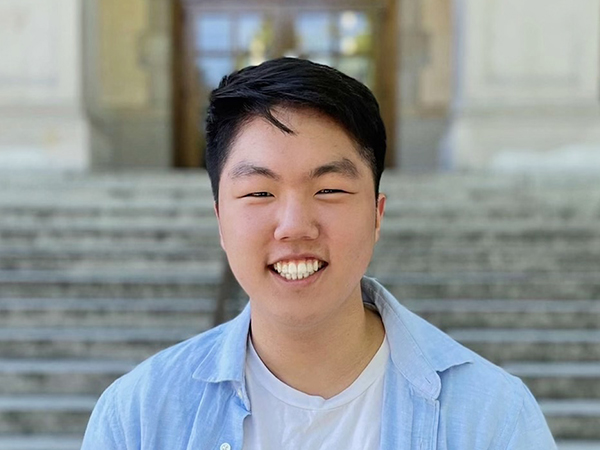
Portrait of Hayoung Jung standing on marble steps to building with wood and glass door behind him

Hayoung Jung

Hayoung Jung’s Husky experience started off tinged with doubt. Having served as a volunteer with the American Red Cross since middle school, he decided before even applying to the UW that what he wanted most out of a career was to have a positive impact on the world. Hailing from Vancouver, Washington, Jung was thrilled to earn direct admission to the Allen School as a freshman; shortly after he arrived on campus, however, his confidence in his choice of major began to waver.

“I was haunted as a first-year student by my inability to reconcile technology’s omnipresence in society with its seeming disregard for ethical responsibilities,” Jung explained. “I had never programmed before college — my burgeoning interest in computer science was mainly fueled by academic curiosity — and I began to doubt my future in a field so often stereotyped as being soulless and materialistic.”

That doubt quickly dissipated once Jung enrolled in the Allen School’s first-year seminar and attended lectures on “Computing for Social Good.” It was there that Jung discovered how computing could be used to benefit diverse people and communities, such as robotics to assist people with motor disabilities; the seminar also offered an unvarnished look at how developer biases can infuse the technologies they create, potentially leading to harm. The course convinced Jung of the importance of diversity in the technology industry — and of sticking with his choice of major. 

“The seminar showed me that computer science is more than coding: computer science is inherently social,” Jung said. “I left ‘Computing for Social Good’ with a new perspective on the influence of technology on the world and a refreshed confidence in my ability to forge my own path at UW.”

That path includes a second major in political science. He combined the two to great effect during the pandemic, when he founded Polling and Open Data Initiative at the University of Washington (PODUW), a registered student organization dedicated to informing communities and improving policy through polling and data science. After noticing some of his fellow students were unequally impacted by the move to remote learning, Jung spearheaded an initiative to explore the impact more broadly on diverse communities of students at UW to inform future practices. To that end, PODUW collaborated with Student Regent Kristina Pogosian to poll more than 3,700 students across the university’s Seattle, Bothell and Tacoma campuses and prepare a report to the UW Board of Regents.

The pandemic also made clear for Jung the dangers of misinformation online. That lesson inspired him to join the Social Computing and Algorithmic Experiences (SCALE) Lab led by Information School professor and Allen School adjunct professor Tanu Mitra, where he is leading an audit study on YouTube to investigate the differences in COVID-19 misinformation exposure between the United States and countries in Africa. Closer to home, Jung has translated his renewed confidence in computer science as a force for good into initiatives that will uplift members of the Allen School community. These include supporting first-year students through the Big/Little mentorship program sponsored by the UW chapter of the Association for Computing Machinery (UW ACM) — of which he is vice chair — and arranging a variety of social and research-focused events for students during the pandemic.

“My vision of positively impacting the world through technology began at UW,” Jung said. “UW has empowered me to use technology to serve, advocate for diverse communities, and combat social inequities.”

Chase King

Portrait of Chase King in a room with lights strung up on the wall behind him, with a sofa and wall art in the background

In his sophomore year, Chase King had an opportunity to witness firsthand the power of artificial intelligence to make a positive difference in people’s lives on a global scale. As an intern at Beewriter, a fledgling company based out of UW’s Startup Hall that develops AI-assisted multilingual writing tools, King received an email from a grateful user in Vietnam who had successfully used the tools to improve his resumé and job applications to secure employment as a technology consultant. It was an “aha” moment for King that helped shape his Husky experience going forward.

“Knowing that my independent research had a positive impact on thousands of people around the world speaking a diversity of languages solidified my desire to focus on the social impact of my work going forward,” explained King, who originally hails from the Bay Area. “I want to transcend the boundaries of my own language and culture to positively influence the lives of many — including those who speak a different language and live half a world away.”

Another epiphany came after King enrolled in the “Data & Society” course offered by the UW Department of Sociology, which challenged him to consider the potential downsides to AI that hasn’t been designed to equitably serve all users. The course opened his eyes to the various ways in which algorithmic unfairness manifests in practice, including how tools such as facial recognition can compound structural racism and cause real harm to already marginalized communities. He subsequently used what he learned in that class to formulate new homework problems in his capacity as a teaching assistant in the Allen School’s machine learning course, to encourage students to contemplate the potential shortcomings of the AI models and their real-world implications. He also has incorporated such lessons into his discussions with students during office hours, finding teaching to be a “powerful force multiplier” for encouraging students to share the same insights with their peers and apply those lessons to their future work.

“These conversations are especially relevant for those of us in purely technical fields,” King noted, “where it can be easy to fall into the trap of perpetuating the status quo, which does not adequately acknowledge minority voices.”

In addition to pursuing a double major in computer science and applied mathematical and computational sciences, King is minoring in neural computation and engineering. The latter has enabled him to explore how technology can be used to assist people with sensory and motor impairments. As part of his capstone project, King collaborated with a group of students to design a neurotechnology device that uses computer vision to help visually impaired people avoid obstacles while navigating indoor spaces. In addition to providing him with an opportunity to build a technical solution to a real-world problem, the capstone experience reinforced the importance of technologists engaging directly with the individuals and communities they hope to serve through their work.

“I envision a future where all information technology graduates are equipped with skills to think critically on a societal level and to design inclusive, equitable and impactful technology,” King said.

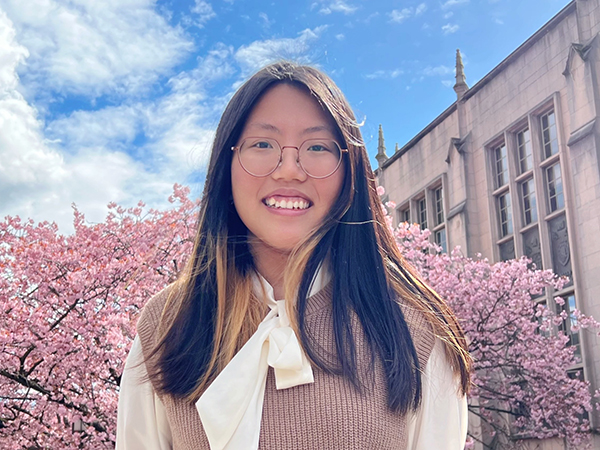
Portrait of Simona Liao with blossoming cherry trees and a gothic-style building behind her

Simona Liao

Growing up in what she describes as a traditional Chinese family in Beijing, Zhehui (Simona) Liao heard early and often about the value of a college education as the pathway to securing a good job. What she did not hear was encouragement to pursue a technical field; both her father, who majored in computer science in college, and a high school teacher discouraged her from learning coding when she was younger by observing that “girls are not as good as boys in STEM.”

While that may have deterred Liao in high school, once she arrived at the UW, she re-discovered coding via the Allen School’s introductory computer science course. Here, she found great joy in completing the Java programming assignments as well as a huge sense of accomplishment. Liao’s mother, for one, embraced her daughter’s newfound career path. This “subversive” experience reminded Liao of what she learned in her Gender, Women & Sexuality Studies classes about how gender binary functions to discipline women and girls via institutions such as family and school — also in the GWSS classrooms, she further gained inspiration and encouragement by learning about Chinese feminists and revolutionists from 100 years ago who transformed Imperial China. 

“My mom, despite being independent and brilliant enough to become an engineering professor, is still impacted by conventional gender ideologies to take on the invisible reproductive labor in our household,” noted Liao. “I recognized my privilege as an international student with a supportive mother who invests in my education. I know not all girls have the same opportunities to discover their hidden interests in STEM.”

Putting the two together — quite literally, as Liao is pursuing a double major in computer science and GWSS — has inspired her to use that privilege to support other women and girls interested in technical fields and to work to increase diversity, equity and inclusion more generally, both inside and outside of the Allen School. To help others in China who may not enjoy the same support for their own career choices, Liao founded Forward with Her, a non-profit networking and mentorship program that connects women college students with women professionals in STEM fields. Although such programs are commonplace in countries like the United States, they are relatively rare in China; when Liao presented FWH as part of the 2020 Social Innovation Competition hosted by UN Women and Generation Equality in Beijing, it earned recognition among the top 10 programs. To date, FWH has connected more than 400 women students with professional mentors and peers in China.

“As a woman in CS, I understood the feelings of being alone in a classroom surrounded by men and the difficulty in finding a sense of belonging,” explained Liao. “FWH created a community where women students can find women role models with developed careers in STEM and peers with whom to share their experiences.”

Back on the UW campus, Liao’s passion for sharing diverse experiences led her to serve first as event coordinator and then as president of Minorities in Tech, an Allen School student group focused on building community and advancing allyship in support of students with diverse backgrounds and experiences. She has helped organize educational events focused on Black History Month and community conversations that provide a safe space in which to explore issues around identity, inequality and the culture of computing. As the vice president of outreach, Liao also led multiple STEM outreach programs for students from low-resource school districts in Washington state on behalf of the UW chapter of the Society of Women Engineers.

More recently, Liao decided to apply her interest in gender issues and technology to research. She joined the Social Futures Lab, led by Allen School professor Amy Zhang, where she is investigating approaches for addressing sexual harassment in social games played in virtual reality.

“My Husky experience started with first understanding the world in terms of systems of power through a transnational feminist perspective and then leveraging my educational privileges to support a larger community,” Liao said. “In the future, I hope to keep expanding the impact I can make by drawing upon all the knowledge, experience, and leadership skills I gained at UW.”

Ather Sharif

Portrait of Ather Sharif in front of a railing overlooking a blurred cityscape and blue sky

Nine years ago, Allen School Ph.D. student Ather Sharif fell asleep in the back seat of a car and woke up in a hospital bed. His spinal cord had been severed in an accident, leaving him paralyzed from the neck down. At the time, Sharif was pursuing his master’s degree at the University of North Dakota; the prospect of not being able to use a computer again made him question his purpose in life.

“The struggles and limitations from the spinal cord injury forced me to contemplate the decision to continue living,” Sharif said. “But I chose to keep moving forward. And seeing where I am and who I am today, I am glad I did.”

Moving forward included restarting his master’s program at Saint Joseph’s University in Philadelphia — after spending over a year in a rehabilitation hospital relearning how to live and regaining his independence. Back on campus, Sharif was one of the only people who used a wheelchair; since the building that housed the computer science department was not accessible, he contended with the added complexity of scheduling classes and meetings in different locations. The situation deprived him of any sense of community within his own discipline.

That changed when he discovered AccessComputing, a program focused on supporting students with disabilities to pursue computer science education and careers. It was through this online community that Sharif met Allen School professor emeritus Richard Ladner, who encouraged him to apply to the Ph.D. program. Sharif’s research focuses on making online data visualizations accessible to blind and low-vision users and has been published at the ACM SIGACCESS Conference on Computers & Accessibility (ASSETS) and ACM Conference on Human Factors in Computer Systems (CHI). Since his arrival at the UW in 2018, Sharif has worked with his advisors, Allen School professor Katharina Reinecke and iSchool professor and Allen School adjunct professor Jacob O. Wobbrock, on a variety of projects, including reassessing the measurement of device interaction based on fine motor function. As part of that work, he interviewed users about their experience with digital pointing devices. He fondly remembers how one participant’s eyes lit up when it dawned on them that they might one day “use a mouse like an able-bodied person.”

“Those words, and the genuine excitement and honest hope they embodied, have not only gotten engraved in my mind but have also defined and motivated my accessibility-related research work,” recalled Sharif.

Sharif has also collaborated with professor Jon Froehlich in the Allen School’s Makeability Lab on tracking the evolution of sidewalk accessibility over time, and he and Dhruv Jain and Venkatesh Potluri earned a Best Paper nomination at ASSETS 2020 for their ethnographic study of how students with disabilities navigate graduate school. Outside of his research, Sharif recognized that one of the reasons so many barriers exist for people with disabilities is their lack of representation in leadership positions. He decided to be the change he’d like to see by volunteering to serve as co-chair of the Allen School’s Graduate Student Committee and as a member of the G5PAC — short for Graduate Student, Fifth-year Master’s, and Postdoc Advisory Council — and the LEAP Alliance (Diversifying LEAdership in the Professoriate), among other roles. He also serves as a member of the user advisory group for the Office of the ADA Coordinator at UW, and mentors other students in accessibility research and founded a grassroots organization, EvoXLabs, to advance universal web design and other accessible technologies.

“While the world has made significant progress in recognizing the inequities and disenfranchisement disabled people face in their everyday lives, we are nowhere close to achieving our desired goal of an equitable society,” Sharif observed. “My future is that of an advocate, a leader, and a researcher devoted to making this world a better place for disabled people.”

Congratulations to all of our 2022 Husky 100 honorees — you make the Allen School and UW proud! Read more →

Apple Scholar in AI/ML Venkatesh Potluri advances artificial intelligence for accessible UI design that empowers developers as well as users

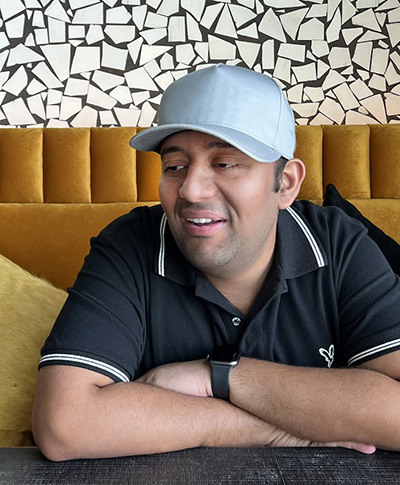
Venkatesh sitting at a black table with hands folded with a candid smile and a grey hat. The sofa is bright yellow and the wall is black and white pattern.

“Nothing about us without us.”

That statement has become a rallying cry for people with disabilities to ensure they have a direct voice in shaping the policies and conditions that, in turn, shape their access to employment, education, and lately, technology. With the growing proliferation of human-centered applications powered by artificial intelligence, it has become clear that the question of who will benefit from these emerging technologies will be determined in no small part by who makes them.

Venkatesh Potluri, a Ph.D. student currently working with professor Jennifer Mankoff in the Allen School’s Make4all Group, is among the makers determined to advance a more inclusive approach. He is also legally blind, which gives him firsthand knowledge of the barriers people with disabilities face in their interactions with technology on both the front and back ends. 

“Conversations about inclusion in AI typically highlight the role of fair hiring practices and equal access to education,” Potluri said. “For people with disabilities, having access to the actual tools of development is equally critical to making the field and the technology it produces more inclusive. Right now, when it comes to the development of human-centered machine learning systems, that access is extremely limited.”

This is particularly the case for blind or visually impaired (BVI) developers, a group historically underrepresented in computing to begin with. For Potluri and his peers, access to critical elements of modern programming, such as user interface and user experience design, is essentially non-existent. Human-centered ML systems depend heavily on these elements, however; without accessibility support for tools beyond basic programming, BVI developers are sidelined from the development process in this rapidly growing area. Beyond the impact on the individuals’ careers — which is bad enough — the exclusion of developers who are BVI or have other disabilities from teams developing these technologies can have real-world repercussions across the field of AI.

“Human-centered machine learning holds a lot of promise for solving important societal problems ranging from health care to transportation. But those solutions won’t benefit everyone if diverse needs and perspectives aren’t taken into account,” Potluri explained. “And in some cases, embedded biases in these technologies can result in real harm. For example, a self-driving car that relies on a collision avoidance system trained solely on a ‘typical’ pedestrian profile may not recognize a wheelchair user crossing the street.”

Earlier this year, Potluri was named a 2022 Apple Scholar in AI/ML for his efforts to advance a new paradigm in UI design, one that uses AI to improve accessibility for BVI developers. Potluri’s attempts to investigate how blind or visually impaired computer users understand visual semantics such as shape, spacing, and size of user interface elements show that users do want access to this information, but many current screen readers do not surface it. Current UI accessibility tools offer basic — one might even say paltry — descriptions of core functionality like menus and links, while disregarding visual semantics such as shape, size, spatial arrangement and overall consistency. With the support of his Ph.D. fellowship from Apple, Potluri plans to construct a dataset and machine learning models for automatically generating UI descriptions that incorporate these rich visual semantics. His goal is to address a fundamental challenge BVI users have in understanding visual layout and aesthetics. 

The enhanced descriptions produced by his new models will lay the groundwork for improvements in text-based search for design templates as well as machine understanding of UIs. And that’s just phase one; Potluri intends to build upon that foundation by developing an accessible UI editor that will improve the design experience for BVI developers. The new tool would enable developers to search for, apply and iteratively assess design templates, and to obtain suggestions for repairing deviations from convention that could detract from the user experience. 

Potluri’s efforts will empower BVI developers to make meaningful UI design decisions that determine form as well as function. Like previous advances in accessible technology, the benefits will most certainly extend beyond people with disabilities.

“Ultimately, the results of this work will improve the quality of AI-based assistance for BVI and sighted users alike when designing UIs for BVI and sighted users alike,” Potluri noted.

Potluri is one of just 15 graduate students at universities around the world to be recognized by Apple in its latest cohort of Scholars. He and his fellow honorees were chosen based on their innovative research, leadership and collaboration, and commitment to advancing their respective fields. Previously, as a first-year Ph.D. student working with Mankoff and professor Jon Froehlich in the Allen School’s Makeability Lab, Potluri earned a Google Lime Scholarship in recognition of his leadership, academic excellence and passion for computer science and technology.

“Venkatesh is all too familiar with the limitations and biases encoded into today’s systems with regard to what BVI programmers are capable of, or even interested in, doing,” noted Mankoff. “His research is raising the bar for what’s possible, and will help to include BVI people in fields such as interface design and data science.

“Not only is Venkatesh’s work of the highest quality, but also, his work works. He is committed to developing not just ideas but practical solutions that will lift up people with disabilities by giving them equitable access to these growing segments of our field,” she continued. “I cannot emphasize enough how important this is, in a world that often still thinks of people with disabilities as the subjects of research rather than the originators.”

Learn more about the Apple Scholars in AI/ML Ph.D. Fellowship here.

Congratulations, Venkatesh! Read more →

Allen School’s Sewon Min is taking natural language processing to the next level to tackle real-world problems

Portrait of Sewon Min against periwinkle background

When Sewon Min first arrived at the University of Washington as an exchange student in the fall of 2016, little did she know how those three months would change the course of her academic career. After completing a brief stint as an undergraduate research assistant under the guidance of Allen School professors Hannaneh Hajishirzi and Ali Farhadi, she returned to Seoul National University in Korea to complete her bachelor’s degree. In the interim, Hajishirzi “tried really hard” to convince Min to move back to the Pacific Northwest to begin her Ph.D. — an effort that ultimately led to a happy reunion with her former advisor as well as a new mentor in professor Luke Zettlemoyer.

In the end, it doesn’t seem like Min took much convincing.

“It was very clear that returning to the Allen School for my Ph.D. would be the right choice for me. I loved every interaction I had with Hanna and Ali,” recalled Min. “All of our discussions and their suggestions opened up a lot of new directions. Oftentimes, when I was stuck, I would leave our meeting excited about new ideas I could try. Also, Hanna has been a world-leading expert in the topic I’ve been especially excited about — question answering — and I had a strong desire to continue working on that.”

Since her arrival, Min has wasted no time in establishing herself as one of the most promising up and coming researchers in the field. She has published more than 15 papers at the premier NLP conferences that have earned more than 1,700 citations combined. Now in her fourth year at the Allen School, Min recently earned a 2022 JP Morgan Ph.D. Fellowship in artificial intelligence to build on her already impressive record of leading the field of natural language processing in new — and sometimes unexpected — directions. 

“Sewon is a rising star who aims to take NLP paradigms to the next level. She not only pushes performance for long-standing hard problems, but also blazes entirely new directions for the field,” said Hajishirzi, who splits her time between the Allen School’s H2Lab and the Allen Institute for AI, where she is a senior research manager. “Sewon’s work is both technically sophisticated and highly impactful, and she continues to push the boundaries of what natural language models can do for a range of real-world applications.”

Min has proven particularly adept at pushing boundaries through her work on question answering. Whereas much of the previous research in this area has focused on restricted questions — ones for which a single answer can be extracted from a given document — Min has chosen to focus on broadening the capabilities of NLP models to respond to questions more akin to those posed by humans.

“My goal is to build a system that understands and can reason about natural language at a level that will help people solve problems they face in their daily lives, from answering their queries, to detecting false information on the internet,” explained Min. “Current systems assume a well-defined user query and a single, definite answer, but that’s not how the human quest for knowledge works! People ask ambiguous and open-ended questions, sometimes built on false presuppositions and requiring complex processing and reasoning about real-world conditions.”

One of Min’s early research breakthroughs was in multi-hop question answering — that is, questions that require reasoning about one or more facts to arrive at the correct answer. In a paper that appeared at the 57th Annual Meeting of the Association for Computational Linguistics (ACL 2019), Min and her collaborators proposed a novel approach to the problem that involves decomposing multi-hop questions into their component parts. Their system, DecompRC, generates sub-questions that can be answered by state-of-the-art single-hop QA models, and then chains the answers to arrive at the correct response to the original question. The technique proved to be both clever and efficient; even with the benefit of only 400 labeled training examples — a relatively miniscule amount of data in machine learning terms — Min and the team demonstrated that DecompRQ could generate high-quality sub-questions on a par with human-authored ones.

Another area in which Min has already made significant contributions is open-ended question answering. She became interested in exploring how to bestow models with the ability to field questions that are inherently ambiguous after realizing the extent to which existing models make faulty assumptions about the nature of the questions real-world users would ask. For example, after examining a corpus of over 14,000 questions based on Google search queries, Min found more than half to be ambiguous in their references to events, entities, time dependency or other factors. Given that ambiguity can be difficult for both machines and humans to spot, she conceived of a new open-ended QA task, AmbigQA, in which the model has to retrieve every plausible answer based on the various potential interpretations of what the questioner was searching for, and then produce a disambiguated question for each answer. 

Min and her colleagues presented their results at the 2020 Conference on Empirical Methods in Natural Language Processing (EMNLP), where it caught the attention of the NLP community as an example of how to effectively model ambiguity as well as study other challenges associated with more realistic open-domain question answering. According to her co-advisor, Zettlemoyer, Min’s work on this and several other projects illustrates her dedication to not only developing solutions to important problems, but also to making sure they are the right problems to solve in the first place.

“Sewon has an uncanny ability to figure out what methods will work well in practice while opening up entirely new ways of thinking about problems,” said Zettlemoyer, who is also a research director at Meta AI. “Beyond her technical contributions, what really sets Sewon apart is how she considers problems as a whole and pushes the machine learning community into more realistic and open-ended territory instead of focusing narrowly on well-trodden challenges.”

With support from the JP Morgan Ph.D. Fellowship, Min is eager to continue down the path less traveled as she continues to grapple with an open-ended question of her own.

“How do we build models that can deal with that level of ambiguity and imperfection — and do so in a way that is computationally efficient?” she asked. “That is the problem that I’m trying to solve.”

Min is one of 11 students who were named JP Morgan Ph.D. Fellows last month as part of the company’s AI Research Awards program. Learn more about the 2022 class of fellows here.

Congratulations, Sewon! Read more →

Goldwater Scholar Alex Mallen aims to make sense of the world — and make a positive impact — through research in beneficial AI

Portrait of Alex Mallen in t-shirt and fleece jacket with trees and autumn leaves in background

When he was a student in high school, computer science major Alex Mallen had what he describes as a “rough” introduction to research. Fortunately, the Bellevue, Washington, native didn’t let that experience deter him at the University of Washington, where as a freshman he decided to try again as a step toward pursuing a Ph.D. after graduation. Mallen’s persistence has paid off in the form of multiple, positive research experiences that have helped him to solidify his plans to enroll in graduate school and, most recently, a prestigious Goldwater Scholarship to support his goal of helping to build artificial intelligence that people can trust to be beneficial.

Of his renewed focus on research, Mallen describes how he cast a wide net and kept an open mind — useful advice for any student hoping to incorporate time in the lab as part of their own undergraduate experience.

“I reached out to professors, postdocs and graduate students whose research I found interesting,” he explained. “I also enrolled in a graduate class in an area I was interested in with my mentor, Professor Kutz.”

Nathan Kutz is a professor in the Department of Applied Mathematics and director of the AI Institute in Dynamic Systems at the UW. In collaboration with Kutz and postdoc Henning Lange, Mallen contributed to the development of a simple and computationally efficient new technique, Deep Probabilistic Koopman (DPK), that enables probabilistic forecasting of complex phenomena thousands of timesteps into the future with a reasonable degree of accuracy. The new class of models, which leverages recent advances in linear Koopman operator theory, returns a probability distribution that assumes parameters will vary quasi-periodically with time. Mallen and his co-authors demonstrated how their approach could be effectively applied in a variety of domains, from forecasting energy demand, to predicting atmospheric pollution levels, to modeling a mouse’s cortical function for neuroscience research. 

“I began working with Alex when he was just a freshman, and I’m not sure how you could find someone as talented and creative and productive as he has been so early in his career,” said Kutz. “He spearheaded our work on DPK, for which he provided critical missing theory for how nonstationary data relate to building Koopman embeddings to transform nonlinear dynamical systems into linear dynamical systems. When we applied this work to a challenge data set for power grid monitoring, his new method placed within the top three—whereas most of the other algorithms had been improved over several years. This is but one illustration of the quality of his work and his potential for transformative impact.”

Mallen subsequently contributed directly to neuroscience research working with members of the Allen Institute for Brain Science. There, he helped to construct and analyze the dataset underpinning the MICrONS Explorer, which offers a comprehensive visualization of the mouse visual cortex. The team developed the tool as part of the Machine Intelligence from Cortical Networks Program to pave the way for a new generation of machine learning algorithms based on an enhanced understanding of “the algorithms of the brain.” More recently, Mallen has been collaborating with a group of researchers based predominantly in Europe and members of the grassroots research collective EleutherAI on a project to direct and characterize the behavior of large pretrained transformers, such as GPT-3, using the example of a large transformer pretrained on human chess games. 

Multi-colored image of nuclei against a black background
A visualization of mouse cortex nuclei from the MICrONS Explorer gallery.

Mallen aims to combine his passion for research with a commitment to effective altruism, which espouses an evidence-based approach to developing solutions to society’s most pressing problems. To that end, he and other members of the UW Effective Altruism group are working to build a community of people on campus who are looking to apply their expertise to do good.

He believes the approach could be particularly effective for addressing the outsized influence AI could have on society in the future.

“It seems reasonably likely that AI will have a very large impact on the world in the next hundred years, and that this shift will have a large and lasting effect on people’s lives for many generations,” Mallen observed. “The effects of AI systems we design are in theory predictable and controllable, but the challenge of properly steering them gets harder as they become more capable.

“I hope to tackle some of the general problems that may arise when training capable AI systems, such as misalignment with human values,” he continued. “We can already see some of these issues in current algorithms that produce toxic or biased output, or social media that harm discourse and mental health by overoptimizing for engagement.”

Mallen is one of two UW students to be named 2022 Goldwater Scholars by the Barry Goldwater Scholarship & Excellence in Education Foundation. Sharlene Shirali, a junior majoring in neuroscience, joined him among this year’s honorees, who are chosen for their potential to make significant research contributions in the natural sciences, engineering or mathematics.

While he is interested in many disciplines, Mallen chose to pursue computer science at the Allen School as an effective means for making sense of the world around him — and for achieving the altruistic impact that he seeks.

“I’m really interested in understanding things — society, philosophy, math, the world — but also I want to do something useful to other people,” Mallen said. “I think computer science is a really important tool to do both.”

Read the Goldwater Foundation announcement here, and the UW Undergraduate Academic Affairs announcement here.

Congratulations, Alex! Read more →

« Newer PostsOlder Posts »