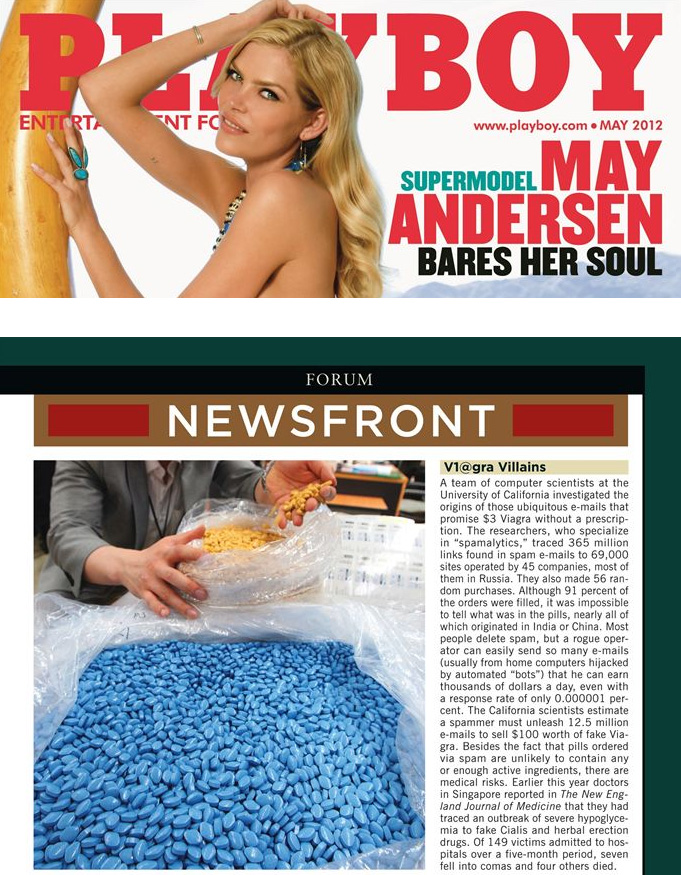
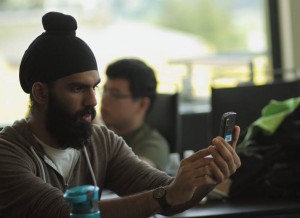
 TouchDevelop is a new programming environment for Windows Phone – a typed, structured programming language built around the idea of only using a touchscreen as the input device to author code, with built-in primitives that make it easy to access the rich sensor data available on a mobile device.
On Friday and Saturday, 30 UW CSE students participated in a TouchDevelop Hackathon. The event started on Friday evening with a short tutorial about TouchDevelop. Throughout Friday night and Saturday, student teams worked hard and the TouchDevelop team was at hand to answer questions and keep the students going. At the end of the Hackathon, on Saturday evening, there were 14 completed entries. Each project was given three minutes to present and demo. And the Oscar goes to …
First place
Second place
Third place
Congratulations to the winners, and thanks to the other participants and to Microsoft (particularly Judith Bishop, Arjmand Samuel, Peli de Halleux, and Nikolai Tillmann). Read more →
 PCWorld writes: “Most gesture-based control systems we use today rely on either motion-capture cameras – like the Kinect – or a touchscreen device. But researchers from Microsoft Research and the University of Washington are developing a system that can detect object with sound waves, like how a bat does with echolocation. With the SoundWave project, the researchers aim to bring gesture controls to any computer that has a set of speakers and microphone. The program uses the Doppler Effect of sound waves for to detect objects and recognize motion.” Read the PCWorld article here.
ExtremeTech writes: “Microsoft Research, working with the University of Washington, has developed a Kinect-like system that uses your computer’s built-in microphone and speakers to provide object detection and gesture recognition, much in the same way that a submarine uses sonar.” Read the ExtremeTech article here.
Geekosystem here.
Slashdot coverage here.
SoundWave is a collaboration involving Sidhant Gupta and Shwetak Patel from UW CSE, and Dan Morris and Desney Tan from Microsoft Research. Read more →
 This is what happens to UW CSE Ph.D. alums who do research on the spam value chain using fake viagra sales as their case study.
Page 45 of the May issue, here.
[In a followup to this post, Savage notes: “Now, one might suggest that there is a trend among UW CSE Ph.D. alums on the UCSD faculty, given Sorin Lerner’s 2010 recognition by the adult entertainment industry. As Yoshi might say, ‘Interesting!’ However, I can assure you that this kind of press is just a natural byproduct of hard work and a firm dedication to science.”] Read more →
 OK, we admit it – it’s not news. But how can you not love this UW-themed hot dog????? (From a collection of Seattle PI photographs of the May 5 “Opening Day” (of the boating season) activities on the Montlake Cut.) Read more →
 CSE’s Stuart Reges has been elected to the Board of Directors of the Computer Science Teachers Association, as one of two “University Faculty Representatives.” CSTA is a national organization that supports and promotes the teaching of computer science in K-12.
Stuart has a long record of engagement with both the national CSTA organization and the Puget Sound chapter, PS CSTA.
Learn more about UW CSE’s K-12 outreach activities – DawgBytes – here. Read more →
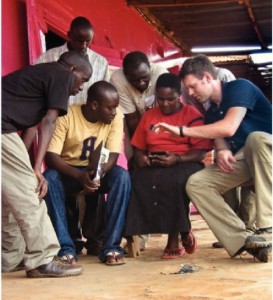
UW CSE's Carl Hartung, a developer of Open Data Kit - which the Grameen Foundation uses to create apps for its project in Uganda - trains a Community Knowledge Worker.
The feature article in the most recent Alaska Airlines flight magazine, “Data Delivery: Researchers tap the potential of mobile technologies to gather and interpret information,” contains an extensive discussion of UW CSE’s “Open Data Kit,” an open source toolkit that turns mobile phones into data collection devices.
Read the article here. Read more →
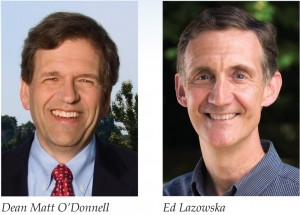 UW’s Trend in Engineering interviews UW CSE’s Ed Lazowska and UW Dean of Engineering Matt O’Donnell regarding the impact on students and employers of the longstanding failure to invest in engineering capacity at the University of Washington.
“‘It’s heartbreaking,’ said Ed Lazowska, the Bill & Melinda Gates Chair in Computer Science & Engineering. ‘We are turning away outstanding students who would absolutely succeed in the program. It’s depriving students of the preparation they need, and it’s depriving employers of the employees they need.’ …
“‘Engineering education is booming because of the preparation it gives students. That preparation is teamwork, interdisciplinary projects and problem solving, and a connection to the real world. Engineering education has become more hands on and experiential in recent years. The value that we add is in the lab, and that pervades all engineering fields. All the upper division courses have a significant lab component.’ …
“‘Our economy is creating great jobs and they are going to other people’s kids. Every smart, motivated kid who grows up here ought to have the opportunity to become a first-tier participant in this new economy. That is not the case today because of lack of capacity.’ …
“‘The nation’s great public universities provide socioeconomic upward mobility for the smart kids who grow up in their regions. The UW enrolls more Pell-Grant-eligible (economically disadvantaged) students than the entire Ivy League combined. We cannot sacrifice that mission.'”
Main article here. Q&A here. Read more →
 Carlos will soon become the Amazon Professor of Machine Learning in UW CSE.
Read the profile here. Full issue of The Link here.
Read more →
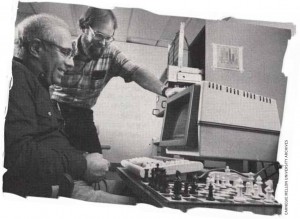 A lovely article on Hans Berliner in the Spring 2012 issue of The Link – the alumni newsletter of Carnegie Mellon’s School of Computer Science – includes an early 1980’s photograph of Carl Ebeling, now a UW CSE faculty member but then a CMU Ph.D. student working with Hans. Ebeling’s Hitech chess machine was the top chess-playing computer in the United States.
Photo here. Full issue of The Link here. Read more →
 GigaOM profiles UW CSE professor Oren Etzioni:
“In Oren Etzioni’s world, telling you where to buy a product is so 20 years ago. He did that with his first startup, Netbot, in 1996. Today, Etzioni wants to tell you when to buy — that ideal moment when the price won’t fall for a while and you won’t get burned by the release of a new model a week later. Tomorrow, well, maybe he can let you know when you’re in the vicinity of a great deal.
“Etzioni, who spends his days as a computer science professor at the University of Washington, is probably best known as the co-founder of Farecast. That company, which Microsoft bought for $115 million in 2008 and incorporated into Bing, helped even the playing field between travelers and airlines by predicting the best times for travelers to purchase their tickets. Airlines practice yield management by regularly changing their prices to maximize profit, but Etzioni was able to find a fair amount of predictability once Farecast was able to get the data it needed from the airline industry.
“Lately, though, Etzioni has been focused on his latest startup, Decide.com, which launched in 2010 and applies the premise behind Farecast to consumer electronics and appliances. At some point, Etzioni told me, the practice of yield management had migrated to ‘pretty much every non-trivial good.’ Consumer electronics was the natural place to start, he said, because they tend to be highly considered purchases and enough of them are made online to generate lots of data and justify the existence of a web application.”
Read the rest of this terrific post here. Read more →