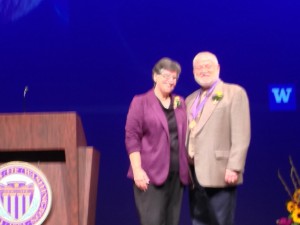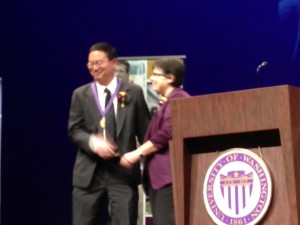
Jeff Dean, Gail Murphy receive 2014 UW CSE Alumni Achievement Awards

jeffgailSeveral years ago, we established the tradition of honoring two outstanding UW Computer Science & Engineering alumni each year as part of our graduation ceremony. In doing this, we have three objectives:

  • To honor some of our most distinguished alumni by recognizing their extraordinary achievements.
  • To ensure that graduating students know that they are joining a long tradition of excellence and accomplishment.
  • To inspire current members of the UW CSE graduating class.

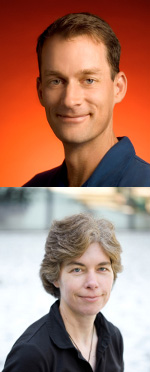
The recipients of the 2014 UW CSE Alumni Achievement Awards are Jeff Dean and Gail Murphy.

Jeff – a 1996 Ph.D. alum – is Senior Fellow at Google. Working with his colleague Sanjay Ghemawat, Jeff is responsible for much of Google’s groundbreaking scalable infrastructure, such as MapReduce and BigTable.  More recently he has turned his attention to “deep learning.” Jeff is a Member of the National Academy of Engineering, a Fellow of the ACM, and recipient of the ACM SIGOPS Mark Weiser Award, the ACM Infosys Foundation Award, and the UW College of Engineering Diamond Award for Early Career Achievement.

Gail – also a 1996 Ph.D. alum – is Professor of  Computer Science and Associate Dean for Research & Graduate Studies in the Faculty of Science at the University of British Columbia. She is also a co-founder and Chief Scientist at Tasktop Technologies Incorporated. Her research interests are in software engineering with a particular interest in improving the productivity of knowledge workers, including software developers.

Read more about Jeff and Gail in MSB here.  Learn about our previous UW CSE Alumni Achievement Award winners here. Read more →

New York Times: CSE Ph.D. alum Jeff Dean on “Intelligence Too Big for a Single Machine”

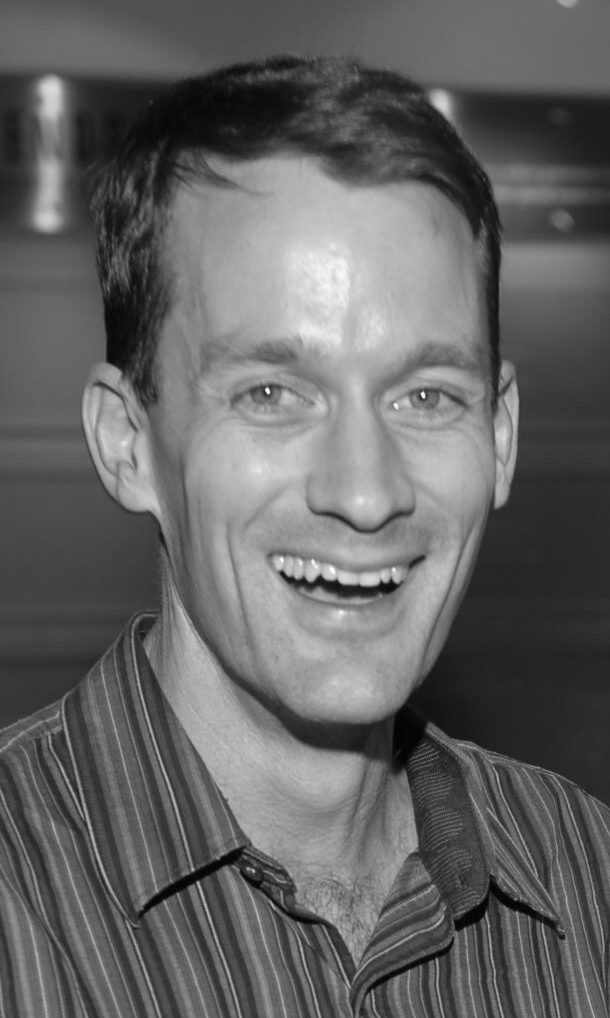
JeffDeanIn the New York Times special section on Cloud Computing (which also identified Seattle as the “the center of the most intensive engineering in cloud computing”), CSE Ph.D. alum Jeff Dean – Google Senior Fellow – is quoted extensively:

“Jeff Dean, a research fellow at Google, focuses on accelerating the progress of artificial intelligence in tasks like computer vision and understanding the meaning of words. Until a few years ago, for example, Google image searches were executed mainly by identifying the text labels affixed to pictures. Today, many images are identified by software analyzing the patterns of digital pixels in a picture or video. And, Mr. Dean said, the technology can pick out a leopard in a picture, and know it is not a lion or a cheetah, recognizing the distinctive pixel patterns of various big cats.

“Mobilizing the firepower of Google’s large cloud data centers, Mr. Dean said, enables his team to ‘bring a lot of computation to bear on these kinds of problems.’ …

“His team’s advanced artificial intelligence research, known as deep learning, is ‘loosely inspired by knowledge of how the brain works,’ Mr. Dean said. But there are things the human brain does that silicon-based computing still only aspires to …

“‘We don’t have a great handle on how to build those kinds of dynamically evolving memory systems,’ Mr. Dean said. ‘Google and others are working on that, but it’s really nascent.'”

Read more here.

Jeff will receive the 2014 University of Washington Computer Science & Engineering Alumni  Achievement Award at our graduation ceremony on Saturday. Read more →

Happy Birthday Stefan Savage!

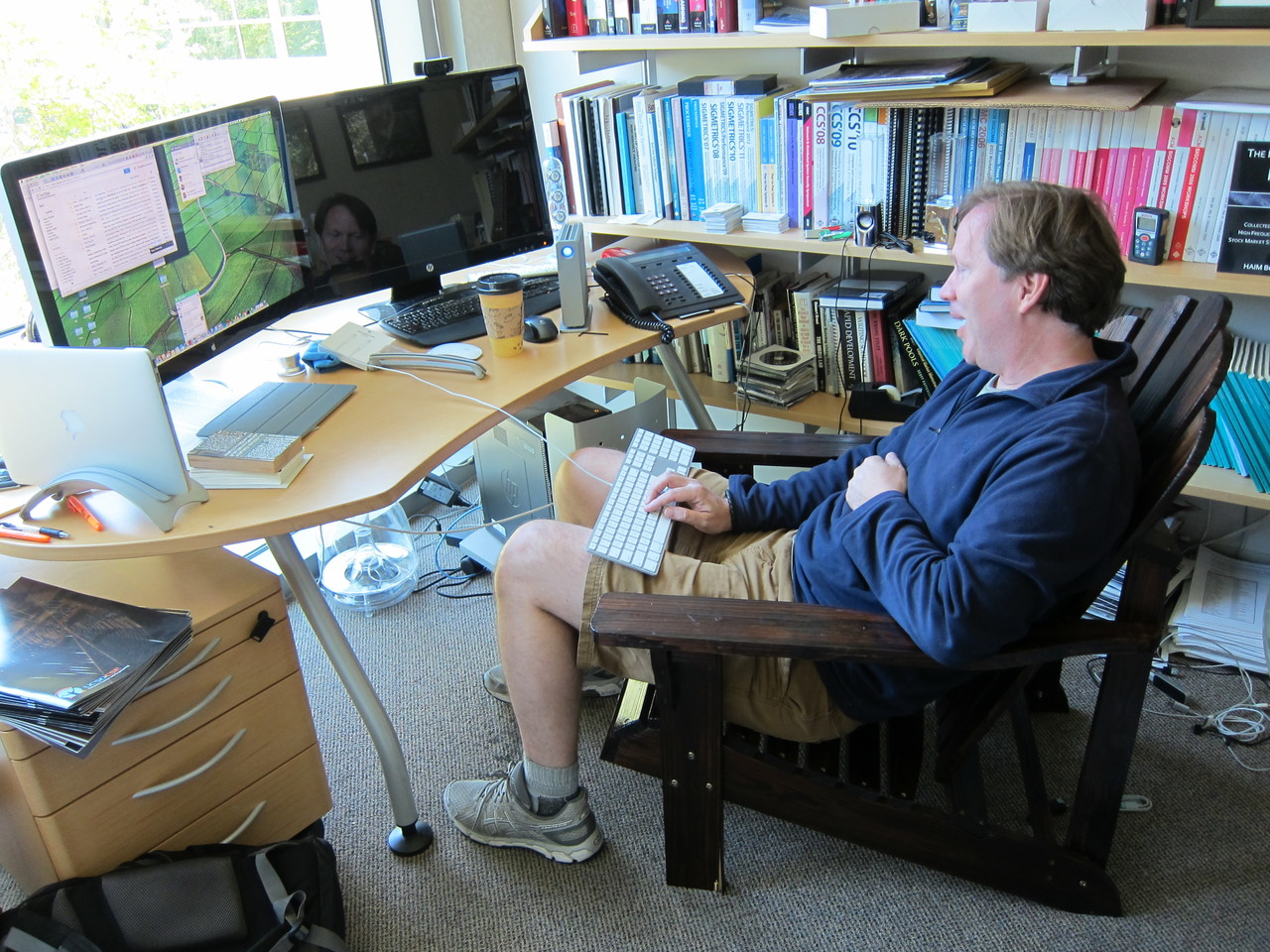
adirondack2(1)UW CSE Ph.D. alum Stefan Savage – star professor at UCSD CSE – turned 45 today.

At some point Stefan had expressed a fondness for Adirondack chairs. His UCSD faculty colleagues, led by UW CSE Ph.D. alum Geoff Voelker, came through.

Said Stefan, after reality met fantasy head-on:

“What is theory with these?  Is this some kind of New England Calvinist thing where sitting on your lawn on a nice day felt too good so, inspired by church pews, they designed the most awkward sitting experience they could whereby you could prove, through your own clear pain, that you were not engaging in the deadly sin of sloth?

“Seriously, what other chair can simultaneously hurt your back, knees and hips … while still providing multiple opportunities for splinter placement?  It is a marvel of anti-ergonomics …”

(We presume that’s Klingon for “Thanks for the thoughtful gift!”) Read more →

New York Times: “Silicon Valley Tries to Remake the Idea Machine”

mag-15Economy-t_CA0-master675Ed Lazowska comments in response to this New York Times article:

“The real message in this article is easy to miss:

“‘Moonshots’ are heroic engineering efforts that draw upon decades of fundamental research. Without fundamental research, there can be no moonshots.

“So, who’s doing it? ‘Back in the day,’ IBM Research and Bell Labs invested in fundamental research, alongside the Federal government. Today, to first approximation, only Microsoft (through Microsoft Research) does so. Google X, as Astro Teller states, is in the moonshot business. Most other companies are in the ‘nothing but engineering the next release of the product’ business, or in the ‘R&D via M&A business.’

“God bless Microsoft Research for augmenting the Federal investment in fundamental research in information technology: Microsoft spends roughly as much on Microsoft Research as the National Science Foundation spends on computer science research – 95% of it published in the open literature, and much of it in collaboration with university researchers.”

Read the article, and this comment and others, here. Read more →

New York Times: “Seattle, the New Center of a Tech Boom”

SEATTLE-blog480“Rain or shine, Seattle has quickly become the center of the most intensive engineering in cloud computing: the design and management of global-scale data centers …

“Besides talent that knows how to build infrastructure, Seattle has a number of leading cloud software companies. Tableau Software, a leader in the computer visualization of large sets of data, is across the street from Google in Fremont. Concur, used for online expense forms, is in Bellevue, near Microsoft Azure. Other companies include Chef, which produces open source cloud automation software; Apptio, a cloud monitoring company, and Socrata, which stores and publishes over 100,000 data sets for 150 government organizations …

“Another factor is the growing presence of the University of Washington’s computer science department, now considered a leader in distributed computing. ‘There’s an argument that Seattle owns the cloud now,’ said Ed Lazowska, who holds the Bill & Melinda Gates chair in Computer Science & Engineering at the university. ‘Universities are always part of the axis’ in building out a regional tech center, he said.

“The university, which awards about 250 computer science degrees a year, is now working on courses in machine learning, which is how computers, particularly in the cloud, study and adapt based on big streams of data.

“‘The cloud and big data are closely connected,’Mr. Lazowska said. ‘We’re incredibly lucky to be in Seattle.'”

Read more here. Read more →

Googlers and UW CSE students in uProxy hackathon

photoUW CSE and Brave New Software partnered to develop uProxy, a project seeded by Google Ideas.

One out of every three people live in societies where free expression is severely restricted. When corrupt or repressive groups control the Internet’s infrastructure, they often subject their citizens’ Internet traffic to censorship, surveillance, and misdirection. uProxy enables friends to provide each other with a trusted pathway to the web.

This week, Googlers and UW CSE students are participating in a uProxy hackathon in the Allen Center.

Learn more about uProxy here and here. Read more →

Remembering Eliana Hechter

ElianaHechterImageA memorial service was held today for Eliana Hechter, who died on Wednesday, April 16, 2014.

Eliana was briefly a CSE major, but graduated magna cum laude from the University of Washington in 2006 – at the age of 18 – with a degree in mathematics. She received a Goldwater Scholarship and was a 2006 Rhodes Scholar – at the time the second-youngest person to ever receive the Rhodes. She was also selected for a Marshall Scholarship but declined in order to accept the Rhodes. At Oxford University Eliana earned her Ph.D. in statistics. At the time of her death she was a first-year medical student at the joint Harvard-MIT Health Sciences and Technology program.

JesseEliana is survived by her father, former UW professor Michael Hechter. Her mother, Debra Friedman, passed away in January 2014 from cancer; Debra was the chancellor of UW Tacoma at the time of her death but previously had been instrumental in establishing Undergraduate Academic Affairs on the Seattle campus, where she was a strong supporter of CSE. Read more →

UW CSE’s Tina Donahue takes Ballard Criterium Women’s Cat 4

IMG_2971

During …

IMG_2967

Before …

IMG_2972

After …

California Chrome lost.  You should have put your money on UW CSE academic advisor Tina Donahue instead.  Tina took the Women’s Category 4 race in the 2014 Ballard Criterium by 15 lengths, as well as taking all but one of the intermediate sprint prizes (and you’d have to be nuts to sprint for a gift certificate to the Lock & Keel).

Congratulations Tina! Read more →

Dr. James Mickens keynotes UW CSE PoCSci ’14

IMG_2963 copyDr. James Mickens, renowned researcher in the Distributed Systems group at Microsoft’s Redmond lab and recipient of the 2040 ACM A.M. Turing Award, delivered a stirring keynote at today’s UW CSE Potentially Computer Science Conference 2014 (PoCSci ‘14), “The Premier Sham Conference for Potentially Computer Science Research.”

PoCSci is the conference that in 2002 – its second year – revolutionized the field of Potentially Computer Science Research through Doug Zongker’s work “Chicken Chicken Chicken: Chicken Chicken” (YouTube video of Zongker’s presentation at AAAS 2007 here).

James’s slides are unfortunately Microsoft Confidential (hence the black rectangles on the image above), due to extreme measures recently taken by Peter Lee (Corporate Vice President and Head of Microsoft Research) to protect Microsoft’s intellectual assets and to shield the public from what happened to the University of Michigan’s computer science Ph.D. program in the 20 years between his own graduation and James’s. However, you can see some of James’s related work here and here (our thanks to Edward Snowden for providing these links).

Presentations that followed James’s keynote included:

  • A. Conrad Nied. OneSnackAway: The Next Generation in Mobile Snack Apps
  • Alex Mariakakis and Vincent Lee. The Marauder’s Map
  • Doug Woos. Angry Ltac: An Expressive DSL for Verifying Trivial Lemmas About Linked Lists
  • Benjamin Wood. PIGINT: Pig Brother + Pig Data, building from related work presented at PoCSci 2013
  • Jeremy Hyrkas, Pavel Panchekha, and Karl Koscher. Karaoke talks

Many thanks to James for getting PoCSci ’14 off to an appropriate start. Read more →

The triumphal return of Luis Ceze

IMG_2960Regular readers of this space will recall that three weeks ago Luis Ceze’s knee was destroyed at a social event organized by Hank Levy.

We are pleased to report that Luis has surfaced once again (he has been seen by us only in X-rays up to this point), sporting a lasting memento of Hank’s hospitality.

Says Luis, who looks in the bright side of everything: “Now that I have a handicapped sticker, I can go to Capitol Hill for dinner and find parking!”

Addendum, echoing a Facebook exchange:

Jim Larus: Hank is still on the loose – are you nervous?

Ed Lazowska: Hank and Ronit fled to France a week ago. We assume he’s seeking asylum and we’ll never see him again. So we feel reasonably secure here for the time being.

Read more →
« Newer PostsOlder Posts »