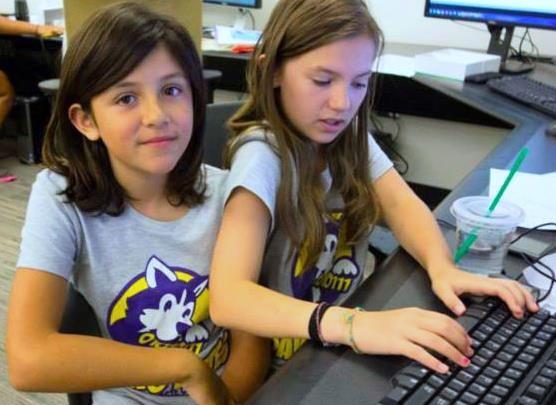
 DawgBytes is UW’s Computer Science & Engineering K-12 outreach program. We introduce students and their teachers to the exciting world of computing.
Here’s an update on summer activities and upcoming opportunities.
Get involved! Read more →

DawgBytes is UW’s Computer Science & Engineering K-12 outreach program. We introduce students and their teachers to the exciting world of computing.
Here’s an update on summer activities and upcoming opportunities.
Get involved! Read more →
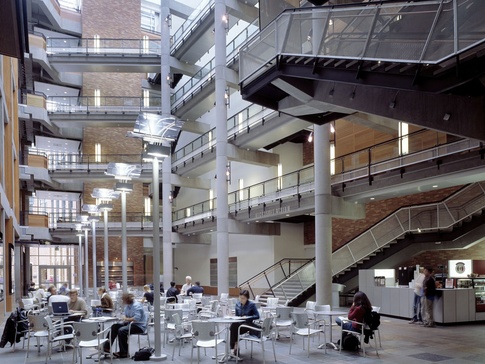 Find out from this Quora post by 2013 UW CSE graduate Ambar Choudhury:
“I’m going to talk about the undergraduate experience at the UW Computer Science Department (UWCSE), having graduated from the program in 2013. Short answer – it’s pretty darn awesome.
“The long answer lies below.”
Read more on Quora here. Read more →
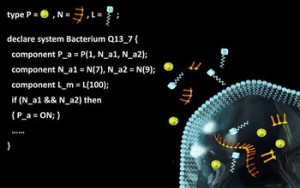 UW EE professor (and UW CSE adjunct professor) Eric Klavins and UW EE and CSE professor Georg Seelig have been awarded a grant from the National Science Foundation’s Expeditions in Computing program as part of a multi-investigator team working to establish the engineering foundations for molecular programming and synthetic biology.
Klavins and Seelig will receive $2 million as part of the expedition called “Molecular Programming Architectures, Abstractions, Algorithms and Applications” led by Professor Erik Winfree of the California Institute of Technology. The team also includes investigators from Harvard and the University of California at San Francisco.
The project explores how to systematically program the behaviors of a wide array of complex information-based molecular systems, from decision-making circuitry and molecular-scale manufacturing to biomedical diagnosis and smart therapeutics in living cells. The work could lead to real-world applications such as molecular instruments for probing biological systems and programmable fabrication of nanoscale devices.
Read the NSF release here! Read more →
 The 1st Heidelberg Laureate Forum takes place September 22-27, 2013.
Forty Abel, Fields, Turing, and Nevanlinna Laureates – winners of the most prestigious awards in the computer and mathematical sciences – will spend a full week interacting with 200 selected young researchers from around the globe.
UW CSE Ph.D. students Kyle Rector and Paris Koutris are among the 200 invited attendees. The Heidelberg Laureate Forum blog has a wonderful writeup on Kyle’s research.
Congratulations to Kyle and Paris on this tremendous honor – and tremendous opportunity! Read more →
 ACM Ubicomp, the world’s top conference for pervasive and ubiquitous computing, was held Sept 8-12 in Zurich Switzerland. For the seventh consecutive year, UW CSE took home a bundle of awards:
Congratulations one and all! Check it all out here!
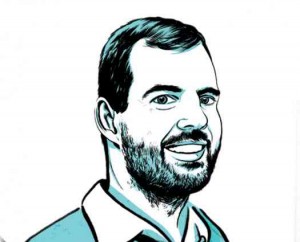 Justin Cappos recently completed a postdoc in UW CSE and joined the faculty at NYU-Poly in New York.
No sooner had Justin left Seattle than he was named to the ranks of Popular Science‘s annual “Brilliant Ten” – based upon his creation of the cloud computing platform “Seattle.”
Congratulations Justin! Read more here. Read more →
 SNUPI Technologies is a new startup out of Shwetak Patel’s lab – Shwetak, Gabe Cohn, Jeremy Jaech, Matt Reynolds, etc.
The TechFlash Cup is a startup competition. Sixteen companies were selected as competitors. Every Monday at 9 a.m., the two companies with the fewest votes will be eliminated, until they get down to the final four, at which point there will be a “pitch competition.”
It’s up to YOU to get SNUPI into the “pitch competition.” You can vote DAILY, beginning today, here:
http://www.bizjournals.com/seattle/techflashcup
(You need to “sign in” to vote. I’m not sure exactly what’s required – I already had an account with PSBJ.)
It will just take a few seconds, once you’re registered. Vote for the SNUPI of your choice, but vote!
UPDATE: On the SNUPI Technologies website, you can sign up for daily voting reminders! http://www.snupi.com/ Read more →
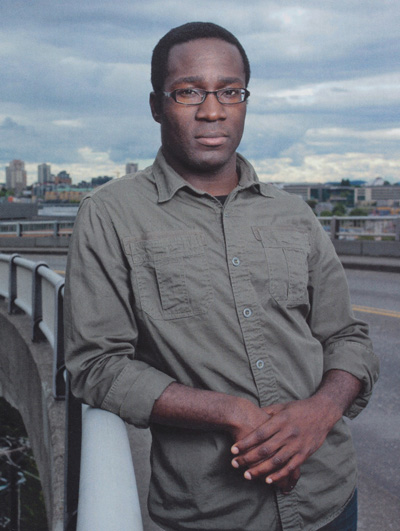 Recent UW CSE Ph.D. alum Yaw Anokwa is profiled in Viewpoint, a publication of the UW Alumni Association. The article showcases several people and programs that are in the forefront of extending education beyond the classroom.
“Yaw Anokwa had just wrapped up his master’s degree in computer science in June 2007 when he felt like something was missing. ‘I got to a stage in my life where I wasn’t working on meaningful problems,’ he says.
“Anokwa found that meaning in Rwanda, where he spent six months in late 2007 as a volunteer with Partners in Health, a global-health advocacy organization …
“The Ghana native and self-described ‘wandering do-gooder’ soon discovered an opportunity to make an even bigger difference …
“Anokwa returned in 2008 to the University of Washington where he pursued a doctorate degree in computer science and helped launch a project called the Open Data Kit … a free set of tech tools to help organizations generate and manage data collection through smartphones and tablets.”
Read the article here. Learn about Open Data Kit here. Learn about the ODK-related startup Nafundi, co-founded by Yaw and fellow UW CSE Ph.D. alum Carl Hartung, here. Read more →
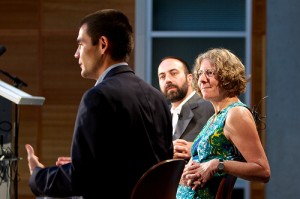
Yoshi Kohno, Ryan Calo, and Batya Friedman
The UW Tech Policy Lab is a unique, interdisciplinary collaboration that aims to enhance technology policy through research, education, and thought leadership. The new venture – enabled by a founding gift of $1.7 million from Microsoft – brings together experts from the University’s School of Law, Information School, and Computer Science & Engineering.
The Tech Policy Lab was launched Thursday evening at an event keynoted by University of Washington President Michael Young, Microsoft Executive Vice President and General Counsel Brad Smith, and Microsoft Corporate Vice President and Head of Microsoft Research Peter Lee, plus the three UW co-directors of the Lab: Ryan Calo from the School of Law, Batya Friedman from the Information School, and Yoshi Kohno from Computer Science & Engineering.
Learn more about the Tech Policy Lab here. See photographs of the launch event here. Read a Seattle Times article here. Read more →
 “Two researchers at the University of Washington in Seattle did something amazing: One influenced the movements of the other simply by willing it. They were separated by an entire college campus, connected only through electrical caps on their heads and the Internet. Host Scott Simon talks with Rajesh Rao, one of the researchers.”
Listen to the interview here! Read more →