 “Spurred by new understanding of how the brain works, local science labs are learning how to use brain signals to compensate for injury or lost function. In Minds and Machines, you’ll meet several of these scientists and learn what’s at the cutting edge of neuroscience research. Visit The Studio within Wellbody Academy to use your brain waves to compete against another player in Mindball, check out neuroscience-related jobs on the Career Machine and see a real human brain.”
The exhibit features the work of UW CSE undergrads Matt Bryan, Alex Dadgar, and Joseph Wu, supervised by UW CSE faculty member Rajesh Rao.
Learn more here and here. Read more →
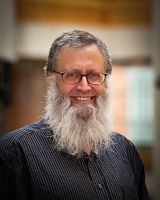 From the July/August 2013 issue of IEEE Software: “We recently lost one of the leaders of the software research community when David Notkin passed away. Many of us have always been familiar with his work. But in many, many conversations since his death, it has become more and more clear how others in the research community cherished not just his technical contributions but his contributions in other dimensions: his mentorship, friendship, and character.”
Read more here.
Learn more about David here. Read more →
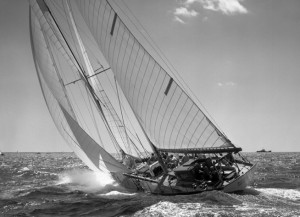 Evi Nemeth – a University of Colorado computer science faculty member well known for her contributions to Unix system administration and system security, and the undergraduate advisor of UW CSE faculty member Yoshi Kohno – has been lost at sea and is presumed dead. Nemeth was sailing aboard the famous schooner Niña, winner of the 1928 3900-mile race from New York to Santander Spain, of the 600-mile Fastnet Race that same year, of the 1929 race from London to Gibson Island Chesapeake Bay, of the New York Yacht Club Astor Cup in 1939 and 1940, of the 233 mile Stanford-Vineyard Race on Long Island Sound (repeatedly), and, at age 34, of the 1962 Newport to Bermuda race.
Articles here and here (with an interesting video in the latter). Read more →
 The UW alumni magazine, Columns, uses UW CSE professor Richard Ladner to illustrate an article on “second careers”:
“Or consider Richard Ladner, Boeing Professor in Computer Science & Engineering and a 2008 winner of the Purpose Prize for extraordinary social innovators over 60 years of age. After 35 years as a professor, Ladner wanted to move from theory to impact. The hearing son of deaf parents, Ladner combined his expertise in computers and technology with an innate understanding of the needs and wants of people with disabilities to develop accessible technologies for disabled people.”
Read the article, “Second Acts,” here. Read more →
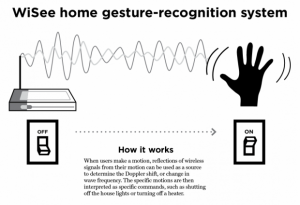 Better late than never, the UW Daily becomes the 99th publication to run an article on UW CSE’s WiSee technology:
“A quick wave of a hand can shut off the lights and a flick of a finger can turn on the heater. Thanks to a team of UW Computer Science & Engineering (CSE) students and faculty, this type of gesture-recognition technology is now possible.
“This newly developed home gesture system, known as WiSee, can perform simple household tasks, such as turning the lights off in a room or changing a music player’s volume, by using Wi-Fi technology to detect the user’s specific body gestures …
“To do this, the group studied the science of Doppler shifts — relative changes in the frequency of waves caused by the location of the observer.”
Read more here. Learn more about WiSee here. Read more →
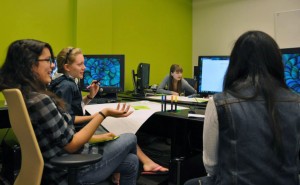 Creative programming projects, car hacking, discrete math card tricks, and lots of snacks – it must be time for UW CSE’s summer day camps for middle school and high school students!
This past week marked the first of eight UW CSE day camps. Twenty one energetic, curious, driven high school girls joined us for a week of exposure to computer science.
There will be a second week-long day camp for high school girls later in the summer, as well as two week-long day camps for middle school girls.
In addition, there will be three co-ed day camps focused on building apps for Android phones – 3-day and 5-day camps for middle school students, and a 3-day camp for high school students. Finally, there will be a 4-day co-ed day camp for high school students focused on physical computing.
Learn more about our summer day camp program here.
Learn more about DawgBytes, UW CSE’s outreach program, here. And follow the action as it happens on the DawgBytes Facebook page here.
See photos from this past week’s camp here. Read more →
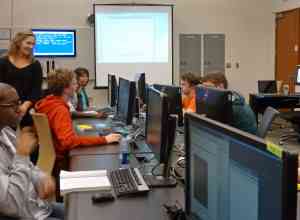 UW News writes:
“The UW program, called the Summer Academy for Advancing Deaf and Hard of Hearing in Computing, is the only one of its kind in the nation that offers a full quarter of academic credit to incoming college students or those who just finished their first year.
“It also gives deaf students a chance to explore an academic field they may not have already considered, said Richard Ladner, a UW professor of Computer Science & Engineering who started the academy six years ago.
“‘It has many facets and a richness that many programs don’t have,’ Ladner said. ‘It really opens up their worldview to what they can do’ …
“Google software engineer Anna Cavender helped with practically every aspect of the summer program its first several years while she was a UW doctoral student in Computer Science & Engineering. She has seen students forge lasting friendships and land highly competitive jobs through networking.
“‘The transition to college can be a little extra daunting for deaf and hard of hearing students,’ Cavender said. ‘This program helps students navigate the hurdles and introduces them to other students with similar backgrounds and interests.'”
Read more here. Read more →
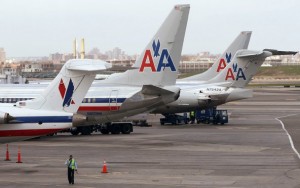 “Over the years, airline travel has been a prime testbed for advanced computing and data tools. In the late 1950s and 1960s, American Airlines and I.B.M. teamed up to develop the Sabre computerized reservations system, perhaps the most impressive private-sector computer system of its day.
“More recently, airline data has served as the raw material for predictive data-mining applications like Farecast, which tells consumers whether the price of a plane ticket, for a specific trip on a specific day, is likely to rise or fall. (Farecast, founded in 2003 by Oren Etzioni, a University of Washington computer scientist, was sold to Microsoft in 2008. It is now part of Bing Travel.)
“But the airlines themselves have become laggards in data-handling innovation …”
Read more here. Read more →
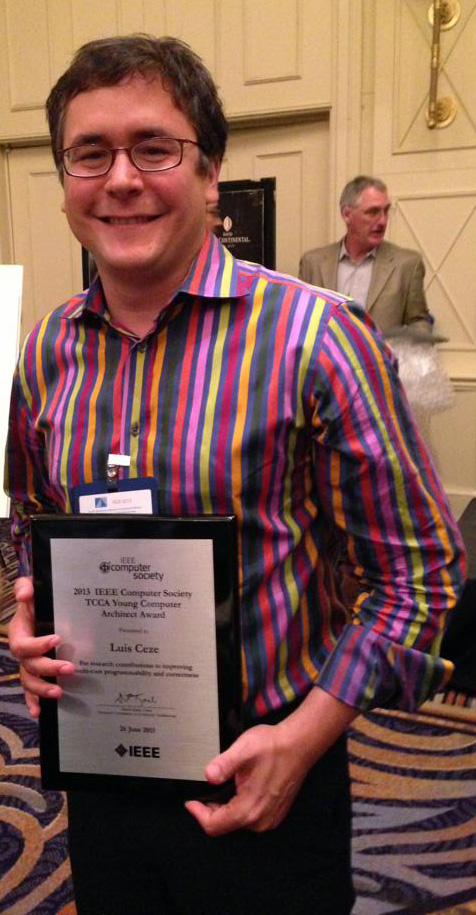 UW CSE professor Luis Ceze has received the IEEE TCCA Young Computer Architect Award!
This annual award recognizes outstanding, innovative, high impact research contributions in the field of computer architecture by computer architects who earned their doctorates six years or less ago.
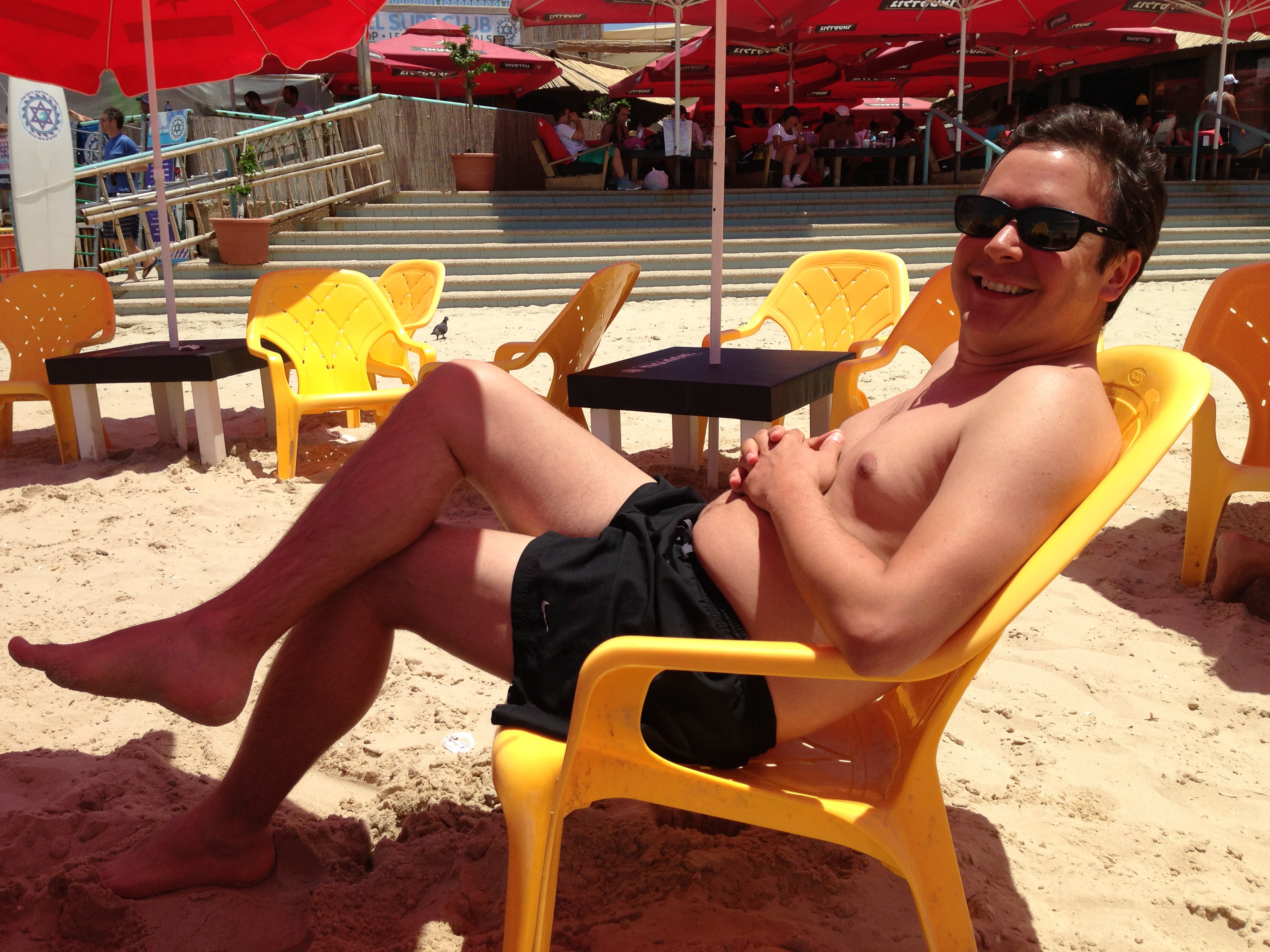
Luis received the award today at the 40th International Symposium on Computer Architecture in Tel Aviv.
Congratulations Luis! Learn more about his research here.
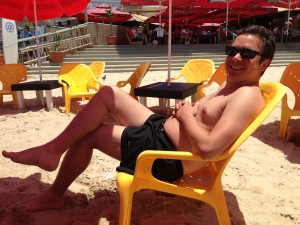
Update: It may appear that Luis is relaxing after receiving his award, but [choose one]:
- (a) he’s always thinking
- (b) his students are always working
Read more →