 In this terrific new video, Microsoft’s Roger Barga discusses UW’s Certificate Program in “Data Science.”
The certificate, offered in both online and face-to-face versions, is comprised of three courses:
Roger is one of the instructors. Creation of the program was driven by Bill Howe of UW CSE and the eScience Institute. Learn more and watch the video here. Read more →
 The TerraSwarm Research Center is addressing the huge potential (and the associated risks) of pervasive integration of smart, networked sensors and actuators into our connected world. The center is funded at $27.5 million over five years by the STARnet phase of the Focus Center Research Program (FCRP) administered by the Semiconductor Research Corporation (SRC). Funding comes from the Defense Advanced Research Projects Agency (DARPA) and the SRC industry partners, including Applied Materials, GLOBALFOUNDRIES, IBM, Intel Corporation, Micron Technology, Raytheon, Texas Instruments, and United Technologies.
Director of the Center is Edward Lee of UC Berkeley. UW CSE’s Carlos Guestrin and Ben Taskar are the machine learning experts on the Investigator team.
TerraSwarm website here. Press release here. White paper here. Read more →
 Foldit – a hugely successful protein folding video game created by UW CSE’s Center for Game Science – has won the 2012 Katerva Behavioral Change Award.
The Katerva Awards shine a global spotlight on the world’s most promising sustainability ideas and serves as a means to gather together the world’s best sustainability innovators. Awards are given in 10 categories. See the announcement of winners here. Read more →
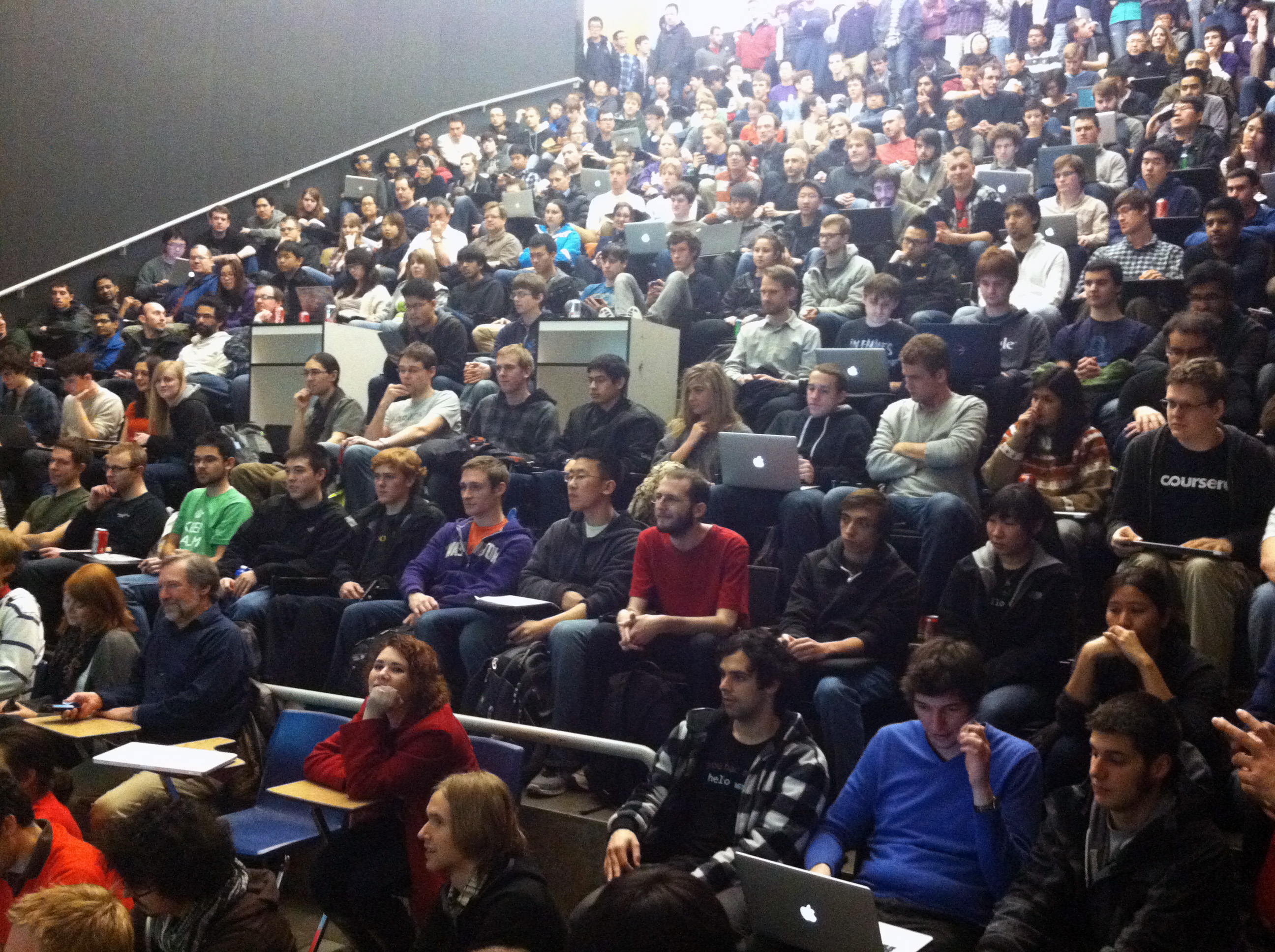
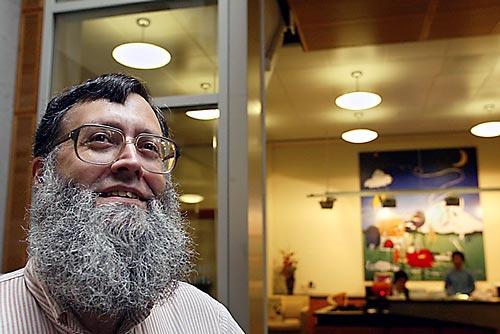 On February 1 2013, more than 300 members of the UW CSE “extended family” joined in recognizing the contributions of David Notkin at Notkinfest.
A world leader in software engineering, David served as CSE chair from 2001-06, and has been honored with the Boeing Professorship, the Frank and Wilma Bradley Endowed Professorship, and the Frank and Wilma Bradley Endowed Chair.
An extraordinary mentor, David received the University of Washington Distinguished Graduate Mentor Award in 2000. His philosophy about working with students follows that of his own adviser, Nico Habermann: “Focus on the students, since graduating great students means you’ll produce great research, while focusing on the research may or may not produce great students.”
- Notkinfest photographs by Bruce Hemingway:
- Notkinfest photographs by Bill Griswold (to download just a few, show the photo you want in the big view, mouse over it, look for the “flyout” menu to appear, and click the yellow folder with the down-arrow over it; to download all 356MB, click here)
April 22 2013: David Notkin succumbed to cancer at 3:30 a.m. Read more →
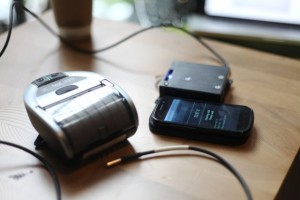 “The capabilities of mobile devices have been expanding to serve purposes far beyond communication. More recently, this trend has centered around creating smartphone applications for medical purposes.
“A project out of the UW uses new technology to monitor safe breast milk pasteurization with a mobile device. This app, called FoneAstra, was developed by UW computer science and engineering (CSE) graduate student Rohit Chaudhri in collaboration with the Seattle-based nongovernmental organization PATH and the UW Department of Human Centered Design & Engineering (HCDE).”
“With a portable receipt printer, an android phone, and a temperature probe, hospital staff are now able to track the milk and regulate the temperature during pasteurization for around $700 instead of costing between $10,000 and $50,000.”
Read more here. Learn more about the project here. Read more →
 When University of Texas faculty stars Doug Burger and Kathryn McKinley moved to Microsoft Research, they brought with them graduate student Hadi Esmaeilzadeh, who transferred to UW CSE and added CSE’s Luis Ceze as an advisor.
Hadi has had an amazing streak of high-profile results recently:
And now, another:
Congratulations again, Hadi! Read more →
 … and the 4- years were cut much more deeply than the 2-years …
… and the research institutions were cut much more deeply than the other 4-years …
… and UW was hit worst of all.
Read the article here. Read more →
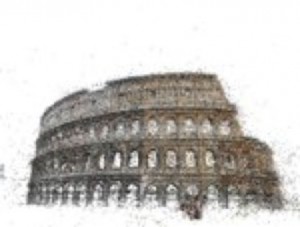 NSF’s bi-weekly “CS Bits & Bytes” featured UW CSE’s “Rome in a Day” project back in December. (An email version went out then, but the web version only just became available due to a snafu.)
“The University of Washington team, with the help of NSF funding, has been able to create a computer program that includes a “parallel matching” system that can match massive collections of images very quickly to create 3D reconstructions. The team ran 150,000 images from Flicker.com associated with the tags “Rome” or “Roma” through their matching algorithm, and the images organized themselves into a number of groups that corresponded to major landmarks. In one example, the computer analysis was able to take 2,106 photos of the Colosseum in Rome, map nearly one million points on those images, and reconstruct a 3D image of the Colosseum. Other 3D images reconstructed included Trevi Fountain, the Pantheon, and St. Peter’s Basilica. This computer matching and reconstruction from Rome took a total of 21 computer hours and near 500 computer cores, or central processing units. In addition to Rome, the project reconstructed 3D models of landmarks in Venice, Italy and Dubrovnik, Croatia.”
Read the post and watch videos here. Read more →
 “Jeff Dean facts aren’t, well, true. But the fact that someone went to the trouble to make up Chuck Norris-esque exploits about Dean is remarkable. That’s because Jeff Dean is a software engineer, and software engineers are not like Chuck Norris. For one thing, they’re not lone rangers—software development is an inherently collaborative enterprise. For another, they rarely shoot cowboys with an Uzi.
“Nevertheless, on April Fool’s Day 2007, some admiring young Google engineers saw fit to bestow upon Jeff Dean the honor of a website extolling his programming achievements. For instance:
- Compilers don’t warn Jeff Dean. Jeff Dean warns compilers.
- Jeff Dean writes directly in binary. He then writes the source code as documentation for other developers.
- When Jeff Dean has an ergonomic evaluation, it is for the protection of his keyboard.
- Jeff Dean was forced to invent asynchronous APIs one day when he optimized a function so that it returned before it was invoked.”
Read more here. Read more →
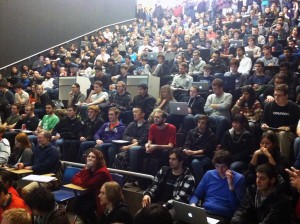 Hopefully the fire marshal is otherwise occupied …
IMPORTANT: Babak Parviz’s Friday talk about Google Glass has been moved to EE125 to provide additional space. Friday, 2:00-2:30, EE125. Read more →