“The University of Washington computer science department sends more than half of its grads to just four companies: Amazon, Facebook, Google and Microsoft. And while those tech giants pay well – on average more than $100,000 for software developers – they’ve certainly moved well beyond the startup phase.
“So, what’s it going to take to get more computer science grads to consider making the startup plunge?
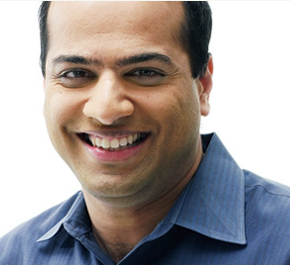
“Hearing from folks like Isilon co-founder Sujal Patel – who sold his Seattle startup to EMC for a cool $2.25 billion in 2010 – certainly can help. In one of the most compelling and informative talks I’ve seen on the wonders of the entrepreneurial journey, Patel laid out no fewer than six reasons why startups are better than big companies.”
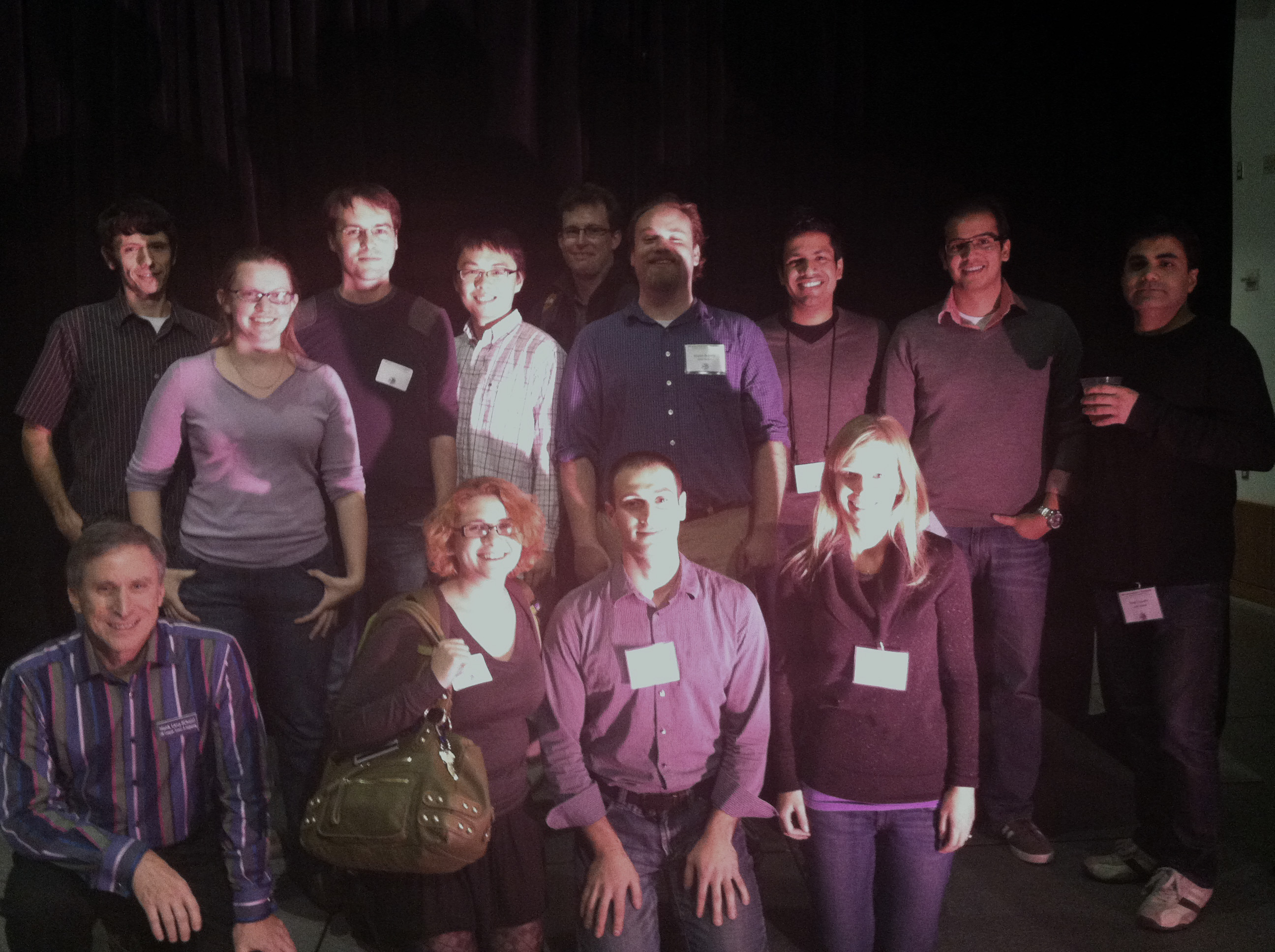
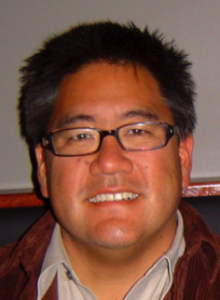
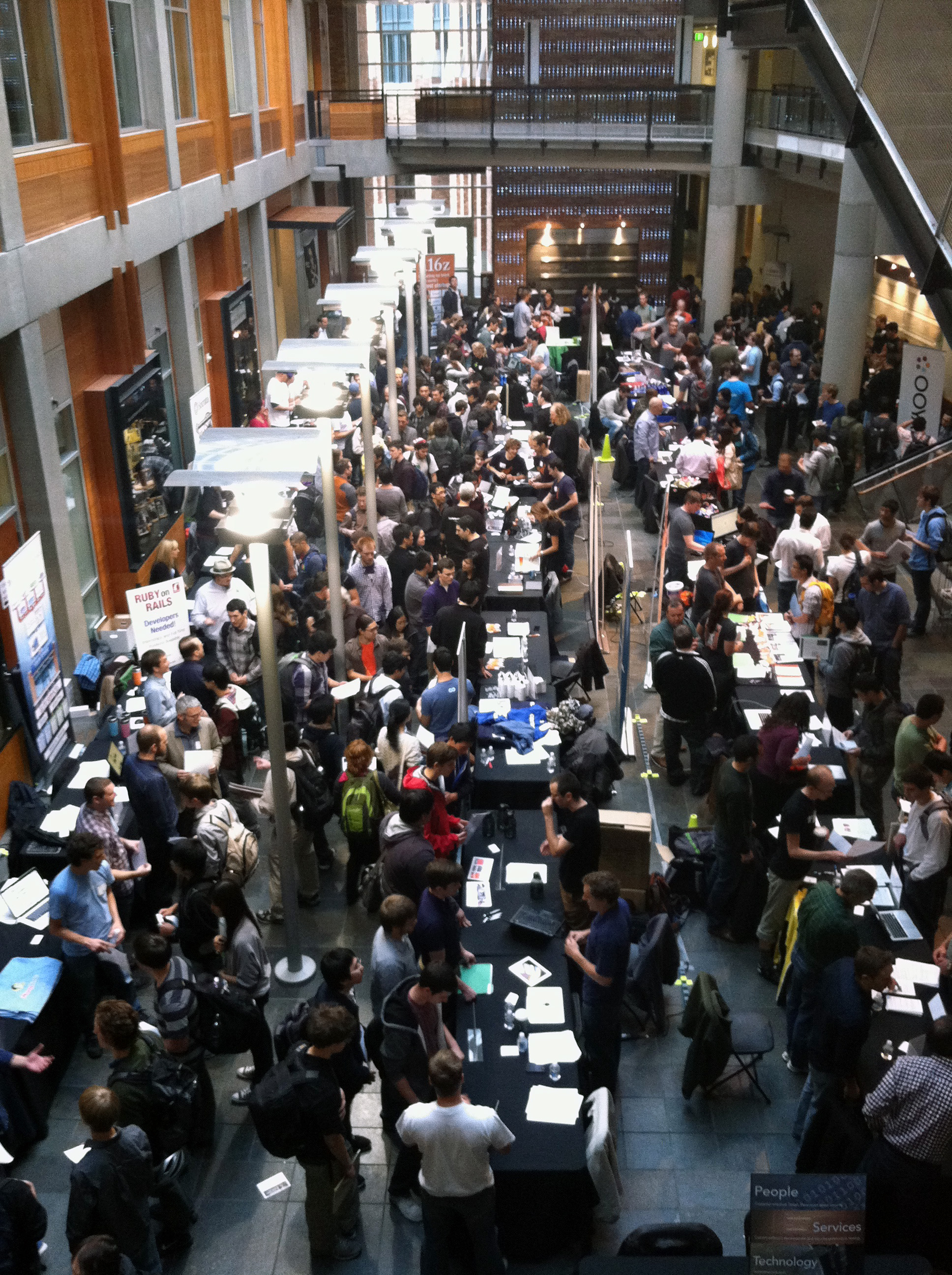
Last night, CSE alum Wayne Yamamoto hosted “Seattle … Startups … You?” – a gathering to help UW CSE students understand why they might want to join a startup. More than 100 students inhaled 25 pizzas and heard from Wayne, Anthony Wu, Chris DeVore, Chris Tolles, David Creemer, Robert Chu, and Jason Tan. Thanks to all for a terrific event!
This year’s meeting of the UW Computer Science & Engineering Industry Affiliates Program takes place this Tuesday-Thursday October 23-25.
Tuesday: Recruiting by startup companies, preceded by a talk by Sujal Patel, co-founder of Isilon.
Wednesday: Research interaction day, followed by a reception, poster session, and lab tours for affiliates, alumni, and friends, plus the presentation of the Madrona Prize for the most commercializable student project.
Thursday: Recruiting by established companies.
Information here. Be there! (But don’t forget to register!) Read more →
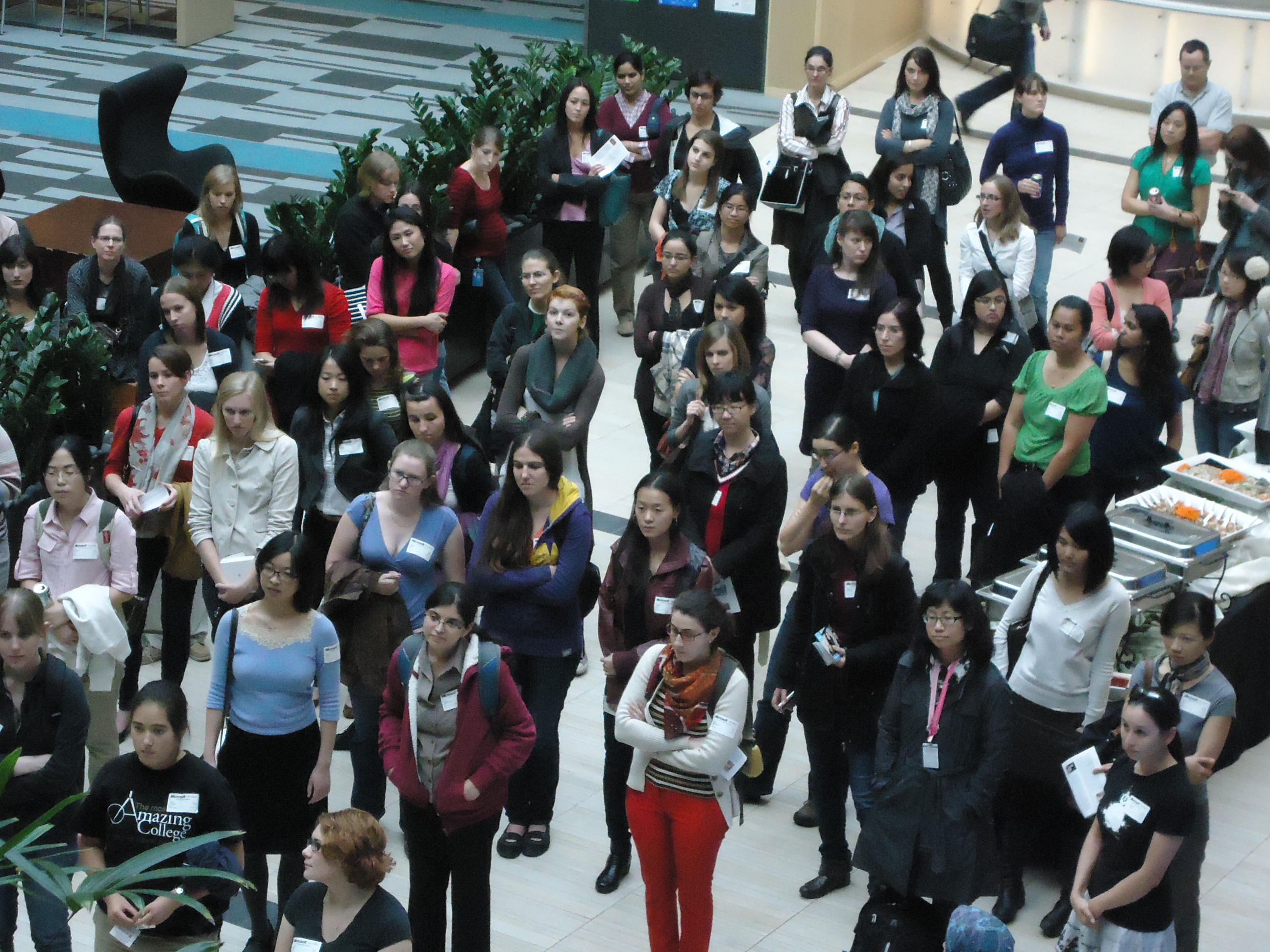
On Wednesday, 75 women Ph.D. students from UW Computer Science & Engineering, Electrical Engineering, Human Centered Design & Engineering, and the iSchool spent the afternoon at Microsoft Research discussing research with women Ph.D.s working at Microsoft.
Among the 9 Microsoft participants were UW CSE Ph.D. alums Saleema Amershi, Kate Everitt, Julie Letchner, and Maya Rodrig, and UW CSE affiliate professors Merrie Morris; and Karin Strauss (who is also the partner of UW CSE professor Luis Ceze).
Thanks to Microsoft (particularly Rane Johnson) for organizing a terrific event! Read more →
UW News, Seattle’s CityClub, the Sacramento Bee, and the Seattle Times report on the 2012 edition of UW CSE’s Living Voters Guide:
“Living Voters Guide invites participants to discuss ballot measures together, to explore one another’s positions, and to build a personal, customized platform that will inform their final vote. This voters’ guide is co-created by everyone who participates. It evolves as you and neighbors across our state consider the tradeoffs for each measure. It requires participants to pledge that they will not make personal attacks on others but focus on the issues before us. It invites everyone to wrestle with both the pros and cons of ballot measures in a deliberative path toward decision making.”
“‘We wanted to create a way to use the Internet to listen to other people in a constructive way,’ said Travis Kriplean, a postdoctoral researcher in computer science and engineering who implemented the guide as part of his UW doctoral thesis.
“Users’ feedback in previous years has been positive, Kriplean reported. ‘People have said: ‘We can listen to what the other side is saying and find some common ground. I didn’t know that could happen.'”
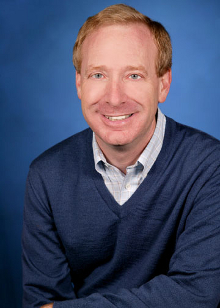
The next CSE Distinguished Lecture – co-sponsored with the UW School of Law – will be given on Tuesday October 30 at 3:30 by Brad Smith, General Counsel of Microsoft and a long-time advocate, regionally and nationally, for education and innovation.
Brad’s talk is titled “Creating an Environment for Innovation.”
Eighteen Seattle-area Harvey Mudd College alums socialized last night with HMC President Maria Klawe in the Jaech Gallery at UW Computer Science & Engineering. Many are UW CSE Ph.D. students – HMC sent us four students just this year!
CSE-ers in the photo: (back row) Adrian Sampson, Dan Halperin, Stuart Pernsteiner, Eric Mullen, (middle row) Lilian de Greef, (front row) Will Scott, (missing in action) Megan Campbell.
The Seattle Times describes this Wednesday’s PBS TV NOVA scienceNOW:
“For most people, computer security means just that: Keeping viruses off your desktop or laptop, your PC or your Mac.
“But when Tadayoshi Kohno thinks of computers and security, he thinks about the vulnerabilities inherent in a whole range of devices that are increasingly connected wirelessly to the Internet, to cellphones or to each other.
“A computer scientist at the University of Washington, Kohno has proved that you can hack and take over the circuitry of a pacemaker, an implantable defibrillator, a child’s toy, a mileage-tracking device for runners, and — perhaps most chilling of all — a car.
“Kohno, 34, is so good at what he does that government regulators and manufacturers habitually beat a path to his door, in the UW’s computer science and engineering department, where he is an associate professor.
“Kohno will be featured Wednesday on PBS’s NOVA scienceNOW, in an episode that examines whether science can help solve crime.”
Read more here. Watch NOVA scienceNOW on PBS TV on Wednesday (in Seattle, 10 p.m. on KCTS-9)! Read more →