 University of Washington recruiters from Amazon.com, Facebook, Google, and Microsoft shared information on the majors of the students they hired from UW in 2011-12 for both internship and permanent positions. This includes all students (every degree level, every major, every UW campus), and all positions (from developer to accountant).
The results are amazing, even to us – see the attached charts. (Capsule summary: 85% are from CSE!)
The University of Washington has many outstanding degree programs. (There are more than 175 undergraduate majors!) They fill a wide variety of student needs, and a wide variety of employer needs. All of them equip students for success.
But if you’re a top technology company such as Amazon.com, Facebook, Google, or Microsoft – a company that can choose the best students from UW and the nation – who ya gonna hire? The answer is clear and overwhelming: CSE!
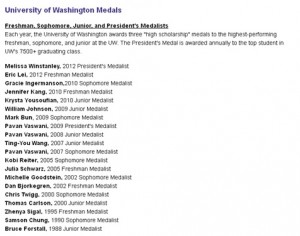 Here’s another amazing statistic. Each year, UW awards 4 “high scholarship” medals – to the top student in the freshman, sophomore, junior, and senior classes. Since 2000, 52 of these medals have been awarded. Seventeen of these medals have gone to CSE students – fully 1/3 of the medals awarded. (CSE accounts for about 2.5% of UW’s undergraduates – our “fair share” of these 52 medals is a bit more than 1.) See the winners here.
These are among the reasons why expanding CSE’s capacity is so important – to students, and to the region. (An excellent NPR piece on that subject here.) Read more →
 The Intel Science & Technology Center in Big Data has launched!
ISTC-Big Data is the sixth Intel Science & Technology Center. The concept was formulated by faculty from across the nation who are participating in the SciDB project focused on open source data management and analytics software for scientific research. It is led by MIT, and includes faculty from 5 other universities, including Magda Balazinska, Carlos Guestrin, and Jeff Heer from UW CSE.
In addition to our involvement in the new ISTC-Big Data, UW CSE leads the Intel Science & Technology Center for Pervasive Computing, and is a substantial participant in the Intel Science & Technology Center for Visual Computing.
Read more →
 A terrific piece by NPR reporter Wendy Kaufman on the market for computer science graduates in the Seattle area, intense student interest, and UW’s recent efforts to respond.
UW President Michael Young states: “If you actually look at what’s happened in the world, we have an enormous amount of information available to us, and dealing with this big data is incredibly important. Computer science is the absolute epicenter of this. So we have to have more compute scientists.”
Listen to the report here. Read more →
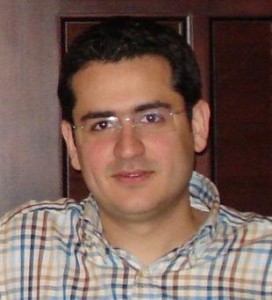 In the second half of today’s double-header, we are thrilled to announce that Ali Farhadi will be joining the UW CSE faculty this fall, bringing leadership in object recognition to our already-superb efforts in computer graphics, computer vision, games, and animation.
Ali received his Ph.D. from University of Illinois in 2011 and is currently a postdoctoral fellow in the Robotics Institute at Carnegie Mellon University. He has made significant contributions to computer vision, specifically in the improvement of object recognition algorithms; Ali’s paper on visual phrases received the best student paper award at CVPR (IEEE Conf. on Computer Vision and Pattern Recognition) in 2011.
It has been a spectacular year for faculty recruiting in UW CSE and related programs at UW – see previous posts concerning Shyam Gollakota, Jeff Heer and Daniela Rosner, Carlos Guestrin and Emily Fox, and Kate Starbird. Read more →
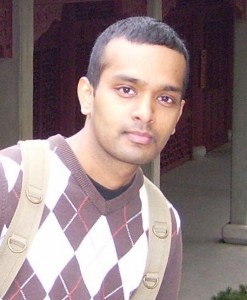 We’re thrilled to announce that Shyam Gollakota will be joining the UW CSE faculty this fall, adding to the strength and vitality to our efforts in systems, networking, and security.
Shyam received his Ph.D. from MIT earlier this year, working with Dina Katabi. His research has focused on improving the performance and security of wireless networks. He has won two best paper awards at the ACM SIGCOMM conference (the leading conference in computer networking), one on security for implantable medical devices, and one on ZigZag, the first wireless receiver that can decode collisions of simultaneous transmissions without assumptions of synchronization, large differences in power, or special codes. Read more →
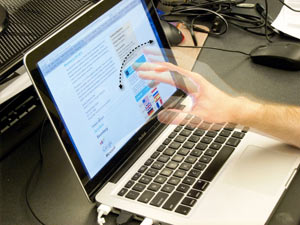 SoundWave, a joint project of UW CSE and Microsoft Research, is featured in Popular Mechanics. Hey, Shwetak is a licensed plumber and electrician, and worked on his own car in high school – what could be more natural?
“Though using the Doppler effect to track human gestures has been around for a decade, it had always required customized equipment. SoundWave eliminates the need for any specialized hardware, requiring only basic technology.”
Read the article here. Read more about the research here.
Read more →
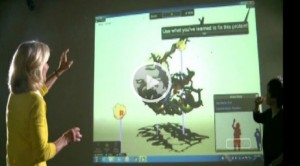 KING 5 News anchor Jean Enerson reports on Foldit: “University of Washington researchers are harnessing the power of online gaming to crack the code of the flu virus.”
Watch the video here – it’s really good.
Play Foldit here.
Read more →
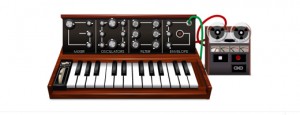 TNW reports:
“Earlier in the week we reported on the pretty epic interactive Google doodle that was an homage to Dr Robert Moog. The super cool landing page allowed visitors to mess around with a virtual Moog synthesizer and then share their noisy creation with others as an application recorded and played back the sounds (On a virtual reel-to-reel no less!)
“One smart engineer is all it takes to push a project further of course. Karl Koscher is a Ph.D. student studying computer security at the University of Washington, and he told TNW …”
Read the post and try it out here. Read more →
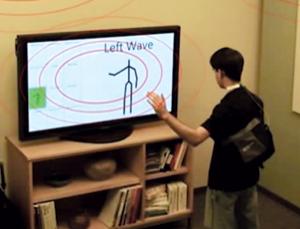 The “Humantenna” project – joint work by UW CSE’s Gabe Cohn and Shwetak Patel and Microsoft Research’s Dan Morris and Desney Tan – is featured in today’s Computing Community Consortium blog. The CCC blog post builds on an article in New Scientist describing the research, presented at CHI 2012 earlier this month. There’s also a callout to the SoundWave project in the post – joint work by UW CSE’s Sidhant Gupta and Shwetak Patel and Microsoft Research’s Dan Morris and Desney Tan.
Humantenna uses the human body as an antenna to pick up the electromagnetic fields — generated by power lines and electrical appliances — that fill indoor and outdoor spaces. By measuring how the signal changes as users move through the electromagnetic fields, it’s possible to identify gestures, such as a punching motion or swipe of the hand.
Read the post here. Read more →
(original photo replaced due to outcry)
It took 13 years for UW CSE graduate students to attempt to top the 2000 “Men of Sieg Hall” calendar. And they failed. Nonetheless, you should support the Marsha Rivkin Center for Ovarian Cancer Research by purchasing the 2013 “Men of CSE” calendar. Read more →

