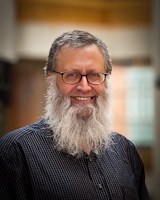
 UW Dean of Engineering Matt O’Donnell has named CSE’s David Notkin as Acting Associate Dean of Research and Graduate Studies for the coming year.
In announcing Notkin’s appointment to faculty in the College of Engineering, O’Donnell stated: “He has won numerous awards including most recently, the ACM SIGSOFT Influential Educator Award in 2012. … In this role, David will foster multidisciplinary collaborations within and outside the college, work with new faculty to develop successful research programs, and strengthen programs to recruit and mentor top graduate students.”
Congratulations to David for his longstanding commitment to graduate education, and for becoming only the second CSE faculty member to keep his nose clean enough that he was able to rise above the level of department chair! Read more →

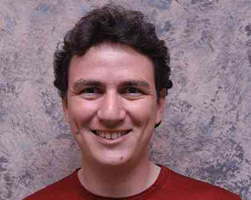 Carlos Guestrin and Emily Fox, experts in machine learning, will join the University of Washington in the fall, driving us to a new level of excellence and impact in this hugely important field.
Carlos is currently the Finmeccanica Associate Professor in the departments of Machine Learning and Computer Science in Carnegie Mellon University’s School of Computer Science, with courtesy appointments in Civil and Environmental Engineering and in the Robotics Institute. He is widely regarded as one of the world’s leading researchers in machine learning for his GraphLab parallel machine learning system and many other contributions. He received his Ph.D. from Stanford Computer Science in 2003. Carlos will join UW Computer Science & Engineering. Learn more here.
Emily is currently an assistant professor in the Department of Statistics at The Wharton School, University of Pennsylvania. Her research interests include Bayesian and nonparametric Bayesian approaches to time-series and longitudinal data analysis, with an emphasis on extensions to high-dimensional data. She received her Ph.D. from MIT EECS in 2009. Emily will join UW Statistics, with an adjunct appointment in Computer Science & Engineering. Learn more here.
Both Carlos and Emily will hold newly-created Amazon Professorships in Machine Learning. Tremendous thanks to Amazon.com for this commitment to the future of computer science in our region!
We are thrilled to welcome Carlos and Emily to the University of Washington! Read more →
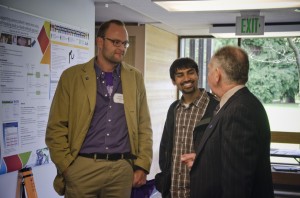
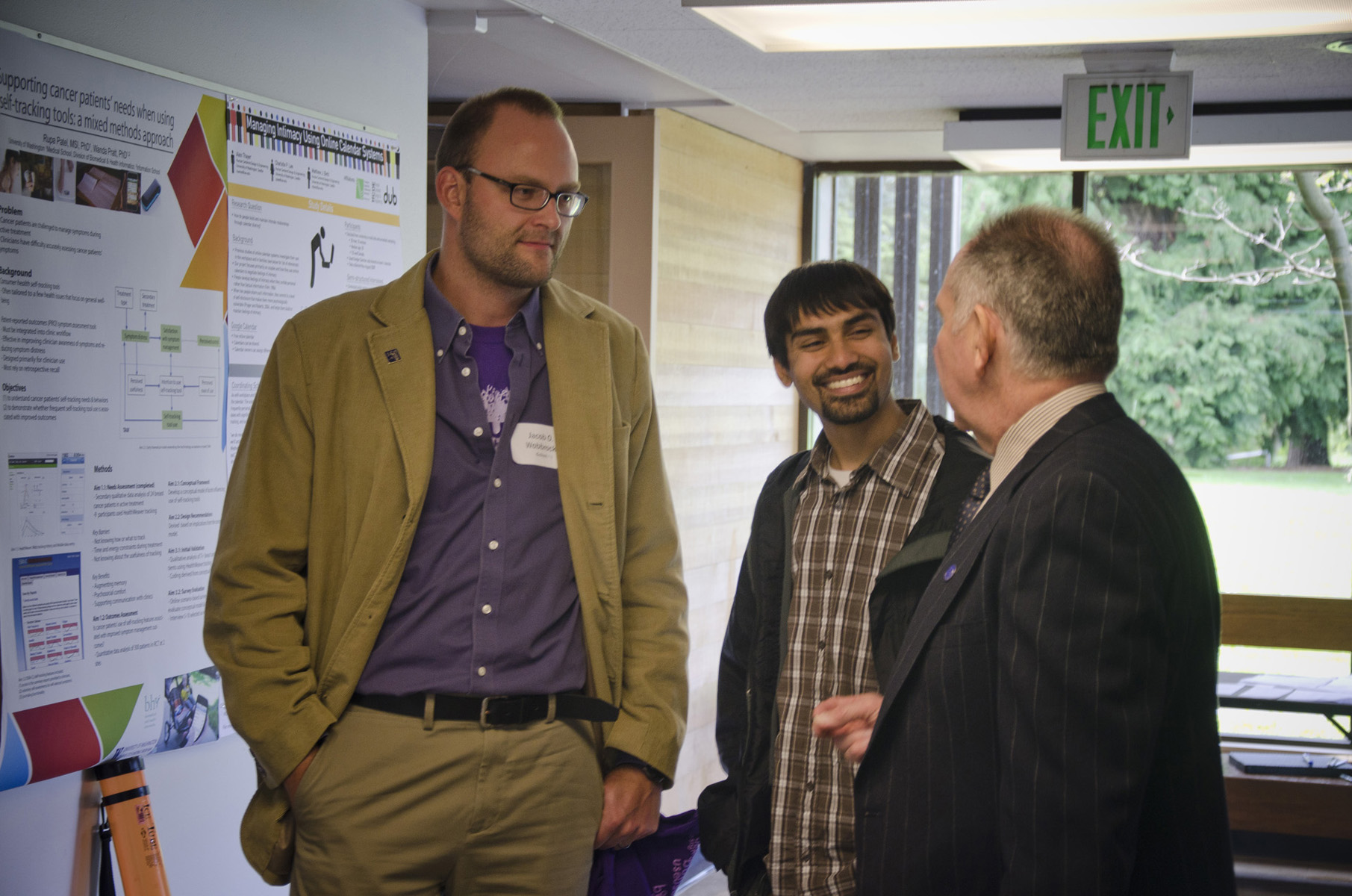
dub faculty members Jake Wobbrock and Shwetak Patel speak with UW President Michael Young
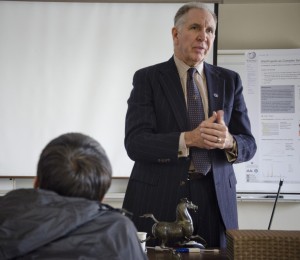
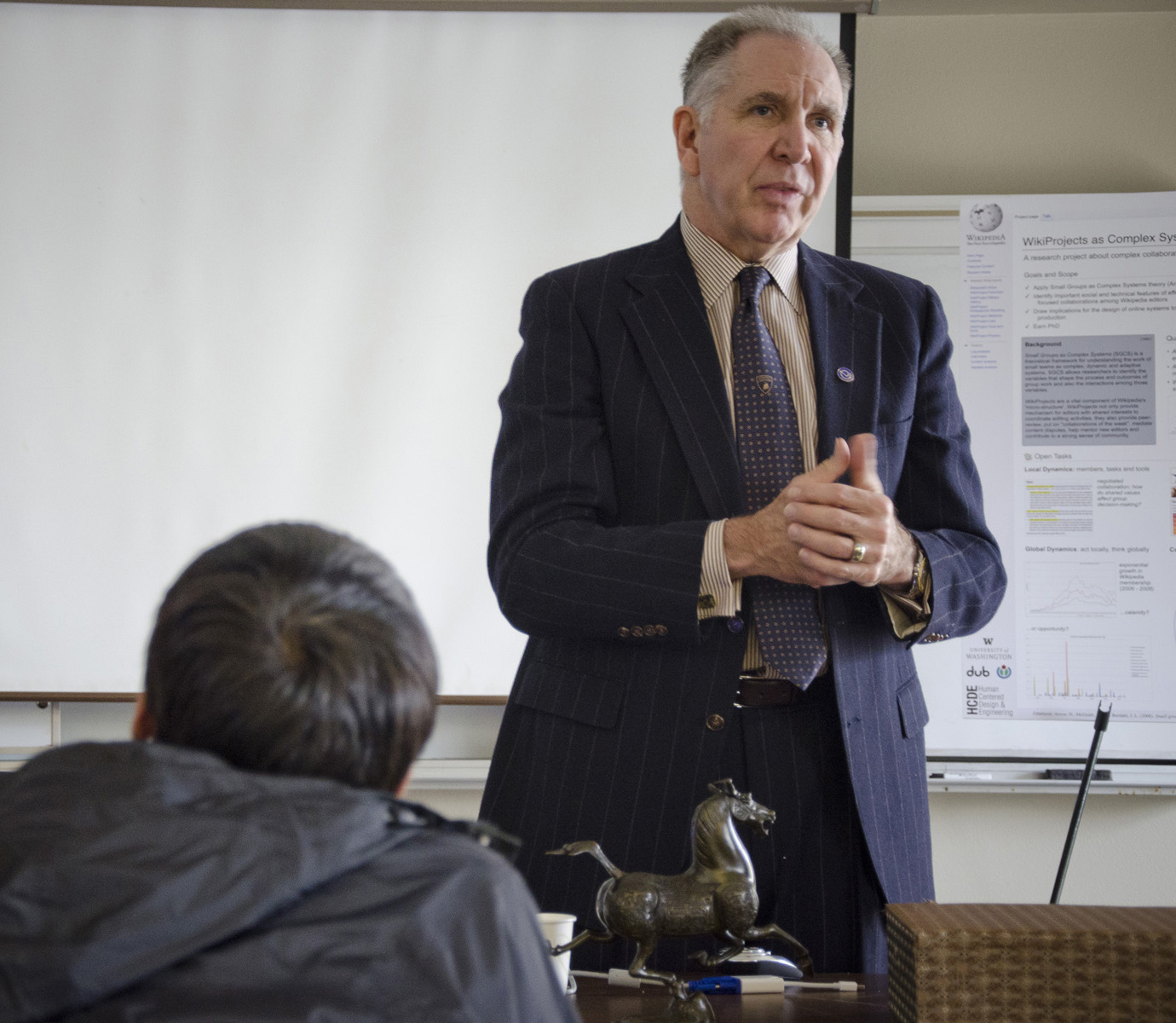
UW President Michael Young addresses dub faculty and students
dub – short for “design … use … build” – is the University of Washington’s interdisciplinary effort in human-computer interaction and design, including faculty and students from across the campus.
Over 100 UW faculty, students, and industrial collaborators came out for the 4th annual dub retreat. The meeting included a celebration of awards, short research talks, and poster sessions. The excitement of the event was bolstered by the attendance of UW President Michael Young. President Young saw talks on topics that included the relevance of dub to Microsoft Research collaborations, the collaborative design with Boeing of concepts for the future flight deck, and World Lab, a new joint institute with Tsinghua University in China to apply human-centered technologies to solving worldwide problems in the areas of environment, health, and education. President Young’s extensive remarks concluded “This is something that is really important to the university.”
Learn more about dub here. Read more →
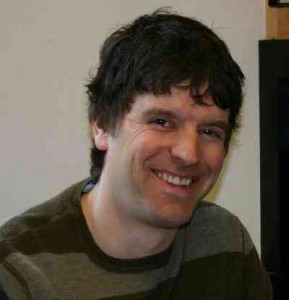 UW CSE and EE professor Georg Seelig, an expert in quantitative biology and DNA nanotechnology, has been named a recipient of a 2012 DARPA Young Faculty Award.
The objective of the DARPA Young Faculty Award program is to identify and engage rising research stars in junior faculty positions at U.S. academic institutions and expose them to Department of Defense needs as well as DARPA’s program development process.
Research in Seelig’s lab focuses on understanding how biological organisms process information using complex biochemical networks and how such networks can be engineered to program cellular behavior, and particularly on the identification of systematic design rules for the de novo construction of biological control circuits with DNA and RNA components. Engineered circuits and circuit elements are being applied to problems in disease diagnostics and therapy.
Congratulations Georg!
Learn more about Seelig’s research here Learn about the DARPA Young Faculty Award program here. Read more →
 The University of Washington Computer Science & Engineering department is running a workshop this summer targeted at high school or middle school teachers of math, science and computer science. This year we are also offering a one day option for school counselors or administrators who would like to learn a little more about the exciting field of Computer Science.
We’d love to have you join us!
Specifically, CS4HS aims to:
- Expose participants to exciting examples of computer science operating in close relationships with other disciplines.
- Broaden participant’s view of computer science and the way it is shaping Washington’s communities and people–and those of the entire world.
- Provide teachers with basic strategies for computational problem solving and give you the vocabulary to relate these concepts to students and subject material.
- Provide hands-on experience with visual and physical programming environments (No prior programming experience necessary).
- Explore opportunities to broaden students’ interest in computer science and dispel myths about what computer science.
We would love to welcome you to the workshop August 6th-8th. More details on how to apply can be found at http://cs4hs.cs.washington.edu/ and below. Go to the Apply tab to fill out a brief application. Admission is on a rolling basis until the workshop fills.
Thank you for your interest–if you have any questions, please don’t hesitate to contact us!
Workshop detail:
- When: August 6-8th, 2012 (Monday – Wednesday approximately 830am – 5pm).
- Where: UW campus (Seattle).
- Cost: $35 registration includes lunch for three days, light breakfast, reception, parking, housing for out of town participants, clock hours ($10 for one day option for counselors and administrators).
- Clock hours: 20 clock hours (three day option), or 6 clock hours (one day option).
- Who: Teachers of high school and middle school math, science, or computer science; administrators and counselors.
- What: Learn what the field of computer science has to offer and take home some ideas of how to incorporate computational thinking into your classes.
Learn more here! Read more →
 Each year, the University of Washington recognizes the top student (of roughly 7,500) in the previous year’s Freshman, Sophomore, and Junior classes as class Medalists.
This year’s UW Freshman Medalist is CSE’s Eric Lei. Eric entered the UW after 10th grade through the Robinson Center’s UW Academy.
CSE has an extraordinary record of UW Medalists: Eric is the fifteenth CSE student to be recognized as a University of Washington medalist since 2000.
Congratulations, Eric!
Announcement from the office of Undergraduate Academic Affairs here. Read more →
 “Photo Tours” is a spectacular addition to Google Maps, created by the Google Seattle computer vision group led by UW CSE’s Steve Seitz, and inspired by Photo Tourism (Seitz, Noah Snavely, and Rick Szeliski).
“Every year, millions of people pack their bags and head to far-off places to enjoy sites and cultures different from their own. While there, they snap photos to document their trip and share their excursions online. Yet none of these individual photos captures the experience of actually being immersed in a specific location. With today’s introduction of photo tours, a feature of Google Maps that guides you through a 3D photo scene, we’re one step closer.
“Photo tours are available for more than 15,000 popular sites around the world, from famous landmarks such as St. Mark’s Basilica in Italy to scenic treasures like Half Dome in Yosemite …
“To produce these photo tours, we use advanced computer vision techniques to create a 3D experience from public, user-contributed Picasa and Panaromio photos. We start by finding clusters of overlapping photos around major landmarks. From the photos, our system derives the 3D shape of each landmark and computes the location and orientation of each photo. Google Maps then selects a path through the best images, and adds 3D transitions to seamlessly guide you from photo to photo as if you’re literally flying around the landmark and viewing it from different perspectives.”
Learn more and try it out here. Read more →
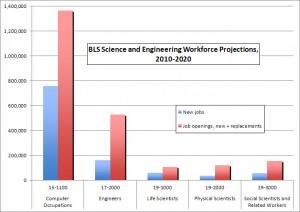
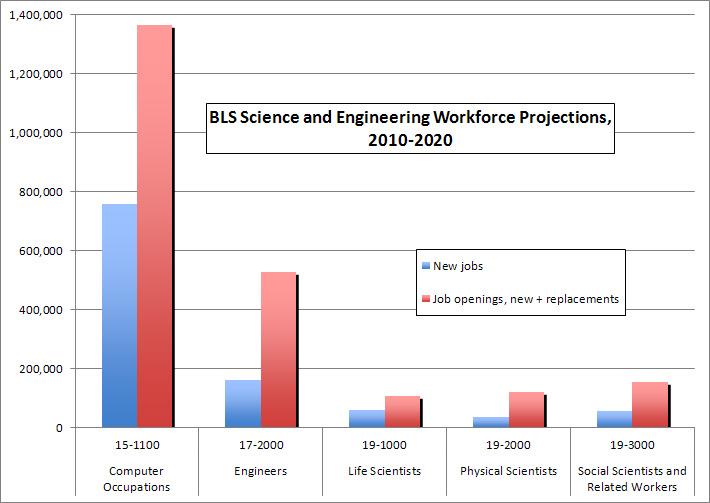
Nationally, Computer Science is projected to be responsible for 70% of all new jobs in all fields of science and engineering during the current decade. Washington State projections are consistent with this.
The UW Daily reports on an anticipated enrollment increase of roughly 80 degrees per year in CSE.
“Hank Levy, UW CSE department chair, explained the significance … ‘There’s really extreme demand from our students,’ he said. ‘We have not been able to expand our program since 1999. Think about how much has changed in tech since then. So this is enormous.’ …
“In addition to growing the computer science major, Levy is looking to develop more courses for students outside the department.
“‘It’s increasingly important for everyone to know something about computing,’ he said. ‘Lots of students need exposure to it, not just computer science students. By doing both, I think we can make a big impact.'” Read more →
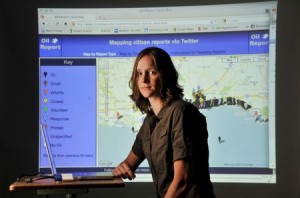 Kate will be a professor of Human Centered Design and Engineering, and an adjunct professor of Computer Science & Engineering. Nice Seattle Times article here. Read more →
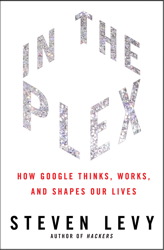 From the book In The Plex: How Google Thinks, Works, and Shapes Our Lives by Steven Levy:
“Google profiled people by which college they had attended. As Page said, ‘We hired people like us’ … Google sought its employees from Stanford, Berkeley, University of Washington, MIT – the regulars.” Read more →