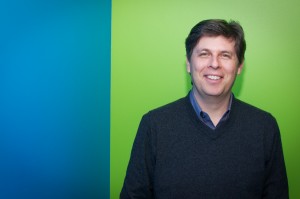
 “Our new Geek of the Week, Oren Etzioni, is a computer scientist and serial entrepreneur who has a knack for building businesses based on complex algorithms that help people make decisions. If you’ve used the price prediction engine in Microsoft Bing Travel, you’re familiar with his work. Etzioni was the founder of Farecast, which Microsoft acquired to form the basis for that service.
“The University of Washington computer science professor and Madrona Venture Group venture partner is currently the co-founder and CTO of Decide, which applies similar principles to consumer electronics prices. It’s latest in a long list of technology startups and computer science projects in which he has played a pivotal role over the years.”
Read the rest here.
Previous UW CSE “Geeks of the Week” include Lauren Bricker, Yaw Anokwa, Wendy Chisholm, and Marty Stepp. UW CSE GeekWire “Newsmakers of 2011” include Steve Yegge, Yoky Matsuoka, Shwetak Patel, and Daniil Kulchenko. Featured in the GeekWire 2012 calendar as “Geeks Who Give Back” are Helene Martin and Kevin Ross. Gotta love those GeekWire guys! Read more →
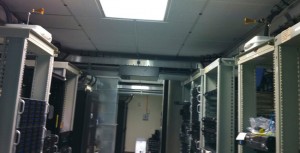 UW CSE Ph.D. student Dan Halperin is quoted in a New York Times article on work at Microsoft Research, led by Victor Bahl and involving Dan and UW CSE professor David Wetherall, “experimenting with wireless links, mounted atop server racks, to supply extra bandwidth for moving data along at crunch times.”
“The Microsoft team forged ahead with the project, building and testing a system with tiny directional antennas at the top of each rack to send and receive data. A central controller monitors traffic patterns, finds network bottlenecks, configures the antennas and turns on the wireless links when more bandwidth is required, says Daniel Halperin, a Ph.D. candidate at the University of Washington, who worked on the project as an intern at Microsoft. Signals go out on a horizontal plane and are steered right or left. The design sped up traffic by at least 45 percent in 95 percent of the cases tested, Mr. Halperin says.”
Read the New York Times article here. Read the joint UW/MSR research paper, “Augmenting Data Center Networks with Multi-Gigabit Wireless Links,” here. See the slides from Dan’s SIGCOMM 2011 presentation on the work here. Read more →
 The Tacoma News Tribune weighs in on a recent University of Pennsylvania study that castigates Washington’s leaders for under-investment in bachelors-level higher education:
“A new critique of the system from the University of Pennsylvania should give pause to anyone inclined to view cuts to public colleges as the path of least resistance in a hard budget year.
“Washington’s four-year colleges are already half-crippled, concluded the experts from the university’s Institute for Research on Higher Education …
“Hunting for the underlying causes of the system’s weaknesses, the researchers accurately nailed the chief culprit: the state’s political leadership. Collectively, our governors and lawmakers have not cared deeply enough or fought hard enough for Washington’s would-be college students. This legislative session is the time to end that sorry tradition.”
Read the editorial here. Learn more about the study here. Read more →
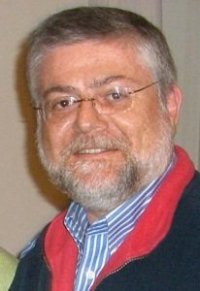 Congratulations to UW CSE’s Gaetano Borriello, the Jerre D. Noe Professor of Computer Science & Engineering, who will be one of two recipients of the UC Berkeley Computer Science Division’s 2012 Distinguished Alumni Award.
Gaetano joins an extraordinary list of Berkeley alums who have been recognized with this award – a list that includes UW CSE professor Susan Eggers (a 2009 recipient) and former UW CSE professor Tony DeRose (a 2011 recipient).
Congratulations Gaetano! Read more →
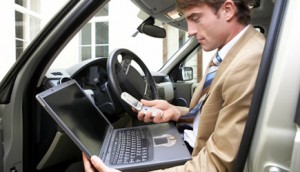 IEEE Spectrum, a bit late to the party, report on the automotive security work carried out jointly by the security groups at UW and UCSD:
“Researchers at the University of California at San Diego and the University of Washington say that in their tinkering research, they hit upon a cyberattack method by which thieves could cause large groups of cars to report their vehicle identification numbers (from which it is easy to determine the cars’ years, makes, and models) and GPS coordinates. Having learned where the most prized vehicles are parked, the technique would allow criminals to issue another set of commands that remotely bypass the cars’ security systems, unlock their doors, and start their engines. A similar technique, said the researchers, could be used to listen in on a driver’s phone conversations, or worse, to disable one or multiple cars’ brakes as they travel at highway speeds.
“Automakers say they have gotten the message. A Chrysler spokesman says the company is seeking the advice of security experts in order to identify its cars’ vulnerabilities. Ford says it is ‘working to ensure that we’ve developed [cars that are] as resistant to attack as possible.'”
Read the article here. Learn more about the tinkering research here. Read more →
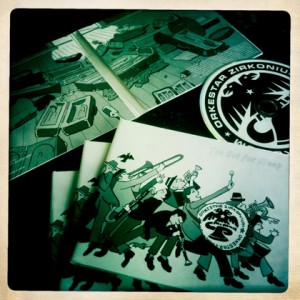 The Stranger reviews Orkestar Zirkonium’s new album “Too Hot for Sleep”:
“Orkestar Zirkonium is a 13-piece marching band with bouncy tuba rhythms, circus-y horn flourishes, and a killer clarinetist ([UW CSE Ph.D. alum] Kevin Hinshaw) who sounds like he’s been airlifted from a concert of Rhapsody in Blue and dropped into a Bulgarian brass band playing around a campfire.”
Read the review here. Learn about Orkestar Zirkonium here. Buy the album here. Read Dan Savage’s latest column about Rick Santorum here. Read more →
 The Seattle Times reports on a new study by the University of Pennsylvania’s Graduate School of Education that highlights Washington State’s lack of bachelors capacity, which “forces employers to go out of state — and even out of the country — to find skilled workers.” The report “puts the blame largely on state leadership — especially Gov. Chris Gregoire, but also state legislators — for what the authors call a ‘policy leadership vacuum.'” The authors also “noted Washington’s four-year schools have high graduation rates compared with their peers in other states, and costs still are relatively low, meaning the system is fairly efficient.”
Seattle Times article here.
Executive summary of the Penn report here (pdf). Full report here (pdf). Presentation graphics here (pdf).
Grim data on STEM education at all levels in Washington State here (pdf). Read more →
 Seattle Times columnist Danny Westneat writes:
“It doesn’t take college-level math to figure that a growing state also needs to continually expand its college system. So why not try what New York City Mayor Michael Bloomberg did? Throw out a little carrot. See who would compete to build a new college here.”
UW CSE’s Ed Lazowska responds:
“Here’s the conundrum:
“Public universities have traditionally been ‘accessible’ in two important respects: they are large, and they have low tuition (supplemented by public funds).
“Private universities have traditionally been ‘inaccessible’ in two important respects: they are small, and they have high tuition …
“From an ‘innovation engine’ point of view, it would be fantastic to have a great private graduate technology university here. That’s what New York was after. From an ‘educational access’ point of view, though, it would be unlikely to be helpful …
“The tragedy is that in Washington, and across the nation, the ‘contract’ under which the public supported a strong college education for smart kids regardless of means is being broken.” Read more →
 UW CSE Affiliate Professor Alon Halevy, who leads the Structured Data Group of Google Research in Mountain View, California, has been moonlighting for the past few years as a coffee aficionado. The result of this effort is a just-published book, The Infinite Emotions of Coffee. Alon will discuss the book on Thursday January 12 at 10:30 in CSE 691 (the Bill & Melinda Gates Commons).
Based on travel to over 30 countries on 6 continents, Alon tells of the latest and greatest in the coffee world, and explains why a database researcher felt the need to venture on such a journey. The Infinite Emotions of Coffee provides a contemporary prism of the drink that so much of the world takes for granted every morning.
Halevy’s travels shed light on how coffee has shaped and is influenced by different cultures through the bean’s centuries-spanning journey of serendipity, intrigue, upheavals, revival, romance and passion. With more than three years of field research, over 180 color photographs, and richly illustrated infographics, this book is an immersive experience that brings alive the enduring allure of coffee and the nuanced emotions of both tradition-bound and avant-garde café cultures.
Written in an engaging narrative, this travelogue entertains through numerous coffee-related tales from around the world. It celebrates all parts of the inextricably linked global coffee ecosystem, from growers, importers, and roasters to baristas and consumers. Readers will learn about the rich, mysterious and often amusing history of coffee; discover the latest hotbeds of coffee and the complex issues facing the coffee industry today; and meet the worldwide network of inspiringly spirited and passionately committed professionals whose relentless pursuit of excellence are pushing coffee to unprecedented levels of quality.
Join us on Thursday January 12 at 10:30 in CSE 691! Read more →
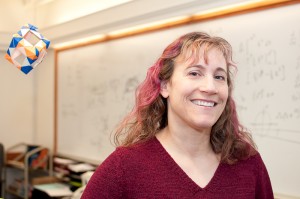 “Lakeside School in Seattle produced a couple of the most famous computer scientists in the world four decades ago, and the subject is still an important one for many students at the school today. One reason is Lakeside computer science faculty member Lauren Bricker, our latest Geek of the Week.
“The University of Washington computer science alum thinks of herself as a ‘geek generator,’ as she explains in her answers to our questions below. Continue reading for more about Bricker, as well as her insights from the front lines of computer science education — including her advice to aspiring computer scientists and her thoughts on getting more women involved in the field.”
This is a superb interview. Read it here. Read more →