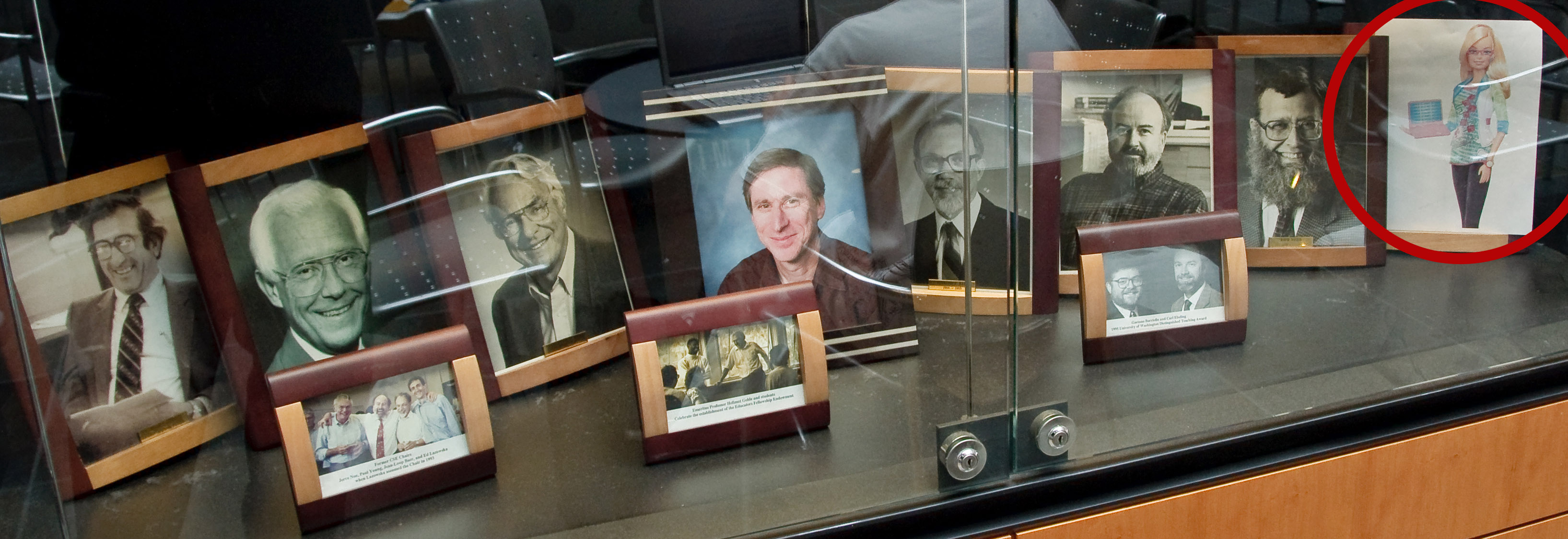
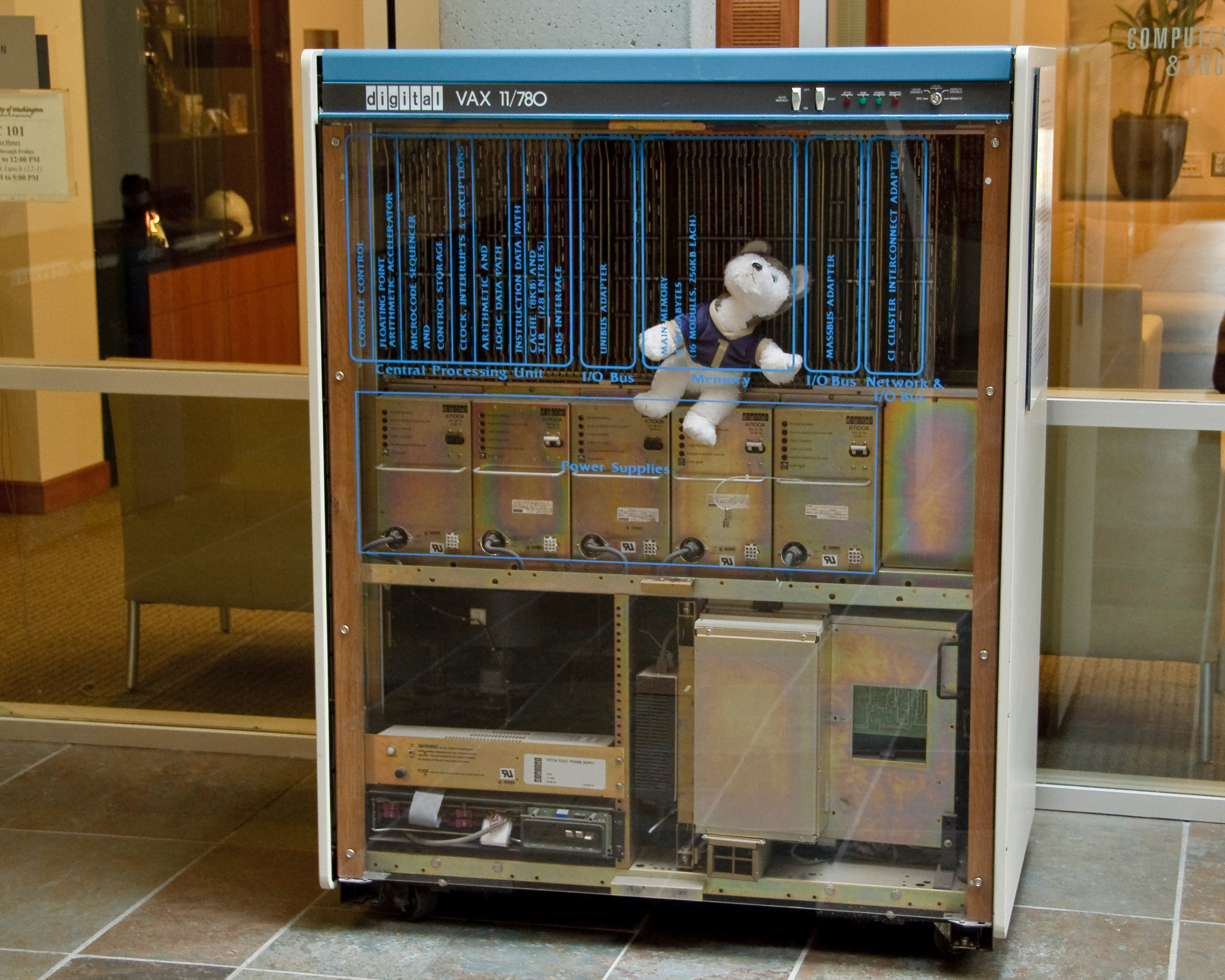
 April Fools Day in CSE dawned to a stuffed Husky trapped inside the museum-piece VAX-11/780 that graces our atrium.
(Computer Engineer Barbie also joined the rogues’ gallery of former CSE chairs.) Read more →

April Fools Day in CSE dawned to a stuffed Husky trapped inside the museum-piece VAX-11/780 that graces our atrium.
(Computer Engineer Barbie also joined the rogues’ gallery of former CSE chairs.) Read more →
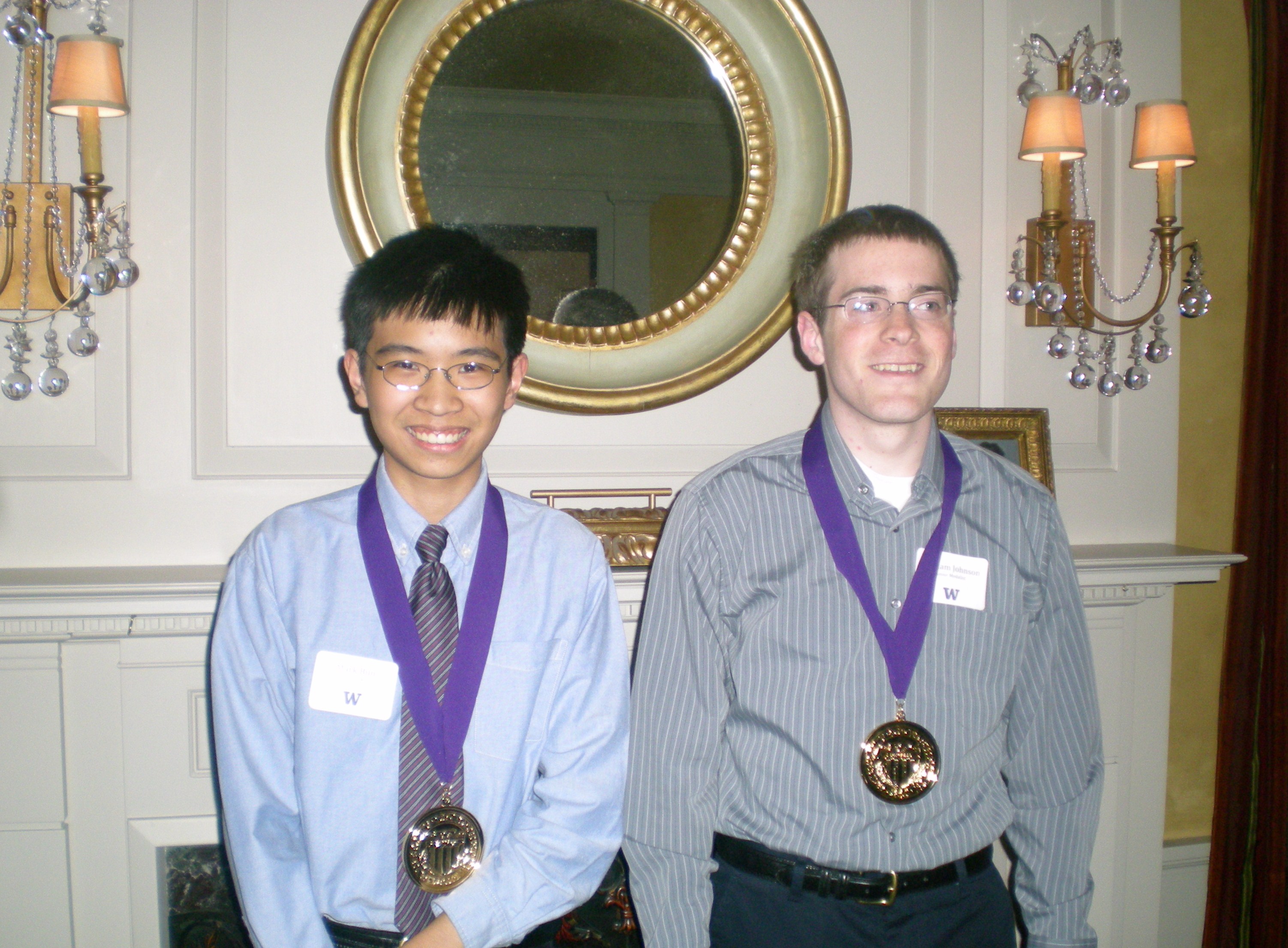
Mark Bun, Will Johnson
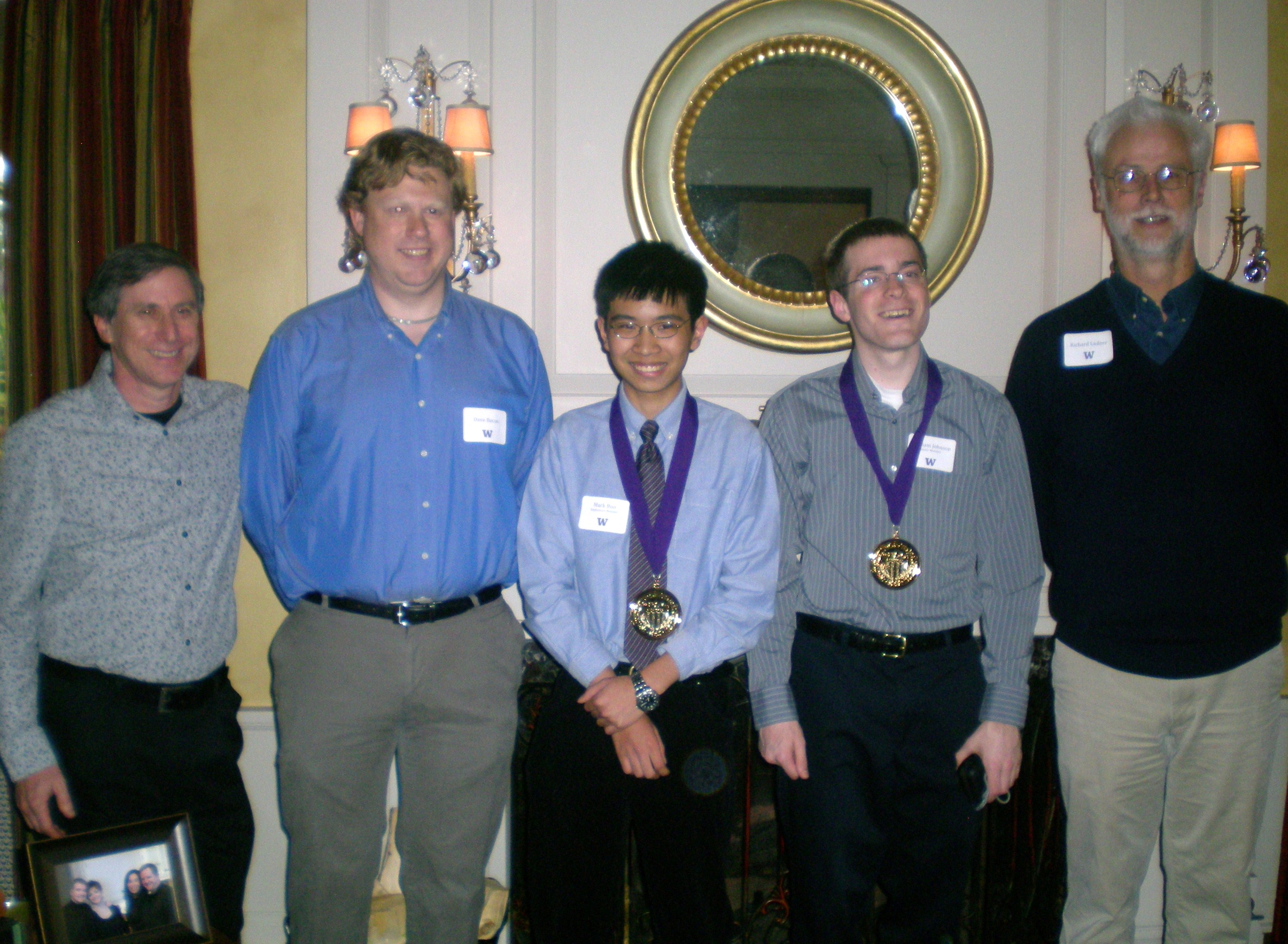
Hank Levy, Dave Bacon, Mark Bun, Will Johnson, Richard Ladner
Each year the University of Washington recognizes the top student (of roughly 7,000) in the previous year’s Freshman, Sophomore, and Junior classes as class Medalists.
In January, in a double-header, CSE’s Mark Bun was named the University of Washington Sophomore Medalist, and CSE’s Will Johnson was named the University of Washington Junior Medalist.
Will and Mark were honored on Wednesday March 31 at the home of University of Washington President Mark Emmert. CSE faculty members Dave Bacon, Richard Ladner, and Hank Levy attended as their guests.
In the past decade, 12 CSE students have been recognized as University of Washington Medalists — an extraordinary record. Johnson was recently in the news for being named a Putnam Fellow for finishing among the top five students in the nation — from among 4,036 competitors — in this year’s William Lowell Putnam Mathematical Competition. Read more →
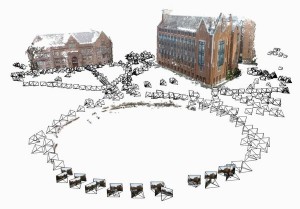 PhotoCity, a virtual capture-the-flag game devised by UW and Cornell computer scientists, starts this week. Says University Week:
“It’s an intercollegiate challenge that’s a little bit different. No balls, sticks or stadiums are involved. Any number of people can participate. The playing field is the entire campus. And the only equipment you need is a digital camera. The goal is to capture the campus, one photo at a time.
“Starting today, anybody is invited to snap digital photos of the University of Washington campus in a game of virtual capture-the-flag. Students, faculty, staff and community members are all invited to participate.
“To play, go to http://photocitygame.com to sign up. There you’ll find a campus map showing white flags that have yet to be captured, as well as colored flags that have already been claimed by one of four teams.
“Next take your camera or other device and snap photos at the flag’s location. You can submit photos instantly using the game’s iPhone application or upload photos to the game’s Web site. Points are awarded for the number of photos, the resolution and quality of the images and, most importantly, whether a player was the first to capture a flag.
“The game, PhotoCity, is a project by computer scientists looking at ways to make 3-D models of neighborhoods or cities. Reconstructions have been started at the UW and Cornell campuses, New York City, San Francisco and Seattle. The game is being organized by researchers who are using their own campuses to test a new strategy to acquire images for their models.”
See the article here. Play the game here. Learn about the phenomenal work in UW’s Graphics and Imaging Laboratory here. Read more →
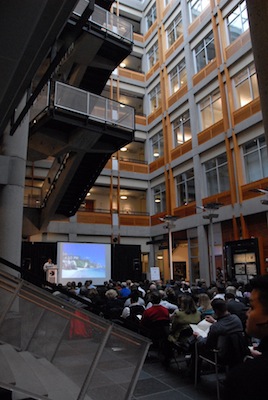 Greg Huang reports on a terrific Xconomy Forum, held on March 29 in the Microsoft Atrium of the Paul G. Allen Center for Computer Science & Engineering.
See Greg’s report on the top ideas here. See a terrific slideshow of the event here. Read more →
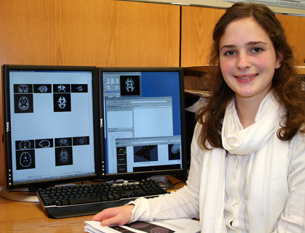 UW CSE undergraduate Rita Sodt will travel to Washington DC on April 13th to participate in the 14th annual “Posters on the Hill” program sponsored by the Council on Undergraduate Research. The goal is to expose Members of Congress to the importance of undergraduate research.
Rita works with UW Pathology professor Kristin Swanson on mathematical models to simulate brain tumor growth. The models make it possible to make predictions about how a tumor will spread, leading to improved tumor treatments. Read more →
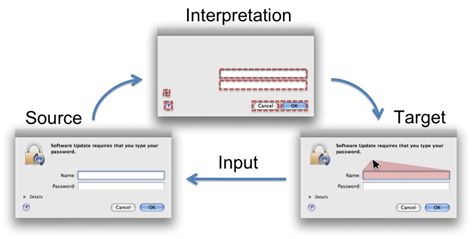 The Seattle PI features Prefab, a breakthrough user interface customization system developed by UW CSE’s James Fogarty and Morgan Dixon.
Prefab “gives you customization by analyzing not the source code of different applications, but the pixels they display on your screen.” It “can identify text, buttons, progress bars, sliders and many other graphical elements that we’re used to seeing in user interfaces. It then can modify what is actually displayed on your monitor.”
The article includes a great video, and a link to the Prefab paper, which will receive a Best Paper Award at CHI in April.
TechFlash post here.
Computing Research Highlight of the Week here. Read more →
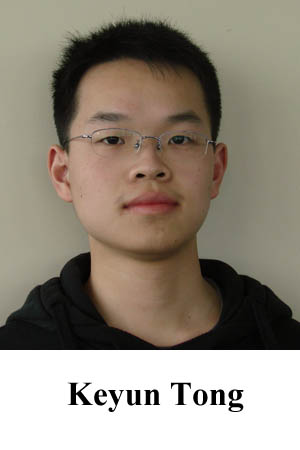
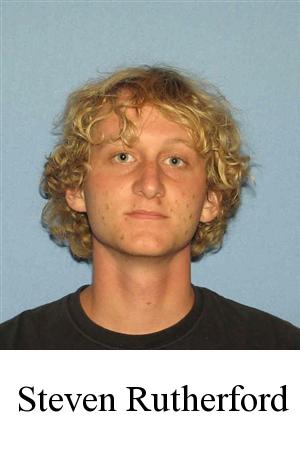
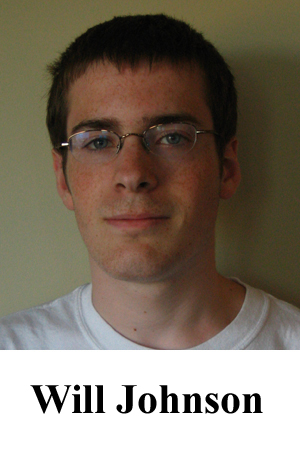 Will Johnson, a senior majoring in Computer Science and Mathematics, has been named a Putnam Fellow for finishing among the top five students in the nation — from among 4,036 competitors — in this year’s William Lowell Putnam Mathematical Competition. Will is the first University of Washington student to win a Putnam Fellowship since the competition was initiated in 1938.
Four other UW students finished among the top 500 in this year’s Putnam Competition, including Computer Science senior Keyun Tong and Computer Engineering freshman Steve Rutherford.
Johnson also participated in last year’s competition, where he finished sixth — “just out of the money.” Keyun finished in the top 500 last year. Steve’s older brother Michael also competed last year — he was a CSE senior at the time. (There must be something in the water in Wenatchee!)
Congratulations to these students on this remarkable achievement. Congratulations also to the other UW participants, and to the outstanding coaches — UW Mathematics professors Ioana Dumitriu and Julia Pevtsova. Read more →
 Widespread press coverage of research by UW CSE professors Luis Ceze, Dan Grossman, and Mark Oskin and UW CSE graduate students Owen Anderson, Tom Bergan, Joseph Devietti, Brandon Lucia and Nick Hunt.
“Ceze and his colleagues … have developed a way to get modern, multiple-processor computers to behave in predictable ways, by automatically parceling sets of commands and assigning them to specific places. Ceze and several colleagues from the university’s Safe MultiProcessing Architectures (SAMPA) group are presenting their proposed fix for this parallel processing problem next week at the International Conference on Architectural Support for Programming Languages and Operating Systems in Pittsburgh.”
Scientific American here. The Register here. Sifynews here. University Week here. Read more →
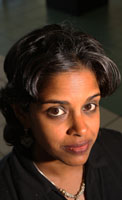
Anu Taranath
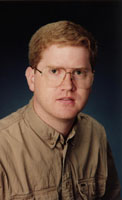
Scott Hauck
Scott Hauck and Anu Taranath have been recognized with 2010 University of Washington Distinguished Teaching Awards.
Scott, a UW CSE Ph.D. alumnus, is a faculty member in UW Electrical Engineering.
Anu, wife of UW CSE professor Raj Rao, is a faculty member in Comparative History of Ideas and in English.
Congratulations to Scott and Anu! Read the announcement here. Read more →
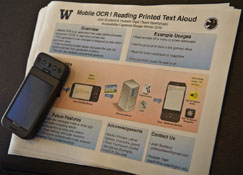 Each year, UW CSE offers a number of “capstone design courses” in a broad range of areas. In these courses, students work in teams to conceive, design, implement, and deploy complete solutions to interesting problems.
As cell phones become more capable with connectivity with the internet and sensors such as cameras, compasses, GPS, and accelerometers, there are opportunities to use them as accessibility or assistive devices. This was the focus of the Accessibility Capstone, taught by professor Richard Ladner. Students worked in teams to create new applications on mobile phones that allow persons with disabilities to accomplish tasks that would be difficult to impossible to do without such applications. (An example would be an application for a blind person that would take a picture of a bar code on a product, decode it, look it up on the internet, then speak the name of the product.)
KOMO-4 TV story here. Photos from the “demo day” here. Course description here. Thanks to our friends at Google for providing Android phones for use in this course!
 Read more →