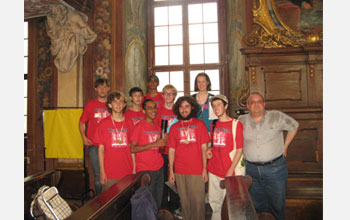
 A news post by the National Science Foundation features the strong performance by U.S. high school students at the International Olympiad in Linguistics in Wroclaw Poland, including incoming UW CSE freshman Daryl Hansen. Daryl writes: “I heard about the North American Computational Linguistics Olympiad from one of my teachers, and went with one of my friends to go compete in it in March, since it sounded interesting. In the second round, I ended up 4th in the country, which put me in the top 8 that the organizers would then take to Poland for the ILO. We had a few months of weekly practice sessions over Skype, and then we got a free weeklong vacation in Europe that involved us taking some linguistics tests. So, yes, it was amazing to be there at all. I didn’t have much prior experience with linguistics or computational linguistics, but this and the NACLO made me a lot more interested in them both.”
Read the NSF post here. Read more →
 UW CSE’s “Vanish” project is featured by the National Science Foundation’s “The Discovery Files” podcast:
“I’m Bob Karson with ‘The Discovery Files’ – new advances in science and engineering from the National Science Foundation.
“Getting data onto the Internet is one thing; the real trick may be getting rid of the data. I mean when you write an extremely sensitive e-mail or chat message, you really have no idea where that information could turn up may be even years later.
“University of Washington researchers have developed a system for making things like web-based e-mails, Facebook posts and other sensitive data have a true expiration date. To make the data ‘disappear’ from the face of the earth – never to be retrieved by anyone …”
Listen to the full podcast here! Learn more about Vanish here. Read more →
 A KUOW (Seattle NPR) segment on new directions in information technology, featuring UW CSE professors Ed Lazowska and Oren Etzioni. Topics include robotics, mobile computing, entrepreneurship, much more. Download the 20-minute segment here. Read more →
“‘The Kindle DX enables our students to access their course content anytime, anywhere,’ said Ed Lazowska, professor of computer science & engineering at the University of Washington. ‘We look forward to seeing how the device affects the engagement of both students and faculty in the educational experience.'”
Full article here. Read more →
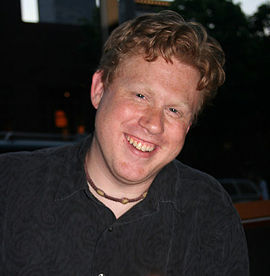 University Week highlights the widely-read “Quantum Pontiff” blog, authored since 2003 by UW CSE professor Dave Bacon.
“Q: What is its purpose and who is its intended audience?
“A: My number one purpose is to slow down my fellow researchers. Every time I spend a few minutes writing a blog post, thousands of others spend a few minutes reading the post. Many of those are my fellow researchers in quantum computing.”
Read the article here. Even better, follow the Quantum Pontiff blog here! Read more →
 UW CSE’s Raj Rao, working with a team of researchers from India, is using computer science to extract patterns in ancient Indus symbols. The study, published this week in the Proceedings of the National Academy of Sciences, shows distinct patterns in the symbols’ placement in sequences and creates a statistical model for the unknown language. The new study looks for mathematical patterns in the sequence of symbols, and calculations show that the order of symbols is meaningful. The authors said the presence of such distinct rules for sequencing symbols provides further support for the group’s previous findings, reported earlier this year in the journal Science, that the unknown script might represent a language.
UWeek article here.
Discovery Channel here.
MSNBC here.
ABC Science here.
The Telegraph India here.
Forskning here. (in Norwegian)
The Hindu here.
Deccan Herald here.
Dr. Dobb’s here.
O’Reilly Radar here.
DailyMirror here.
Time here. Read more →
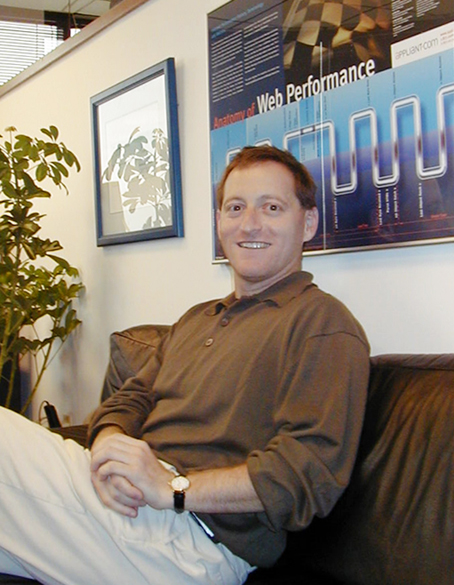 UW CSE professor and Google Seattle site director Brian Bershad recently spoke with Brier Dudley from the Seattle Times. Among the topics discussed: Google’s plans to continue to build its presence in the Seattle area, and concerns about education funding and the potential impact it may have on the local start-up community.
Read the first part of the article here.
Read the second part here. Read more →
 UW CSE and Microsoft Research sponsored their 13th annual Summer Research Institute, held July 27-29th. The purpose of each institute is to gather thought leaders to deeply explore a timely research topic. The 2009 institute focused on “Unraveling the technological knot in homes.” Modern homes are well on their way to becoming one of the richest everyday computing environments with a diverse mix of inter-connected devices, infrastructure and services. The goal of this summer institute was to articulate the key aspects of this problem space, identify new and promising solution approaches, and encourage inter-disciplinary research efforts that will create the revolution of the intelligent home.
Links to presentations from the institute, including keynote presentations by Anders Vinberg, Microsoft, and Keith Edwards, Georgia Tech, may be viewed here.
Information on past summer institutes may be viewed here. Read more →
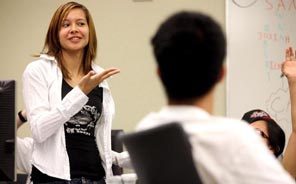 The Seattle Times describes UW CSE’s Summer Academy for Advancing Deaf and Hard of Hearing in Computing, organized by Professor Richard Ladner with support from the National Science Foundation.
“The summer academy – the only one of its kind in the country – introduces deaf and hard-of-hearing students to careers in computer science. For many of the participants, it’s their first glimpse inside the high-tech world. For some, it is the first time as students that they have been able to spontaneously talk to their classmates.
“‘It’s inspiring,’ said 17-year-old Johanna Lucht, of Anchorage, through an interpreter. ‘It’s opening a whole new world for me.'”
Read the rest of this terrific article here. Read more →
 Recent UW CSE Ph.D. alumnus Jonathan Carlson has received the 2009 University of Washington Graduate School Distinguished Dissertation Award. Carlson’s thesis work on “Phylogenetic Dependency Networks: Inferring Patterns of Adaptation in HIV,” co-supervised by Larry Ruzzo of UW CSE and David Heckerman of Microsoft Research, seeks to enable improved HIV vaccines by identifying HIV adaptations that the virus employs against the immune system. Carlson now works with Heckerman in the Microsoft Research eScience Group in Los Angeles. Read more →