Randall Stross devotes his Digital Domain column in the Business section of the Sunday New York Times to a look at the ham-handed marketing of SongSmith, based on work from Dan Morris and Sumit Basu from Microsoft Research and UW CSE graduate student Ian Simon that generates instrumental accompaniment to match users’ vocal input.
A four-minute video promoting the product has been the target of derision, attracting (at this writing) more than half a million views and several thousand comments. But hey, buzz is buzz!
Stross notes the emergence a new genre of parody video, where YouTube content mashers feed the vocals from famous rock videos into SongSmith, remix the generated instrumentals with the vocals, and replace the audio with what, in combination, kills the buzz dead. An example.
We previously covered SongSmith here. Read more →
“As speculation built over the past few weeks about the possibility of Microsoft layoffs, one theory that gained some traction in Seattle’s startup community was that a sizable cutback could actually spur entrepreneurial energy in the region.”
“‘I don’t even think of it as a hiccup to be honest,’ said Lazowska, an adviser to Microsoft who believes the company will keep hiring. ‘I just think this is continual renewal, rather than something catastrophic.'”
Read the full TechFlash article here. Read more →
PetraVM, a new start-up founded by CSE’s Mark Oskin and Luis Ceze, raised $1.5M from Madrona Venture Group and WRF. PetraVM is out to improve the cost and reliability of software the people use every day — developing technology to enable effective and reliable use of now ubiquitous multi-core systems.
Read the Xcomony article here.
Read the TechFlash article here.
(Update: also see Brier Dudley’s Blog post Stealthy UW multicore software spinoff gets Madrona funding, which has an abundance of detail. -SMR) Read more →
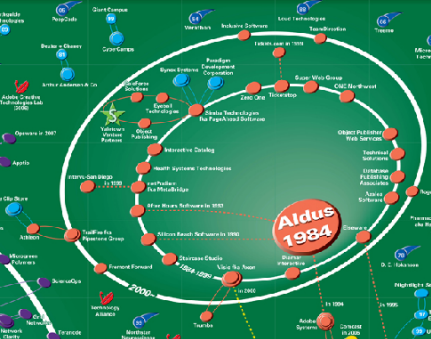 About a year ago, the Washington Technology Industry Association (WTIA) set out to map hundreds of high-tech companies in the region and their connections to one another. The resulting poster and website shows 781 companies from the region scattered in a virtual universe. The WTIA will debut the poster and website on at a morning reception on Thursday, January 22. CSE’s Ed Lazowska will be part of panel that will be on hand to share some of the early war stories of the Seattle tech region.
See the full article in TechFlash here.
[Update 23 January: also covered at Xconomy Seattle here. -SMR] Read more →
 The December issue of Esquire highlights 28 ‘Best and Brightest 2008‘. Two of the articles have UW CSE connections:
Tapan Parikh, currently at Berkeley, is recognized for his UW thesis work in Esquire’s article: “Why the Real Hundred-Dollar Laptop Is a Cell Phone.”
Microsoft PhotoSynth, a collaborative effort with UW, is highlighted in: “How Microsoft Photosynth Built a Globe for the 21st Century.” Read more →

Seattle Times technology reporter Benjamin J. Romano surveys the current job prospect landscape for MBA and tech graduates, talking to UW CSE professor Ed Lazowska and UW CSE PhD candidate Andrew Putnam. Bottom line: it’s no picnic, but it’s not as bleak as one might think, particularly for top candidates, and the internship process is still healthy. Most companies at the UW CSE Winter Recruiting Fair are offering internships only.
The full article is here. Read more →

CNN is harnessing Microsoft PhotoSynth technology to “crowdsource” the Tuesday inauguration of the 44th president of the United States, producting the first “synth” of a major historical event. Photos mailed to themoment@cnn.com will be processed in real time to create synths that will be available at The Moment site. CNN coverage starts at 5AM Eastern time (2AM Pacific).
Read the article announcing the collaboration and explaining how to participate here.
PhotoSynth technology grew out of collaborative research involving UW CSE graduate student Noah Snavely (now on the faculty at Cornell University), CSE professor Steven Seitz, Microsoft Research’s Rick Szeliski (also UW CSE affiliate professor), and others.
Previous UW CSE News coverage of PhotoSynth is here Read more →
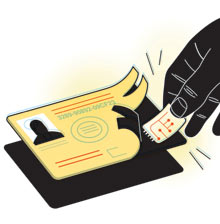 Are U.S. passport cards and new state driver’s licenses with RFID truly secure? Not everyone is convinced that new security cards are a good idea. UW CSE’s Yoshi Kohno is quoted. See the full article in Technology Review‘s January/February issue.
We provided earlier coverage on Yoshi’s research and problems with RFID passport cards. Read more →
Microsoft has a new tool that automatically generates backup music to go with original melodies and lyrics sung into a computer.
Songsmith, which debuted today at the International Consumer Electronics Show in Las Vegas, lets people explore songwriting. The software first analyzes your vocal melody using existing pitch-tracking technology. Then an algorithm the researchers built selects musical chords that will go well with the melody. Songsmith evolved from MySong, a joint research project by Microsoft researchers Dan Morris and Sumit Basu and CSE’s own Ian Simon, who worked with them as an intern in 2007.
Read the full article here.
(TechFlash notes the “cringe-worthy” video and the derisive buzz it has attracted in the YouTube comments in this post. Almost 300,000 views at this 14 January writing! -SMR)
(ars technica offers this detailed review of SongSmith. -SMR) Read more →
 The regular and wonderful Wired Magazine feature Jargon Watch seeks out and exposes emerging English language words and phrases as they are minted to describe our changing world. In current issue 17.01, feature editor Jonathon Keats highlights the term cloaker, coined by CSE graduate student Tamara Denning in the paper Absence Makes the Heart Grow Fonder: New Directions for Implantable Medical Device Security (joint with Kevin Fu and Tadayoshi Kohno) to describe a device designed to keep heartless hackers from altering the radio-controlled settings on pacemakers. Read more →