Hellmut Golde
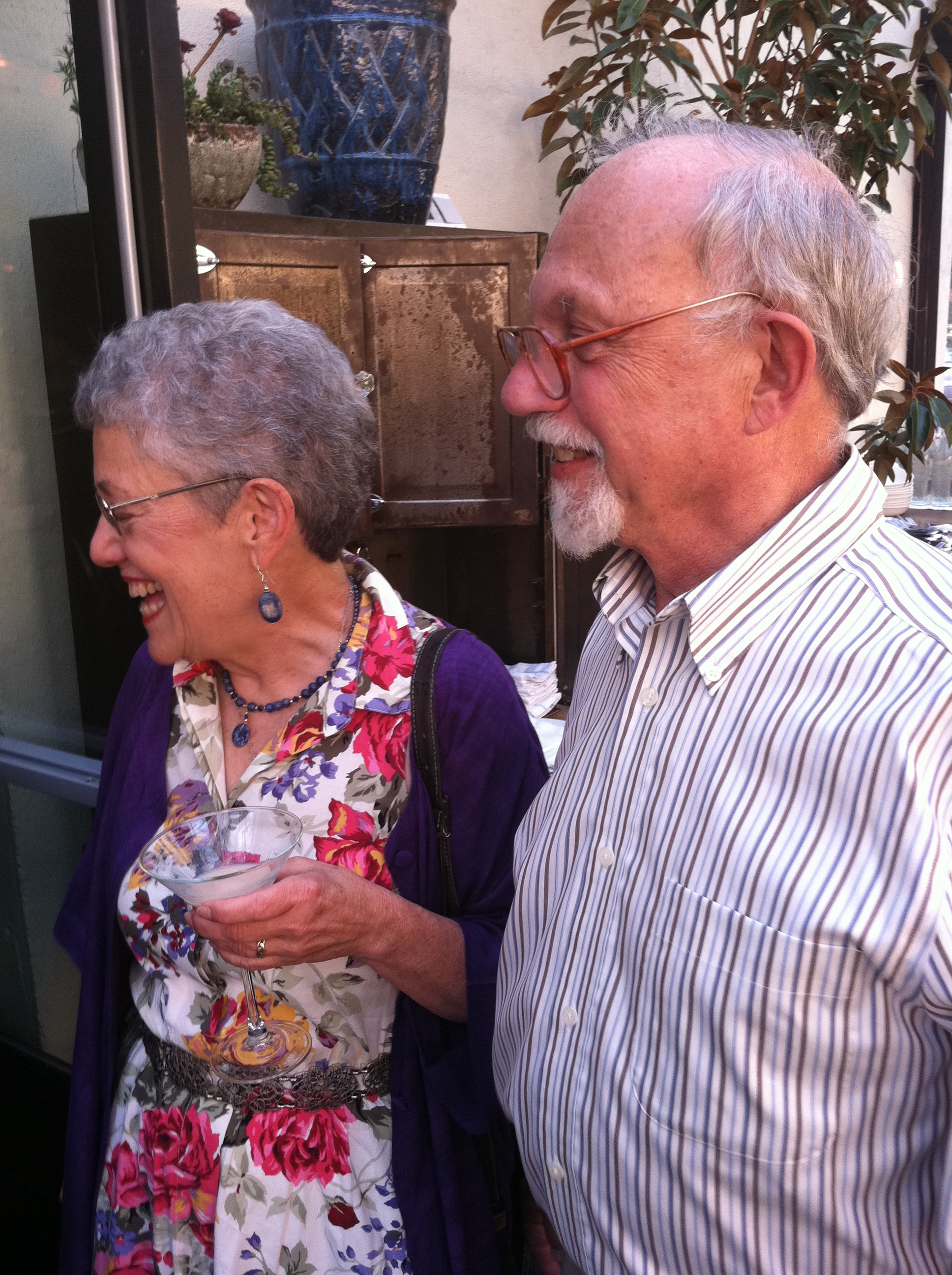
Margarete Noe
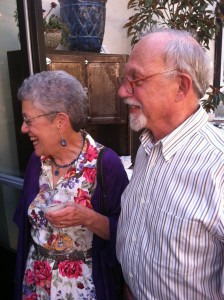
Diane and Jean-Loup Baer
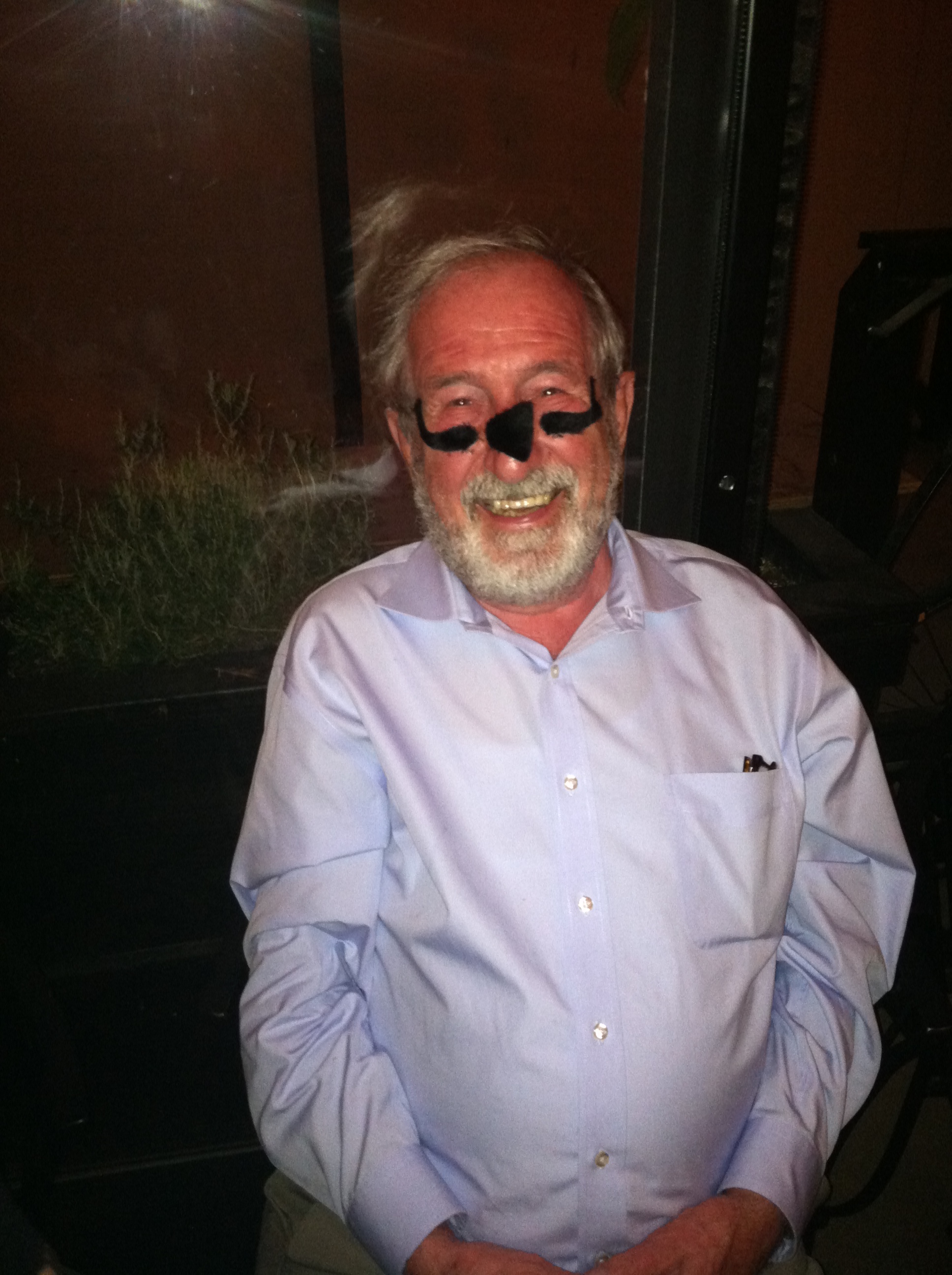
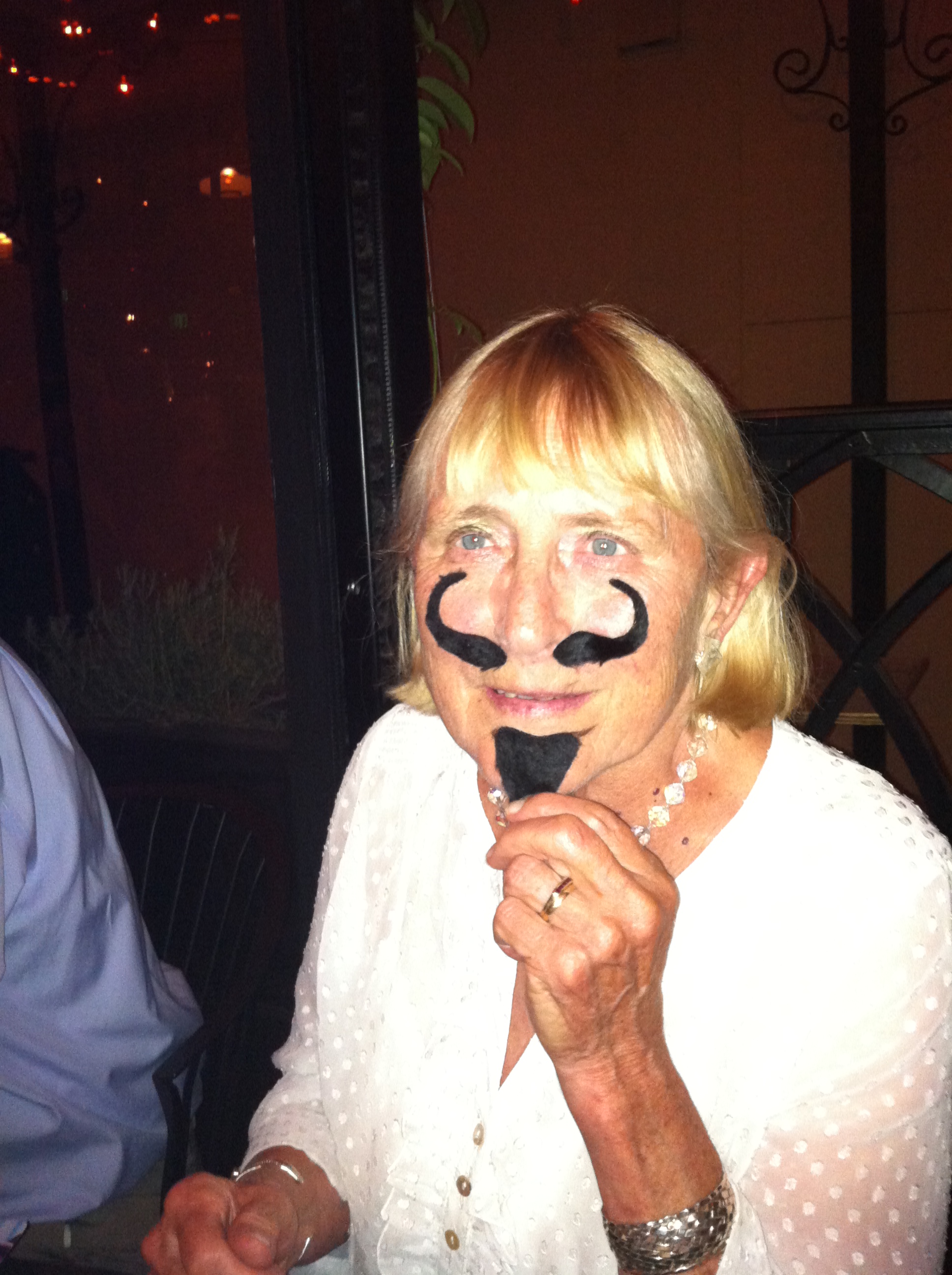
UW CSE emeritus professor Jean-Loup Baer celebrated his 75th birthday on Saturday evening with a wonderful party at Bastille. Winners of the “To how many obscure questions about Jean-Loup can you guess the right answer?” contest were entered in the Jean-Loup Baer Lookalike Contest.
Happy birthday Jean-Loup!! Read more →
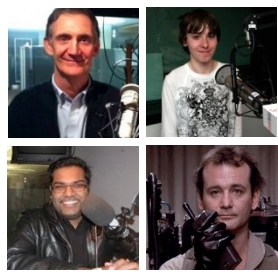 In honor of back-to-school season, this week’s GeekWire radio show and podcast features excerpts from past interviews with technology educators and one very impressive high school student: Ed Lazowska (Bill & Melinda Gates Chair in Computer Science & Engineering at the University of Washington), Daniil Kulchenko (the 15 year-old entrepreneur who sold his cloud-computing startup earlier this year – and who is the son of UW CSE Ph.D. student Paul Kulchenko), and Hanson Hosein (Director of the Master of Communication in Digital Media program at UW).
Listen here.
Read more →
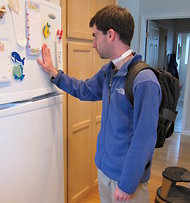 Joint research by UW and Microsoft Research is described in the New York Times.
The research provides gestural remote control by means of algorithms that interpret and harness the interaction between the human body and the ambient electromagnetic field that is emitted as a matter of course by the wiring in households, by the power lines above homes, and by the gas pumps at service stations. The work was described in the CHI 2011 paper “Your Noise is My Command: Sensing Gestures Using the Body as an Antenna” by Gabe Cohn (UW EE graduate student), Dan Morris (Microsoft Research, and UW CSE affiliate professor), Shwetak Patel (UW CSE and EE professor), and Desney Tan (Microsoft Research, and UW CSE affiliate professor).
Read the New York Times article here. Read more →
 ACM’s Special Interest Group on Software Engineering – SIGSOFT – launched an initiative several years ago to recognize research papers that have been particularly influential in software engineering research. Annually an award is made to a paper published a decade earlier, and in each of the first five years of the award, an additional committee is asked to select up to five papers published prior to 1998 for a special Retrospective Impact Award.
The 1995 paper “Software Reflexion Models: Bridging the Gap between Source and High-Level Models” has been selected to receive a 2011 SIGSOFT Retrospective Impact Paper awards. The paper was part of the UW CSE Ph.D. research of Gail Murphy, now a faculty member at the University of British Columbia. Her co-authors were her Ph.D. advisor David Notkin, and Kevin Sullivan, another Notkin Ph.D. who had recently joined the faculty at the University of Virginia.
Congratulations to Gail, David, and Kevin! Read more →
 A New York Times article on improvements in computer-generated text (and specifically on some great work by Narrative Science, a Northwestern University startup) quotes UW CSE’s Oren Etzioni. Read the article here. Read more →
 VLDB 2011 – the 37th International Conference on Very Large Databases – was held in Seattle this week.
As previously noted here, the VLDB 10-year Award, recognizing the paper that appeared in the VLDB conference 10 years ago and has had the greatest impact on database research since then, was received by Jayant Madhavan (a UW CSE Ph.D. alum, currently at Google) and Phil Bernstein (a UW CSE Affiliate Professor, working at Microsoft Research), along with their co-author Erhard Rahm, for their VLDB 2001 paper “Generic Schema Matching with Cupid.”
New news: The VLDB 2011 paper “Data Markets in the Cloud: An Opportunity for the Database Community” by UW CSE’s Magdalena Balazinska, Bill Howe, and Dan Suciu won 2nd place in the “Best Paper Award” competition for the Challenges and Visions Track at VLDB 2011.
The Challenges and Visions Track, organized in cooperation with the Computing Community Consortium, focuses on visionary ideas, long term challenges, and opportunities in data-centric research that are outside of the current mainstream topics of the field; submissions were judged on the extent to which they expand the possibilities and horizons of the field. Similar tracks have been organized at a number of major conferences in the past year.
Congratulations to Magda, Bill, and Dan!
Read more →
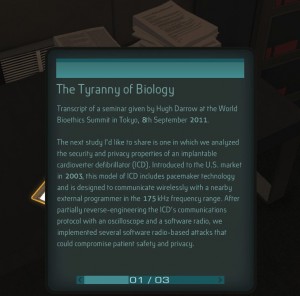 From the “any publicity is good publicity” department …
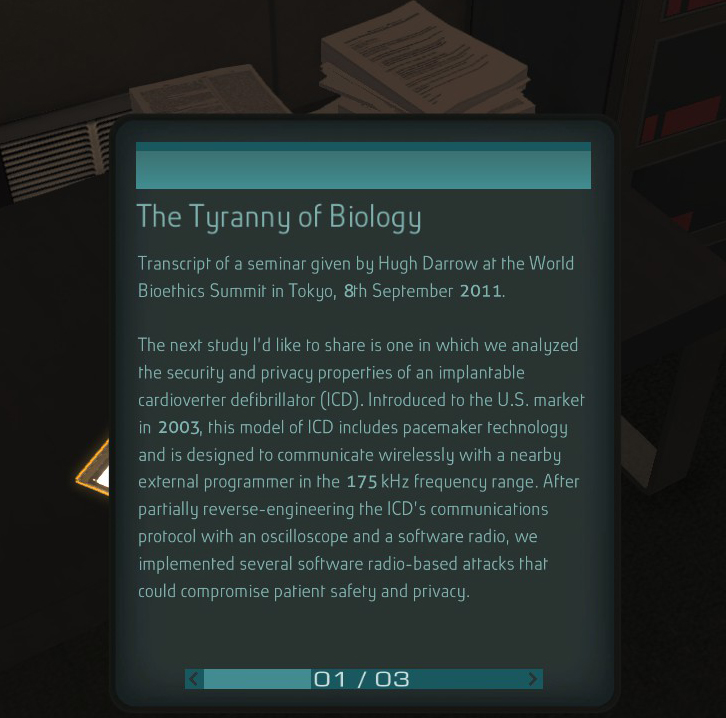
The game developers of Deus Ex have lifted text from the Oakland 2008 paper “Pacemakers and Implantable Cardiac Defibrillators: Software Radio Attacks and Zero-Power Defenses” for their dystopian video game shoot up.
Check out a Deus Ex screenshot here. Compare it to the highlighted section of the research paper here. And, for those of you who are researchers rather than gamers, check out the Medical Device Security Center website here.
The Oakland paper was co-authored by Daniel Halperin and Yoshi Kohno (University of Washington), Thomas S. Heydt-Benjamin, Benjamin Ransford, Shane S. Clark, Benessa Defend, Will Morgan, and Kevin Fu (University of Massachusetts Amherst), and William H. Maisel (BIDMC and Harvard Medical School). Read more →
 “Dr. Etzioni, a computer scientist at the University of Washington in Seattle who has founded four firms in all, says Decide relies on three main data sources: pricing data, news and rumours, and technical specifications. Pricing data comes from a variety of sources. Most are the company’s trade secret, though they always include current prices of goods and sales data. The model also uses feedback about how its predictions fare over time to fine-tune their probability estimates. With news and chatter, Decide scores sites by how accurate their scoops are for particular categories of goods. The algorithm discounts rumour-mongers and gives a greater weight to reliable sources. So far, the firm has amassed a year’s worth of data, many thousands of gigabytes in total.
“These reveal unexpected consumer behaviour. For example …”
To read the exciting conclusion, check out the full article in The Economist here. Read more →
 “Decide uses sophisticated data-mining and analysis techniques to predict whether prices will change for a given product, giving consumers a better window into volatile retail prices. If this sounds familiar, it’s the same basic idea behind Farecast, another [UW CSE professor Oren] Etzioni company that predicted price changes for airline tickets. Microsoft bought Farecast in 2008 for a reported $115 million, and has incorporated the technology into its Bing search engine.
“But where Decide gets really futuristic is its ability to advise consumers whether new models are about to debut, helping them avoid the kind of regret swallowed by all those poor folks who were just a little too late in buying the first-generation iPad …”
Read the full article here. Read more →
 PC World notes the selection of UW CSE’s Shwetak Patel as a Microsoft Research Faculty Fellow.
“Homeowners who want to know which electrical device in their house consumes the most energy will soon be able to find out due to the research of Shwetak Patel. The assistant professor from the University of Washington is one of this year’s recipients of Microsoft’s Research Faculty Fellowships …
“The Microsoft Research Faculty Fellowship is not the first award marking Patel as an outstanding researcher in his field. In 2009 Technology Review magazine named him as one of the 35 most promising researchers under the age of 35, and he won the title “top innovator of the year” from Seattle Business Magazine in 2010.”
Read the article here. Read more →