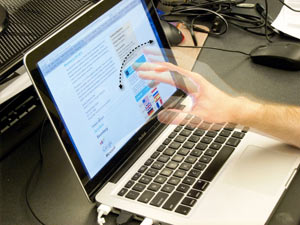
 SoundWave, a joint project of UW CSE and Microsoft Research, is featured in Popular Mechanics. Hey, Shwetak is a licensed plumber and electrician, and worked on his own car in high school – what could be more natural?
“Though using the Doppler effect to track human gestures has been around for a decade, it had always required customized equipment. SoundWave eliminates the need for any specialized hardware, requiring only basic technology.”
Read the article here. Read more about the research here.
Read more →
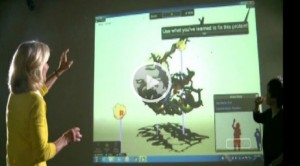 KING 5 News anchor Jean Enerson reports on Foldit: “University of Washington researchers are harnessing the power of online gaming to crack the code of the flu virus.”
Watch the video here – it’s really good.
Play Foldit here.
Read more →
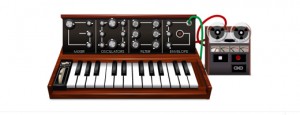 TNW reports:
“Earlier in the week we reported on the pretty epic interactive Google doodle that was an homage to Dr Robert Moog. The super cool landing page allowed visitors to mess around with a virtual Moog synthesizer and then share their noisy creation with others as an application recorded and played back the sounds (On a virtual reel-to-reel no less!)
“One smart engineer is all it takes to push a project further of course. Karl Koscher is a Ph.D. student studying computer security at the University of Washington, and he told TNW …”
Read the post and try it out here. Read more →
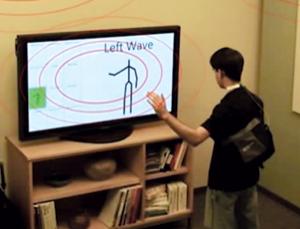 The “Humantenna” project – joint work by UW CSE’s Gabe Cohn and Shwetak Patel and Microsoft Research’s Dan Morris and Desney Tan – is featured in today’s Computing Community Consortium blog. The CCC blog post builds on an article in New Scientist describing the research, presented at CHI 2012 earlier this month. There’s also a callout to the SoundWave project in the post – joint work by UW CSE’s Sidhant Gupta and Shwetak Patel and Microsoft Research’s Dan Morris and Desney Tan.
Humantenna uses the human body as an antenna to pick up the electromagnetic fields — generated by power lines and electrical appliances — that fill indoor and outdoor spaces. By measuring how the signal changes as users move through the electromagnetic fields, it’s possible to identify gestures, such as a punching motion or swipe of the hand.
Read the post here. Read more →
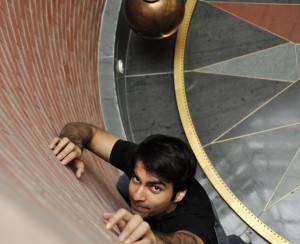
(original photo replaced due to outcry)
It took 13 years for UW CSE graduate students to attempt to top the 2000 “Men of Sieg Hall” calendar. And they failed. Nonetheless, you should support the Marsha Rivkin Center for Ovarian Cancer Research by purchasing the 2013 “Men of CSE” calendar. Read more →
 UW CSE has significantly ramped up its K-12 outreach activities. This spring, undergraduate and graduate students taking the K-12 Computing Education seminar have logged over 150 hours volunteering in K-12 classrooms around the greater Seattle area. This week alone, our students have introduced CS to one class at Odle middle school and 3 classes at Shorecrest high school. We will be involved in a programming symposium component of the Seattle Science Festival on June 4th and have been exploring other partnership opportunities with the Seattle Science Center. All 3 of our summer camp sessions for middle school and high school girls are full with waiting lists, as is our CS4HS teacher workshop. All of this in addition to a broad range of existing activities.
Learn more at DawgBytes, our outreach Facebook page, or on our K-12 outreach website. Read more →
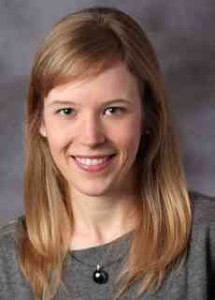 UW CSE Ph.D. student Franzi Roesner has been recognized with the “Best Practical Paper” award at the IEEE Symposium on Security and Privacy. The paper, “User-Driven Access Control: Rethinking Permission Granting in Modern Operating Systems,” was co-authored with UW CSE professor Yoshi Kohno, UW CSE Ph.D. alumnus and Microsoft Research staff member Alex Moshchuk, Microsoft Research staff members Bryan Parno and Helen Wang, and Microsoft staff member Crispin Cowan.
Congratulations to Franzi and her co-authors!
Read more →
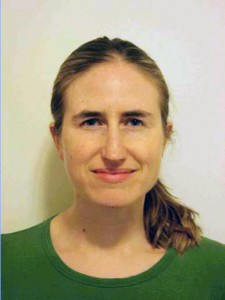 Congratulations to2000 UW CSE bachelors alumna Emma Brunskill, announced today as the recipient of a 2012 Microsoft Research Faculty Fellowship.
Each year, Microsoft Research selects a handful of the most promising young computer science faculty members from around the world for recognition and support through this program.
After graduating from UW CSE, Emma won a Rhodes Scholarship, received a computer science Ph.D. from MIT, did a postdoc at Berkeley, and is now a faculty member at Carnegie Mellon University.
CSE faculty members Shwetak Patel, Luis Ceze, and Magda Balazinska are past recipients of Microsoft Research Faculty Fellowships, as are CSE Ph.D. alum Noah Snavely (now a faculty member at Cornell) and CSE postdoc and acting assistant professor Aaron Hertzmann (now a faculty member at the University of Toronto).
Congratulations one and all! Read more →
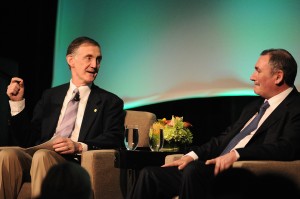
UW CSE's Ed Lazowska interviews F5 Networks' John McAdam at the "State of Technology" luncheon (Ashley Genevieve photograph)
Higher Education was a recurring theme today at the annual Technology Alliance “State of Technology” luncheon in downtown Seattle.
Technology Alliance chair (and UW CSE alum) Jeremy Jaech presented the results of the most recent Technology Alliance economic impact study. According to GeekWire:
“Jaech also sounded the alarm about education funding, thanking the governor and state legislature for stemming the tide of cuts, but saying that more needs to be done to expand the pool of homegrown engineering talent. ‘I believe we are screwing up if we allow this increasing mismatch between job creation and talent production to continue,’ he said. ‘We’re going to have to engineer our own future, and I mean that literally. We need engineers, and lots of them.'” Read the GeekWire post here.
Later in the program, UW CSE’s Ed Lazowska interviewed John McAdam, CEO of Seattle’s F5 Networks. Again according to GeekWire:
“F5 Networks has been operating in the Seattle area for more than 15 years, quietly building one of the biggest success stories of the tech community. But even though it boasts a market value of $9.25 billion and employs 2,800 worldwide, few people — even those in its home town — really know what F5 is all about. Heck, most folks didn’t even know that its name is actually taken from the hit movie ‘Twister.’ … University of Washington computer science professor Ed Lazowska, who moderated the discussion, described F5 as a ‘hidden gem’ and started the talk with this very blunt question: ‘What on Earth is that that you folks do at F5?’ … Asked what government could do to help support the tech ecosystem, McAdam echoed earlier remarks by Technology Alliance Jeremy Jaech about the importance of supporting education.” Read this GeekWire post here.
Read an excellent Seattle Times article describing the entire event here. Read more →
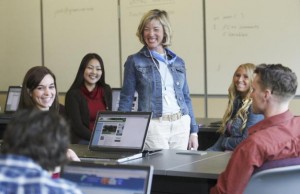 Janet Ash, an engineering instructor at Green River Community College, has been honored multiple times by UW CSE as an “inspirational teacher” – nominated by her former students who are now UW CSE majors.
“As a kid, Janet Ash listened to Gilbert and Sullivan operettas, played Chopin nocturnes on the piano, read anything she could get her hands on.
“The very crucible into which nerds are poured, you say? Yep. And Ash is proud of her lineage. Nerds, she insists, flock to her.
“‘I think I’m a bit of a nerd magnet,’ Ash says.”
Read more of this wonderful profile in the Auburn Reporter here. Learn more about the UW CSE “inspirational teacher” recognition program here.
Warm thanks, and warm congratulations, to Janet and to all of Washington’s inspirational teachers! Read more →