Ben Taskar, 1977-2013

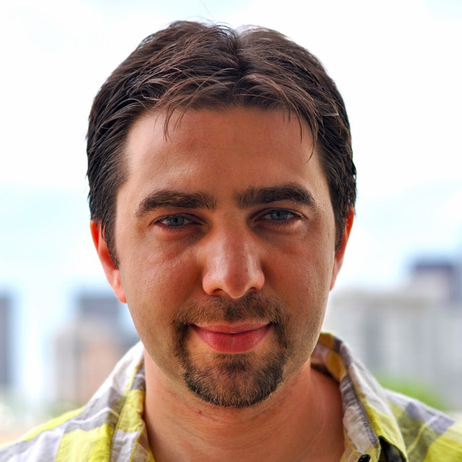
Ben TaskarIt is with deep sadness that we announce that Ben Taskar,  Boeing Professor of Computer Science & Engineering at the University of Washington, passed away on the early morning of November 18 of sudden and severe heart failure.  Ben leaves behind his wife Anat Caspi, their two year old daughter Aviv Taskar, his mother, father, and sister, and an array of other family members, friends, and colleagues – all of whom will miss him tremendously.

Ben joined UW CSE one year ago.  He received his Bachelors, Masters, and Ph.D. from Stanford University, and spent 18 months as a postdoc at UC Berkeley and six years as a faculty member at the University of Pennsylvania before joining UW CSE as part of a “cluster hire” in data analytics that also included Emily Fox, Carlos Guestrin, and Jeff Heer.

When a 30-something person dies unexpectedly, leaving behind a spouse and a young child, it scarcely matters that he or she was one of the generation’s leading computer scientists.  Ben was that, though – an outstanding computer scientist, one of the very best of his generation.  He made many significant research contributions in areas spanning machine learning, natural language processing, and computer vision.   We are devastated by his loss.  Even in a short time at UW, Ben’s brilliance, and his positive and gentle nature, made him admired and adored by everyone who knew him.

A website has been established where you can find details about the funeral, share your memories of Ben, and find information about the “Ben Taskar Family Benefit Fund,” created to help support Anat and Aviv in light of Aviv’s continued medical care needs.

Memorial website here.

GeekWire article here.

Seattle Times article here (pdf version here).

Daily Pennsylvanian article here.

UW CSE remembers Ben Taskar, here.

Memorial service at the University of Pennsylvania; program here. Read more →
Oren Etzioni in NY Times on deciding whether to sell a startup

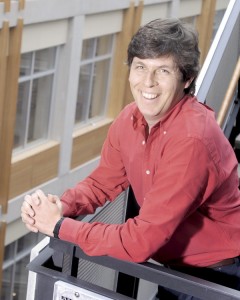
oren_etzioniThe New York Times interviews eight startup veterans on the “sell vs. remain independent” decision, including UW CSE’s Oren Etzioni:

“Oren Etzioni caught the start-up bug so many times while working as a professor of computer science at the University of Washington that it seems he will never shake it. All four of the start-ups he has helped found have been acquired, the most recent ones by eBay and Microsoft …”

Read more here. Read more →

Xconomy: “SNUPI Technologies’ Home Sensor Network Monitors Water Leaks, Babies”

SNUPI-co-founders-1100x730

SNUPI co-founders Gabe Cohn, Shwetak Patel, and Matt Reynolds. (Not pictured: Jeremy Jaech.)

“SNUPI Technologies wants to help homeowners spot mold, leaks, and appliance failures before they become a big problem, but that’s just the beginning.

“This Seattle startup is building a platform at the intersection of low-cost, low-power sensor networks, cloud computing, and machine learning, that is showing potential beyond the initial product and service that SNUPI is bringing to market.

“SNUPI is also notable for its location in a surprising space on University Way – better known as The Ave – pioneering what city and University of Washington leaders see as Seattle’s next hot startup neighborhood.

Maya

SNUPI’s quality assurance department, as first reported by Xconomy.

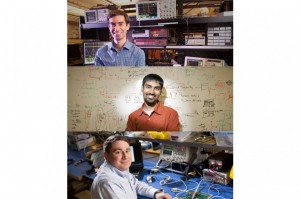
“SNUPI – an acronym for Sensor Nodes Utilizing Powerline Infrastructure – is getting plenty of attention, and for good reason, starting with its founders and leadership. The underlying technology was developed at Georgia Institute of Technology by co-founders Shwetak Patel, a MacArthur Genius Grant Fellow, and Matt Reynolds, now computer science professors at the UW. UW Ph.D. student Gabe Cohn helped refine the technology and is another co-founder. Jeremy Jaech, one of Seattle’s top serial entrepreneurs, is CEO.”

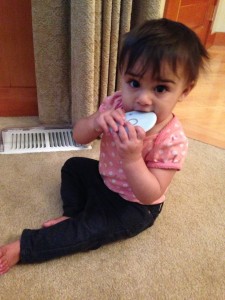
Read more (including how Shwetak’s 1-year-old daughter Maya loves to lick the sensors) here. Read more →

UW CSE @ Paul Allen’s Living Computer Museum

_DSC1357More than 100 UW CSE students spent the afternoon at Paul Allen’s Living Computer Museum.

Despite Moore’s Law, one thing hasn’t changed in 40 years:  19-year-olds are seduced by an IBM 029 card punch!

The Living Computer Museum is extraordinary.  Every important PC and minicomputer is up and running!

Bruce Hemingway photos of our excursion here. Read more →

UW CSE’s Yoshi Kohno on “ethical hacking”

ethichackKUOW (Seattle NPR) interviews UW CSE professor Yoshi Kohno:

“Yoshi Kohno is a cyber security professor at the University of Washington. He has a class that is designed for students to understand computer security threats against modern technologies. ‘We teach students both how to violate the security of a computer system and how to protect the security of a computer system,’ he said.

“With a group of smart students actively engaged in building and breaking security systems, the natural concern is how to keep the skills from breaching moral standards.

“‘Ethics is incredibly important for me,’ Kohno said. ‘At the beginning of my course I have all my students sign an ethical form that says they won’t use the knowledge learned through this course without legal authorization.'”

Read more, or listen to the interview, here. Read more →

Seattle named “Smartest City in North America”

3021592-slide-shutterstock133656629Or so says Fast Company.

I mean, how dumb is that???

But, as we always say, “We advertise the surveys whose results we like, and we do our best to bury the other ones.”

Read this highly authoritative survey here.

  Read more →

CSE startup SNUPI: First among GeekWire’s “Seattle 10”

logo-smallGeekWire writes:

“Seattle is ripe with innovation …

“With that in mind, we’re excited to announce the Seattle 10, presented in partnership with the Museum of History & Industry and the new Bezos Center for Innovation.

“This is a list of some of the most promising emerging technology companies in the region …

“As a member of the Seattle 10, each company will get the opportunity to sketch their business concepts on giant six-foot by six-foot cocktail napkins. Those napkins, which were delivered to the companies last week, will be displayed at MOHAI, making their debut at the big GeekWire Gala on Dec. 4th.”

CSE alum Jeremy Jaech – co-founder of the startup SNUPI along with CSE professors Shwetak Patel and Matt Reynolds and graduate student Gabe Cohn, states:

“In our increasingly busy lives, we all seek peace of mind that our home, and what’s in it, is safe. The SNUPI Team has tackled just that, creating a sensor system that monitors home hazards related to moisture, temperature and humidity. We’ve incorporated user-friendly guidance and convenient modes of communication to allow for an interactive experience, so you’re always in the know. Our product is environmentally conscious, using a battery that lasts for over ten years, and letting you maintain your home’s resources for a sustainable future. SNUPI is here to give the world safer, healthier and smarter homes.”

Read more here.  Learn about SNUPI’s first offering, Wally, here. Read more →

CSE’s Rajesh Rao to lead UW’s NSF Engineering Research Center for Sensorimotor Neural Engineering

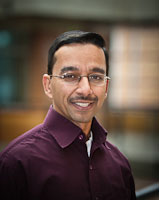
rajeshrao_1113UW CSE professor Rajesh Rao has been named Director of the National Science Foundation’s Engineering Research Center for Sensorimotor Neural Engineering (CSNE), based at the University of Washington with MIT and San Diego State as partners.

CSNE is one of 17 engineering research centers nationwide that aim to translate discovery to innovation through university, industry and government partnerships, and prepare the next generation of creative, interdisciplinary engineers to meet pressing challenges in health, energy, environment and national security.  CSNE was launched in 2011 with a five-year, $18.5 million grant. Raj has been heavily involved in CSNE since its earliest conceptual stages.  Tom Daniel, professor of Biology and CSE, has served as interim director since the founding director, Yoky Matsuoka, left UW.

Read the UW News press release here.  Learn more about CSNE here.  Learn about Rao and his research on brain-computer interfaces here. Read more →

NSF “Big Data” press release features video interview with UW CSE’s Bill Howe

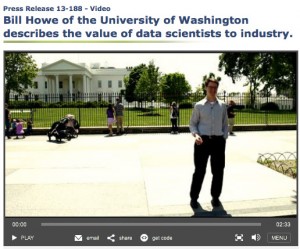
UntitledAn NSF press release in conjunction with yesterday’s White House “Big Data Partnerships” event includes a video interview with UW CSE’s Bill Howe … from last May … shot in front of the White House …

“Bill Howe of the University of Washington describes his work on big data and opportunities for collaboration among academia and industry. He discusses how classically trained data scientists can become valuable contributors to businesses.”

Watch the video here.  Read the full NSF press release here.  Learn more about UW’s efforts in data-driven discovery here. Read more →

Wall Street Journal gives a nod to Ambient Backscatter

EY-AA583_STORAG_G_20131107193335The article is on “better batteries,” but it notes:  “Researchers at University of Washington recently published a paper on how they used “ambient backscatter” from cellphone towers and other sources of energy to power a device with no battery at all.”

Read more here.  Learn about ambient backscatter here. Read more →

« Newer PostsOlder Posts »