UW CSE alumni events at Google Kirkland, Google Seattle

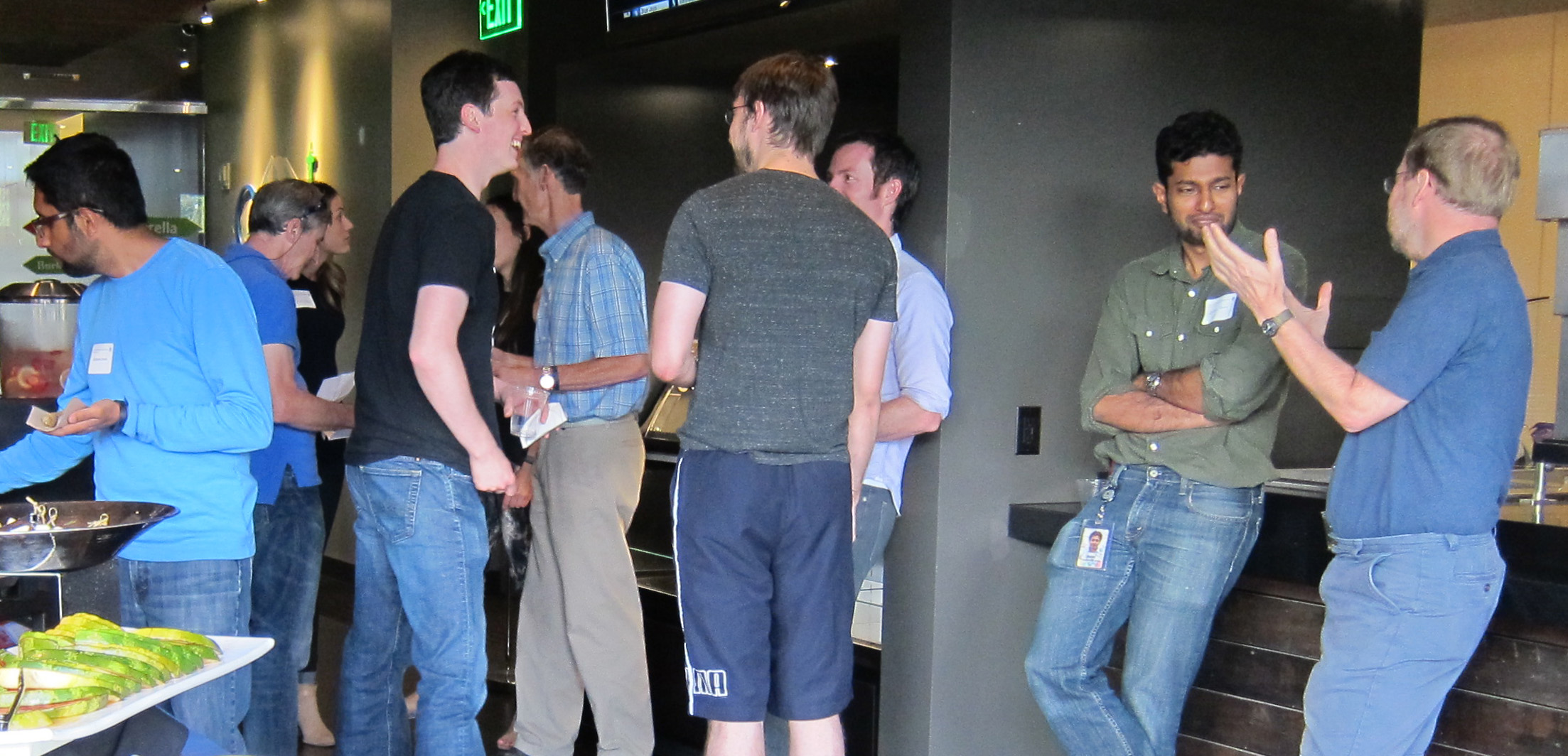
IMG_0405We hold alumni events annually at the companies in Seattle and the Bay Area that employ significant numbers of our alums. On August 12 we were at Google’s Kirkland WA engineering office; on August 13 we were at Google’s Seattle engineering office. Google has close to 2,000 engineers in these offices, growing to 3,000 – including lots of our alums. It’s great to re-connect!

Another recent post related to UW CSE alums at Google is here.WP_20140813_18_29_35_Pro Read more →

Fracking in Pittsburgh: Will CMU’s Gates & Hillman Centers be next?

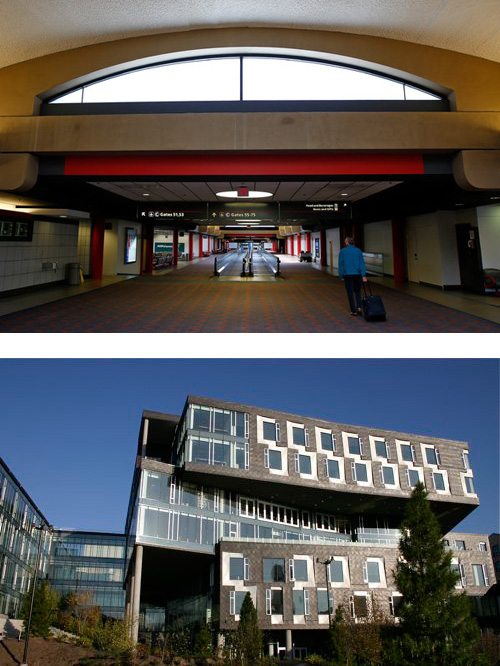
pghThe New York Times reports on a financial lifeline for Pittsburgh International Airport:

“Pittsburgh’s airport is struggling financially and mired in debt …

“For salvation, airport officials are looking down – about 6,000 feet. The quiet runways, it turns out, are sitting on enough natural gas to run the whole state of Pennsylvania for a year and a half, and this month, Consol Energy will drill its first well here to tap the gas …

“After the drilling, which uses hydraulic fracturing, or fracking, begins in earnest and the natural gas royalties kick in, the airport will receive about $20 million a year …”

We cannot help but ask … will CMU’s Gates & Hillman Centers be next? What’s the real story behind Randy Bryant’s resignation as Dean of the School of Computer Science? Read more →

Alum of the future …

Julie LetchnerQ: What’s the perfect attire for the child of two UW CSE Ph.D. alums?

A: A UW CSE t-shirt, of course!

(As Mom said on Facebook: “So very appropriate for a kid who owes his existence to UW CSE!“)

Thanks to Julie Letchner and Seth Bridges for the cute photo! Read more →

Chronicle of Higher Education on ties between academic CS programs and industry

chronicle_0The Chronicle of Higher Education reports on ever-closer ties between academia and industry in Computer Science:

“Professors and industry leaders across the computer-science landscape say that their worlds have never been closer and that a new generation of tech giants is leading the push …

“The reasons are clear. Academics need access to the data and scale that only industry can generate, not to mention the money that large corporations like Google, Facebook, and Yahoo provide in an age of dwindling federal research dollars. Students need to interact with the companies that will eventually employ a growing number of them. Corporations need a line to the talent and ideas percolating inside academe …

“The University of Washington is so gung ho about forging industry relations that it encourages faculty to leave the department for leadership roles at top companies. Ed Lazowska, a former chair of Washington’s computer-science and engineering department and the founding director of its Microsoft-sponsored eScience Institute, says the university nudged one professor to become the founding director of Google Seattle and another to help establish the nearby Allen Institute for Artificial Intelligence. In both cases, Mr. Lazowska says, the moves ensured ‘tight relations.’

“Sometimes the benefits are more direct. When Steven Seitz, a professor in the department of computer science and engineering, took a two-year leave to start a computer-vision group at Google Seattle in 2010, Google reciprocated with a $1-million gift to keep his research active, according to Mr. Lazowska. Mr. Seitz now splits his time 50-50 between the university and Google, creating what Mr. Lazowska described in an email as ‘a HUGE WIN in absolutely every way.’ …

“‘America is the world leader in information technology because of a complex interplay involving the industry, university, and government sectors,’ Mr. Lazowska wrote by email. ‘It is a flourishing interplay that needs to be amplified.'”

Close friends of CSE including Andy Bernat (Computing Research Association), Mike Franklin (Berkeley), Matt Welsh (Google), Ron Brachman (Yahoo), Fred Schneider (Cornell), and Alfred Spector (Google) also are quoted.

Read the article here. Read more →

CSE’s Ryan Drapeau featured in Google Student Blog

Screen Shot 2014-08-12 at 10.52.04 AM

Ryan Drapeau (second from right) and his team head to a meeting

Google’s Student Blog – news and updates especially for students – has a feature article today on UW CSE bachelors student Ryan Drapeau, who’s interning at Google Mountain View this summer along with many of his UW CSE classmates. A few excerpts:

Can you provide us with a high-level description of your summer project?
I work on the Accessibility Engineering team in Google Research in Mountain View, CA. As a team, we build innovative products and solutions to help make the world’s information universally accessible to everyone. We ensure Google’s technologies are accessible in order to empower people with disabilities to be socially engaged, productive, and independent.

We all know Googlers and interns love the food and the other benefits. Outside of some of the well-known perks, what’s your favorite part about working at Google?
The people. I’m constantly surrounded by people that are smarter than me and I think that is important. It creates an atmosphere filled with learning and opportunities for improvement. There is an incredible amount of knowledge here and plenty more waiting to be discovered. To be able to be a part of that as an intern is a wonderful experience.

Screen Shot 2014-08-12 at 11.13.04 AM

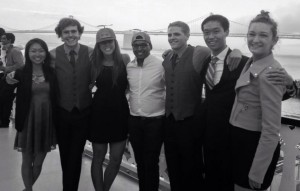
Among the UW CSE interns at Google MTV this summer are (l to r) Vivian Yu, Ryan Drapeau, Karolina Pyszkiewicz, Karan Goel, Aaron Nech, Eric Zeng, and Krista Holden – photographed on the Intern Boat Cruise

Read the entire interview here.

And a few statistics on UW CSE + Google:

  • In the past two years, UW has sent 74 permanent employees and 93 interns to Google, 85% of them from CSE.
  • Google hires graduate students from UW CSE in numbers nearly equal to undergraduates – for example, 19 Ph.D. alums in the past 5 years.
  • 18 UW CSE students have received Google Graduate Fellowships or Google Anita Borg Memorial Scholarships.
  • 20 UW CSE faculty members have had Google research support in the past few years.
  • Picasa Face Movie, Open Data Kit, and the process structure of the Chrome browser are examples of interactions between UW CSE and Google that have made it out into the world.

And we equally value our relationships with Amazon, Microsoft, and many other companies that are helping to change the face of Seattle and the world! Read more →

CSE alum startup Parenthoods in TechCrunch

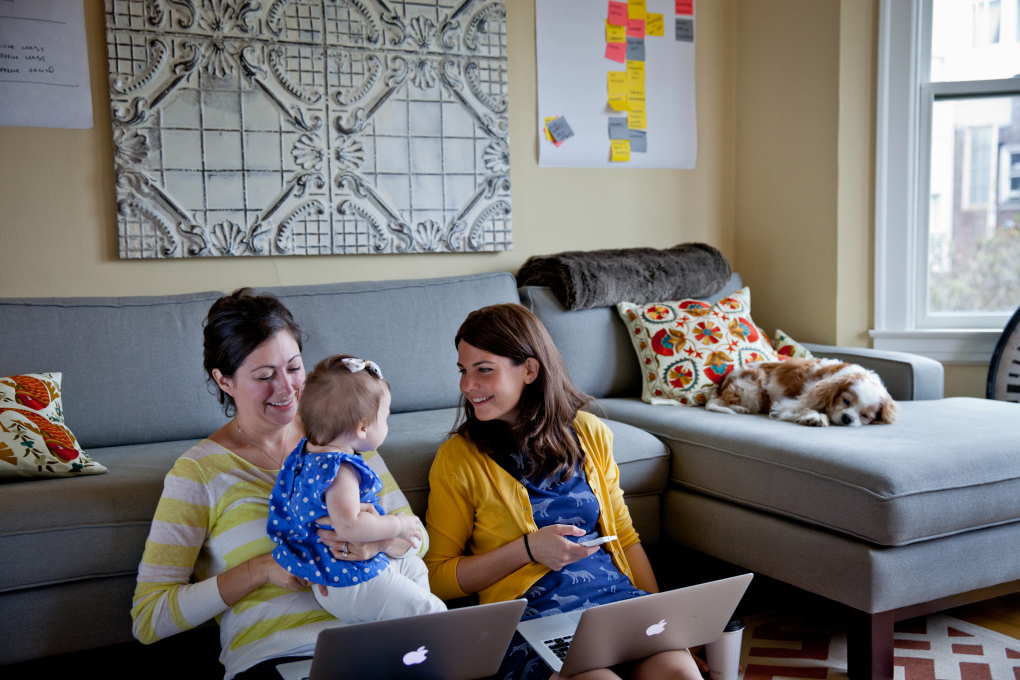
mg_1224-editA great article in today’s TechCrunch on Parenthoods, a new Y Combinator-backed mobile platform created by alums Siobhan Quinn and Jeni Axline:

“Becoming a parent is an amazing, life-changing experience, but it can also be one that’s isolating and lonely – especially if your pre-baby social activities involved spur-of-the moment invites, happy hours, and nights out on the town. Parenthoods, a new Y Combinator-backed mobile platform, wants to help with the social isolation parenthood can bring by offering a community for local moms and dads where they can connect with others like them right from their mobile phone.

“The company was founded by Siobhan Quinn, a former Foursquare and Google product manager, and Jeni Axline, previously a Director of Production at Say Media. The two are longtime friends who first met at University of Washington, before relocating to San Francisco to work in the tech industry …

“The idea for the startup was inspired – like many ideas are – by a personal experience: Axline became a mom herself. ‘Being home alone all day, you kind of want to pull your hair out,’ she says …”

Read the TechCrunch post here. Check out Parenthoods here. Read more →

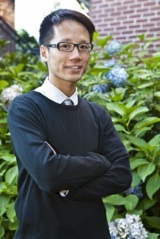
UW CSE Ph.D. alum Noah Snavely wins 2014 SIGGRAPH Significant New Researcher Award

snavelyCongratulations once again to UW CSE Ph.D. alum Noah Snavely, who on Monday will receive the 2014 SIGGRAPH Significant New Researcher Award, the top award for young researchers in the computer graphics field.

Noah is a faculty member in the Computer Science Department at Cornell University, working in the Cornell Graphics and Vision Group. (He is currently on leave at Google, which acquired a startup that he founded.) His research interests are in computer vision and computer graphics, in particular in recovering 3D structure from large community photo collections for use in graphics and visualization. His Ph.D. work at UW, co-supervised by Steve Seitz and Rick Szeliski, formed the computer vision technology behind Microsoft’s ground-breaking Photosynth offering.

Noah has previously been recognized with an NSF PECASE Award, an NSF CAREER Award, a Microsoft New Faculty Fellowship, an Alfred P. Sloan Research Fellowship, and an MIT Technology Review TR35 Award. Whew!

The SIGGRAPH Significant New Researcher Award is familiar ground for UW CSE faculty and alums: Ph.D. alum Karen Liu received it in 2012, and faculty member Zoran Popovic received it in 2004. Ditto the SIGGRAPH Computer Graphics Achievement Award (for senior researchers): affiliate professor Rick Szeliski received it in 2011, Ph.D. alum Hughes Hoppe received it in 2004, faculty member David Salesin received it in 2000, faculty member Tony DeRose received it in 1999, affiliate professor Michael Cohen received it in 1998, and Ph.D. alum Loren Carpenter received it in 1985.

Congratulations to Noah, and to all the members – faculty and students, past present and future – of UW CSE’s extraordinary computer graphics, vision, animation, and game science group. Read more →

No-power Wi-Fi connectivity could fuel Internet of Things reality

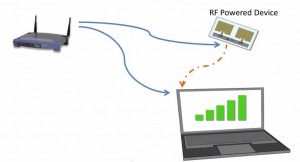
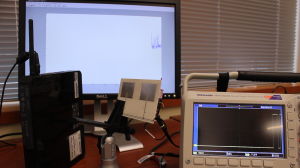
Infrastructure-300x162UW News reports on UW’s WiFi Backscatter technology:

“Imagine a world in which your wristwatch or other wearable device communicates directly with your online profiles, storing information about your daily activities where you can best access it – all without requiring batteries. Or, battery-free sensors embedded around your home could track minute-by-minute temperature changes and send that information to your thermostat to help conserve energy …

“Now, University of Washington engineers have designed a new communication system that uses radio frequency signals as a power source and reuses existing Wi-Fi infrastructure to provide Internet connectivity to these devices. Called Wi-Fi Backscatter, this technology is the first that can connect battery-free devices to Wi-Fi infrastructure.”

Read the UW News release here. Read a related article in MIT Technology Review here. Visit the project website here.

Pickups: daijiworld.com, Hands on Today, ZDNetBetaNews, many others. Read more →

Alvin Cheung joins the UW CSE faculty

PhDFellow_2013_56_Alvin-CheungAlvin Cheung, a researcher in databases whose work integrates techniques from programming languages and systems, will be joining UW CSE as a faculty member this coming year.

Alvin’s research focuses on co-optimizing data-intensive applications by examining the database and the runtime system and environment together, which can enable order-of-magnitude speedups in applications. For example, his paper demonstrating how to convert application functions written as imperative code into SQL queries, so that they can be optimized by the data management system, received a best paper award from the Conference on Innovative Data Systems Research (CIDR), while his paper describing the programming language methods used to achieve that result was a PLDI best paper nominee.

Alvin is the recipient of an Intel Ph.D. Fellowship and an NSF Graduate Fellowship. He holds B.S. and M.S. degrees in Electrical Engineering from Stanford University, and will receive his Ph.D. in Computer Science from MIT this fall.

Welcome Alvin!

Read about other new faculty who will be joining us: Noah Smith here; Emina Torlak and Xi Wang here; Yejin Choi and Franzi Roesner here. Read more →

UW’s “WiFi Backscatter” featured in MIT Technology Review

WiFi_BackscatterMIT Technology Review has a super article on research by professors Shyam Gollakota, Josh Smith, and David Wetherall and graduate students Bryce Kellogg and Aaron Parks:

“Engineers have worked for decades on ways to generate power by harvesting radio signals from the air, a ubiquitous resource thanks to radio, TV, and cellular network transmitters. But although enough energy can be collected that way to run low-powered circuits, the power required to actively transmit data is significantly higher. Harvesting ambient radio waves can collect on the order of tens of microwatts of power. But sending data over Wi-Fi requires at least tens of thousands of times more power—hundreds of milliwatts at best and typically around one watt of power, says Gollakota.

“The Washington researchers got around that challenge by finding a way to have the devices communicate without having to actively transmit. Their devices send messages by scattering signals from other sources—they recycle existing radio waves instead of expending energy to generate their own.”

Read the MIT Technology Review article here.  Learn more about the WiFi Backscatter project here.

UW News press release here. Read more →

« Newer PostsOlder Posts »