Allen School professors Tadayoshi Kohno and Rajesh Rao named IEEE Fellows for pioneering new directions in computing research

Allen School professor Tadayoshi Kohno has devoted his career to advancing security, privacy and safety in multiple industries, from cars to cardiac defibrillators, while also advancing thoughtful and inclusive approaches to technology design. Meanwhile, his colleague Rajesh Rao contributed to the progress of brain-computer interfaces from science fiction to actual science by demonstrating their very real potential to help people with neurological injury or disease. What they both have in common is the honor of being named a 2023 IEEE Fellow by the world’s largest technical professional association focused on advancing technology to benefit humankind.

Tadayoshi Kohno: Putting the brakes on security and privacy threats
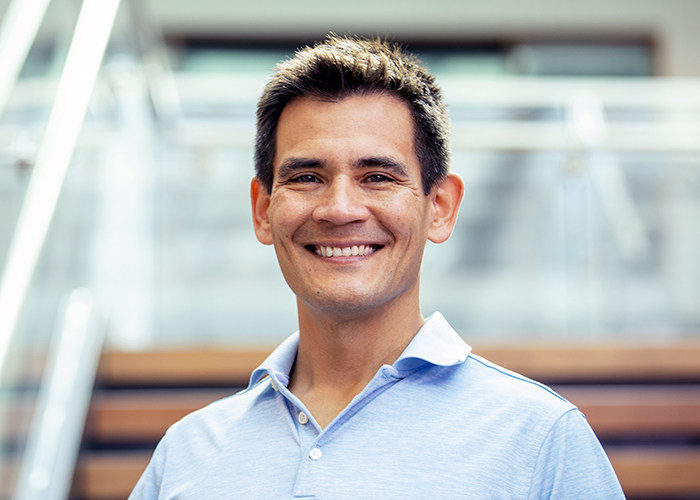
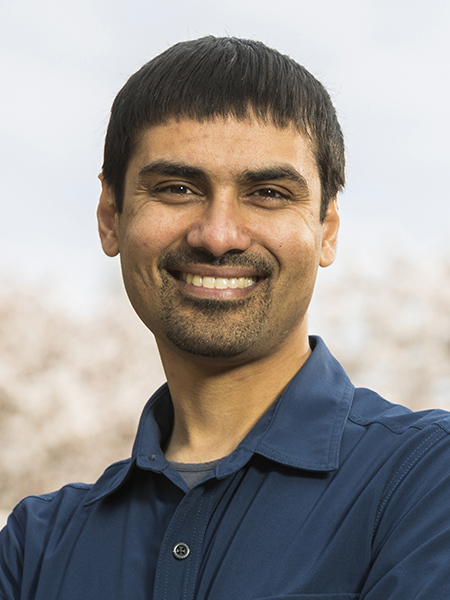
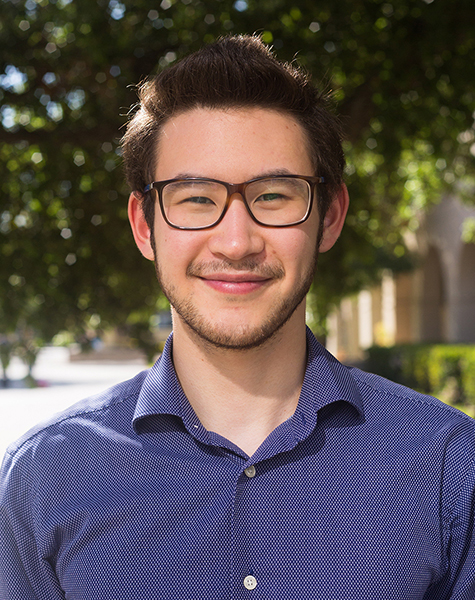
Portrait of a smiling Tadayoshi Kohno wearing a light blue polo shirt standing on warm-toned wooden stairs with metal and glass railings
IEEE Fellow Tadayoshi Kohno’s contributions to security and privacy span multiple domains, from the automobile and medical device industries, to electronic voting and mixed reality.

IEEE honored Kohno for “contributions to cybersecurity” — an apt reference to Kohno’s broad influence across a variety of domains. As co-director of the Allen School’s Security and Privacy Research Lab and the UW Tech Policy Lab, Kohno has explored the technical vulnerabilities and societal implications of technologies ranging from do-it-yourself genealogy research, to online advertising, to mixed reality. 

His first foray into high-profile security research, as a Ph.D. student at the University of California San Diego, struck at the heart of democracy: security and privacy flaws in the software that powered electronic voting machines. What Kohno and his colleagues discovered shocked vendors, elections officials, and other cybersecurity experts.

“Not only could votes and voters’ privacy be compromised by insiders with direct access to the machines, but such systems were also vulnerable to exploitation by outside attackers as well,” said Kohno. “For instance, we demonstrated that a voter could cast unlimited votes undetected, and they wouldn’t require privileged access to do it.”

After he joined the University of Washington faculty, Kohno turned his attention from safeguarding the heart of democracy to an actual heart when he teamed up with other security researchers and physicians to study the security and privacy weaknesses of implantable medical devices. They found that devices such as pacemakers and cardiac defibrillators that rely on embedded computers and wireless technology to enable physicians to non-invasively monitor a patient’s condition were vulnerable to unauthorized remote interactions that could reveal sensitive health information — or even reprogram the device itself. This groundbreaking work earned Kohno and his colleagues a Test of Time Award from the IEEE Computer Society Technical Committee on Security and Privacy in 2019.

“To my knowledge, it was the first work to experimentally analyze the computer security properties of a real wireless implantable medical device,” Kohno recalled at the time, “and it served as a foundation for the entire medical device security field.”

Kohno and a group of his students subsequently embarked on a project with researchers at his alma mater that revealed the security and privacy risks of increasingly computer-dependent automobiles, and in dramatic fashion: by hacking into a car’s systems and demonstrating how it was possible to take control of its various functions.

“It took the industry by complete surprise,” Kohno said in an article published in 2020. “It was clear to us that these vulnerabilities stemmed primarily from the architecture of the modern automobile, not from design decisions made by any single manufacturer … Like so much that we encounter in the security field, this was an industry-wide issue that would require industry-wide solutions.” 

Those industry-wide solutions included manufacturers dedicating new staff and resources to the cybersecurity of their vehicles, the development of new national automotive cybersecurity standards, and creation of a new cybersecurity testing laboratory at the National Highway Transportation Safety Administration. Kohno and his colleagues have been recognized multiple times and in multiple venues for their role in these developments, including a Test of Time Award in 2020 from the IEEE Computer Society Technical Committee on Security and Privacy and a Golden Goose Award in 2021 from the American Association for the Advancement of Science. And most importantly, millions of cars — and their occupants — are safer as a result. 

Kohno has journeyed into other uncharted territory by exploring how to mitigate privacy and security concerns associated with nascent technologies, from mixed reality to genetic genealogy services. For example, he and Security and Privacy Research Lab co-director Franziska Roesner have collaborated on an extensive line of research focused on safeguarding users’ security and privacy in augmented-reality environments. The results include ShareAR, a suite of developer tools for safeguarding users’ privacy while enabling interactive features in augmented-reality environments. They also worked with partners in the UW Reality Lab to organize a summit for members of academia and industry and issue a report exploring design and regulatory considerations for ensuring the security, privacy and safety of mixed reality technologies. Separately, Kohno teamed up with colleagues in the Molecular Information Systems Lab to uncover how vulnerabilities in popular third-party genetic genealogy websites put users’ sensitive personal genetic information at risk. Members of the same team also demonstrated that DNA sequencing software could be vulnerable to malware encoded into strands of synthetic DNA, an example of the burgeoning field of cyber-biosecurity. 

Kohno’s contributions to understanding and mitigating emerging cybersecurity threats extend to autonomous vehicle algorithms, mobile devices, and the Internet of Things. Although projects exposing the hackability of cars and voting machines may capture headlines, Kohno himself is most captivated by the human element of security and privacy research — particularly as it relates to vulnerable populations. For example, he and his labmates recently analyzed the impact of electronic monitoring apps on people subjected to community supervision, also known as “e-carceration.” Their analysis focused on not only the technical concerns but also the experiences of people compelled to use the apps, from privacy concerns to false reports and other malfunctions. Other examples include projects exploring security and privacy concerns of recently arrived refugees in the United States, with a view to understanding how language barriers and cultural differences can impede the use of security best practices and make them more vulnerable to scams, and technology security practices employed by political activists in Sudan in the face of potential government censorship, surveillance, and seizure. 

“I chose to specialize in computer security and privacy because I care about people. I wanted to safeguard people against the harms that can result when computer systems are compromised,” Kohno said. “To mitigate these harms, my research agenda spans from the technical — that is, understanding the technical possibilities of adversaries as well as advancing technical approaches to defending systems — to the human, so that we also understand people’s values and needs and how they prefer to use, or not use, computing systems.”

In addition to keeping up with technical advancements that could impact privacy and security, Kohno is also keen to push the societal implications of new technologies to the forefront. To that end, he and colleagues have investigated a range of platforms and practices, from the development of design principles that would safeguard vulnerable and marginalized populations to understanding how online political advertising contributes to the spread of misinformation, to educate and support researchers and developers of these technologies. He has also attempted to highlight the ethical issues surrounding new technologies through a recent foray into speculative and science fiction writing. For example, his self-published novella “Our Reality” explores how mixed reality technologies designed with a default user in mind can have real-world consequences for people’s education, employment, access to services, and even personal safety.

“It’s important as researchers and practitioners to consider the needs and concerns of people with different experiences than our own,” Kohno said. “I took up fiction writing for the joy of it, but also because I wanted to enable educators and students to explore some of the issues raised by our research in a more accessible way. Instead of identifying how a technology might have gone wrong, I want to help people focus from the start on answering the question, ‘how do we get this right?’”

Rajesh Rao: Engineering new possibilities through brain-computer interfaces
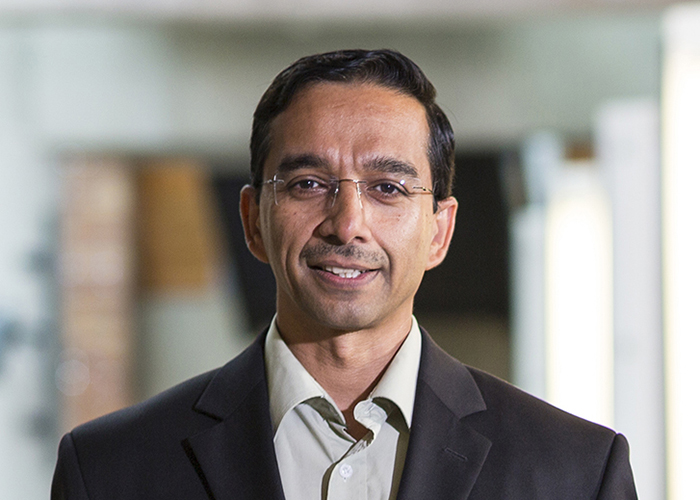
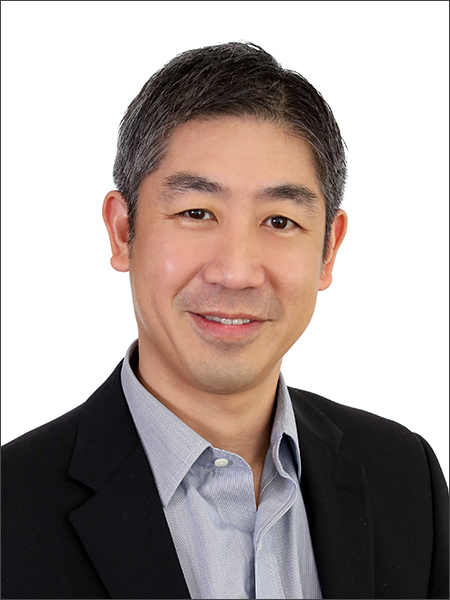
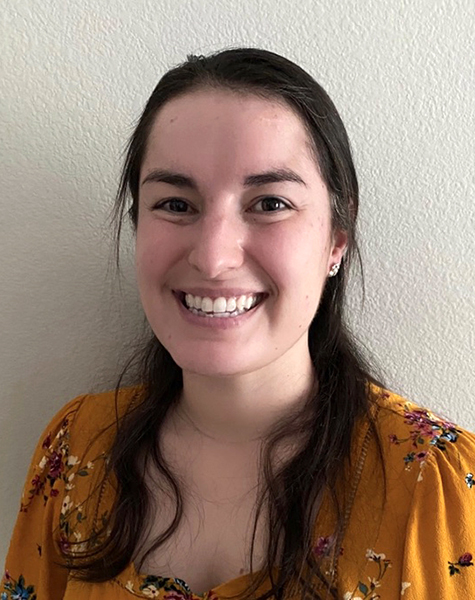
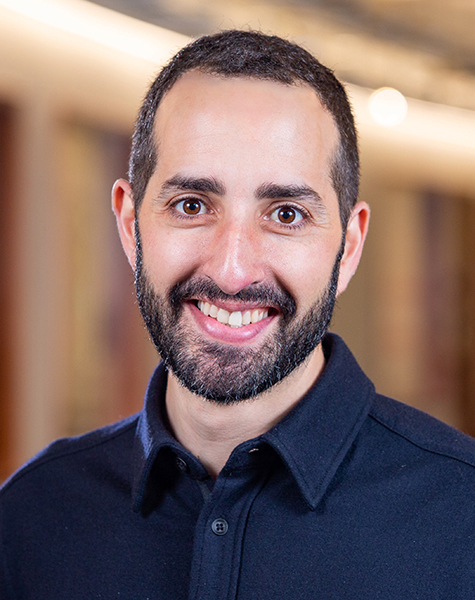
Portrait of a smiling Rajesh Rao wearing wire-rimmed eyeglasses and a dark grey suit jacket over a pale grey button-up shirt, with concrete and brick features and catwalk lighting in the Paul G. Allen Center atrium visible in the background.
IEEE Fellow Rajesh Rao is a pioneer in brain-computer interfaces and computational modeling for advancing neuroscience and artificial intelligence.

Rao was elevated to IEEE Fellow for “contributions to brain-computer interfaces and computational modeling.” As a holder of the Cherng Jia and Elizabeth Yun Hwang Professorship in the Allen School and UW Department of Electrical & Computer Engineering, director of the Neural Systems Lab and co-director of the Center for Neurotechnology, Rao has been instrumental in advancing the fields of computational neuroscience and neural engineering over the past decade while helping to bring BCIs into the mainstream.

Rao’s early research focused on the application of Bayesian modeling to understand prediction and learning in the brain. In 1999, he and his Ph.D. advisor, Dana Ballard, introduced predictive coding, a hierarchical neural network model of how the visual cortex is constantly predicting and learning a model of the world by minimizing prediction errors. As the first to explain the phenomenon known as “endstopping” — the scenario in which a neuron ceases responding to a stimulus once it has extended beyond the neuron’s classical receptive field — the duo’s work has been highly influential in both neuroscience and artificial intelligence (AI), anticipating the importance of prediction in recent AI models such as transformers. 

Rao subsequently built upon that work by developing models for attention, planning as inference, robotic imitation learning, and more. He was the first to apply approximate Bayesian inference for an arbitrary hidden Markov model in a recurrent neural network commonly used to model the cerebral cortex. Using an orientation discrimination task and a visual motion detection task, Rao demonstrated that his approach produces neural dynamics that emulate the response of decision-making neurons in the brain. He later combined Bayesian inference and the theory of partially observable Markov decision processes (POMDPs) with temporal difference learning algorithms to produce a model of decision-making under uncertainty — akin to how animals choose when to switch from information gathering to overt action to maximize future expected reward in the face of incomplete knowledge. For a well-known motion discrimination task, Rao demonstrated that his model neurons exhibited responses similar to those of the primate lateral intraparietal cortex.

“Predictive coding and Bayesian modeling of brain function are just two examples of the extremely fruitful ways in which computer science can help advance neuroscience and vice versa, leading to synergistic interactions between the two fields,” Rao said. “Another way is coupling computers directly to brains using brain-computer interfaces or BCIs.”

Leading a multidisciplinary research team at CNT with fellow Hwang Professor and co-director Chet Moritz, Rao helped develop new bi-directional BCIs — implantable devices that can both interpret brain signals and use this information to stimulate areas of the brain and spinal cord to help people regain function lost due to spinal cord injury, stroke, or other neurological conditions. Such devices also have the potential to promote neuroplasticity in regions of the brain or spinal cord that have been damaged — essentially assisting the networks of neurons in these regions to repair themselves.

“When Christopher Reeve sustained a spinal cord injury due to a fall from his horse, his brain circuits were still intact and able to form the intention to move, but unfortunately the injury prevented that intention from being conveyed to the spinal cord,” Rao explained to UW News in 2015, citing the original Superman actor’s paralysis as an example of how those connections are severed. “Our implantable devices aim to bridge such lost connections by decoding brain signals and stimulating the appropriate part of the spinal cord to enable the person to move again.”

In addition to advancing technologies that would restore the connections between an individual’s brain and their limbs, Rao has also explored techniques for creating new connections between multiple people’s brains. In 2013, he and another UW colleague, Andrea Stocco, a professor in the UW Department of Psychology and researcher in the Institute for Learning & Brain Sciences, offered the first demonstration of human brain-to-brain communication over the internet. During the experiment, Rao directed Stocco via brain signals to move his finger to hit a target on a video game from the other side of the UW campus. Their method of remote communication involved a non-invasive combination of electroencephalography, which recorded Rao’s silent instruction, and transcranial magnetic stimulation, which transmitted that instruction to Stocco’s brain.

A year after achieving this milestone, the researchers replicated their demonstration — this time involving multiple pairs of participants. Alluding to the Vulcan mind-meld from Star Trek and the premise of the movie Avatar, “we realized that we had all the equipment we needed to build a rudimentary version of this technology,” the duo wrote in Scientific American. “Along with other scientists, we are now learning to bypass traditional modes of communication and swap thoughts directly between brains.”

There were limitations to their initial proof of concept; it was restricted to communication between two people, and the second could only passively receive information. In 2019, Rao and his collaborators addressed that problem head-on with BrainNet, which expanded the capabilities of their brain-to-brain interface to enable a group of people to collaborate remotely to solve a task — in this case, a Tetris-like game — by both sending and receiving information.

“Humans are social beings who communicate with each other to cooperate and solve problems that none of us can solve on our own,” Rao said in a UW News release at the time. “We wanted to know if a group of people could collaborate using only their brains. That’s how we came up with the idea of BrainNet: where two people help a third person solve a task.”

In a series of experiments, participants averaged 81.25% accuracy in completing the task set for them, with the receiver learning to trust the instructions from the more reliable sender. The work pointed to the potential for humans to engage in collaborative problem-solving via a “social network” of brains.

Recently, Rao has returned his attention to his earlier, career-defining research to take advantage of new developments in the field while continuing his research in BCIs. 

“This is an exciting time to be working at the intersection of computer science and neuroscience,” said Rao. “Inspired by recent advances in AI, my group is currently working on new versions of predictive coding, called dynamic and active predictive coding, to better understand brain function while also suggesting new brain-inspired AI models. In the area of BCIs, we have proposed a new type of BCIs called brain co-processors that use artificial neural networks to interact with biological brains to restore or augment human function.”

Rao and Kohno are among four University of Washington professors elevated to the status of IEEE Fellow for 2023. They are joined by Uri Shumlak, a professor in the William E. Boeing Department of Aeronautics & Astronautics who was recognized for “research of sheared flow stabilization of the Z pinch for fusion energy,” and Yinhai Wang, a professor in the Department of Civil & Environmental Engineering who was recognized for “contributions to traffic sensing, transportation data science, and smart infrastructure systems.”

Learn more about the IEEE Fellow program here. Congratulations to Yoshi, Raj and all of the honorees! Read more →
‘It’s extremely important for future students to picture themselves in computing’: Allen School celebrates Computer Science Education Week

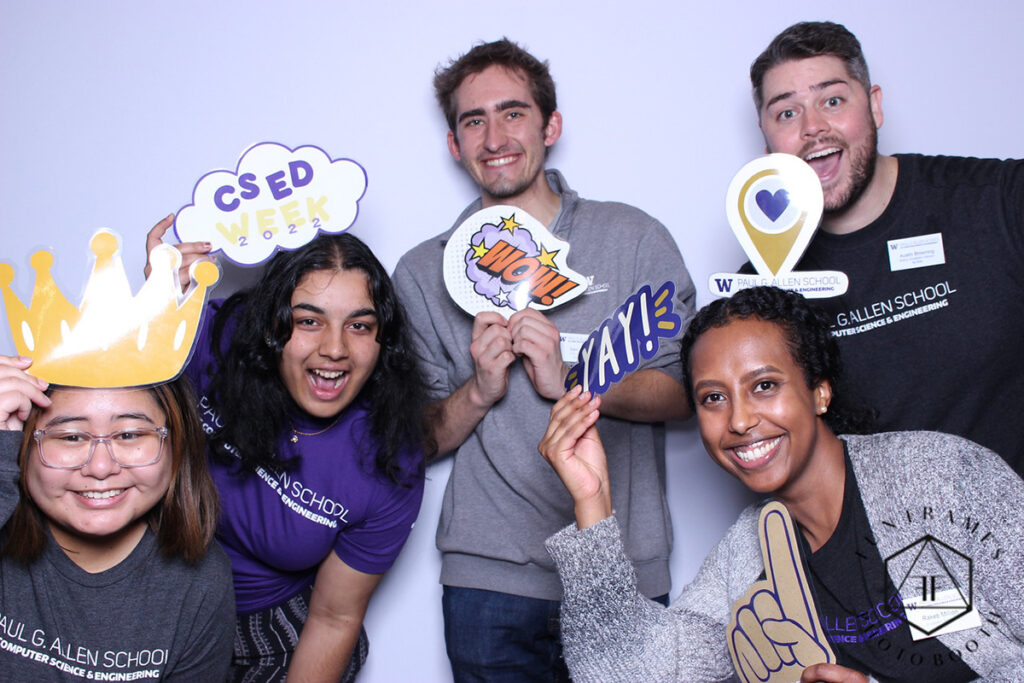
Five people, four of whom are wearing Paul G. Allen School of Computer Science & Engineering t-shirts, pose with 2D props in a photo booth, including a sign shaped like a crown, a thought cloud with the text CS Ed Week 2022, a comic book-style graphic with stars and the text WOW!, an online map-style location pin with a heart in the center and the Allen School logo underneath, a cut-out of the word YAY!, and a sign shaped like a hand with index finger pointing up in a “#1” gesture.

Each December, the Allen School invites prospective students and families to join us for a week-long celebration of Computer Science Education Week, a nationwide event that aims to inspire students, advance equity, and honor those who are contributing to the field and to society. After being compelled to go fully virtual due to the pandemic in 2020 and 2021, the school’s Diversity & Access Team was thrilled to offer a hybrid celebration this year. 

Throughout the week, prospective students and families joined Allen School researchers, staff and students for virtual sessions devoted to a range of topics, from “a day in the life” of an Allen School major, to exploratory discussions of computing’s impact on society, to research talks and demos spanning artificial intelligence, computer security, robotics, accessibility, and more.

“CS Education Week is our largest outreach event of the year,” said Assistant Director for Diversity & Access Chloe Dolese Mandeville. “We know that it’s extremely important for future students to picture themselves in computing and the Allen School before they even step foot on campus as an undergraduate. This week is an opportunity for us to provide that picture for high school students — especially those who don’t have access to computing opportunities in their schools or communities.”

To that end, in addition to offering an overview of what it’s like to be an Allen School student, the team also organized sessions devoted specifically to highlighting the experience of students from underrepresented communities and those who are the first generation in their families to pursue a bachelor’s degree. The celebration culminated in a virtual Hour of Code followed by an in-person open house in the Allen Center and Gates Center on the University of Washington’s Seattle campus, where an estimated 250 people spent the day touring the labs, participating in interactive demos, talking to current students and researchers, and experiencing firsthand what it means to be part of the Allen School and the field of computing.

“It was an incredible experience to host students and their families on campus again after three years,” said Dolese Mandeville. “We loved the energy that students and their families brought to campus — taking photos with each other, getting to know our undergraduate students, and engaging in hands-on activities. This celebration is really about welcoming more students into the computing community and the Allen School community, too.”

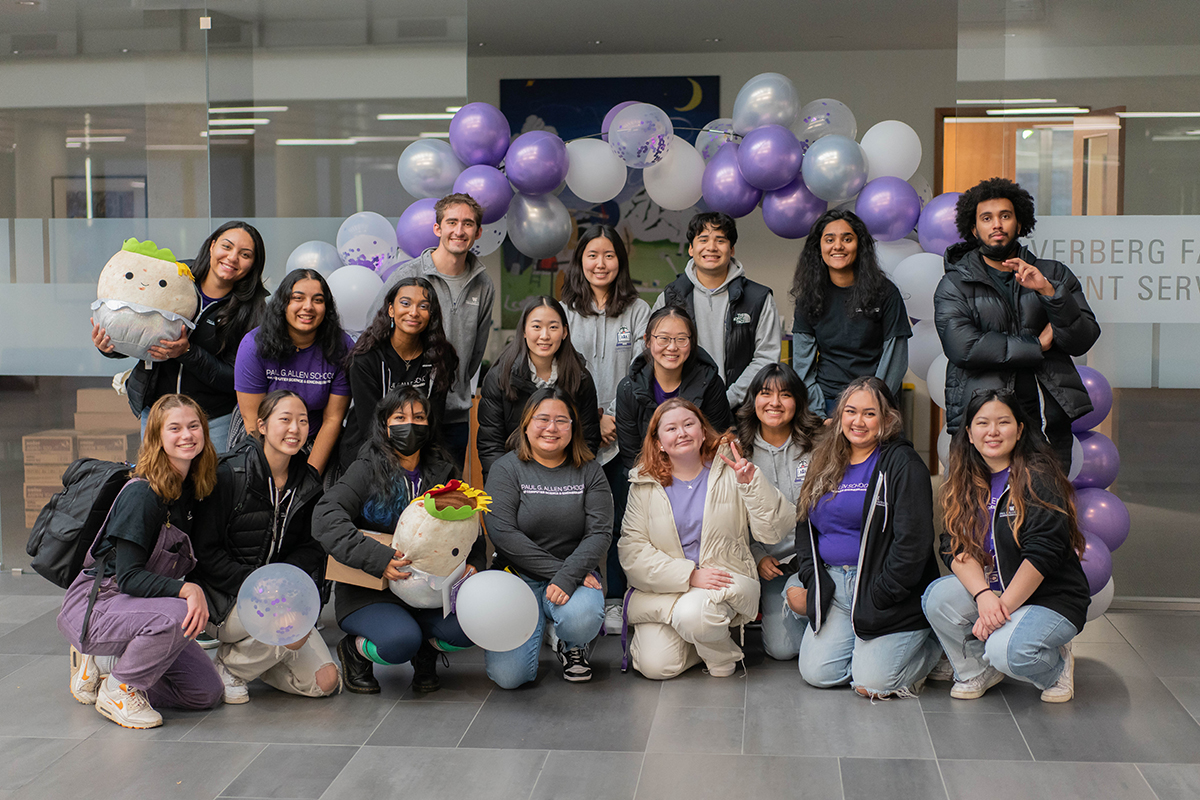
Group photo of 18 people, some of whom are wearing Allen School-branded clothing, framed by a purple, silver and white balloon arch in front of glass doors inside the Gates Center atrium. Two people are holding round white stuffed animals resembling white blobs with black eyes and felt hats, and two people are holding individual balloons.
Members of the Diversity & Access Team, including our student ambassadors and Changemakers in Computing mentors, were ready to welcome 250 students, family members and friends to the Allen School’s first open house since 2019.
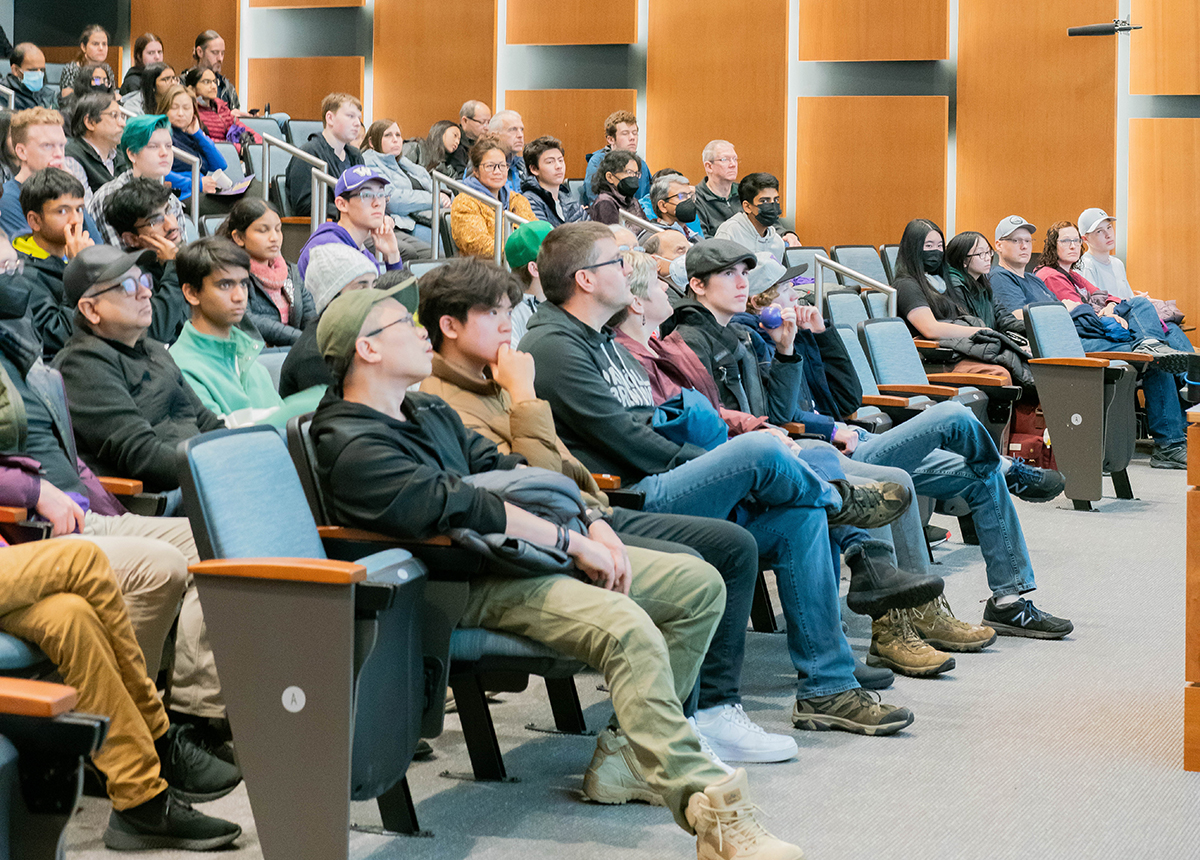
A crowd of people, a mix of teenagers and adults, in casual dress seated in rows in an auditorium viewing a presentation that appears out of frame.
Visitors assembled in the auditorium for an Allen School information session to learn about the student experience and the application process.
A conference room with tables and signage around the perimeter. People are spread out around the tables, conversing and laughing or looking at displays. A teenager wearing a black mask, purple Allen School t-shirt, grey sweatpants trimmed with three white stripes, and rain boots is walking across the room in the foreground, followed by a man wearing a black and white baseball cap, glasses, black and white plaid flannel shirt and jeans, carrying multiple coats.
Students and their families explore the Gates Center.
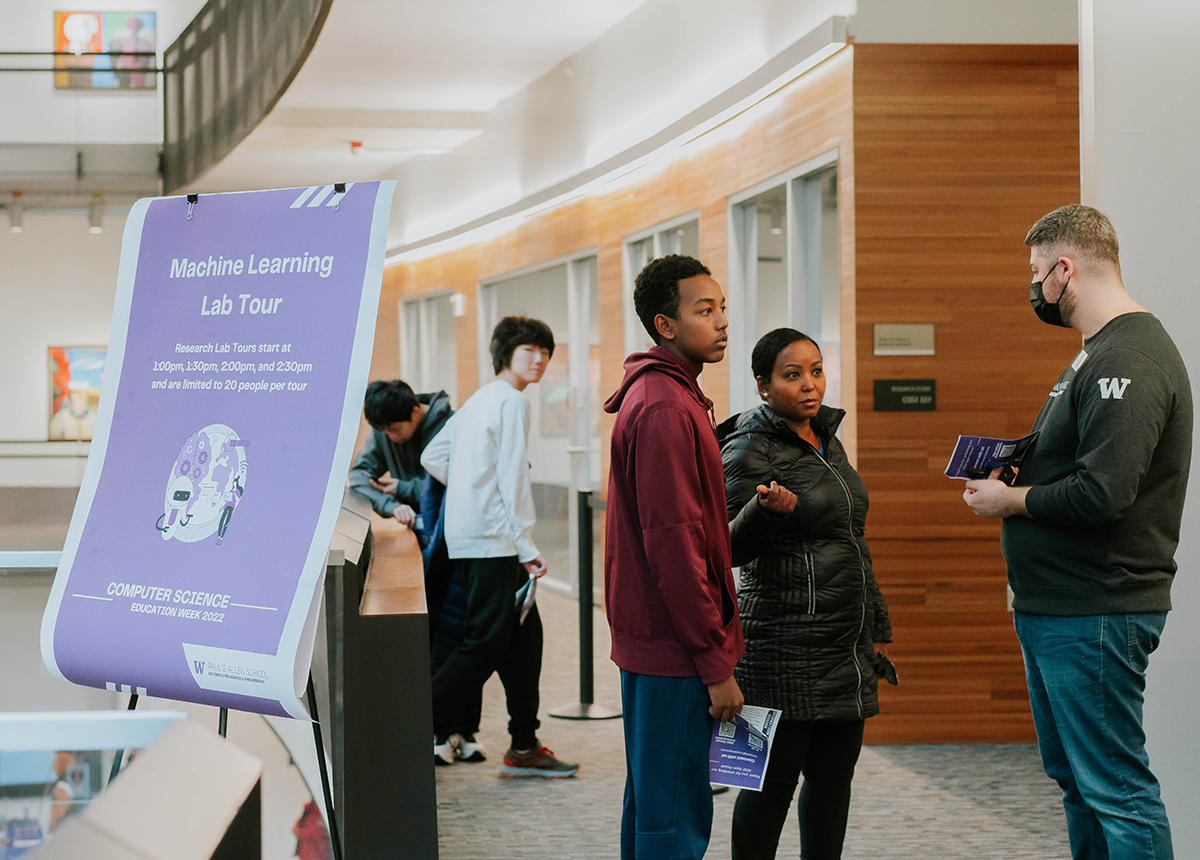
Two people that appear to be mother and son stop to ask a question of a third person wearing a black Allen School shirt and jeans and black mask. The woman is wearing a black puffer coat and jeans; the teenager is wearing a maroon sweatshirt and blue jeans. Two people who appear to be students dressed in sweatshirts, baggy pants and sneakers, are visible in the background. There is a sign with text “Machine Learning Lab Tour, a list of tour start times and specification that tours are limited to 20 people each, a graphic representation of computer science themes, and “Computer Science Education Week 2022”
Next stop: the Machine Learning Lab.
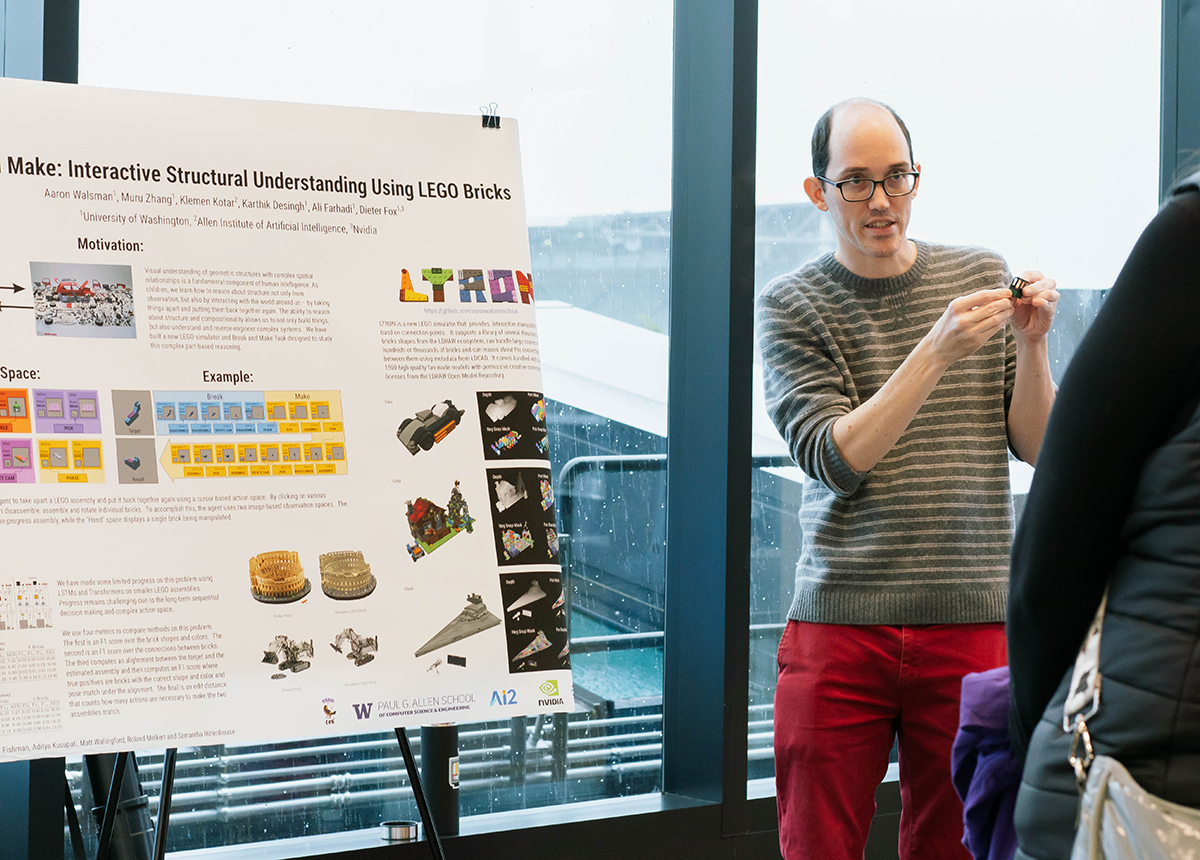
A person wearing glasses, a grey and white striped sweater, and red trousers is holding a small item, possibly a LEGO piece, in his hands and talking to a person who is positioned with their back to camera, mostly out of frame. Next to the person talking is a poster with colorful images and diagrams of various Lego building projects, with a partially visible title text: “Make: Interactive Structural Understanding Using LEGO Bricks.” The poster is in front of a large glass window overlooking the exterior of Husky Stadium in the rain.
Speaking of learning, visitors learned about a LEGO simulator that is teaching machines to reason about structures the way kids do — by taking things apart and putting them back together again. (Bonus: The bricks are virtual, so there’s no danger of accidentally stepping on one!)
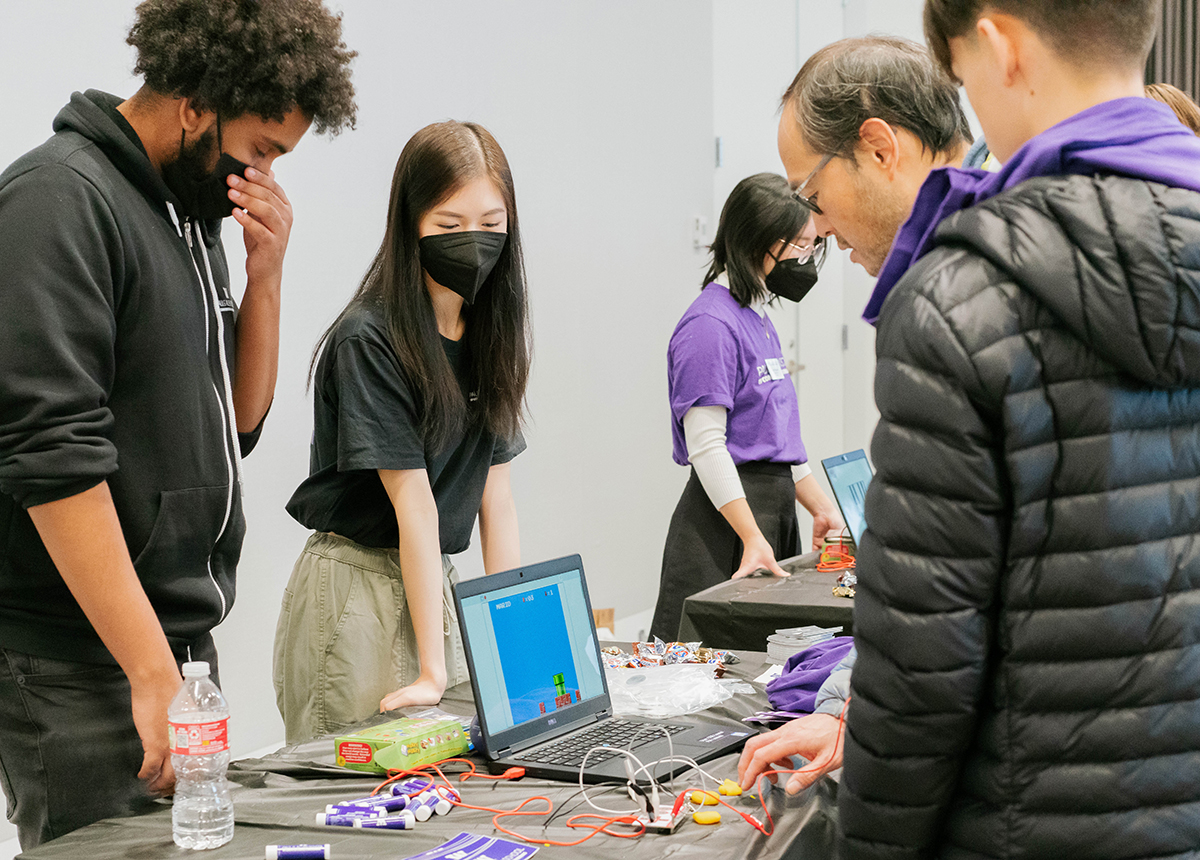
Five people stand around a demo table with a laptop and assorted wires attached to a small square device off to the side. Three people are running the demo from one side of the table; one of the two guests on the opposite side, facing the laptop, is reaching out towards the device. The laptop screen displays simple graphics suggesting some kind of video game. There are little piles of purple tubes of chapstick and stickers branded with the Allen School logo.
Tired: Viewing museum exhibits from a distance. Wired: Interacting with the exhibits at CS Education Week. Inspired: Experiencing what it’s like to be part of the Allen School community!
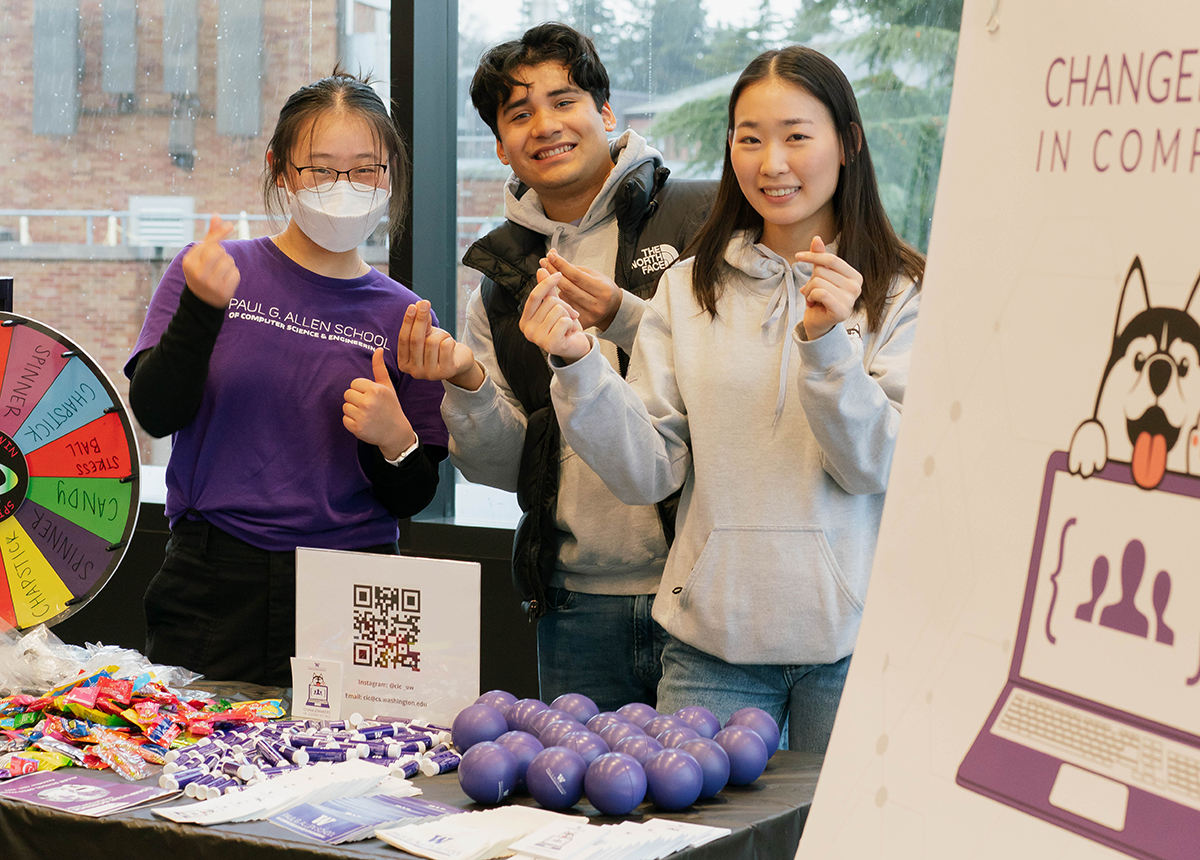
Three people, one of whom is wearing glasses, a purple Allen School t-shirt and a mask and the others wearing light grey sweatshirts, one with a North Face puffer vest on top, standing behind a table making snapping gestures with their fingers and smiling at the camera. Part of the “Changemakers in Computing” sign with a graphic of a Husky and laptop with three avatars in brackets onscreen is visible. There are piles of purple rubber balls and chapstick tubes, a selection of purple and white stickers with Allen School and Changemakers in Computing’s Husky logo, and a pile of candy behind a multi-colored game wheel that people can spin to win items on the table. A QR code in a plastic sheath is also on the table. Evergreen branches and a brick building are visible through the window in the background.
Changemakers in Computing mentors came prepared, because everyone loves swag (and candy)!
A teenage girl with long straight hair and wearing a black sweatshirt with partially visible words “The Gymnastics Connection in purple and green” stands in a line of people carrying a white coat draped over her arm, looking off to the side and smiling. The people lined up behind her are blurred and appear to be looking at the contents of display cases along the wall as they wait. There is a stanchion and ropes to indicate where the line is.
Taylor Swift concert? Nah — not to be “Mean,” but these students and their families are having “The Best Day” at CS Education Week! After finding some “Blank Space” in line at the Allen Center, they waited patiently to tour our UbiComp Lab and be “Enchanted” by some amazing research.
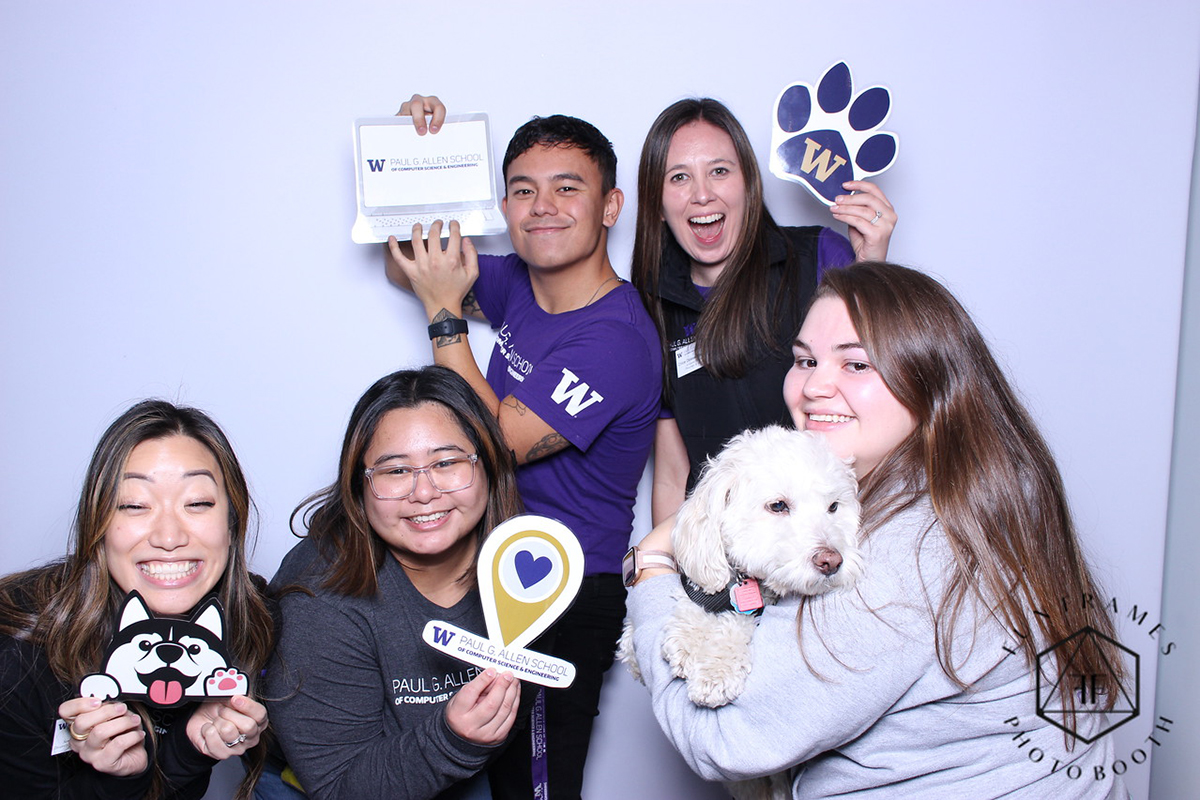
Five smiling people, one of whom is holding a dog with curly white hair and pink and brown nose, pose in a photo booth. Two of the people are wearing t-shirts with UW and Allen School logos visible. The four people without the dog are holding up 2D props, including a graphic of a Husky with pink tongue and paw pads, an online map-style location pin with a heart in the center and the Allen School logo underneath, an open laptop with the Allen School logo onscreen, and a purple dog paw with a gold “W” on the paw pad.
New album, just dropped! (Just kidding — these are members of the Allen School’s Diversity & Access Team taking over the CS Education Week photo booth. But they’re definitely rock stars in our book!)

Thanks to all of our presenters, students and visitors for making CS Education Week a tremendous success! See you next year!

Photos: Emmy Ngo Read more →

University of Washington and Microsoft study of online search activity during the pandemic offers a new window into the second-level digital divide

In the spring of 2020, schools and offices across the nation closed their doors en masse to in-person learning and working, restaurants and retail stores began extolling the virtues of curbside dining and delivery, and Zoom became a household name. In the midst of the global health emergency caused by the emergence of COVID-19, many of the services and activities people rely on as part of their daily lives — from doctors’ appointments to sessions at the gym — moved from the physical world to the digital one. 

But not everyone made the transition evenly. In a paper recently published in Nature Communications, a team of University of Washington and Microsoft researchers presented the first population-scale study of how digital engagement shifted during the pandemic and how the shift to online resources may have differed across subpopulations. Using anonymized activity logs of online search activity, the researchers examined the types of information and assistance that people sought in the days of remote work, telehealth, and virtual education tied to a range of environmental and socioeconomic factors. Their findings offer new insights into the disparities in how people access critical resources against the backdrop of a public health emergency and economic upheaval. 

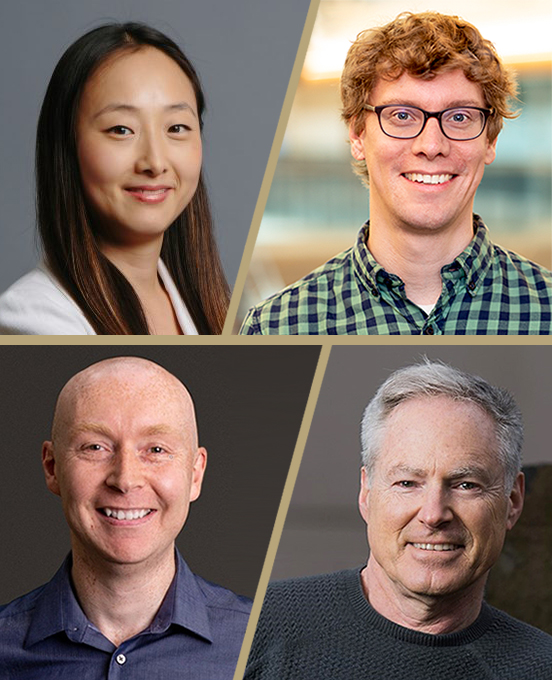
Collage of author headshots divided by diagonal gold lines. Jina Suh is wearing a white v-neck top against a gray background; Tim Althoff is wearing glasses and a green and blue plaid button-down shirt with a building atrium blurred in the background; Eric Horvitz is wearing a dark gray sweater with a darkened room blurred in the background; Ryen White is wearing a blue button-down shirt against a dark gray background
The study co-authors, clockwise from top left: Jina Suh, Tim Althoff, Eric Horvitz and Ryen White

“Prior research has shown that there are disparities in how people engage with digital resources, even when they have internet access. That ‘second-level digital divide’ has real-world implications for people’s health and well-being,” explained lead author Jina Suh, a Ph.D. student in the Allen School and principal researcher at Microsoft Research. “By steering so much of daily life online, the pandemic amplified or exacerbated those disparities and raised important questions about potential barriers to people obtaining essential information and support that they need.” 

Suh and her co-authors — Allen School professor Tim Althoff and affiliate professors Eric Horvitz, chief scientific officer at Microsoft, and Ryen White, general manager at Microsoft Research — examined how that second-level digital divide changed during the pandemic by analyzing approximately 57 billion anonymized Bing search engine interactions across the U.S. between 2019 and 2020. Their analysis covered 25,150 ZIP codes representing 97% of the nation’s total population and leveraged the social determinants of health (SDoH), a framework from the U.S. Department of Health and Human Services setting out the conditions known to affect outcomes related to health and quality of life.

To gain a holistic view of how online behavior relates to offline needs, the researchers classified search interactions according to elements of SDoH, spanning health, education, economic assistance, and food access. For each of the identified elements, they compared the change in online search activity between two corresponding ZIP code groups for a set of census variables — race, population density, educational attainment, employment, health insurance and internet access — to capture how the subpopulations leveraged online resources differently during the pandemic. Their analysis followed a longitudinal before-after observational method with a matching-based approach to isolate the influences of different census variables on the observed changes. The team first calculated the percentage change in digital engagement for each search category from before and during the pandemic within each ZIP code group; next, they measured the percentage-point difference in those results to gauge the disparities between the two matched groups. 

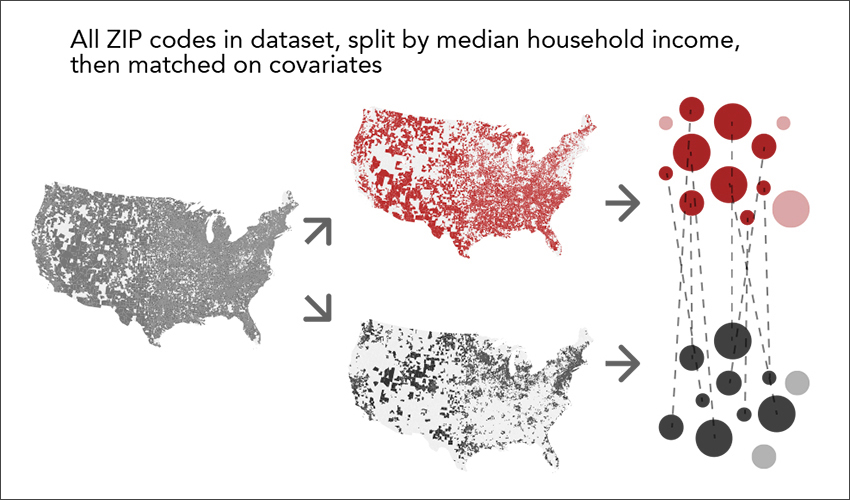
Graphic showing location of ZIP codes on a U.S. map, then divided into two datasets, signified by red and black, on separate U.S. maps, with different sized circles in a group of red and a group of black, with each circle connected to the opposite colored circle of corresponding size via dotted lines to signify similarity. Graphic title is "All ZIP codes in dataset, split by median household income, then matched on covariates"
The researchers explored changes in online behavior related to offline needs by comparing ZIP code groups based on a set of census variables. They created matched pairings of ZIP codes for each variable — for example, median household income — according to their similarity in other variables to control for confounding.

“Our methodology offers a level of detail and scale that can’t be achieved by conventional approaches to disparity research that rely on surveys or interviews,” Suh said. “It also allows us to account for normal seasonal variations and control for confounding factors in a way that traditional survey approaches cannot.” 

That control of confounding factors is important; since many of the socioeconomic and racial variables are correlated, it can be difficult to pinpoint which factors may be contributing to variances in digital engagement and design effective interventions. To sidestep potential confounding effects, Suh and her colleagues created matched pairings of ZIP codes for each census variable according to their similarity in other census variables. For example, to compare the magnitude of change on a particular SDoH element between ZIP codes above or below the $55,000 median household income, they matched a single high-income ZIP code to a single low-income ZIP code having a similar profile in the remaining variables. They repeated this step for all of the ZIP codes and each of the variables in turn, discarding any ZIP codes that could not be matched before performing their population-level analysis. 

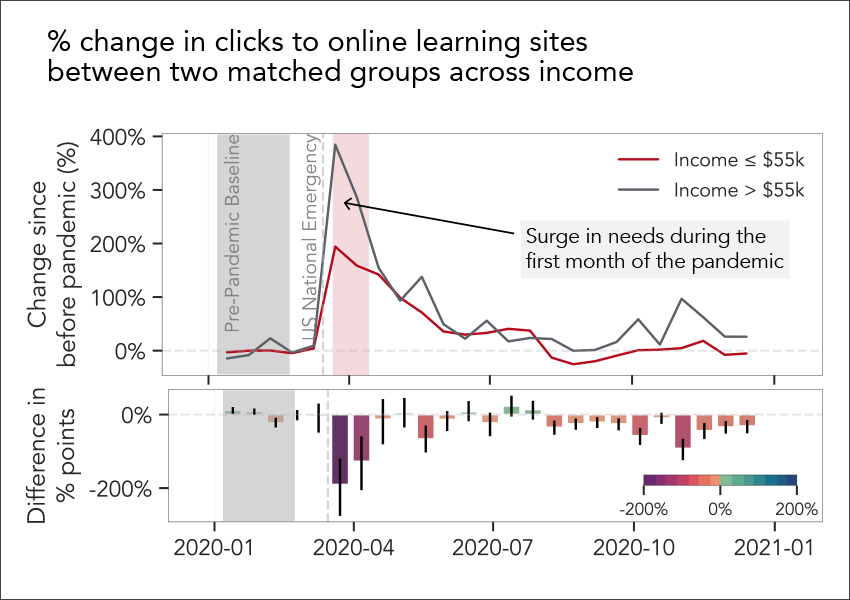
Two graphs positioned one above the other. The top graph is a line graph showing "Change since before pandemic (%)" with the x axis showing year/month between 2020-01 and 2021-01 and the y axis showing percentage between 0% and 400%. The graph shows two sharp spikes in 2020-04: a grey line signifiying income greater than $55k nearing 400%, and a red line signifying income less than or equal to $55k nearing 200%, with text "Surge in needs during the first month of the pandemic". The bottom graph follows the same x axis but displays in vertical bars the "Difference in % points" between the two income groups on a y axis scale of 0% to -200%. Graphic title: "% change in clicks to online learning sites between two matched groups across income"
There was a surge in the need for online learning during the first month of the pandemic, but the extent to which people leveraged these resources varied significantly between high- and low-income ZIP codes.

As anticipated, that analysis revealed some stark differences. Focusing on the aforementioned income variable, in the first four weeks after the pandemic was declared, the researchers found a significant gap — more than 200 percentage points — in the extent to which people ramped up their search for online health information between high-income ZIP codes versus low-income ZIP codes. Their analysis also revealed a difference of roughly 100 percentage points between ZIP codes with a higher than average proportion of Hispanic residents compared to those having a lower proportion of Hispanic residents. They saw smaller, but still measurable, disparities in ZIP codes with greater population density (a proxy for urban areas), higher rate of unemployment, and a higher proportion of Black residents compared to corresponding areas with lower density, lower unemployment, and a lower proportion of Black residents.  

Another outgrowth of the pandemic was a rapid pivot to online learning. Here again, the researchers found that not everyone leveraged relevant digital resources to the same extent. In particular, while clicks to online learning sites in low-income ZIP codes increased by around 200% compared to pre-pandemic times, that figure was closer to 400% in high-income ZIP codes. Similar, though not necessarily as dramatic, differences were noted between ZIP codes with higher proportions of Black or Hispanic residents or greater population density and their counterparts during the same period — and that’s with controlling for internet access. 

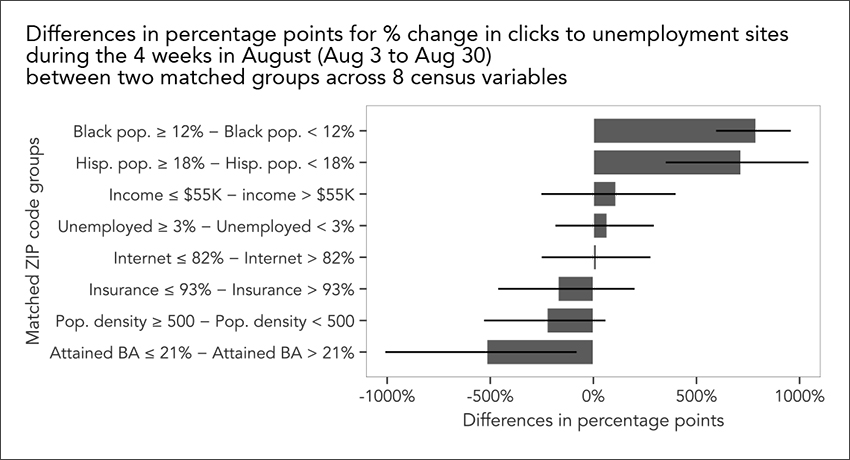
Horizontal bar graph showing differences in percentage points of change in digital engagement on a scale of -1000% to 1000% for matched zip code groups across eight census variables: Black pop. greater than/equal to 12% and less than 12%; Hisp. population greater than/equal to 18% and less than 18%; Income less than/equal to $55k and greater than $55k: Unemployed greater than/equal to 3% and less than 3%; Internet less than/equal to 82% and greater than 82%; Insurance less than/equal to 93% and greater than 93%; Pop. density greater than/equal to 500 and less than 500; and Attained BA less than/equal to 21% and greater than 21%. The first two bars stretch beyond 500%; the next two appear to be below 100%; Internet is virtually at 0; the next three are negative, with the final variable exceeding -500%. Graphic title: "Differences in percentage points for % change in clicks to unemployment sites during the 4 weeks in August (Aug 3 to Aug 30) between two matched groups across 8 census variables"
The researchers measured a significantly larger surge in visits to unemployment-related websites in August 2020 in ZIP code groups with higher proportions of Black residents and Hispanic residents compared to their counterpart groups.

On the other hand, a greater uptick in online information-seeking was not necessarily a positive indicator of a community’s experience in weathering pandemic-induced impacts. In ZIP codes with higher proportions of Black residents, for instance, the spike in search queries for unemployment information in spring 2020 was nearly three times that found in ZIP codes having a below-average proportion of Black residents. That August, there was another surge, this time in clicks on unemployment websites, in ZIP codes with higher proportions of Black residents and Hispanic residents, respectively.  

“The summer increase in unemployment site visits coincided with the expiration of federal supplemental unemployment insurance benefits. We saw an overall surge in interest online that was not reflected in the submitted claims data,” Suh noted. “The disparities we see online can help shine a light on economic disparities offline.” 

As Suh and her co-authors point out in the paper, many of the disparities they see online can have downstream impacts on health and educational outcomes and economic opportunity — impacts that are likely to reverberate for individuals and communities long after stay-at-home orders and pandemic assistance programs have ended. 

“We know that certain subpopulations have experienced a higher risk of COVID infection and mortality and a heavier socioeconomic burden as a result of the pandemic,” said Althoff. “Thanks to our ability to analyze billions of queries by millions of people, we have evidence of how some of those same subpopulations experienced the shift to digital resources differently, as well. 

“There’s a saying, ‘you can’t manage what you can’t measure,’” he continued. “Our study illustrates the importance of measuring digital engagement aligned with indicators of health and well-being at the subpopulation level, and provides a blueprint for continuously monitoring changes in that engagement in real time. Only then will we manage to begin addressing the disparities and improve outcomes for people and society as a whole.” 

Read the Nature Communications paper here and the related Microsoft Research Focus article here. Read more →

Family matters: For the Winston siblings, the intersection of software engineering and neuroscience research is relatively inspiring at the UW

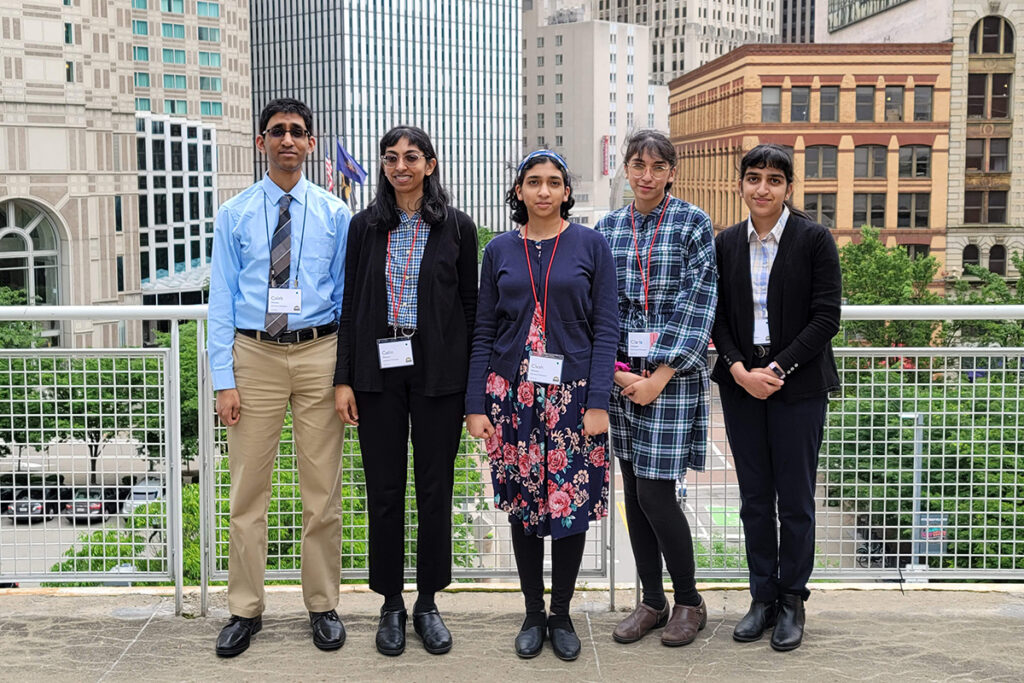
Group photo of the five Winston siblings wearing business attire and name tags on lanyards around their necks, standing side-by-side in front of a metal railing with buildings of various styles of stone, metal and glass in downtown Pittsburgh in the background.
The Winston siblings pose for a family photo in downtown Pitttsburgh during the ICSE 2022 conference (from left): Caleb, Cailin, Cleah, Claris and Chloe

Back in May, a group of five student researchers advised by Allen School professors Rajesh Rao and René Just disembarked in Pittsburgh, Pennsylvania for the 44th International Conference on Software Engineering. They had traveled to ICSE 2022 from Seattle to present a paper describing a methodology they had developed at the University of Washington for detecting and repairing faults in brain-computer interfaces (BCIs), which are designed to enhance or restore sensorimotor function in people with neurological disorders or spinal cord injury. 

The paper, “Repairing brain-computer interfaces with fault-based data acquisition,” was noteworthy for its contributions toward ensuring that BCIs, which decode or encode neural signals to mediate the connection between the brain and assistive devices, are safe and robust for everyday use. The team was noteworthy for their connection with each other: All five student co-authors — Cailin, twins Caleb and Chloe, Claris, and Cleah — are siblings. And all five were, or were about to become, Allen School majors.

The research that prompted the ICSE paper had its roots in a project initiated by four of the siblings during Rao’s neural engineering capstone course last year. While Rao appreciated the novelty of so many siblings working on the same project, he was most appreciative of their ambition and ingenuity in tackling an open problem in neural software engineering with the potential to significantly improve people’s quality of life.

“The field of BCIs is still in its early stages, with most researchers focusing on proof-of-concept demonstrations,” said Rao, co-director of the Center for Neurotechnology and the Cherng Jia and Elizabeth Yun Hwang Professor in the Allen School and the UW Department of Electrical & Computer Engineering. “I was therefore surprised and impressed when the Winston team proposed a forward-looking class project seeking to apply state-of-the-art techniques in software engineering to the design and implementation of BCIs.”

Recent Allen School alum Cailin Winston (B.S., ‘20, M.S., ‘22) — the eldest of the Winston siblings — developed and evaluated components of the team’s approach, which applies widely accepted methods for automated software testing and debugging, such as partial test oracles for detecting faults, corrective heuristics for labeling faulty data and slice functions for localizing faults, to the nascent domain of BCIs. The acquired data is then used to retrain the model to correct its performance of fault-prone tasks or used to suggest additional classes of data to target data collection and labeling. A student in the Allen School’s fifth-year master’s program at the time of publication, Cailin was already keenly aware of the importance of software and computational methods to biomedical research. That awareness prompted her to seek out ways to explore the intersection of the two disciplines early in her academic career.

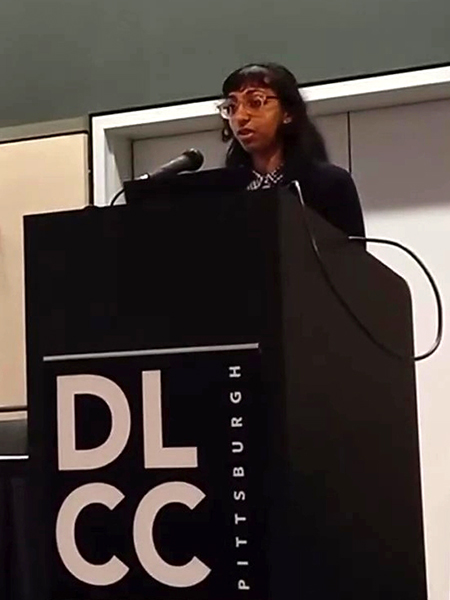
Cailin Winston stands behind a podium and laptop, speaking into the connected microphone. The podium is black with white text "DLCC PITTSBURGH," and a pair of light-colored doors and two-toned walls of the banquet room, in sage green and cream, are visible behind her.
Cailin Winston presents the group’s paper on techniques for repairing BCIs at ICSE 2022

“I initially got involved by contacting research groups at the University of Washington with prior publications that piqued my interest,” explained Cailin, who joined NVIDIA as a Deep Learning Engineer after graduation. “Attending research talks and colloquiums also made me aware of the various research projects being carried out and allowed me to further my involvement.”

As it turns out, the people who would take her involvement furthest — all the way to Pittsburgh as first author of a major conference paper — were closest to home. Her brother, Caleb Winston (B.S., ‘22), was also eager to find a pathway into research; in his case, it was a weekly reading group focused on the latest program synthesis papers organized by graduate students in the Allen School’s Programming Languages & Software Engineering (PLSE) group that set him on his way. Fast forward a few years, and Caleb and Cailin are collaborating on a methodology for real-time debugging and repair of BCIs and writing a paper accepted to one of the top conferences in the field.

In addition to sharing responsibilities for aspects of the ICSE paper, Caleb also shared his sister’s interest in how computing intersects with biomedicine — along with many other fields.

“Computer science intersects with so many different fields of study, from law, to healthcare, to urban planning,” noted Caleb, who is currently pursuing a Ph.D. in Computer Science at Stanford University after graduating from the Allen School in the spring. “This generalizability is what excites me to study programming languages, software engineering, AI and hardware/software systems. Simple ideas from these subfields have potentially impactful applications in many fields outside of computing.”

Claris Winston, who is now in her third year at the UW, became intrigued by the connection between computing and biomedicine in part by her experience working on a mobile app for scoliosis treatment as well as her experience participating in a summer computing camp organized by Girls Who Code. After earning direct admission to the Allen School as a freshman, she worked with members of the Molecular Information Systems Lab (MISL) on a new combinatorial polymerase chain reaction method for efficient retrieval of DNA oligo pools. That work, for which Claris was first author, was presented in a journal, in which her graphic design was also featured on the front cover. As she subsequently discovered at ICSE, presenting her research at a conference offered an entirely different — and exhilarating — experience.

“It was exciting to see researchers from all over the world and with such diverse backgrounds,” said Claris, who currently works with Allen School professor Jennifer Mankoff in the Make4All Group on research related to optimization for embroidered tactile graphics. “I was impressed by the range of topics covered, and the talks themselves had so many creative ideas and applications in the field.”

Youngest sibling and current freshman Cleah Winston contributed to the ICSE paper even before she arrived at the UW. She credits this and other early research experiences with opening her eyes to how an Allen School education would help her reach her goal of creating real-world impact.

“After being involved in several research projects in high school, I realized how much I enjoyed designing and developing solutions to problems in society,” she explained. “I felt that studying computer science would give me the tools and thought process for designing such solutions.”

The BCI project certainly gave her a head start in that regard, where she collaborated with sisters Claris and Chloe Winston (B.S., ‘22) in implementing a set of neural decoding BCI applications and using focused data acquisition and data labeling techniques to evaluate the team’s methodology for testing and repairing BCIs. Cleah is currently working with Allen School professor Byron Boots in the Robot Learning Lab exploring neural networks for computer vision and applications for hazard avoidance for off-road autonomous vehicles.

Chloe, who also took the lead on the statistical analysis of the results, credited an “internship-like class” in biotechnology research that she took in high school with setting her on a path to research at the UW. Her experience in the Garden Laboratory, in UW Medicine’s Department of Neurology, further fueled her love for research.

“I enjoyed the process of formulating research questions and designing and conducting experiments,” said Chloe, who double-majored in computer science and neuroscience at the UW. “That experience led me to seek other research opportunities throughout my undergraduate years.”

The two senior authors, Rao and Just, saw to it that all five student researchers would be able to attend the conference in person. While the siblings enjoyed the thrill of presenting their work to more senior researchers, their first conference experience was memorable for a variety of other reasons.

“I especially enjoyed the talks in the ‘Human Aspects of Software Engineering’ session, in which the social and cognitive aspects of the field were discussed,” said Claris. “Many of these topics were ones that I had not thought deeply about before, but this research is very important to study so we can build better engineering communities and software that benefits everyone.”

Chloe, meanwhile, found the conference eye-opening for the breadth of research happening in software engineering and the diverse problems it is trying to solve. The experience also impressed upon her the importance of researchers showing up to share their work. It’s a lesson she took with her to the University of Pennsylvania, where she is pursuing a M.D./Ph.D. with the goal of incorporating deep learning techniques into biomedical research and patient care as a physician-scientist.

“The conference environment was highly collaborative, and I was impressed by how new ideas were sparked through presentation and discussion,” she said. “Despite the inconvenience of travel and the anxiety that can come with presenting, I aim to continue attending and presenting at conferences. This is how new research directions are formed.”

For Caleb, ICSE offered a chance to bring what, at this point, could arguably be referred to as “the family business” full circle.

“The first time we all worked on a research project together was in high school. We were printing, cutting, and taping together a poster on precision medicine the night before a science fair,” he recalled. “It’s exciting to think that we have gone from working on high school science fair projects to cutting-edge research at the intersection of neural engineering and software engineering, which led to us presenting at ICSE.”

Read the team’s research paper here and the siblings’ retrospective on ICSE 2022 here. Read more →

The sound of touch: UW and Microsoft researchers earn ISS 10-year Impact Award for advancing innovative interaction technique via on-body sensing

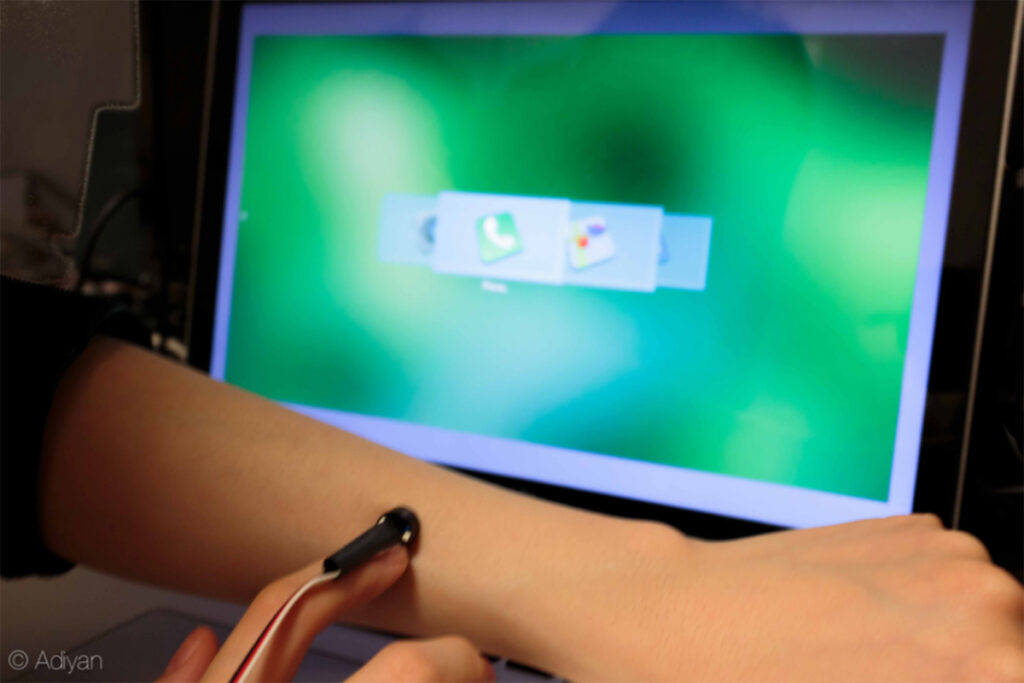
Person sliding fingertip with small sensor device across their forearm in front of a computer screen showing a selection of menu icons superimposed on each other horizontally, with the green and white phone icon selected

Nearly a decade ago, well before mixed reality and the metaverse went mainstream, a team of researchers from the University of Washington’s UbiComp Lab and Microsoft Research were making noise within the human-computer interaction community with a novel approach to on-body sensing. Their technique, which leveraged transdermal ultrasound signals, turned the human body into an input surface for pressure-aware continuous touch sensing and gesture recognition without requiring extensive, not to mention expensive, instrumentation.

Last week, that same team collected the 10-Year Impact Award from the Association for Computing Machinery’s Interactive Surfaces and Spaces Conference (ISS 2022) for ”significant impact on subsequent on-body and close-to-body sensing interaction techniques over the last decade within the SIGCHI and broader academic communities.” SIGCHI is the ACM’s Special Interest Group on Computer Human Interaction, which sponsors ISS.

The researchers originally presented the paper, “The Sound of Touch: On-body Touch and Gesture Sensing Based on Transdermal Ultrasound Propagation,” at the ITS 2013 conference — at that time, the “T” stood for “Tabletops,” as “Spaces” had not yet come into their own when it came to interaction research. The paper described a system for resonating low-frequency ultrasound signals across a person’s body using an inexpensive combination of off-the-shelf transmitters and receivers. As the person performs a touch-based gesture, the signal becomes attenuated in distinctive ways according to differences in bone structure, muscle mass and other factors, while distance from the transmitter and receiver and the amount of pressure exerted affect the signal amplitude. The system then measures these variations in the acquired signal and applies machine learning techniques to classify the location and type of interactions.

Shwetak Patel wearing dark blue button-down shirt with blurred cherry blossoms and pale blue sky in the background
Shwetak Patel

Although the set-up was simple — the proof of concept relied on a sole transmitter and receiver pairing — the technique was sufficiently robust to provide continuous detection and localization of pressure-sensitive touch along with classification of arm-grasping hand gestures for a variety of interaction scenarios. 

“Our approach was unique in that it was the first time someone had applied transdermal ultrasound propagation to the problem of on-body sensing. It also was the first system capable of detecting both the onset and offset of a touch interaction,” recalled Shwetak Patel, who holds the Washington Research Foundation Entrepreneurship Professorship in the Allen School and UW Department of Electrical & Computer Engineering. “We showed that our system could infer rich contextual information from a variety of interactions to support user input and information retrieval, from touch-and-click actions to slider-like controls.”

Patel and his collaborators evaluated two potential configurations of their system: a wearable transmitter and receiver pairing for pressure-sensitive, localized touch-based sensing and an armband that combined the two for gesture recognition. In a series of studies involving a total of 20 participants, they demonstrated the system could correctly classify a set of touch-based gestures along the forearm with roughly 98% accuracy, and more complex arm-grasping gestures with 86% accuracy just using baseline machine learning techniques without much in the way of fine tuning. Although the team’s experiments focused on the forearm, the transmitter and receiver could be positioned to enable touch-based sensing anywhere on the user’s body.

Desney Tan wearing pale grey button-down shirt and black suit jacket against a white background
Desney Tan

Patel’s collaborators on the project include Allen School affiliate professor Desney Tan, currently vice president and managing director of Microsoft Health Futures, and his Microsoft colleague Dan Morris, now a research scientist with Google’s AI for Nature and Society program; lead author Adiyan Mujibiya, former University of Tokyo student and Microsoft Ph.D. Fellow who now heads the Tech Strategy Office at Yahoo Japan and Z Holdings Corp.; Jun Rekimoto, professor at the University of Tokyo; and Xiang Cao, former Microsoft researcher and director at Lenovo Research who is now a scientist at bilibili.

“The impact of this research continues to be felt within the industry-leading companies developing AR/VR and wearable technologies today,” said Patel. “It’s great to see the results of the long collaboration between our group and Desney’s team at MSR being recognized in this way.”

In addition to the 2013 ITS paper, that collaboration includes a project that turned the human body into an antenna by harnessing electromagnetic signals for wireless gesture control; an ultra-low power system for passively sensing human motion using static electric field sensing; and a system capable of classifying human gestures in the home by leveraging electromagnetic noise in place of instrumentation. Each of those papers earned a Best Paper Award or Best Paper Honorable Mention at the time of publication.

Read the 10-Year Impact Award-winning paper here

Congratulations to Shwetak, Desney and the entire team! Read more →
A winning combination: Allen School recruits nine new faculty with expertise in computational neuroscience, machine learning, quantum computing, and more

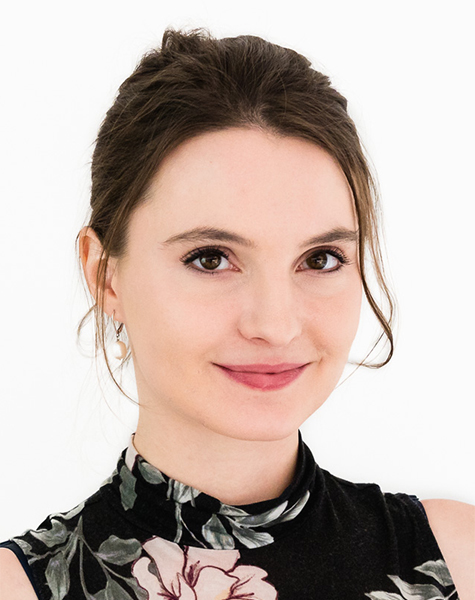
Hand silhouetted against the sun, giving the "dubs up" symbol, with ring and middle finger crossed in between pinky and index finger to resemble the letter "W," against a purple background

When it comes to recruiting at the University of Washington, the latest promising commits to the Husky football team tend to grab most of the headlines. Here in the Allen School, we’re pursuing our own version of “Purple Reign” on a different playing field: the intense competition that is faculty recruiting in computer science and computer engineering. 

The results of the 2022 season are in, and the Allen School scored nine outstanding educators and researchers who are rising stars in their respective disciplines. The newcomers will strengthen the school’s historic leadership in core areas such as systems and architecture, programming languages, and computer science education while expanding our impact in rapidly growing areas such as computational neuroscience, machine learning, quantum computing, and more. 

Throw your dubs up for the newest additions to the Allen School and UW campus community:

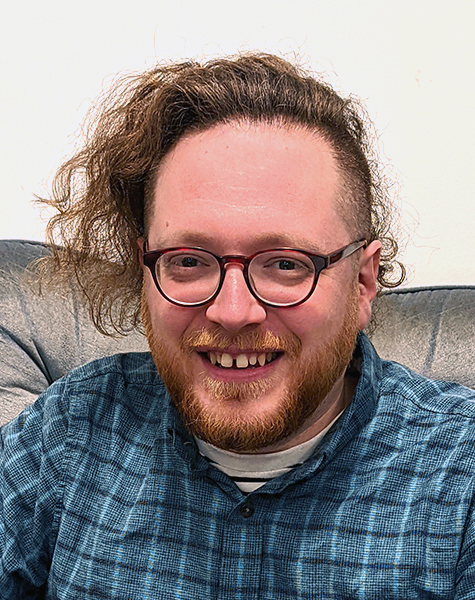
Portrait of Gilbert Bernstein seated in a plush dark grey armchair against a light grey wall. He has reddish curly hair swept to one side and a beard, and he is wearing glasses and a blue plaid shirt over a light-colored t-shirt.

Gilbert Bernstein: High-performance domain-specific languages for simulation, optimization and design

Gilbert Bernstein bridges the fields of computer graphics and programming languages to develop domain specific languages (DSLs) that enable high-performance computing applications for physical simulation, optimization and design. His approach, which employs data abstraction for portability across architectures and decouples mechanism and policy in the scheduling of code and data structures, enhances system performance without the inherent tradeoffs of conventional techniques or the development and maintenance costs associated with customized software and hardware co-design. High-performance DSLs can be adapted to domains as varied as climate modeling, construction, drug development, fabrication, the visual arts and more — without requiring programmers to have deep domain expertise. Recent contributions include Aetherling, a DSL that enables hardware engineers to easily explore complicated space-time tradeoffs when developing hardware accelerators for system-on-a-chip designs, and an interactive sketch-based tool that assists quilters in creating designs compatible with foundation paper piecing to democratize fabric design and manufacturing. He previously contributed new approaches for working with 3D mesh data structures, editing vector graphics, and developing complex physical simulations.

Bernstein earned his master’s degree in 2012 from the Allen School before going on to complete his Ph.D. at Stanford University. He is currently pursuing postdoctoral research at the University of California, Berkeley and MIT and will officially join the Allen School faculty in January 2023.

Portrait of Andrea Coladangelo with short dark hair and trim facial hair and wearing glasses and a subtly striped blue button-down shirt. Leafy trees and hedges in front of a stone building with archways are visible in the background.

Andrea Coladangelo: Understanding quantum information through the computational lens

Andrea Coladangelo will join the Allen School faculty and the UW’s interdisciplinary QuantumX initiative in January. Coladangelo’s research focuses on the intersection of quantum computation, cryptography and complexity theory, with an emphasis on understanding the interplay between quantum information and ideas from computational hardness. In a recent example of this, he devised a new encryption scheme that protects against coercion in online elections in a way that is fundamentally impossible to do classically. In other work, Coladangelo showed how, in stark contrast with the classical setting, quantum communication allows one to realize the very general cryptographic functionality of secure multi-party computation from one-way functions — the latter being an object of essentially minimal cryptographic complexity. Going forward, Coladangelo is keen to explore the two-way interaction between quantum information and cryptography: On the one hand, how quantum information can be leveraged to achieve cryptographic functionalities that are beyond what is achievable classically, such as copy-protection of programs; on the other, how cryptographic hardness can be used to test and prove “quantumness,” as well as to understand the limits of quantum computation.

After earning his Ph.D. from Caltech, Coladangelo went on to pursue a postdoc at the University of California, Berkeley and the Simons Institute for the Theory of Computing. He is an editor of the open-access, peer-reviewed journal Quantum and a co-founder of qBraid, a cloud-based platform for experimenting with quantum programs.

Portrait of Elba Garza with long wavy hair, with the sides pulled back from her face and a dark yellow blouse with a contrasting multi-colored floral print. She is standing in front of a plain, neutral-toned wall.

Elba Garza: Accessible and engaging computer science education for a variety of learning styles

Elba Garza joined the faculty this fall as a teaching professor in the Allen School’s revamped introductory course sequence. As co-instructor of the course focused on students with little or no prior programming experience, Garza is particularly keen to ensure that the school delivers introductory computer science in a way that supports first-generation students and those from historically marginalized backgrounds as part of building a more diverse academic community. She is also interested in advancing methods for presenting course content in a cohesive manner while incorporating a variety of techniques for engaging students with diverse learning processes, inspired by her own experience as a student diagnosed with a type of Attention Deficit/Hyperactivity Disorder (ADHD). Garza’s background in computer architecture also prepares her to teach a variety of upper-division systems and architecture courses.

Garza earned her Ph.D. from Texas A&M University, where her research focused on the development of microarchitectural predictive structures and policies. Prior to her arrival in Seattle, Garza was a member of AccessComputing, a UW-based program that provides mentorship and learning opportunities for students with disabilities to pursue computing education and careers. She also co-founded and served on the steering committee of the Computer Architecture Student Association (CASA), a student-run organization with the goal of fostering well-being and inclusion within the computer architecture community.

Portrait of Matthew Golub with close-cropped hair, mustache and beard, wearing a dark blue button-up shirt. An interior building hallway is blurred but visible in the background.

Matthew Golub: Computational techniques for understanding and augmenting neural processes

Matthew Golub’s research focuses on computational neuroscience, with an emphasis on advancing the theory and tools needed for understanding computation and communication within large networks of neurons in the brain. Golub’s work has demystified how these networks of neurons coordinate to enable, and sometimes constrain, the brain’s ability to learn, generate decisions, and control movements. A core approach to his research is to view a network of neurons as a nonlinear dynamical system whose activity evolves over time due to how those neurons are connected and the inputs they receive from other networks in the brain. Golub’s contributions include FixedPointFinder, a software toolbox for revealing the computations performed by such nonlinear dynamical systems. This approach, which is broadly applicable to different organisms, regions of the brain, and tasks, can help researchers identify the most promising avenues for more costly and labor-intensive experimental validation. Golub also co-led a series of studies exploring the neural mechanisms that influence the learning and performance of new tasks, in the contexts of both naturalistic movements and brain-computer interface operation.

Golub will join the Allen School faculty this December after completing a postdoc at his alma mater Stanford University, where he earned his bachelor’s and master’s degrees. In between, he earned his Ph.D. in Electrical & Computer Engineering at Carnegie Mellon University.

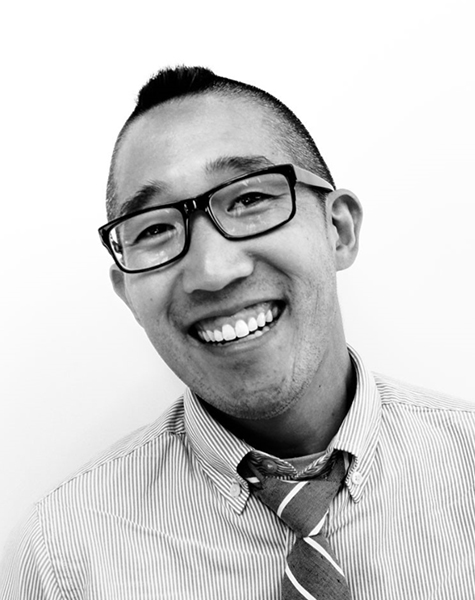
Black and white portrait of Scott Sumio Ichikawa with short dark hair and wearing glasses, a pinstripe button-up shirt, and tie with wider diagonal stripes. He is pictured against a plain light-colored background.

Scott Sumio Ichikawa: Elevating design practices and education in service to society

Scott Sumio Ichikawa joined the faculty over the summer as a teaching professor and associate director of the UW’s Master’s in Human-Computer Interaction & Design (MHCI+D), which combines expertise from the Allen School, Information School, Department of Human-Centered Design & Engineering and the Division of Design in the School of Art + Art History + Design. Ichikawa’s devotion to advancing the ethical design of products and services for diverse users is matched by his commitment to mentoring the next generation of socially-aware design leaders — twin goals that are a natural fit for his leadership of MHCI+D. Ichikawa, who holds a Master of Design in Interaction Design from the UW, is already well-known within the MCHI+D community, having spent three years as an instructor for a range of undergraduate and graduate courses focused on foundational interface design, user research and evaluation, design methods, interaction design, and more.

In addition to leading his own independent design consultancy, Run, Jump & Fly, for the past 20 years, Ichikawa has held leadership roles at multiple design studios, where he worked with household names in technology, sports, consumer appliances and electronics, and the arts. He holds two patents related to the design of graphical user interfaces for planning and monitoring surgical procedures.

Portrait of Natasha Jaques with brown hair swept up and back and tendrils framing her face. She is wearing a dark sleeveless top or possibly dress with a high neck and large green and pink floral pattern. She is pictured against a plain light background.

Natasha Jaques: Advancing human-centered AI through social reinforcement learning

Natasha Jaques develops techniques for enabling artificial intelligence agents to engage in social learning, in which they acquire and practice increasingly complex behaviors from ongoing interaction with each other and with humans. Her goal is to build AI systems that can perform complex tasks, incorporate feedback from human social and emotional cues, and adapt seamlessly to new situations in order to assist humans with everyday tasks as effectively as another human can. For example, Jaques proposed a framework for enhancing coordination and communication in multi-agent reinforcement learning by rewarding agents for exercising causal influence over the actions of other agents. She also developed PAIRED, a novel reinforcement learning technique in which an environment generator builds increasingly complex environments for a pair of agents to solve and maximizes regret between the two to make the learner more robust. PAIRED demonstrated how multi-agent training can improve learning and generalization for a single AI agent. Jaques also proposed a method for training language models using reinforcement learning and human feedback that uses KL-control to minimize divergence from the original model trained on data. Going forward, Jaques intends to focus her research on developing agents’ ability to use social learning to acquire complex behavior, generalize to new environments, perceive and adapt to a person’s needs in real time, and to understand natural-language commands.

Jaques earned her Ph.D. from MIT and is currently a senior research scientist at Google Brain and a visiting postdoctoral scholar at University of California, Berkeley. She will join the Allen School faculty in January 2024.

Portrait of Baris Kasikci with short, light-brown hair and trim facial hair wearing glasses and a medium-blue button-down shirt under a dark suit jacket. Red tile roofs and palm or possibly banana trees are blurred but visible in the background.

Baris Kasikci: Building efficient and trustworthy systems across the computing stack

Baris Kasikci develops techniques for building efficient and trustworthy computer systems capable of delivering high performance at scale while minimizing bugs and security vulnerabilities. His work draws upon a range of disciplines, from systems and security, to computer architecture and programming languages, to produce solutions that span the entire computing stack. His contributions to software and applications include REPT, a practical tool for reverse debugging of failures in deployed software systems that is used in over a billion Windows systems worldwide, and OPTIMUS, the first hypervisor that supports scalable, flexible shared-memory virtualization of FPGAs for accelerating applications in the cloud. On the hardware side, Kasikci and his collaborators discovered microprocessor vulnerabilities such as Foreshadow that put billions of devices at risk. His group subsequently developed techniques to mitigate those risks while preserving performance, including NDA, which breaks the chain of dependent wrong-path instructions to head off speculative execution attacks at their source, and DOLMA, which introduced the principle of transient non-observability to comprehensively protect against transient execution attacks. Kasikci has also contributed to hardware/software co-design techniques for improving the performance and efficiency of data center systems that have been adopted by companies such as Intel and ARM.

Kasikci will join the Allen School next summer from the University of Michigan, where he has been a faculty member in the Electrical Engineering and Computer Science Department since 2017. During that time, he earned a National Science Foundation CAREER Award, a Microsoft Faculty Fellowship, an Intel Rising Star Award and a VMware Early Career Grant. Kasikci holds a Ph.D. from the École Polytechnique Fédérale de Lausanne (EPFL).

Portrait of Pang Wei Koh with short tousled dark hair wearing glasses and a grey t-shirt. Trees with autumn-colored leaves and evergreens are blurred but visible in the background.

Pang Wei Koh: Making machine learning systems robust and reliable in the wild

Pang Wei Koh focuses on the theory and practice of building reliable machine learning systems for real-world deployment. His research encompasses tools for inspecting model behavior; approaches for dealing with noisy, incomplete or contaminated data; and techniques for benchmarking and mitigating distribution shifts that contribute to model failure. For example, Koh developed an efficient and scalable method for explaining black-box model predictions by applying influence functions to identify which training examples contributed most to a given prediction. To support data-driven COVID policy, Koh helped develop a framework that combined population-scale mobility data with epidemiological modeling to assist policymakers in analyzing the impact of reopening policies on infection rates and societal inequities. Koh also co-led the development of WILDS — a curated set of benchmarks that reflect real-world distribution shifts for machine learning models deployed in domains spanning agriculture, biomedicine, wildlife conservation and more — as well as distributionally robust optimization methods for mitigating the effects of such shifts. He aims to build on his past work by developing techniques that will aid models in reliably extrapolating information from new data, improve model performance based on interactions with end users, and optimize models trained on broad data.

Koh is currently a senior research scientist at Google Brain and will join the Allen School in fall 2023. He was recently named among MIT Technology Review’s 2022 Innovators Under 35 Asia Pacific for his research. Before earning his Ph.D. from Stanford University, Koh was the third employee at Coursera, where he built and led the team responsible for course content and university partnerships.

Portrait of James Wilcox with short light brown hair and trim facial hair wearing a blue plaid button-down shirt. A glass and concrete building and green landscaping is blurred but visible in the background.

James Wilcox: Computer science education as refined storytelling

Allen School alum James Wilcox (Ph.D., ‘21) joined the faculty this fall as a teaching professor. His teaching interests include programming languages, systems programming, and reasoning about programs, and he enjoys teaching undergraduate and graduate as well as majors and non-majors courses. Wilcox’s favorite part of teaching is the creative process of learning, revising, and telling “the story” of each course in the spirit of oral tradition handed down from generation to generation.

Prior to joining the Allen School faculty, Wilcox taught multiple course offerings as a graduate student or lecturer, spanning undergraduate and graduate programming languages, software design and implementation, web browser engineering, introduction to systems, and more. His Ph.D. is in the theory of programming languages and focused on the application of formal reasoning techniques to distributed systems, including the first machine-checked proof for the popular Raft consensus protocol.

Including the 2022 recruiting season, the Allen School has added a total of 24 new faculty members over the past three years. Other recent arrivals are advancing transformational research focused on topics such as human-centric data visualization to support interactive exploration and discovery, bio-inspired wireless computing for environmental applications, molecular programming to bridge biology and information technology, and machine learning for understanding and treating disease.  Read more →
Allen School researchers team up with clinicians and global health experts to repurpose inexpensive earphones to screen babies for hearing loss

A young boy wearing a grey and black zip-up jacket with green and orange trim and jeans sits in an ivory-colored plastic chair as a researcher seated adjacent to him in a dark grey office chair holds a probe to his ear. The probe is attached to a smartphone sitting on the researcher's lap. The researcher is wearing glasses, with a mask around his chin, a plaid button down shirt and dark cotton trousers. The child is looking down at the smartphone screen. There is a desk with papers and a pen and a backpack behind the child.
Allen School Ph.D. student Justin Chan, right, tests a child’s hearing in Kenya. Dr. Nada Ali/University of Washington

If you’re a frequent flyer, you may have amassed a motley collection of complimentary airline earbuds over the course of your travels — if you didn’t toss them in the trash immediately after clearing customs, that is. Soon, those throwaway pieces of plastic and wire could potentially transform the lives of children around the world. A team that includes Allen School professor Shyam Gollakota and Ph.D. student Justin Chan has devised a way to repurpose inexpensive earbuds to turn any smartphone into a device for screening newborn babies for hearing loss. The team described its prototype system in a paper published today in Nature Biomedical Engineering.

Clinicians screen newborns’ hearing by stimulating and evaluating otoacoustic emissions, or OAE, which are the sounds generated by the movement of the outer hair cells of a healthy cochlea. While such screening is currently routine in the United States, in many countries hospitals and clinics cannot afford the specialized equipment for administering the test. That disparity, along with firsthand experience, motivated Gollakota to tackle the project.

“I grew up in a country where there was no hearing screening available, in part because the screening device itself is pretty expensive,” Gollakota, who holds the Washington Research Foundation / Thomas J. Cable Professorship in the Allen School, told UW News. “The project here is to leverage the ubiquity of mobile devices people across the world already have — smartphones and $2 to $3 earbuds — to make newborn hearing screening something that’s accessible to all without sacrificing quality.”

The team designed an inexpensive probe using the aforementioned earbuds, an off-the-shelf microphone and a length of lightweight silicon tubing. The system plays a different tone through each earbud to stimulate the cochlea, and then records the OAE via the attached microphone and transmits it through the smartphone’s headphone jack for processing. In clinical testing involving more than 100 patients, the UW-developed system performed as well as commercial equipment costing thousands of dollars.

Now that they have a prototype, the researchers’ next step is to partner with local experts to scale up their approach. The team has already made a start by partnering with the UW Department of Global Health, the University of Nairobi and the Kenya Ministry of Health on the TUNE project, short for Toward Universal Newborn and Early Childhood Hearing Screening in Kenya. As reported on TUNE’s website, in countries with routine newborn screening programs, doctors detect hearing impairments in babies by the time they are two to three months of age; in countries without such programs, hearing loss often is not detected until the child reaches three years of age.

“We have an opportunity to really have an impact on global health, especially for newborn hearing,” Chan said. “I think it’s pretty gratifying to know that the research we do can help to directly solve real problems.”

Chan and Gollakota’s co-authors include Dr. Randall Bly and Dr. Emily Gallagher, both affiliated with UW Medicine and Seattle Children’s; Dr. Nada Ali of UW Medicine; Ali Najafi, who earned his Ph.D. from the UW Department of Electrical & Computer Engineering; Anna Meehan of Seattle Children’s, and Lisa Mancl of the UW Department of Speech & Hearing Sciences.

Read the Nature Biomedical Engineering paper here, a related article here, and the UW News release here. Read more →
Lost in translation no more: IBM Fellowship winner Akari Asai asks — and answers — big questions in NLP to expand information access to all

Portrait of Akari Asai wearing grey floral lace top with black trim and dangling earrings against a grey background

Growing up in Japan, Akari Asai never imagined that she would one day pursue a Ph.D. at the Allen School focused on developing the next generation of natural language processing tools. Asai hadn’t taken a single computing class before her arrival at the University of Tokyo, where she enrolled in economics and business courses; her first foray into computer science would come thousands of miles from home, while studying abroad at the University of California, Berkeley. The experience would alter the trajectory of her academic career and put her on a path to solving problems on a global scale.

“I changed my major in the middle of my undergraduate studies, and I wished I had discovered computer science and opportunities for pursuing my career abroad earlier,” said Asai. “My own situation made me realize the importance of information access for everyone.”

That realization led Asai to pursue her Ph.D. at the University of Washington, where she is now in the business of developing next-generation AI algorithms that offer rich natural language comprehension using multi-lingual, multi-hop and interpretable reasoning working with Allen School professor Hannaneh Hajishirzi in the H2Lab.

“Akari is very insightful and cares deeply about the impact of her work,” observed Hajishirzi, who is also senior research manager in the Allen Institute for AI’s AllenNLP group. “She is bridging the gap between research and real-world applications by making NLP models more efficient, more effective, and more inclusive by extending their benefits to languages other than English that have been largely ignored.”

More than 7,100 languages are spoken in the world today. While English is the most prevalent, spoken by nearly 1.5 billion people, the global population is nearing 8 billion — meaning a significant proportion is excluded from the benefits of today’s powerful NLP models. Asai is trying to close this gap by enabling universal question answering systems that can read and retrieve information across multiple languages. For example, she and her collaborators introduced XOR-TyDi QA, the first large-scale annotated dataset capable of open-ended information retrieval across seven different languages other than English. The approach — XOR QA stands for Cross-lingual Open Retrieval Question Answering — enables questions written in one language to be answered using content expressed in another. 

Asai also contributed to CORA, the first unified multilingual retriever-generator framework that can answer questions across many languages — even in the absence of language-specific annotated data or knowledge sources. CORA, short for Cross-lingual Open-Retrieval Answer Generation, employs a dense passage retrieval algorithm to pull information from Wikipedia entries, irrespective of language boundaries; the system relies on a multilingual autoregressive generation model to answer questions in the target language without the need for translations. The team incorporated an iterative training method that automatically extends the annotated data previously only available in high-resource languages to low-resource ones. 

“We demonstrated that CORA is capable of answering questions across 28 typologically different languages, achieving state-of-the-art results on 26 of them,” Asai explained. “Those results include languages that are more distant from English and for which there is limited training data, such as Hebrew and Malay.”

Language is not the only barrier Asai is working to overcome. The massive computational resources required to operate the latest, greatest language models, which few groups can afford, also puts them out of reach for many. Asai is making strides on this problem, too, recently unveiling a new multi-task learning paradigm for tuning large-scale language models that is modular, interpretable and parameter-efficient. In a preprint, Asai and her collaborators explained how ATTEMPT, or Attentional Mixture of Prompt Tuning, meets or exceeds the performance of full fine-tuning approaches while updating less than one percent of the parameters required by those other methods.

Asai is also keenly interested in the development of neuro-symbolic algorithms that are imbued with the ability to deal with complex questions. One example is PathRetriever, a graph-based recurrent retrieval method that learns to retrieve reasoning paths over the Wikipedia graph to answer multi-hop open-domain questions at web scale. By leveraging a reading comprehension model alongside the retriever model, Asai and her colleagues enabled PathRetriever to explore more accurate reasoning paths in answer to complex questions compared to other methods. Some of her co-authors subsequently adapted the system to enable complex queries of scientific publications related to COVID-19. 

Ultimately, Asai intends to integrate the various facets of her research into a general-purpose, lightweight retriever and neuro-symbolic generator that will be capable of performing complex reasoning over diverse inputs while overcoming data scarcity. Having earned a 2022 IBM Ph.D. Fellowship earlier this year to advance this work, Asai’s ambition is to eliminate the disparity between the information “haves” and “have nots” by providing tools that will empower anyone to quickly and easily find what they need online — in multiple languages as well as multiple domains.

“Despite rapid progress in NLP, there are still several major limitations that prevent too many people from enjoying the benefits of that progress,” she explained. “My long-term research goal is to develop AI agents that can interact with broad swaths of internet users to answer their questions, giving everyone equal access to information that might otherwise be limited to certain default audiences.”

Her commitment to promoting equal access extends beyond information retrieval to include the field of NLP itself; to that end, Asai is an enthusiastic mentor to students from underrepresented backgrounds.

“I’m excited to continue making progress on my own research interests,” said Asai, “but I hope to also inspire the next generation of researchers in AI.”

Way to go, Akari! Read more →
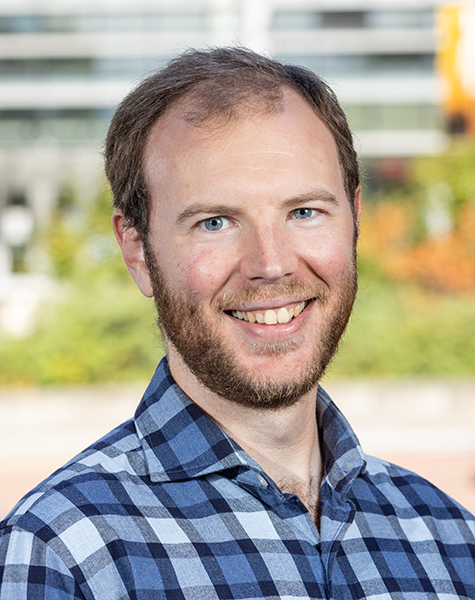
Making “magical concepts” real: Allen School professor Rachel Lin named one of Science News’ 10 Scientists to Watch

Portrait of Rachel Lin leaning against a metal railing in building atrium with concrete, wood and glass in the background

Science News has named professor Huijia (Rachel) Lin, a founding member of the Allen School’s Cryptography group, as one of its SN 10: Scientists to Watch. Each year, Science News recognizes 10 scientists who are making a mark in their respective fields while working to solve some of the world’s biggest problems. Lin earned her place on the 2022 list for achieving a breakthrough on what has been alternately referred to as the “holy grail” or “crown jewel” of cryptography by proving the security of indistinguishability obfuscation.

“I’m very attracted to these magical concepts,” Lin told Science News. “The fun of it is to make this concept come to realization.”

While Lin explores a variety of fundamental problems — from black-box constructions for securing multiparty computation to zero-knowledge proofs — her work on iO has been celebrated for answering an open question that had vexed cryptographers for more than 40 years: How to prove the security of this potentially powerful “master tool” for securing data and computer programs while maintaining their functionality and bring it into the mainstream. According to the article, previous attempts at proving iO were generally geared toward obtaining a result that would be deemed “good enough” — and one by one, those attempts would unravel under further scrutiny. 

Lin aimed for more than “good enough” by seeking a generalizable solution grounded in sound mathematical theory. Rather than approaching iO like “a bowl of spaghetti,” as she put it, Lin preferred to attack the problem by untangling it into its component parts, working alongside University of California, Los Angeles professor Amit Sahai and his then-Ph.D. student and NTT Research intern Aayush Jain, now a professor at Carnegie Mellon University. After two years, the team had a theoretical framework for provably secure iO that was based on a quartet of well-founded assumptions: Symmetric External Diffie-Hellman (SXDH) on pairing groups, Learning with Errors (LWE), Learning Parity with Noise (LPN) over large fields, and a structured-seed Boolean Pseudo-Random Generator (sPRG). The result was first reported in Quanta Magazine in the summer of 2020; Lin and her collaborators subsequently earned a Best Paper Award at the Association for Computing Machinery’s 53rd Symposium on Theory of Computing (STOC 2021) for their contribution — one that Lin is eager to see progress from theory to reality.

“These are ambitious goals that will need the joint effort from the entire cryptography community,” she observed at the time. “I look forward to working on these questions and being part of the effort.”

In other words, watch this space.

Lin is the second member of the Allen School’s Theory of Computation group to be recognized on the SN 10 list, after her colleague Shayan Oveis Gharan was highlighted in 2016.

Read Lin’s profile in Science News here, and the Quanta article on the i/O breakthrough here.

Photo: Dennis Wise/University of Washington Read more →
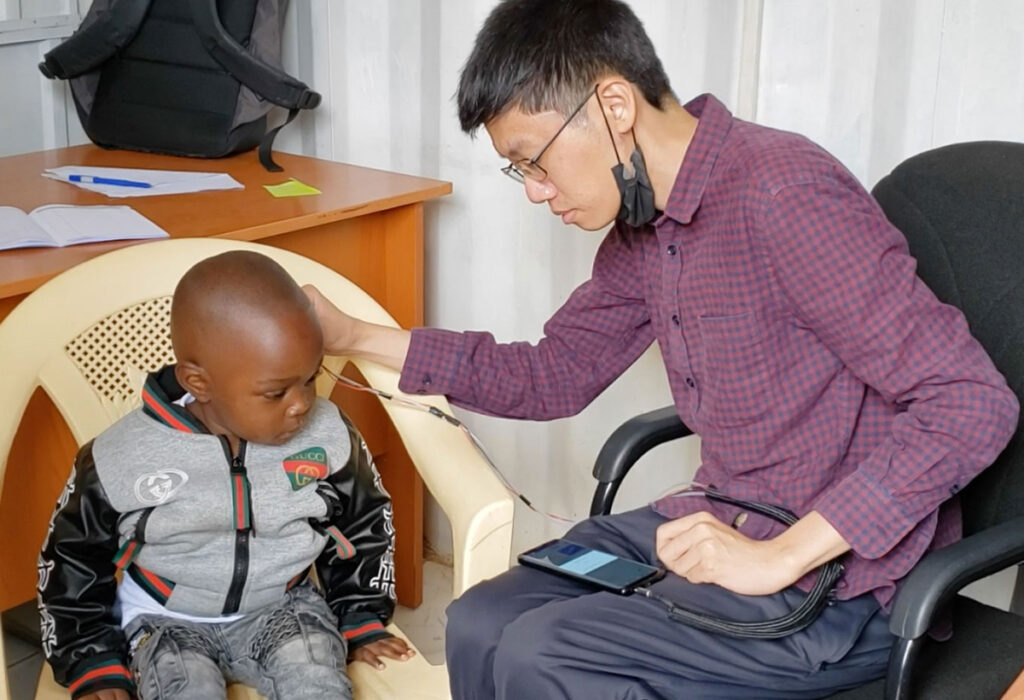
“The sky’s the limit”: Allen School launches new FOCI Center at the UW to shape the future of cloud computing

Seattle skyline viewed from a three-lane highway framed by street lamps, with vivid blue sky and fluffy clouds

The Allen School has established a new center at the University of Washington that aims to catalyze the next generation of cloud computing technology. The Center for the Future of Cloud Infrastructure, or FOCI, will cultivate stronger partnerships between academia and industry to enable cloud-based systems to reach new heights when it comes to security, reliability, performance, and sustainability.

“The first generation of the cloud disrupted conventional computing but focused on similar engineering abstractions, which is typical of many new technologies,” said Allen School professor Ratul Mahajan, co-director of the FOCI Center and, until recently, co-founder and CEO of cloud computing startup Intentionet. “Now that cloud computing is on the cusp of a more radical transformation, this center will help usher in a new era by cultivating tighter partnerships between researchers and practitioners to address emerging bottlenecks and explore new opportunities.”

That transformation is being driven in large part by the rise in machine learning, edge computing, 5G and other burgeoning technologies. According to Mahajan’s Allen School colleague and center co-director Simon Peter, the demands of these new workloads — including exponential growth in the energy required to power their applications — will require researchers to rethink the full computing stack from the ground up. 

“Companies and consumers are seeking ever-greater levels of security, reliability and performance in the cloud at a reduced cost,” Peter noted. “Not just monetary cost, but also in terms of cost to the environment. For a while, thanks to Moore’s Law, we were gaining ground when it comes to energy efficiency. But now the gains have slowed or even reversed; for example, in the U.S. the energy demand for computation is growing twice as fast as solar and wind power. So we need to think holistically about the hardware-software interface and how to make cloud computing sustainable as well as resilient and secure.”

One of the areas that Peter and his colleagues are keen to explore is energy-aware cloud computing, which would enable tradeoffs between power and performance while making cloud applications resilient to disruption. Another potential avenue of inquiry concerns how the development of systems to effectively manage the variety of hardware accelerators used in settings such as disaggregated storage and emerging machine learning applications while minimizing latency, ensuring fairness, and meeting multi-dimensional resource needs — among other challenges.

Portrait collage of Arvind Krishnamurthy, Ratul Mahajan, and Simon Peter, with UW's block "W" logo in the lower right corner against a purple background
The co-directors of the new FOCI Center at the UW, top, from left: Arvind Krishnamurthy and Ratul Mahajan; bottom left: Simon Peter

How the center approaches these challenges will be informed by a technical advisory board comprising representatives of cloud companies Alibaba, Cisco, Google, Microsoft and VMware — all significant movers and shakers in the cloud space. Their input will help guide the center’s research toward real-world impact based on current trends, what problems they anticipate over a five to 10- year time horizon, and how solutions might be applied in practice. Center researchers will apply these practical insights to their pursuit of big, open-ended ideas, drawing upon cross-campus expertise in systems, computer architecture, networking, machine learning, data science, security, and more.

“Industry knows the pain points and technology trends; academia is adept at the exploratory, collaborative work that’s fundamental to solving hard problems,” noted Allen School professor and center co-director Arvind Krishnamurthy, who also serves as an advisor to UW machine learning spinout OctoML. “By bringing the two together, this center will not only yield compelling solutions but also contribute to the education of students who will go on to build these next-generation systems.”

The FOCI Center was seeded with industry commitments totaling $3.75 million over three years. The Allen School is hosting a launch event on the UW campus in Seattle today to connect faculty and student researchers with industry leaders interested in shaping the future of cloud computing.

“Seattle is the cloud city, both in weather and as home to the largest cloud companies, so it was only natural to establish a center focused on cloud computing and leverage the synergies between the UW’s research expertise and our local industry leadership of this space,” said Magdalena Balazinska, professor and director of the Allen School. ”When it comes to what we can accomplish together, I would say the sky’s the limit.”

To learn more, visit the FOCI Center website and read the coverage by GeekWire here.

Main photo credit: University of Washington Read more →
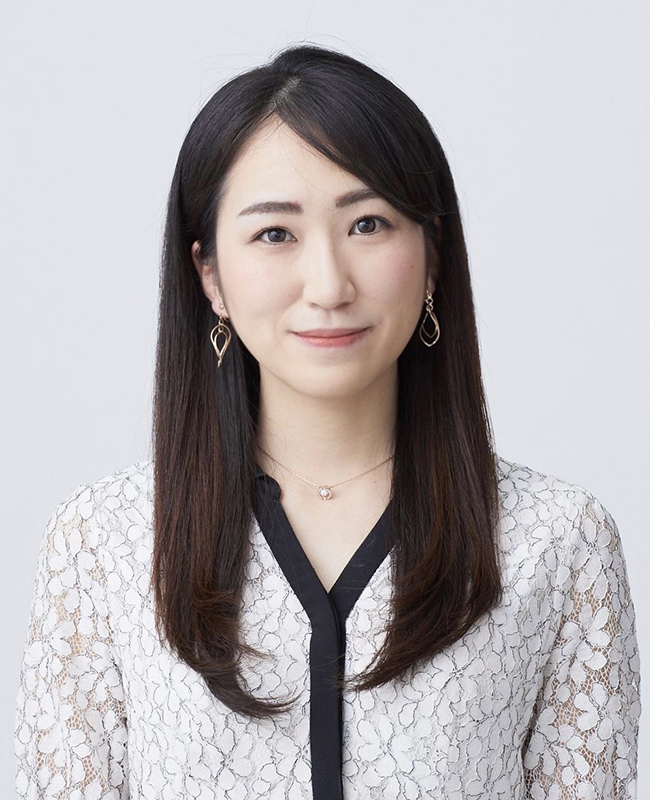
« Newer PostsOlder Posts »