 A UWTV interview with UW CSE’s Barbara Mones, describing our interdisciplinary digital animation curriculum, and showing several animated shorts.
Watch this wonderful piece here. Read more →

A UWTV interview with UW CSE’s Barbara Mones, describing our interdisciplinary digital animation curriculum, and showing several animated shorts.
Watch this wonderful piece here. Read more →
 WibiData – a Bay Area “big data” startup launched by Christophe Bisciglia and multiple other UW CSE alums – is featured in the NY Times for its unique recruiting approach:
“If you want to signal to software engineers that your tech start-up is a cool place to work, you can let them bring their dogs to the office, offer free energy drinks or put up a billboard with a Web address that can only be accessed after solving a math equation.
“WibiData, a 22-person San Francisco start-up that develops big data applications, has come up with its own gimmick for telegraphing its engineering street cred to job applicants: a custom version of c, a devilishly addictive cult video game from Valve.”
Read the NY Times article here! Play the game here! Read more →
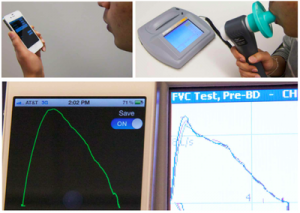 UW CSE’s SpiroSmart is described in MIT Technology Review:
“Today, a deep sigh at your smartphone could reveal a well-developed emotional connection with your gadget. But one day those sighs could tip off your doctor to a latent or worsening lung condition.
“A group at the University of Washington, in collaboration with Seattle Children’s Hospital, is developing a way to check how healthy your lungs are when you breathe out at your smartphone.”
Read more here. Learn about SpiroSmart here. Read more →
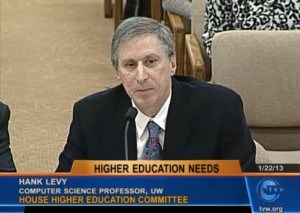 CSE chair Hank Levy today testified to the Washington State Legislature on high tech workforce needs. His remarks are a terrific summary of Seattle’s high tech scene and the role of UW CSE in supporting it.
Watch Hank’s testimony here. Read more →
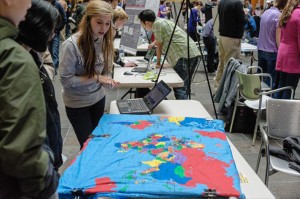 The current issue of SIGCSE Bulletin (the publication of the ACM Special Interest Group for Computer Science Education) features the Computer Science Education Week outreach activities of six colleges and universities, including UW.
UW’s activities included an Open House that attracted more than 750 middle school and high school attendees, and a programming competition (organized in conjunction with the local chapter of the Computer Science Teachers Association, and sponsored by Microsoft) that featured 74 teams representing 26 different schools.
Read the short article here. Learn more about UW CSE’s outreach activities here. Read more →
 Many of the nation’s leading researchers in advanced computer architectures – including UW CSE professors Luis Ceze and Dan Grossman – have joined together to form C-FAR, the Center for Future Architectures Research.
C-FAR is focused on innovation to create future generation scalable computing systems. The center is working on research that maximally leverages emerging circuit fabrics to enable whole new application areas. It accomplishes this goal through a highly collaborative research agenda that brings together researchers from many universities, including Michigan (the lead institution), Columbia, Duke, Georgia Tech, Harvard, MIT, Northeastern, Stanford, UC Berkeley, UCLA, UC San Diego, Illinois, Washington and Virginia.
C-FAR is funded at a level of $28M by the Semiconductor Research Corporation (SRC) and the Defense Advanced Research Projects Agency (DARPA) through the Semiconductor Technology Advanced Research network (STARnet). Read more →
![PATH_HumanMilkBanking_Infant[1]](http://news.cs.washington.edu/wp-content/uploads/2013/01/PATH_HumanMilkBanking_Infant1.jpg) One project resulting from a collaboration between UW CSE and Seattle-based global health organization PATH is a lifesaving low-cost intervention to save newborn babies using mobile phones and donated breast milk.
One project resulting from a collaboration between UW CSE and Seattle-based global health organization PATH is a lifesaving low-cost intervention to save newborn babies using mobile phones and donated breast milk.
Each year, more than 3.3 million newborns die within their first month of life. Working with UW CSE Ph.D. student Rohit Chaudhri, PATH has developed a unique, low-cost system that uses mobile phones to manage safe pasteurization of breast milk.
Heat pasteurization kills potential pathogens in donated milk, such as HIV and hepatitis, while retaining the milk’s nutritional and immunological benefits. It is a critical but expensive step in human milk banking. Commercial-grade pasteurizers can cost up to $60,000, preventing many hospitals from establishing a milk bank. The UW/PATH system allows health care providers in neonatal units to monitor the pasteurization process in real-time on their mobile phones, ensuring that the milk is heated safely and consistently every time even when commercial-grade equipment is not available.
See a recent PATH press release (which, er, doesn’t bother to mention UW) here. Learn about Rohit Chaudhri and his work here – his FoneAstra project, supported by a Gates Grand Challenge award, is the key to the breast milk pasteurization effort. Read more →
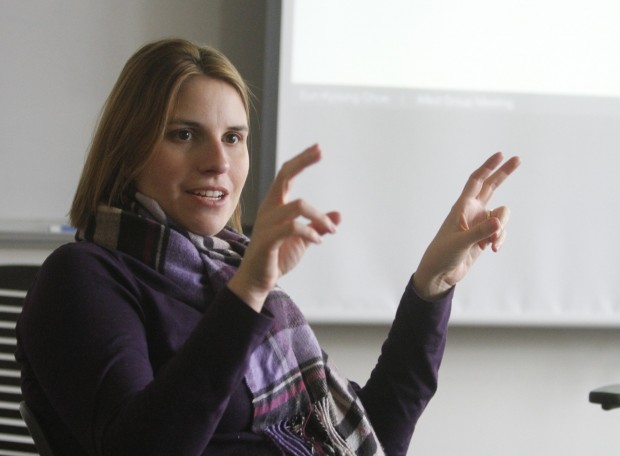 The Seattle Times profiles Julie Kientz – UW professor of Human Centered Design and Engineering, adjunct professor of Computer Science & Engineering, and wife of UW CSE professor Shwetak Patel.
“Kientz … is setting out to improve public health by giving people tools to track their own habits and share more complete data with their doctors.
“More than that, she’s one of a growing number of researchers and entrepreneurs working to bridge the increasingly conspicuous gap between the centralized, tightly regulated world of health care and the open, free-flowing possibilities of personal tech.”
Read the article here. Read more →
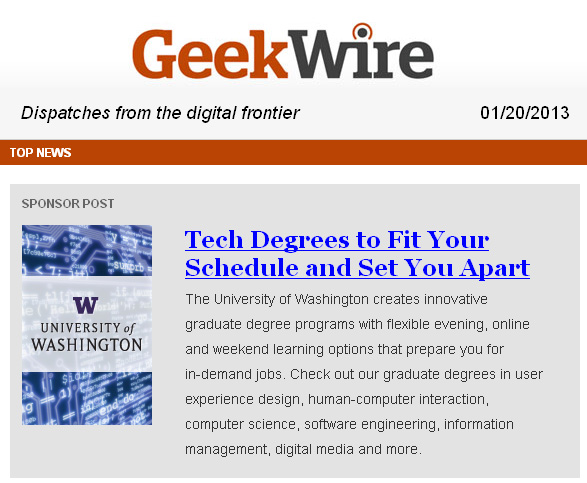 UW offers a host of Professional Masters Programs in technology fields – programs geared to the needs of fully-employed professionals.
An ad in today’s GeekWire highlights these programs. Check out the full list here. Learn more about UW CSE’s Professional Masters Program – one of these offerings – here.
Why would you seek a professional masters degree from a different institution when you can benefit from UW’s top-ranked programs? Read more →
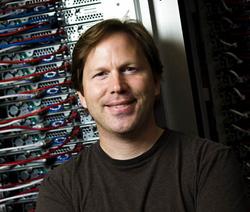 Well, sort of … In Episode 430, “Black Market Pharmacies And The Spam Empire Behind Them,” NPR’s “Planet Money” features UW CSE Ph.D. alum and UCSD professor Stefan Savage:
“Chances are you’ve received an email with a subject line like this ‘The hottest method to please your beloved one’ …
“You’ve probably wondered — who is sending these emails? Does anyone actually click on these links? What happens when they do?
“On today’s show, we go deep inside the world of spam to answer these questions with the help of cyber-security reporter Brian Krebs and researcher Stefan Savage.”
Listen here. Read more →