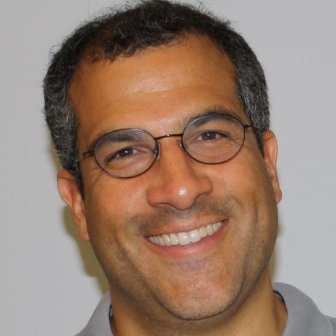
 On February 1, UW alum and former UW EE professor Babak Parviz, co-creator of Google’s Project Glass, will describe that project. Babak’s Google colleagues Nirmal Patel and Bob Ryskamp also will participate.
2:00-2:30, EE125.
[CSE Ph.D. students: See separate information sent by email on January 26.]
IMPORTANT: This talk has been moved to EE125 to provide additional space. Friday, 2:00-2:30, EE125. Read more →
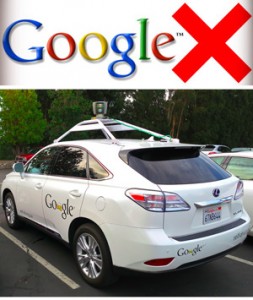 On January 28 at 6 p.m. in EEB 125, two Googlers will discuss Google X (Google’s “skunkworks”) and the Google Driverless Car Project.
UW CSE Ph.D. alum Adrien Treuille, a faculty member at Carnegie Mellon on leave at Google X, will begin by providing an overview of activities at Google X.
Then Nick Hobbs, a graduate of Olin College and a PM at Google X, will discuss the Driverless Car Project.
Plan on roughly 60 minutes of presentation and 30 minutes of Q&A.
Please RSVP here! Read more →
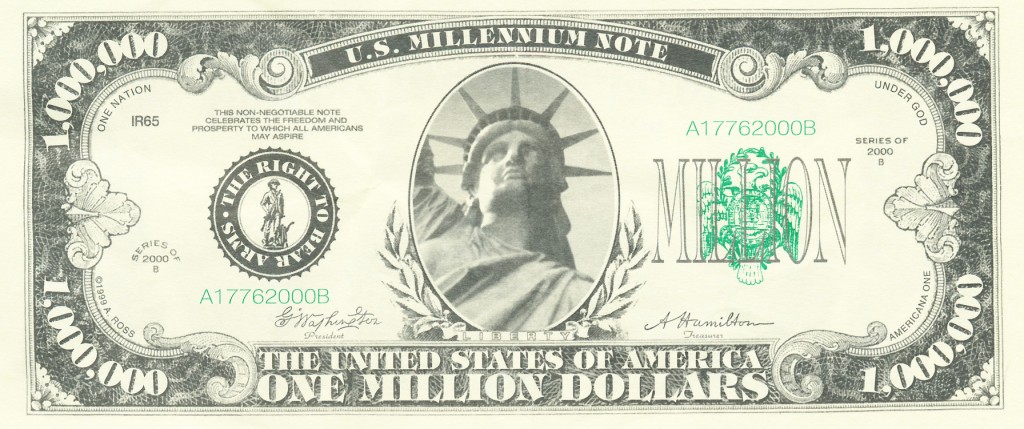 On January 10 we announced the launch of the “Levytown” effort to provide badly-needed additional space for UW CSE.
Imagine our surprise this morning when we opened a small crumpled envelope and discovered, rather than the $40 he had pledged, a $1M bill from Ph.D. alum Marc Fiuczynski.
 Unfortunately, the UW development office is closed on weekends, but we’ll be hustling over there first thing on Monday morning.
Read more →
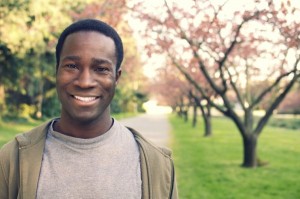 “This week on the GeekWire Podcast, we’re pleased to be joined by one of our former Geeks of the Week, Yaw Anokwa. He’s a graduate of the University of Washington computer science program, co-founder of the software startup Nafundi and one of the computer scientists behind the Open Data Kit project, which provides smart forms for collecting data on mobile devices in rural areas, developing countries and other places with limited connectivity.
“It’s a glimpse into the part of the technology world that we don’t always see, blending mobile technologies and social good. Yaw provides an overview of some of the ways organizations are using the tools around the world, including relief organizations, health workers, government agencies and charitable organizations.
“Among other interesting tidbits, Yaw explains why they’ve built their data collection tools for Android even though he prefers to use an iPhone in his own life. He also talks about his preference for using Macs over Windows PCs as he’s developing software.
“Finally, we discuss his own life in computer science, his love of motorcycles, and his tips for kids and teens out there who want to pursue careers in the field.”
Read more, and listen, here. Read more →
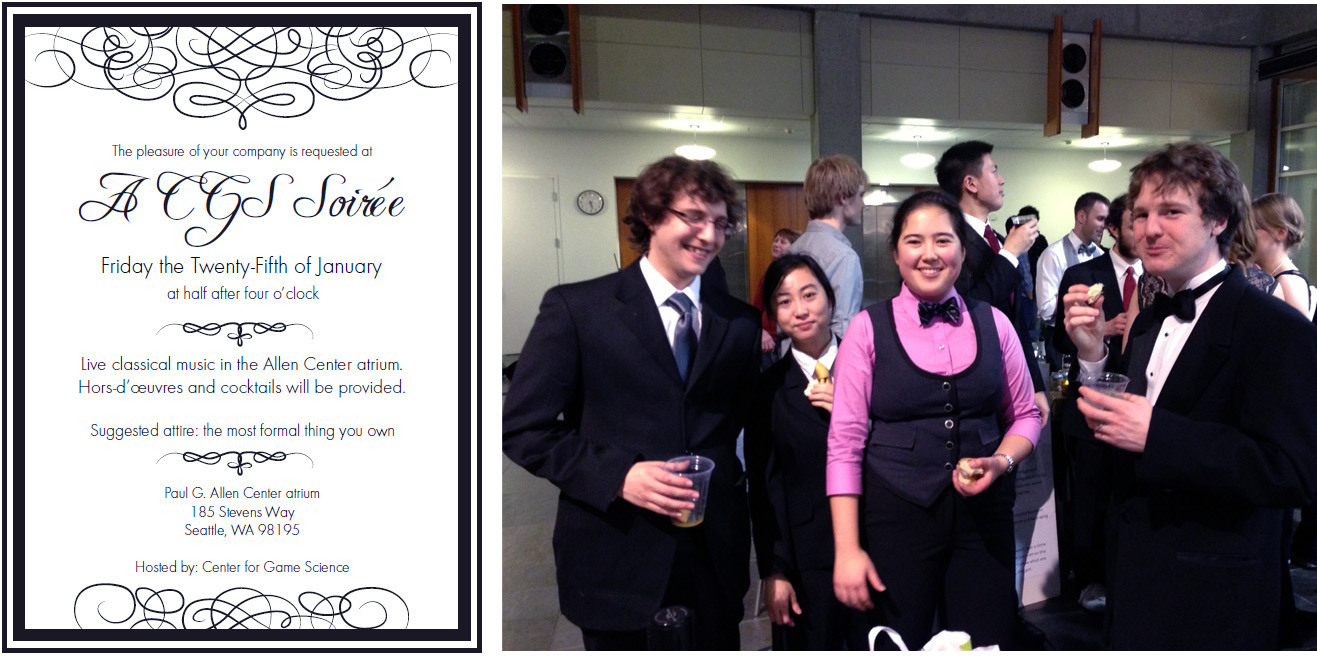
In an attempt to inspire others to raise their game, the graduate students and staff of UW CSE’s Center for Game Science replaced today’s regular Friday TGIF with “A CGS Soiree.”
Unfortunately, the event was so spectacular that it probably marks the last TGIF ever – no one has a prayer of being able to compete.
 Read more →
 UW CSE Ph.D. students Nicki Dell, Katie Kuksenok, and Kyle Rector have been recognized this year’s Palantir Scholarship for Women in Technology.
Nicki, as one of two runners-up (there were two grand winners), received a $7,000 scholarship. Katie, as one of five finalists, received a $2,000 scholarship. Kyle was one of 10 semi-finalists.
Congratulations to Nicki, Katie, and Kyle – and thanks to Palantir! Read more →
 GeekWire reports on the newly-established Northwest Institute for Advanced Computing (NIAC), a joint venture of the University of Washington and the Pacific Northwest National Laboratory:
“The University of Washington is already a budding hub for computer science. Now, with some help from a national laboratory, the Seattle campus will become even more of a CS powerhouse.
“The UW and Pacific Northwest National Laboratory have formed the Northwest Institute for Advanced Computing. Researchers there will jointly focus on developing solutions related to big data for challenges from climate change to energy management.
“‘The expanded partnership between UW and PNNL will create tremendous new opportunities for both organizations,’ Ed Lazowska, UW’s Bill & Melinda Gates Chair in Computer Science & Engineering, said in a press release. ”Big data’ is transforming the process of discovery in all fields. UW and PNNL have significant and complementary strengths; together we’ll be able to do amazing things.'”
Read more here. Read more →
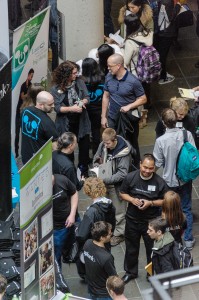 Following on yesterday’s UW CSE Startup Recruiting Fair was today’s recruiting fair for established companies. Participation was again capped at 50 companies (and gosh knows how many UW CSE students) due to space limitations.
These events are held for UW Computer Science & Engineering students, and for companies that are members of the UW CSE Industry Affiliates Program.
See the participating companies here. See the participating startups here. Learn more about the UW CSE Industry Affiliates Program here. (Recruiting fairs are held twice annually, in October and January.) Become a CSE major here. And check out lots of Bruce Hemingway photographs here. Read more →
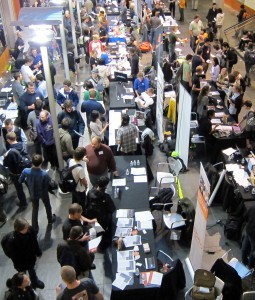 Today was the UW CSE Startup Recruiting Fair – an event devoted to startup companies (50 employees or fewer) seeking to employ UW Computer Science & Engineering students as interns or permanents. Participation was capped at 50 companies (and gosh knows how many UW CSE students) due to space limitations.
Tomorrow: a recruiting day for established companies.
These events are held for UW Computer Science & Engineering students, and for companies that are members of the UW CSE Industry Affiliates Program.
See the participating startups here. See the participating established companies here. Learn more about the UW CSE Industry Affiliates Program here. (Recruiting fairs are held twice annually, in October and January.) Become a CSE major here. Read more →
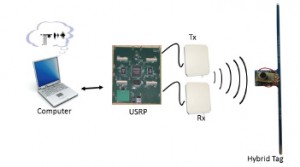 Vamsi Talla – an EE graduate student advised by CSE and EE faculty member Josh Smith – won the Best Student Paper award at WiSNet 2013, the IEEE Topical Meeting on Wireless Sensors and Sensor Networks. In addition to Vamsi and Smith, the co-authors are Michael Buettner (2012 CSE Ph.D., now at Google Seattle) and CSE professor David Wetherall. The work was funded by the Intel Science and Technology Center for Pervasive Computing, and by the NSF.
The paper, entitled “Hybrid Analog-Digital Backscatter Platform for High Data Rate, Battery-Free Sensing,” shows that by combining digital and analog techniques, it is possible to combine desirable features of digital (such as addressability) and analog (high data rate sensing at very low power). The paper presents battery-free, uniquely identified microphones that can be read at about 4m. The microphones are powered, controlled, and read by specially designed Software Defined RFID readers.
Learn more about the work of the Sensor Systems Research Group here. Read more →