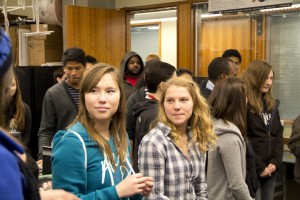
 Roughly 20 students from last summer’s UW College of Engineering Math Academy program returned to campus and visited the Ubiquitous Computing Laboratory in CSE.
Lots of photographs here. Read more →

Roughly 20 students from last summer’s UW College of Engineering Math Academy program returned to campus and visited the Ubiquitous Computing Laboratory in CSE.
Lots of photographs here. Read more →
 For the 20th anniversary of the International Symposium on Field-Programmable Gate Arrays in 2012, a program committee has assembled a special volume to highlight the most significant papers from the conferences – 25 papers across all years and all major FPGA topics that best exemplify the contributions from the conference. These 25 papers represent roughly 5% of the 400-500 papers that have appeared in the conference to date.
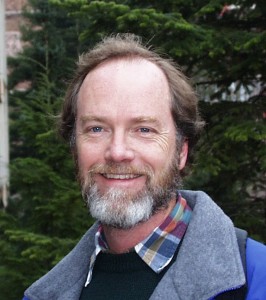
The paper “PathFinder: A Negotiation-Based Performance-Driven Router for FPGAs” by UW CSE’s Larry McMurchie and Carl Ebeling was among the 25 papers selected. In nominating the paper, Sinan Kaptanoglu, Fellow and FPGA Architect at Microsemi Corp., wrote:
“I personally consider this to be the single most important paper for FPGAs at any technical conference in the past twenty years. This assertion is based on the accumulated impact of this paper on the FPGA industry and the academia alike. This paper changed FPGA routing from a major headache with wildly fluctuating results to a reasonably well controlled optimization problem. Today, all FPGA vendors have routers in production that are based on Negotiated Congestion or based on some generalization of the idea. It is also the cornerstone of VPR, the most commonly used tool for Academic Research.
“Some papers inspire the audience immediately. Others, like this one, go underappreciated for a while before their significance is fully understood. … Back in 1995, … very few understood that … this was a game changing fundamental idea that will withstand the challenges of decades and will not be surpassed by any other router, except by its own extensions and generalizations. In the years that followed, slowly but surely, academia and the industry both understood the magnitude of the milestone achieved by the concepts advanced in this paper.”
Congratulations to Carl and Larry! Read more →
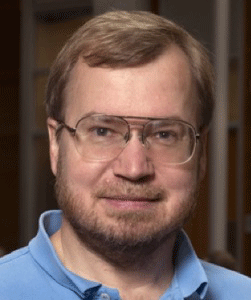 The International ACM Symposium on High-Performance Parallel and Distributed Computing (HPDC) has identified 20 “most influential” papers from the past 20 years. Among them is the paper “WebOS: Operating System Services For Wide Area Applications” by Amin Vahdat, Tom Anderson, Mike Dahlin, Eshwar Belani, David Culler, Paul Eastham, and Chad Yoshikawa.
Says Tom: “Perhaps a lesson in this – this paper was serially rejected from every conference we submitted it to, except the last one (HPDC). After all, in 1996, why would anyone want to have a web service that spanned multiple data centers?”
Congratulations to Tom and his co-authors! Read more →
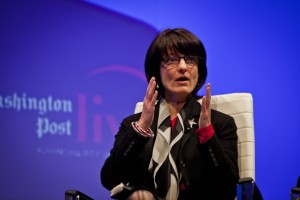 In the Washington Post, DARPA Director Regina Dugan highlights UW’s Foldit game, in which 100,000+ gamers contribute to protein folding and protein structure calculation.
“We have a program — a game — called Foldit. It was originally sponsored at DARPA, and it is essentially the Tetris of protein folding. Understanding the three-dimensional folded structure of a protein is very important for understanding disease and for developing treatments for diseases. A gamer said, ‘Oh, look, lots of small manipulations, lots of detailed interactions — that’s a game.’ And so they built Foldit. Just last September, the three-dimensional protein structure for the retroviral protease that contributes [to] AIDS in rhesus monkeys was solved.
“For 15 years that problem was unsolved in the scientific community. The gamers solved it in days.”
Read Dr. Dugan’s Washington Post article here. Play Foldit here. Learn more about UW CSE’s Center for Game Science here. Read more →
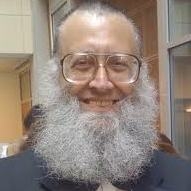 David Notkin – Bradley Chair in Computer Science & Engineering – has been honored with the Influential Educator Award from SIGSOFT, the ACM Special Interest Group on Software Engineering.
David is being recognized for “tremendous impact in graduate-level education, in mentoring junior researchers, and in nurturing future researchers.”
The award was initiated in 2009, and in the first year was awarded posthumously to David’s Ph.D. advisor, CMU’s Nico Habermann. David will receive the award at the International Conference on Software Engineering in Zurich in June.
David has graduated 19 Ph.D. students and 18 Masters students. He received the University of Washington Distinguished Graduate Mentor Award in 2000.
Congratulations David! Read more →
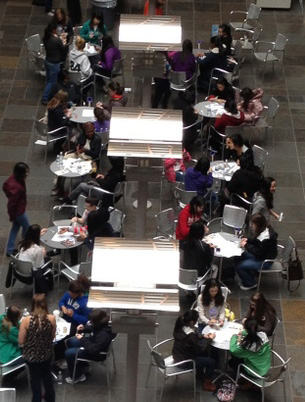
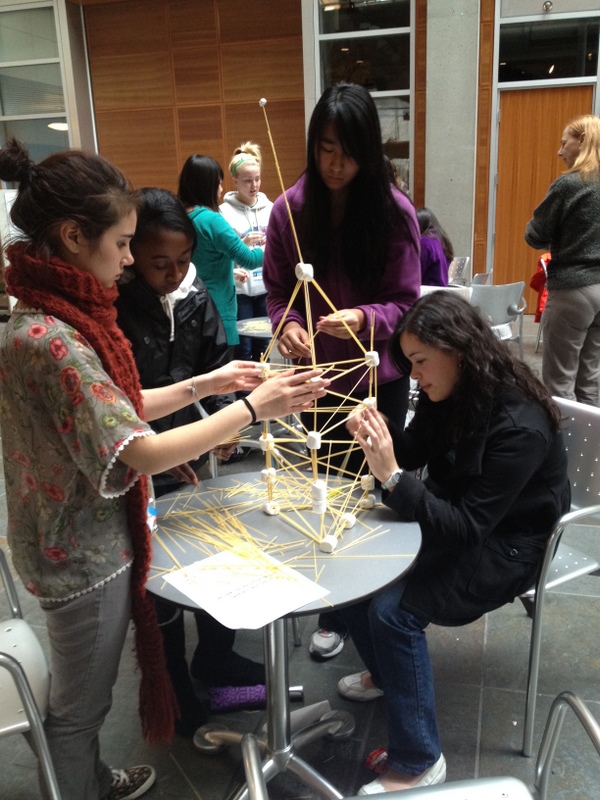 On Saturday February 18, 48 girls in grades 8-12 gathered in UW CSE for STEM Out! organized by Amazon.com Hoppers.
Computer science is a great “change the world” field for everyone! Come join us! Read more →
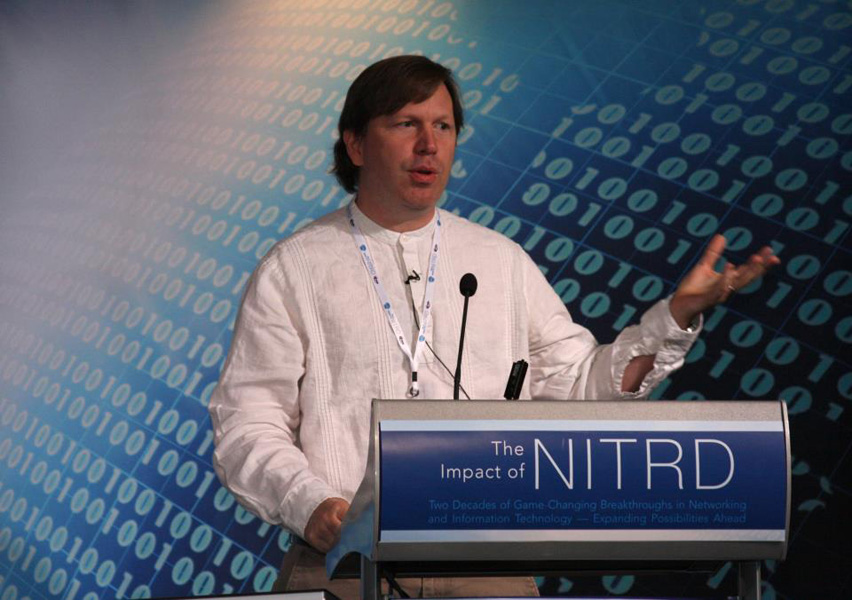 Stefan Savage |
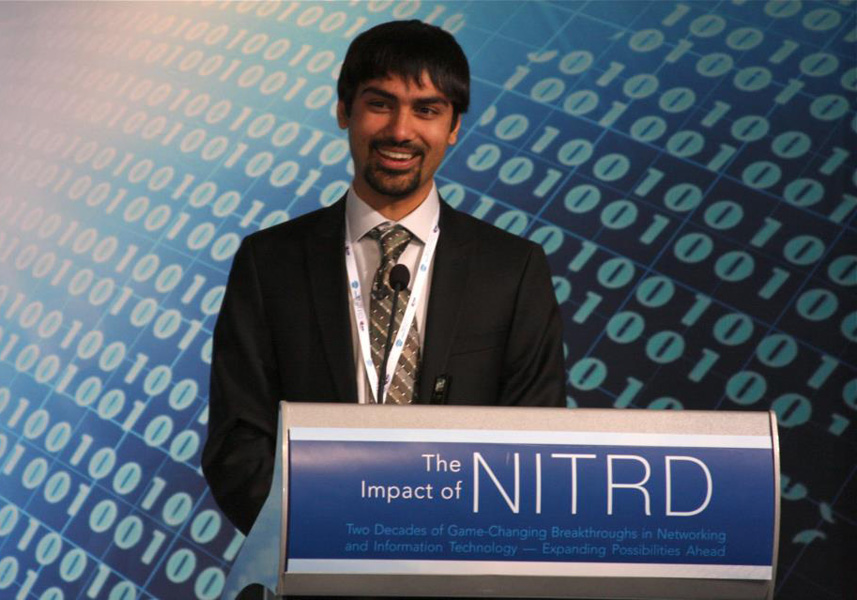 Shwetak Patel |
 Ed Lazowska |
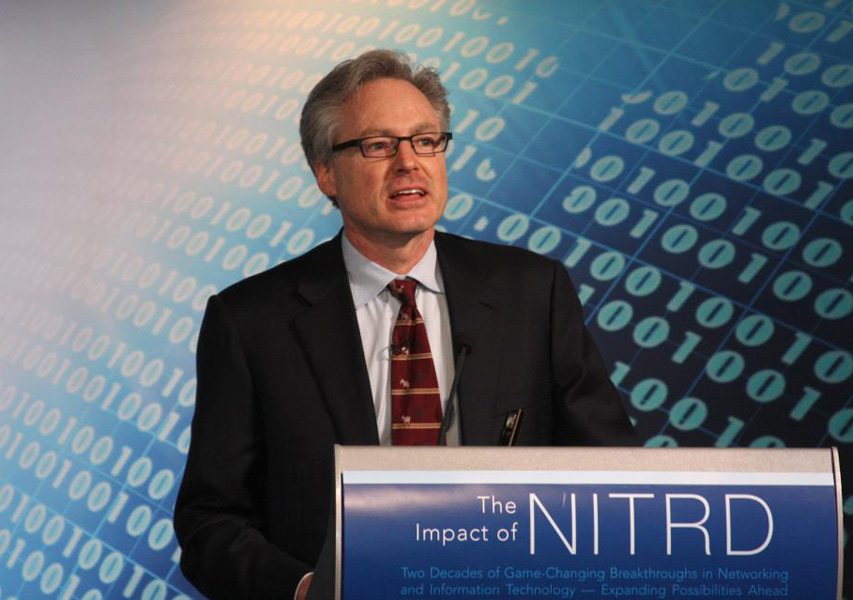 Eric Horvitz |
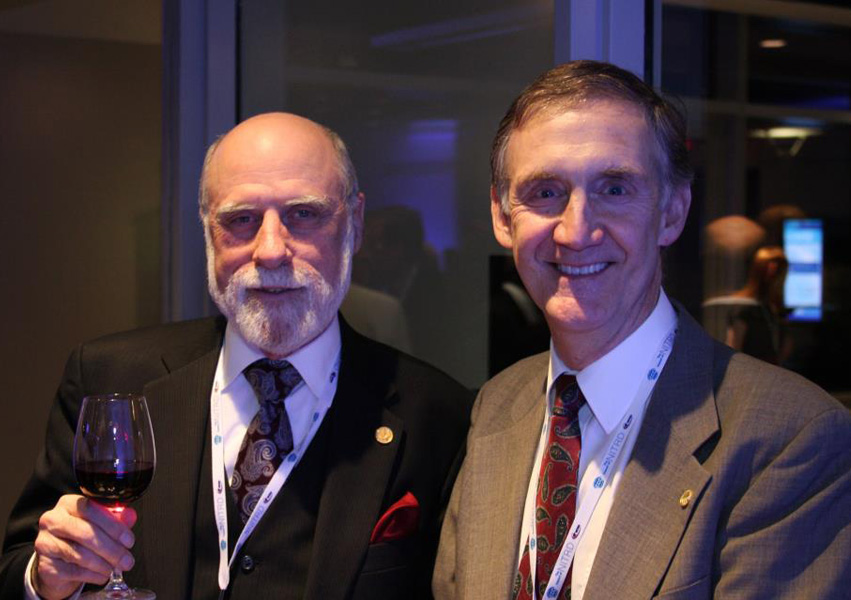 Vint Cerf and Ed Lazowska |
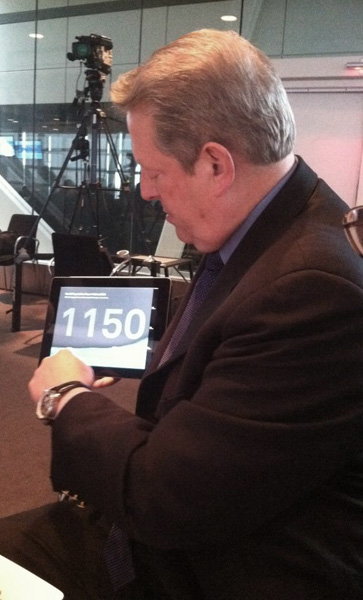 Al Gore demos "Our Choice" on Ed Lazowska's iPad during lunch |
On February 16th, a technical symposium in Washington DC marked the 20th anniversary of the Federal Networking and Information Technology Research and Development Program – the multi-agency coordinated R&D program that was set in motion by the High Performance Computing Act of 1991, sponsored by then-Senator Al Gore.
Among the speakers were UW CSE professor Shwetak Patel, UW CSE Ph.D. alum Stefan Savage (now on the faculty at UC San Diego), UW CSE affiliate professor Eric Horvitz (Microsoft Research), and UW CSE professor Ed Lazowska (who also co-chaired the organizing committee for the Symposium, with Susan Graham from UC Berkeley).
The Symposium agenda is here. Slides, videos, and one page overviews of all talks will be posted shortly. Read more →
Adrian Sampson
After considering nearly 300 applications, Facebook has announced 12 winners and 30 finalists for 2012-2013 Facebook Fellowships.
Winners each receive full payment for their 2012-2013 tuition, a $30,000 stipend to cover study expenses, $5,000 for conference travel, and $2,500 for a personal computer.
Congratulations to UW CSE Ph.D. student Adrian Sampson and UW Information School Ph.D. student Jeff Huang, who are among the 12 winners, and to UW CSE Ph.D. student Alan Ritter, who was among the 30 finalists.
See the Facebook announcement here. See a Seattle Times article here. Read more →
Noah Snavely
Prasad Raghavendra
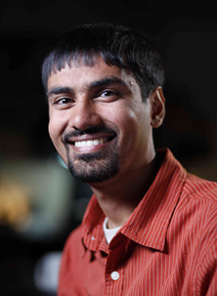
Shwetak Patel
UW CSE professor Shwetak Patel, along with recent UW CSE Ph.D. alums Prasad Raghavendra (now a faculty member at Georgia Tech) and Noah Snavely (now a faculty member at Cornell), were named today as recipients of 2012 Sloan Research Fellowships.
Sloan Research Fellowships – among the most prestigious awards available to young scientists – emphasize individual creativity in the selection process. Patel is the 18th UW CSE faculty member to receive a Sloan Research Fellowship!
Congratulations to Shwetak, Prasad, and Noah!
See the complete list of 2012 Sloan Research Fellows here. Read more →
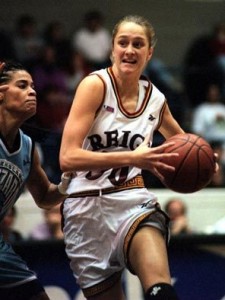 In this Seattle Times article, Kate Starbird – Lakes High School graduate, Stanford and professional basketball star, and soon-to-be University of Colorado ATLAS Institute Ph.D. recipient – credits UW CSE’s David Notkin for reaching out and helping her make the return from professional sports to computer science.
“After playing professionally in Spain, she was thinking about returning to school when she received an email out of the blue from Notkin, inviting her to a meeting of the executive leadership of the National Center for Women & Information Technology.
“Notkin knew she had studied computer science at Stanford and ‘sort of kept a vague eye on her.’
“At the meeting, Starbird sat next to the head of Colorado’s technology program, who invited her to apply there.”
Starbird is speaking this week at the ACM Computer-Supported Cooperative Work conference in Bellevue. On March 5, she will speak in UW HCDE. On March 6, she will speak in UW CSE. The University of Colorado’s ATLAS Institute is led by UW CSE Ph.D. alumnus John Bennett.
Read Brier Dudley’s Seattle Times article here. Read more →