 “When a cell phone or credit-card bill arrives, each call or purchase is itemized, making it possible to track trends in calling or spending, which is especially helpful if you use a phone plan with limited minutes or are trying to stick to a budget. Within the next few years, household utilities could be itemized as well, allowing residents to track their usage and see which devices utilize the most electricity, water, or gas. New sensor technology that consists of a single device for each utility, which builds a picture of household activity by tracing electrical wiring, plumbing, and gas lines back to specific devices or fixtures, could make this far simpler to implement.
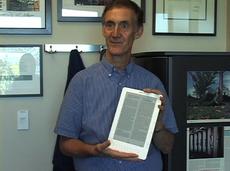
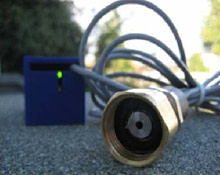
“Shwetak Patel, a professor of computer science and electrical engineering at the University of Washington, in Seattle, developed the sensors, which plug directly into existing infrastructure in buildings, thereby eliminating the need for an elaborate set of networked sensors throughout a structure. For example, an electrical sensor plugs into a single outlet and monitors characteristic ‘noise’ in electrical lines that are linked to specific devices, such as cell-phone chargers, refrigerators, DVD players, and light switches. And a gas sensor attaches to a gas line and monitors pressure changes that can be correlated to turning on a stove or furnace, for instance.
“Now, Patel and his colleagues have developed a pressure sensor that fits around a water pipe. The technology, called Hydrosense, can detect leaks and trace them back to their source, and can recognize characteristic pressure changes that indicate that a specific fixture or appliance is in use.
“Patel hopes to incorporate electrical, gas, and water sensors into a unified technology and has cofounded a startup, called Usenso, that he hopes will start offering combined smart meters to utility companies within the next year or so. The goal, says Patel, is to make a ‘smart home’ universally deployable.”
Read the full article here. Read more →

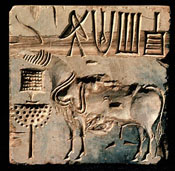 “The Indus civilization, which flourished throughout much of the third millennium B.C., was the most extensive society of its time … About 22 years ago, in Hyderabad, India, an eighth-grade student named Rajesh Rao turned the page of a history textbook and first learned about this fascinating civilization and its mysterious script. In the years that followed, Rao’s schooling and profession took him in a different direction – he wound up pursuing computer science, which he teaches today at the University of Washington in Seattle – but he monitored Indus scholarship carefully, keeping tabs on the dozens of failed attempts at making sense of the script. Even as he studied artificial intelligence and robotics, Rao amassed a small library of books and monographs on the Indus script, about 30 of them. On a nearby bookshelf, he also kept the cherished eighth-grade history textbook that introduced him to the Indus.”


 KUOW (Seattle’s NPR station) interviews UW CSE’s Ed Lazowska regarding the Amazon.com