UW CSE professor Raj Rao is quoted extensively in this article in TechNewsWorld concerning Toyota’s thought-guided wheelchair.
“‘The promise still remains, and there’s been considerable progress made in the last 10 years in the field,’ Rao said. ‘Now we’re getting better and better at decoding these signals … on the recording side, with better hardware to decrease the amount of noise in the [brain] signal. And we’re getting better at understanding the signals once we receive them, and the computer algorithms used. There’s progress on all these fronts.'”
Read the full article here. Read more →
 Most states suffer a significant “brain drain” of graduates from their flagship universities. Not so for the University of Washington! Forbes Magazine ranks UW #1 in the nation for the proportion of its graduates that are still working in-state 5 years after graduation.
“The state doing the best job of holding onto its top public university graduates is Washington. No fewer than 74% of University of Washington grads remain in the Evergreen State, well ahead of second-ranked Minnesota, which retains 67% from the University of Minnesota.”
UW CSE contributes strongly to this, even at the graduate level. At the June 2009 commencement, UW CSE awarded 82 Masters degrees and 24 Ph.D. degrees. Of these 106 graduate degree recipients, 60 (57%) came from Washington State, and 89 (84%) remained in Washington State after receiving their degrees.
Read the Forbes article here. See the data on various flagship public universities here. Read more →
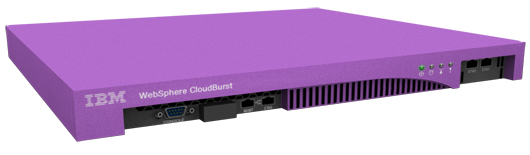 The Seattle Times interviews Dennis Quan, IBM’s director of autonomic computing development in Raleigh, N.C., regarding IBM’s new “CloudBurst” offering:
“Blueprints for IBM’s cloud offerings came from a joint research project with Google. It initially explored business intelligence at big schools and large-scale analytics, which led to the creation of a cloud-computing cluster at the UW and two run by IBM in 2007. ‘The work that was done as part of that project really informed how we can put together large cloud datacenters that can efficiently process terabytes, petabytes, of information across thousands of machines,’ he said. The early clusters also ‘kind of provide the blueprints for the designs we base these new clouds on,’ he said.”
UW’s cloud computing course was profiled in Business Week in December 2007. The web materials from the most recent version of the course, CSE490H, are here. The startup company Cloudera involves a number of the principals of the original UW course.
Read the Seattle Times article here. Read more →
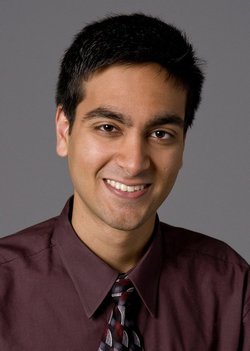 CSE’s graduating senior Pavan Vaswani has won the University of Washington President’s Medal, awarded annually to the top student in UW’s 7,500+ person graduating class.
Pavan is majoring in CSE, neurobiology and biochemistry. His decision to come to the UW was heavily influenced by the assurance that he could become involved in research the day that he arrived on campus. Indeed, his experience working with faculty in a research setting caused him to broaden his degree ambitions, which had begun with computer science.
Pavan is a Goldwater Scholar, a Mary Gates Scholar and a Washington Scholar. He also has received the Research Fellowship for Advanced Undergraduates and is a Space Grant Scholar. He is currently working in a laboratory in the Department of Neurological Surgery, where he is developing a device to measure brain pressure non-invasively using ultrasound.
Pavan plans to attend The Johns Hopkins University in an M.D.-Ph.D. program. He is ultimately planning a career in medical research.
Previously, Pavan was the UW Sophomore Medalist and the UW Junior Medalist (awarded to the top student in each of those classes). Recently he was awarded the UW Arts & Sciences Dean’s Medal for the Sciences, given to the top graduating student in the sciences. Read more about Pavan and his accomplishments here. Read more →
 TechFlash discusses Microsoft’s newly launched Bing Travel — which combines UW CSE’s Farecast’s airfare-prediction and travel-search tools with MSN editorial content — as “a key chess piece in Microsoft’s new effort to challenge Google in Internet search.”
“It’s also a high-profile example of Microsoft benefiting from technology developed in its backyard. Oren Etzioni, the University of Washington computer scientist who founded Farecast in 2003, is watching with pride.”
Read the TechFlash post here. Read more →
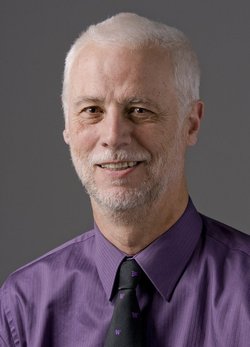 A University Week profile of CSE professor Richard Ladner, winner of the 2009 University of Washington Outstanding Public Service Award for his work with the deaf and blind communities.
“‘It is kind of interesting at this point in my career. You would think I would be winding down,’ says Ladner, the Boeing Professor in Computer Science & Engineering … But instead of making plans for retirement, he has a pile of cell phones on his desk that he’s adapting to make them accessible, a project to bring American Sign Language to the UW campus, and ongoing relationships with groups on campus and around the country.”
Read the full article here. Congratulations Richard! Read more →
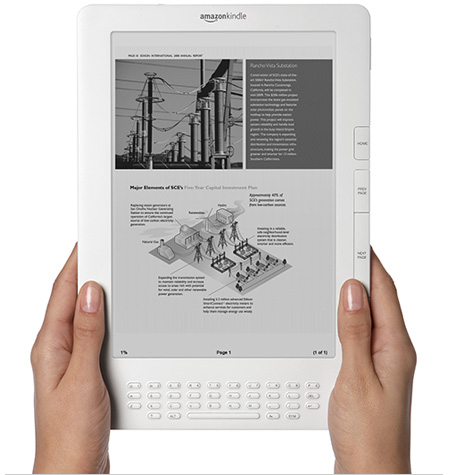 In Fall 2009, each incoming University of Washington Computer Science & Engineering graduate student will receive a Kindle DX, Amazon’s latest wireless reading device, to use in place of traditional printed textbooks and research papers in their first-year graduate courses. The students also will receive textbooks and other required reading materials free of charge for the Kindle DX.
The University of Washington is one of seven colleges and universities conducting a Kindle DX pilot program. The goals of the pilot are to explore the use of electronic readers in university classes, and to discover their strengths and weaknesses relative to traditional content delivery. At the University of Washington, Computer Science & Engineering and the Foster School of Business are participating in the pilot. The other institutions taking part in the pilot are Princeton University, Case Western Reserve University, Reed College, Arizona State University, Pace University, and the Darden School of Business at the University of Virginia.
Learn more here!
TechFlash article here. Read more →
 A National Science Foundation news release regarding the President’s 60-day assessment of cybersecurity. “[NSF CISE Assistant Director Jeannette] Wing asked Fred Schneider, a computer science professor at Cornell University and chief scientist of the NSF-funded TRUST Science and Technology Center, and Ed Lazowska, a professor of computer science at the University of Washington, to gather ideas from experts in trustworthy computing from a variety of academic institutions and turn them into a viable set of policy recommendations.”
See the NSF press release here. Read more →
 Susan Eggers, Microsoft Professor of Computer Science & Engineering at the University of Washington, has been named the 2009 Distinguished Alumnus of UC Berkeley’s Computer Science Division. She will be recognized at the UC Berkeley commencement on Sunday May 24.
Eggers’s achievements in computer architecture have earned her recognition as a Member of the National Academy of Engineering and as a Fellow of ACM, IEEE, and AAAS.
Eggers, who will be recognized along with Steve McCanne, joins a “Who’s Who” of computer scientists who are Berkeley alums and have received this recognition — among the recipients during the first decade of the award were Doug Engelbart, Ken Thompson, Bill Joy, Jim Gray, Niklaus Wirth, Butler Lampson, Randy Katz, Len Adleman, Chuck Thacker, Eric Schmidt, Steve Wozniak, and Barbara Liskov.
Congratulations Susan on another well-deserved honor! Read more →
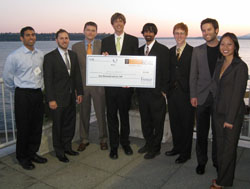 HydroSense — a team led by UW CSE graduate student Jon Froehlich and advised by UW CSE faculty members Shwetak Patel, James Fogarty, and James Landay — finished 3rd out of 90 entrants in the 2009 University of Washington Business Plan Competition. HydroSense received the $5,000 WRF Capital Finalist Prize, and was named the “Best Clean-Tech Idea.”
Hopes were high as HydroSense won the $10,000 UW Environmental Innovation Challenge in early April, then made it to the Round of 16 and the Round of 5 in the 90-entrant Business Plan Competition. Much of the $10,000 Environmental Innovation Challenge prize was spent by Fogarty purchasing his first suit in the hopes of influencing the final judging of the Business Plan Competition, but wearing it over a t-shirt with an orange tie probably doomed the outcome.
HydroSense attacks the problem of water leakage in the United States, which accounts for 10 percent of average household water used. As part of their strategy, the team developed a device that screws onto a single water faucet and uses an analysis of acoustic vibrations and pressure differential signatures of water flow to determine usage.
Congratulations to Jon and his team! Read more →