Read the article here.
“The project, known as the Vocal Joystick, is designed to allow someone to control a computer cursor using nothing more than their voice … Malkin demonstrated the software in real-time, showing how it is used in conjunction with a simple game where a player controls a fish swimming around trying to catch other fish. He proceeded to sound out vowel after vowel, and sure enough, on-screen, his fish moved around dexterously, chomping up snack after snack. The Gnomedex crowd went wild.”
Vocal Joystick is a collaboration between UW Electrical Engineering and Computer Science & Engineering. Read more →
Read the article here.
The National Medal of Technology honors America’s leading innovators. Cutler is best known for his contributions to operating systems: RSX-11/M, VAX/VMS, VAXeln, and Windows NT. CSE’s Ed Lazowska, in his letter of support for Bill Gates’s nomination of Cutler, wrote: “Cutler … has an incredible facility for creating designs that will work, for leading teams that implement these designs according to spec – correct, on-time, within budget, and meeting performance goals – and for building the most critical and challenging aspects himself … Project after project, for more than 30 years, Cutler has succeeded at accomplishing the impossible (or at least the highly unlikely) through insight, talent, skill, leadership, and force of will. The result, as the nomination states, is ‘fundamental contributions to computer architecture, to compilers, to operating systems, and to software engineering’ that ‘enabled a trillion dollars of industry revenue.'” Read more →
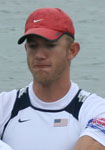 2005 UW Computer Engineering bachelors alumnus Brett Newlin will represent the United States in the Men’s Four at the Beijing Olympics. A four-time national team member and first-time Olympian, Brett was named USRowing’s Male Athlete of the Year in 2006.
Brett was one of six US Olympic Team members featured in an August 3 NY Times spread, Bodies of Work: “‘In high school, I was kind of a beanpole. Then in college I started rowing, and muscles started popping out from all over the place.'”
See Brett’s USRowing Olympic biography here. Beijing photos by fellow Husky oarsman Scott Gault here. Read more →
Read the article here.
PC Week describes the Adeona service, created by UW CSE undergraduate Gabriel Maganis.”Lose your laptop these days and you lose part of your life: You say good-bye to photos, music and personal documents that cannot be replaced, and if it’s a work computer, you may be the source of a very public data breach.
“But now, researchers at the University of Washington and the University of California, San Diego, have found a way to give you a shot at getting your life back …
“Here’s how it works: A user downloads the free client software onto a laptop. That software then starts anonymously sending encrypted notes about the computer’s whereabouts to servers on the Internet. If the laptop ever goes missing, the user downloads another program, enters a username and password, and then picks up this information from the servers …”
See Slashdot here
See SC Magazine here Read more →
Read the article here.
“Insert your key in the ignition of a luxury car and the seat and steering wheel will automatically adjust to preprogrammed body proportions … But open any computer program and you’re largely subject to a design team’s ideas about button sizes, fonts and layouts … A new approach to design, developed at the University of Washington, would put each person through a brief skills test and then generate a mathematically-based version of the user interface optimized for his or her vision and motor abilities.”
Supple project website here. Read more →
 CSE’s Yoky Matsuoka is profiled by PBS’s Nova science series. “A former tennis prodigy aims to create advanced prosthetic limbs controlled by human thought. Learn how a self-described ‘airhead’ came to embrace her inner scientist, and what she’s doing to encourage young women to pursue scientific careers.”
View the video at Nova. Read more →
Read the article here.
CSE’s Ed Lazowska in the Chronicle of Higher Education. Read more →
Read the article here.
 Mikhail Manyak, 20, a University of Washington Computer Engineering student, died Sunday after suffering a massive allergic reaction to medications prescribed following oral surgery. Read more →
Read the article here.
“This year, researchers at the Howard Hughes Medical Institute and the University of Washington began recruiting computer gamers to an online competition, named Foldit, aimed at unraveling one of the knottiest problems of biology: how proteins fold.” Read more →