American millennials lag the developed world in literacy, numeracy, and problem solving

branding-globeNot directly related to UW CSE, but important to all who care about education and about the future of our society:

A sobering analysis by the Educational Testing Service of results from the latest Programme for the International Assessment of Adult Competencies (PIAAC) survey of adult skills carried out by the Organisation for Economic Co-operation and Development (OECD).

Among the 22 participating nations, American millenials (the cohort born after 1980) had:

  • Among the lowest average scores in each skill area
  • Among the lowest scores for students at the 90th percentile nationally
  • The lowest scores for those at the 10th percentile nationally
  • Among the lowest scores in numeracy among those with four-year bachelors degrees (we beat only Poland and Spain)

Read the short scary summary here. Read more →

Remembering Ira Kalet, 1944-2015

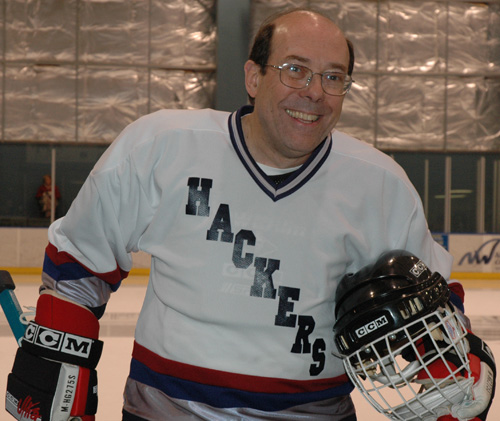
iraRetired CSE adjunct professor Ira Kalet passed away last night after a long battle with cancer.

Ira joined the University of Washington in 1978 in the then newly formed Department of Radiation Oncology. Subsequently he held adjunct appointments in Computer Science & Engineering, Bioengineering, and Biological Structure, and a joint appointment in Medical Education (now the Department of Biomedical Informatics and Medical Education).

From 2005 until his retirement, Ira also served as Director of Security and Networking for UW Medicine IT Services, where he led the establishment of a strong security program for UW Medicine clinical and research data and systems.

Ira was closely engaged as a CSE adjunct professor, advising a number of CSE Masters and Doctoral students.

We extend our best wishes to his wife Terry, and to all of his many friends. Read more →

Google Faculty Research Awards to UW CSE’s Tom Anderson, Alvin Cheung, Richard Ladner, Ph.D.alums Ethan Katz-Bassett and Steve Swanson, iSchool professor Karen Fisher

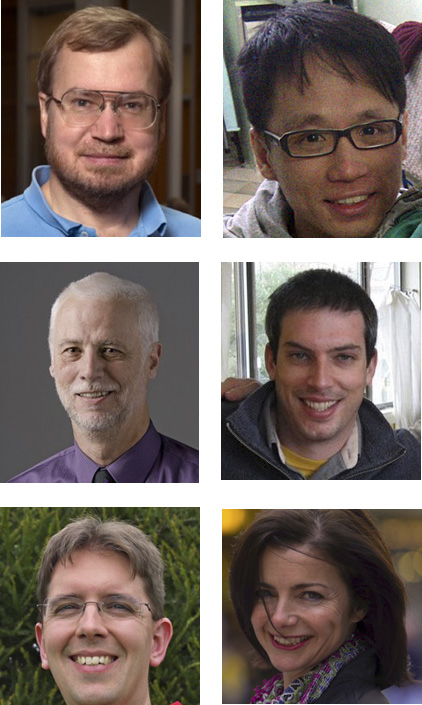
sixUW CSE’s Tom Anderson, Alvin Cheung, and Richard Ladner are among 122 recipients (from among 808 applicants) of Winter 2015 Google Faculty Research Awards. UW CSE Ph.D. alums Ethan Katz-Bassett (now on the faculty at USC) and Steve Swanson (now on the faculty at UCSD) also were recipients, as was UW iSchool professor Karen Fisher.

Congratulations to Tom, Alvin, Richard, Ethan, Steve, and Karen! Read more here.

  Read more →

UW CSE’s Nanocrafter in PLOS

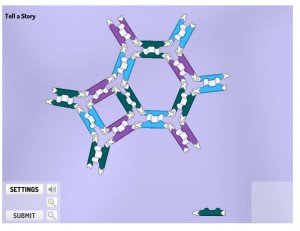
Nanocrafter-image“On its surface, it looks like just another science puzzle game. In reality, the game is part of a broader goal to enable non-scientists to contribute to synthetic biology research.

“‘It’ is Nanocrafter, a project created by researchers and game developers at the Center for Game Science at the University of Washington. They are the same team behind the citizen science project FoldIt.”

Read more here. Read more →

Forbes: “We Need to Innovate the Science Business Model”

indexAn article by Greg Satell in Forbes concludes:

“Most of all, we need to accept that we all have a stake in the public funding of science.  It is, after all, government funding that made the iPhone possible, has led to miracle cures and blockbuster drugs and decoded the human genome.  We’d all be poorer without it.”

The article quotes UW CSE’s Ed Lazowska extensively:

“When [Vannevar] Bush wrote his famous proposal for public financing of scientific research, we had just defeated Hitler and his allies with help from scientific miracles like radar and the atomic bomb. That created enormous support for the public funding of science to enhance the private sector as well as national defense.  Times, unfortunately, have clearly changed.

“Today, there is a veritable war on science, with politicians quick to score cheap political points by accusing researchers of waste or merely declaring that science is irrelevant to everyday concerns.  Ed Lazowska, who co-chaired President Bush’s Information Technology Advisory Committee, sees this as a fundamental misunderstanding of how innovation takes place.

“There’s a big misunderstanding of today’s industry R&D. Most of it is ‘D’ rather than ‘R,” he told me and points to Google X as an example. Although Google has taken on major business risks with things like autonomous cars, the basic research was funded by the federal government through places like NSF and DARPA, so there is little technological risk.

“He also points to the principle of appropriability as a foundation for thinking about scientific funding. Enterprises understandably have a bias for investments from which they will benefit directly. That’s why public funding is the most viable source of support for basic research, which leads to applications that are not only broad, but often unforeseeable.

“Lazowska notes further that market leaders may have an interest in investing in scientific inquiry that benefits their industry broadly and highlights Microsoft and IBM as two firms that invest in basic research and publish openly. Yet they are the exception, not the rule.”

Read more in Forbes here. Read more →

NSF CAREER Award to UW CSE postdoc alum Yuriy Brun

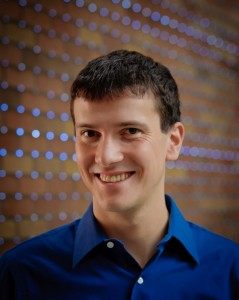
yuriyCongratulations to Yuriy Brun – 2008 USC Ph.D., Computing Innovation Fellow postdoc in UW CSE from 2009-12, and now an Assistant Professor at UMass-Amherst – on receipt of an NSF CAREER Award.

Yuriy’s research interests are in software system modeling, design, and development, focusing on understanding how local component behavior impacts global system behavior.

(That’s the Allen Center’s cool LED public artwall in the background of Yuriy’s photograph!) Read more →

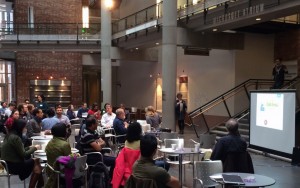
UW CSE hosts Code for Seattle’s “Seattle Open Data Day”

logo-300x300Today UW CSE hosted Code for Seattle’s “Seattle Open Data Day” – a one day unconference on open data and civic technology where we ask: how might we …

  • Make data easy to find and use?
  • Use data to make and improve decisions?
  • Make it easy for everyone to participate in open data and civic technology?

UW CSE Ph.D. student Will Scott was the organizer. Socrata, Microsoft, and the City of Seattle were among the sponsors.

Putting public data to work for the public good is something we can all get behind! Let’s make Seattle a leader in this!

IMG_4722


  Read more →

UW’s Aaron Parks, Kyle Rector are 2015 North American Google PhD Fellows

anp-181x300Among the 15 2015 North American Google PhD Fellows announced to day are UW’s Aaron Parks and Kyle Rector.

Aaron, a Ph.D. student in Electrical Engineering, works with CSE and EE professor Josh Smith on the design of ultra-low-power hardware and software systems, and RF energy harvesting for ubiquitous computing applications.

Kyle, a Ph.D. student in CSE, works with HCDE professor (and CSE affiliate professor) Julie Kientz and CSE professor Richard Ladner on research at the intersection of human-computer interaction and accessibility, such as designing accessible exergames for people who are blind or low-vision.

Congratulations to Aaron and Kyle, and thanks to Google! Read the Google announcement here.


kyle
Read more →

Magda Balazinska, Luis Ceze, and Yoshi Kohno honored with Career Development Professorships

threesomeCongratulations to UW CSE professors Magda Balazinska, Luis Ceze, and Yoshi Kohno, who have been appointed by the Provost to Career Development Professorships – endowed positions that are awarded for a fixed period of time (typically three years) to extraordinary Associate Professors.

Magda has been appointed as the Jean-Loup Baer Career Development Professor of Computer Science & Engineering. This professorship was established by UW CSE Bachelors alumna Anne Dinning and her husband Michael Wolf in honor of UW CSE professor emeritus Jean-Loup Baer. Magda joined the University of Washington in 2006 after receiving her Ph.D. from MIT. Her MIT thesis work concerned distributed stream processing and sensor data management – leading-edge topics in “traditional” data management. Shortly after arriving at UW she decided to take a significant risk: embed herself with some of UW’s leading scientists (most especially Andrew Connolly in Astronomy) and derive her research agenda from their needs. This has paid off phenomenally for Magda, for CSE, and for UW: Magda has become a world leader in “big data” management, scientific data management, and cloud computing.

Luis has been appointed as the Torode Family Career Development Professor of Computer Science & Engineering. This professorship was established by UW CSE Ph.D. alumnus John Torode and his wife Patti. Luis is widely regarded as the most creative and most productive early-career faculty member working in the broad and rich field of computer architecture. Luis joined UW CSE in September 2007, after completing his Ph.D. at the University of Illinois. He holds more than a half dozen patents, co-founded the startup company Corensic, and is a superb citizen of CSE and of the national and international research communities in his field.

Yoshi has been appointed as the Short-Dooley Career Development Professor of  Computer Science & Engineering. This professorship was established by UW CSE Masters alumnus Rob Short and his partner Emer Dooley. Yoshi joined the University of Washington in 2006, following receipt of his Ph.D. from UCSD. He has almost single-handedly established the University of Washington as a major force in computer security and privacy – an extraordinary accomplishment. He excels in research, in education, and in civic engagement.

Congratulations to Magda, Luis, and Yoshi! And many thanks to Anne Dinning & Michael Wolf, John & Patti Torode, and Rob Short & Emer Dooley for making it possible for us to recognize these superb UW CSE faculty members! Read more →

UW data science team at AAAS Annual Meeting

PrintThere’s a new kind of researcher on campus, one who doesn’t fit into the usual nooks and crannies at a university.

They are data scientists – students, faculty members and professional scientific staff – who are building the tools and crafting the methods to help researchers analyze the vast amounts of data now abundant in every field. The very nature of their skill set is interdisciplinary, and the university system doesn’t always reward them for the time they spend developing techniques and software to advance discovery.

This dilemma, and what universities can do to change it, is the topic of a symposium Feb. 15 at the American Association for the Advancement of Science annual meeting in San Jose, California. The session, “Advancing University Career Paths in Interdisciplinary Data-Intensive Science,” was organized by UW’s Cecilia Aragon and Bill Howe, and also includes UW’s Ed Lazowska, Berkeley’s Joshua Bloom and Fernando Perez, and NYU’s Juliana Freire – partners in the Data Science Environments project supported by the Gordon and Betty Moore Foundation and the Alfred P. Sloan Foundation.

Read a UW News post here.  See Ed Lazowska’s introductory slides here. Read more →

« Newer PostsOlder Posts »