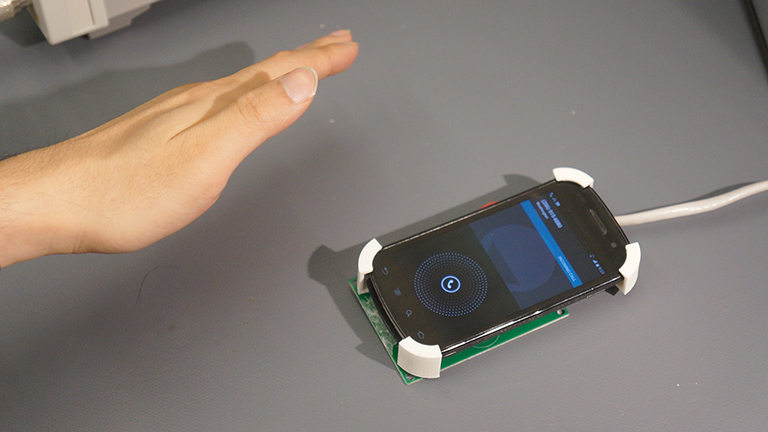
 The Register reports on recent work by UW CSE’s Rajalakshmi Nandakumar, Bryce Kellogg, and Shyam Gollakota – the first wireless gesture recognition design that operates using ambient Wi-Fi signals and devices. Leveraging their design, the authors demonstrate the feasibility of non line-of-sight gesture interaction on commodity devices. Given the ubiquity of Wi-Fi on mobile devices, the work takes a significant step towards always-available interaction.
Read the article in The Register here. Check out the research paper here. Learn about all the work in UW CSE’s Networks and Sensing Lab here. Read more →
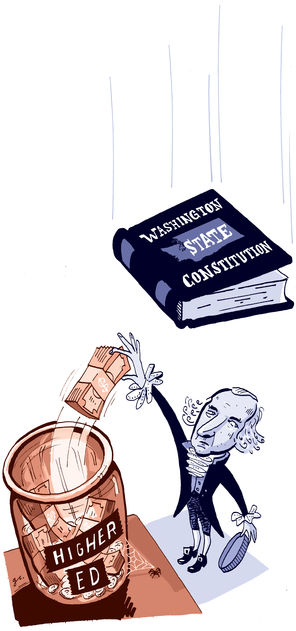 A Seattle Times op-ed by attorney and former UW Regent Stan Barer and UW Law professor Hugh Spitzer argues that the state has a constitutional funding obligation to its universities, as well as to K-12 education.
“What this means, from a practical standpoint, is that the Legislature cannot lawfully throw our public universities under the bus …”
“But since the 1980s, we have witnessed a massive reduction in state per-student funding for higher education. For example, in the 2009-2011 biennium, state per-student funding for the same programs dropped to $7,122, and by the 2011-2013 biennium, state per-student funding dropped to $5,000.”
Read more here.
Read more →
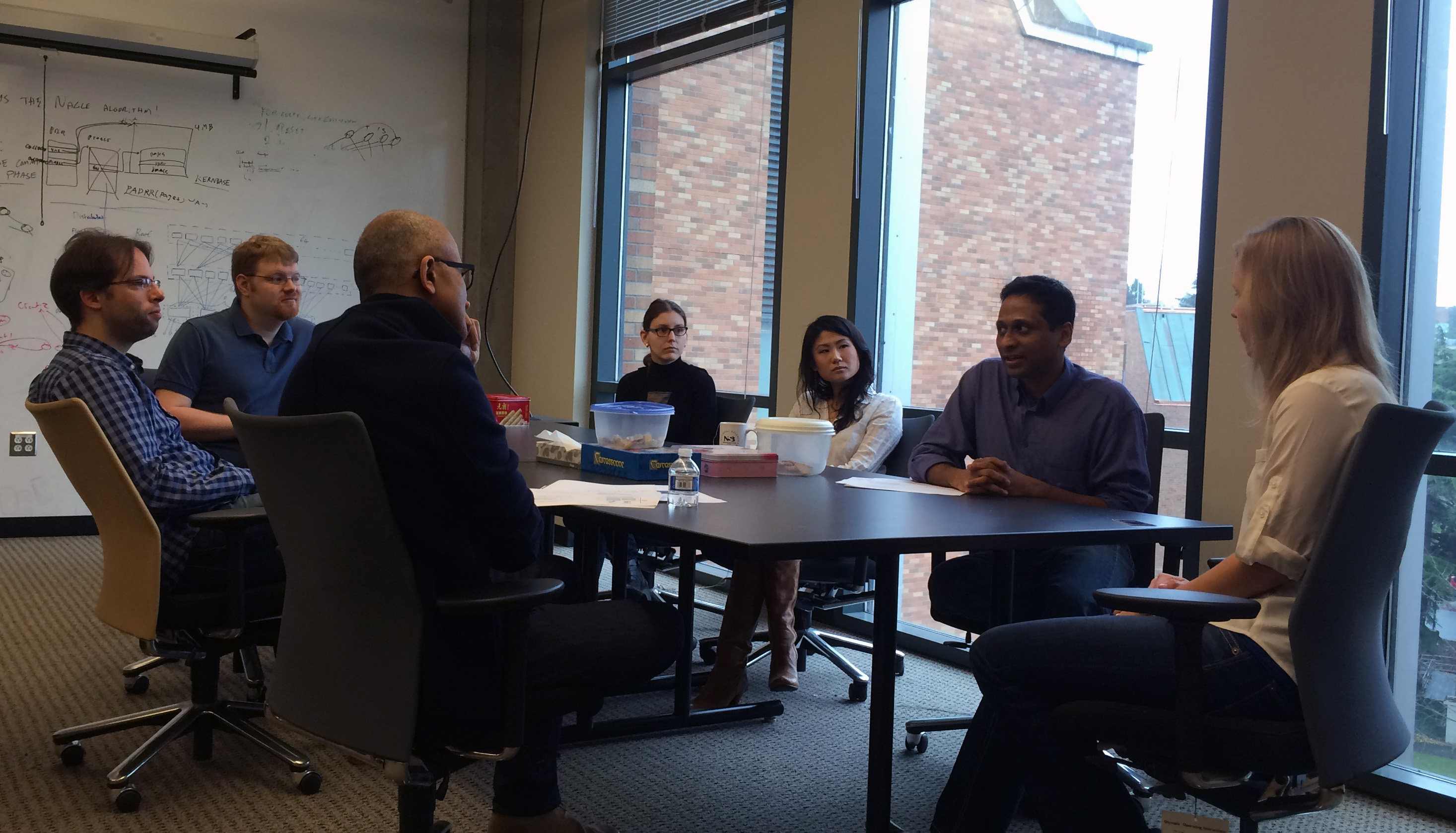
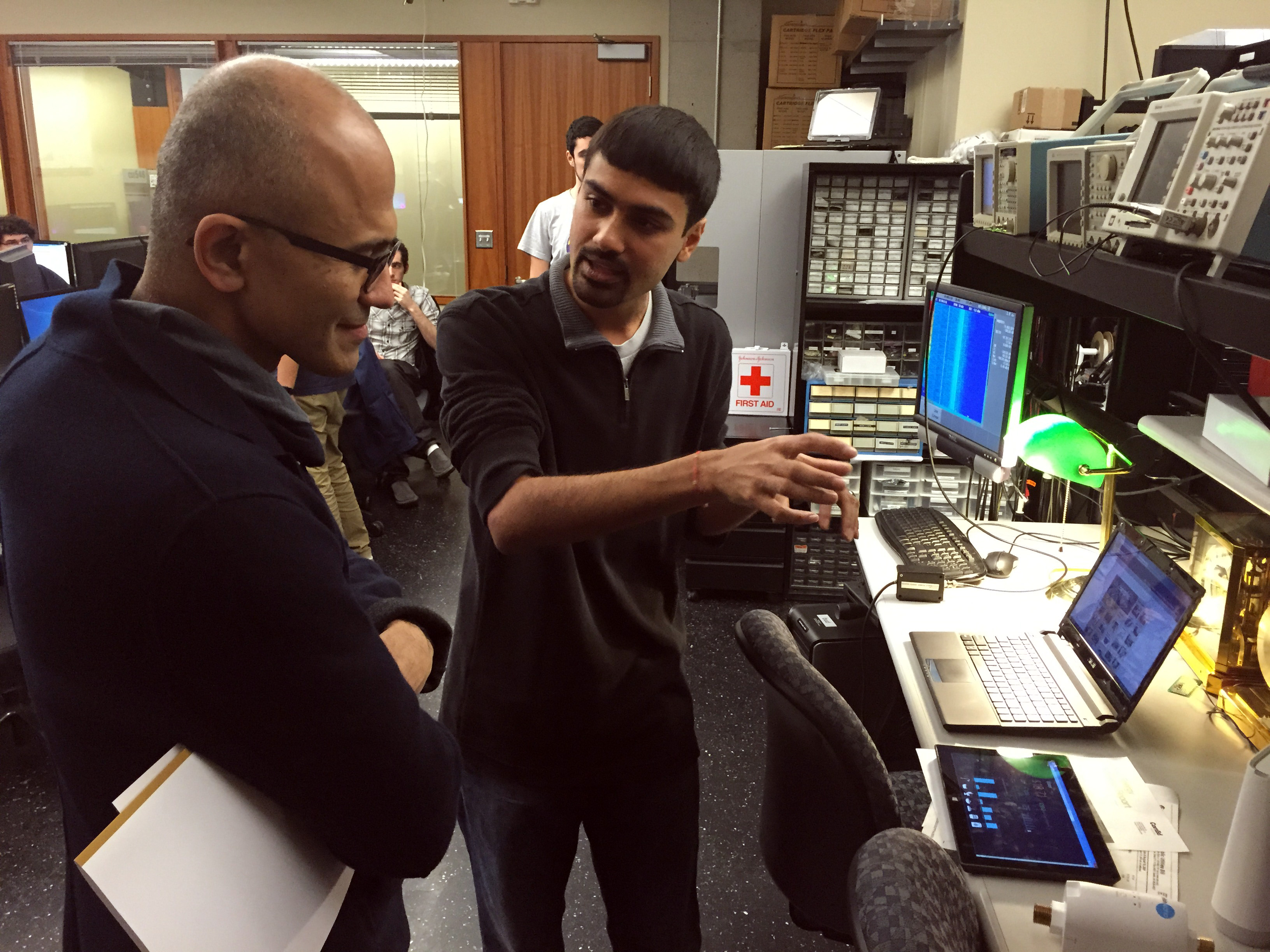
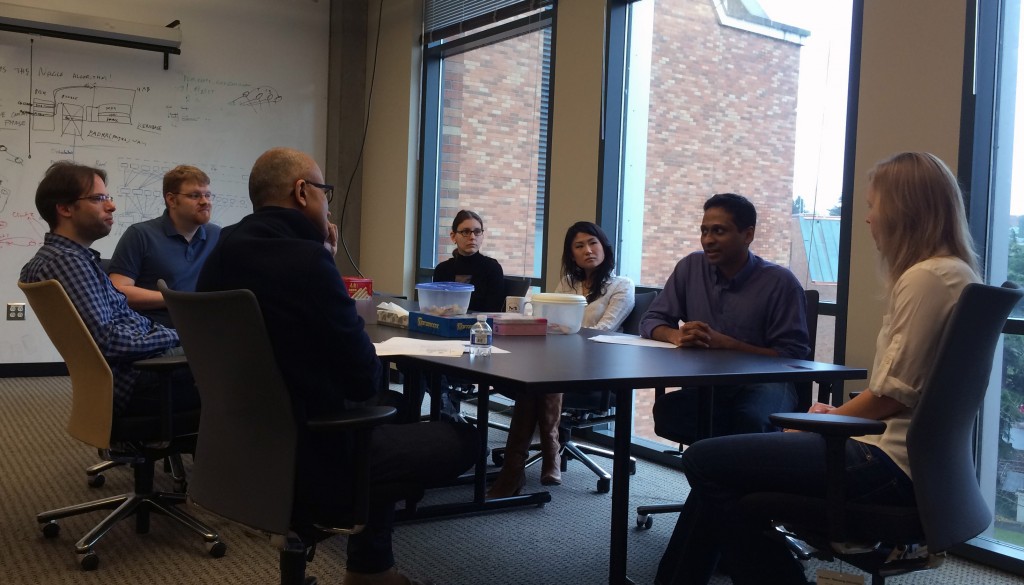
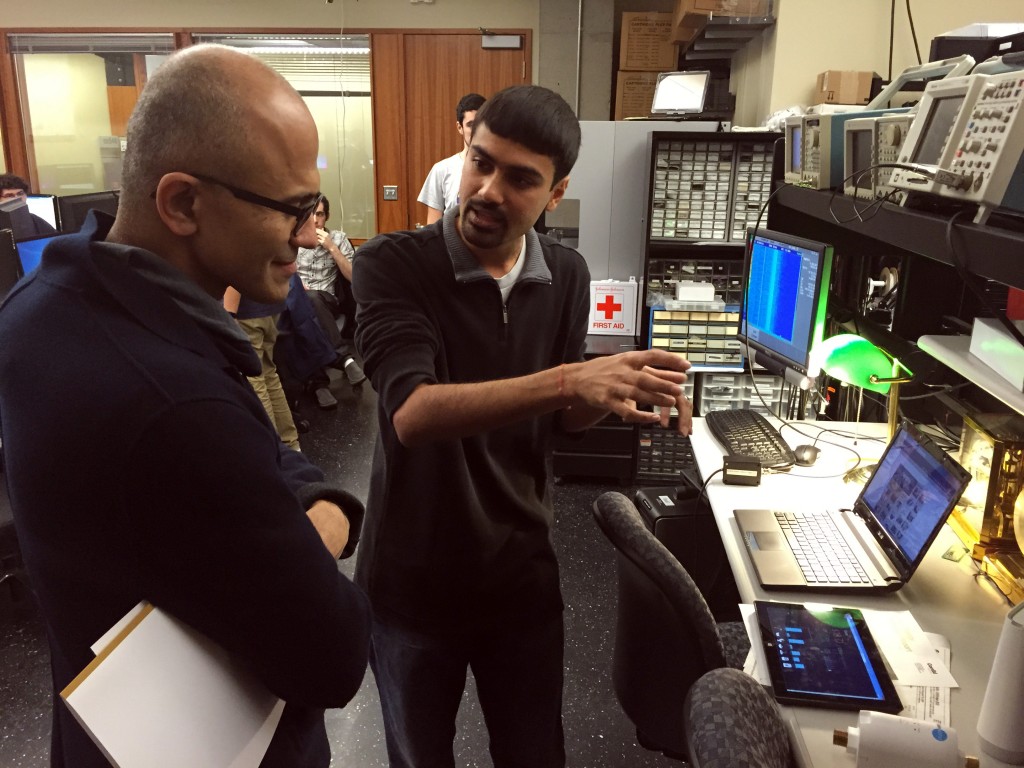
 Microsoft CEO Satya Nadella spent 90 minutes in UW CSE this morning – discussing our trajectory with Ed Lazowska and Hank Levy, and interacting with four groups of faculty and students: Ubiquitous Computing (Shwetak Patel and students), Data Visualization (Jeff Heer), Datacenter Systems (Arvind Krishnamurthy, Franzi Roesner and students), and Computer Vision (Ira Kemelmacher-Schlizerman, Steve Seitz, and students).
Read more →
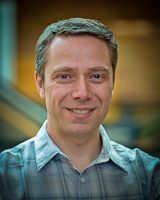 Dieter Fox has been named a Fellow of the Institute of Electrical and Electronics Engineers – the 14th UW CSE faculty member to be honored in this way by IEEE.
Dieter, whose research interests lie in artificial intelligence, robotics and probabilistic state estimation, was recognized “for contributions to Bayesian state estimation and robotic perception.”
Dieter is the director of the UW Robotics and State Estimation Lab. From 2009 to 2011, Dieter was director of the Intel Research Lab Seattle, and he currently serves as the academic PI of the Intel Science and Technology Center for Pervasive Computing.
Congratulations to Dieter, and also to UW EE professor Radha Poovendran and UW A&A professor Mehran Mesbahi, who also were included in this year’s class of new IEEE Fellows! Read more →
Euronews recently featured an article on SideSwipe, a new sensor technology developed by Chen Zhao and Matt Reynolds that enables smartphones to recognize hand gestures. As Matt Reynolds explains in the article:
“‘If you think about a radar on an aircraft or a boat or something like that … you have a transmitter that is sending energy out into the environment and it is being reflected by objects nearby … what we do is use a machine learning algorithm to match patterns of the changes due to gestures with previously recorded patterns and when we see a match we say ‘oh’ a particular gesture has been performed.’”
 Having demonstrated that its sensor works with 87 percent accuracy, the team is working on commercializing the new technology.
Read the article here, and check out the original media release announcing the technology here. Read more →
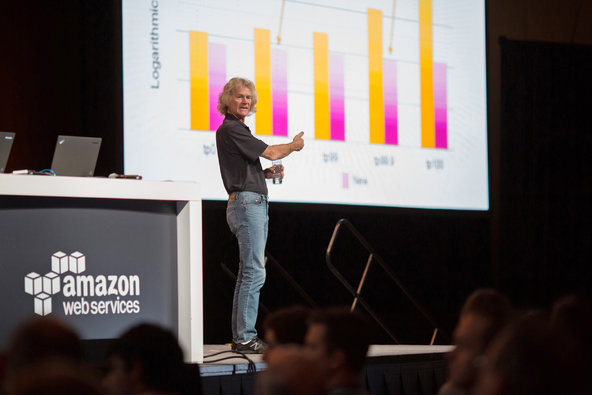
Amazon’s James Hamilton
An interesting New York Times article by Quentin Hardy, quoting UW CSE’s Ed Lazowska:
“‘Technology shapes styles of work,’ said Ed Lazowska, who holds a chair in computer science and engineering at the University of Washington. ‘One critical advantage of the cloud is that sharing becomes dramatically easier.’ He foresees more collaboration and outsourcing of work, and more specialization into whatever a worker, team or company does well.”
[The quote he liked better but that didn’t fit the eventual article, related to the introduction of technology into any field: “First we do faster, only later do we do different/smarter/better.”]
Read more here. Read more →
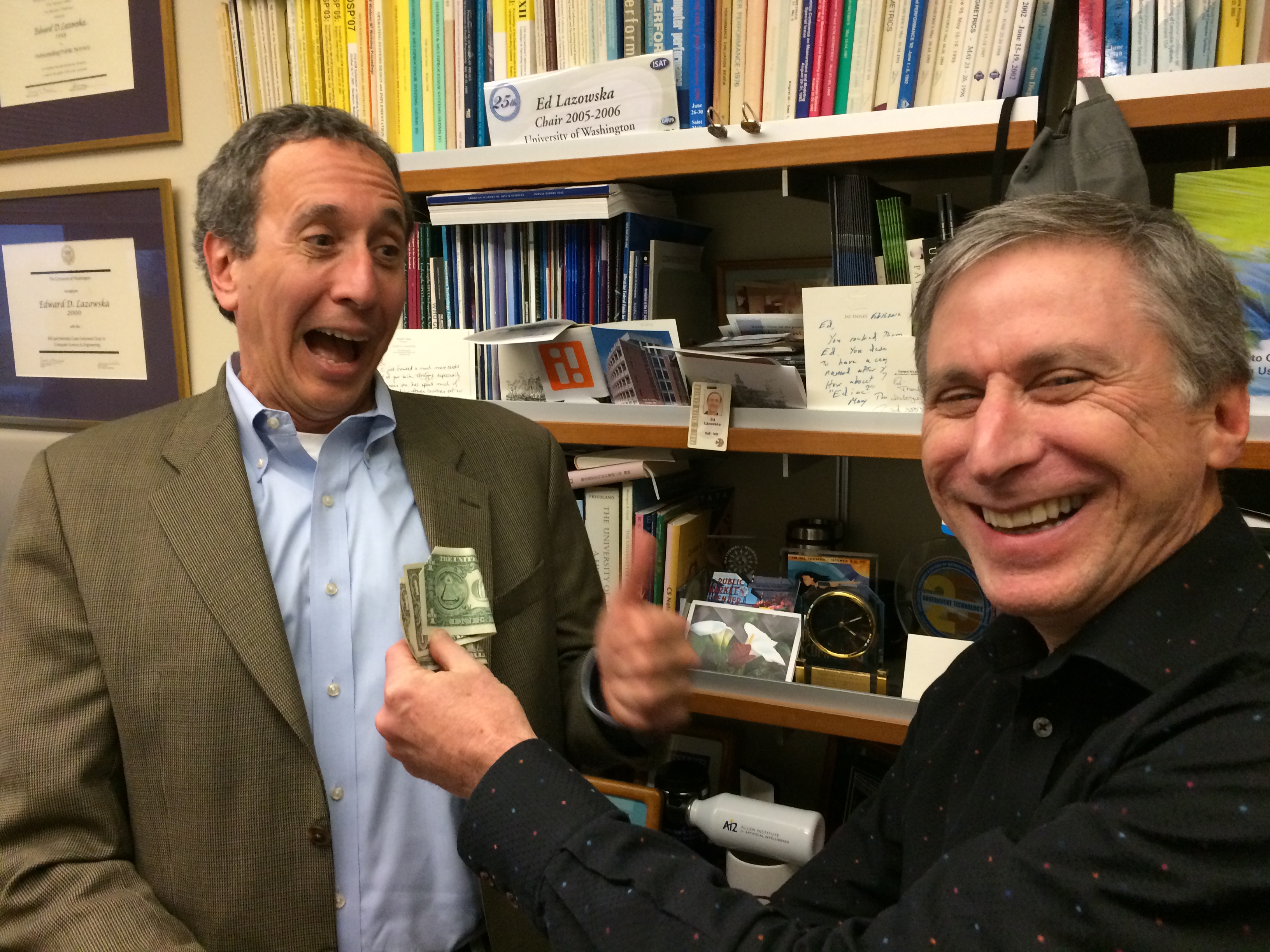 UW CSE Ph.D. alum Kevin Jeffay – chair of the Department of Computer Science at the University of North Carolina at Chapel Hill – is in Seattle raising money for his department.
Kevin is in a hurry, noting the potential impact on alumni loyalty of the impending change of UNC’s motto from “Lux libertas” to “Accredited until early 2015” (or, if one is to believe Google Latin, “Adprobatum usque mane MMXV”).
Hank “Ever-Helpful” Levy got things off to a rollicking start. And he allayed Kevin’s fears by noting that UNC alumni didn’t seem to care all that much when the Old Well was converted to a water fountain.
(It’d be better of Hank would focus on Levytown instead …) Read more →
 (And the lunch was really good too!)
Many thanks to our Microsoft recruiter, Becky Tucker! Read more →
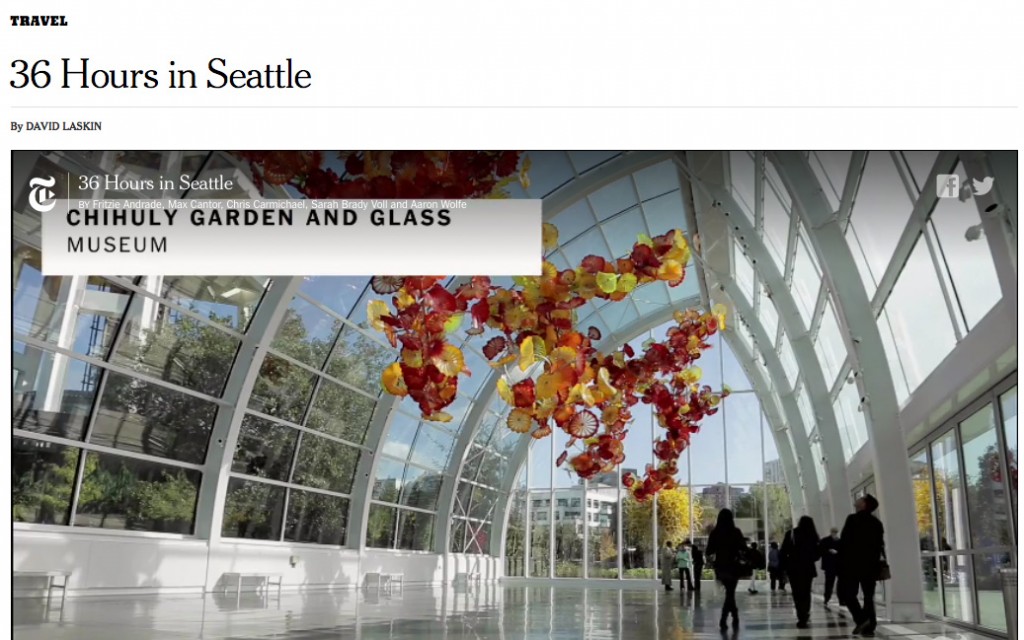 They spent it in some very odd ways (they should have asked Nick Wingfield, who lives here, or John Markoff, who visits often), but hey, any press is better than no press.
“Seattle is in boom mode, and for visitors that means creative restaurants, a vibrant nightlife scene, and stunning art.”
Read more here. Read more →
 René Just, Darioush Jalali, and Michael Ernst of UW CSE have won an ACM Distinguished Paper award for their paper “Are Mutants a Valid Substitute for Real Faults in Software Testing?”
Both practitioners and researchers need to evaluate the quality of test suites – for example, researchers want to know whether a new testing technique improves a test suite. The true measure of a test suite’s quality is how many real faults it detects. The set of real faults is typically unknown, so the state-of-the-art approach is to measure how many artificial faults, called mutants, a test suite detects. Hundreds of research papers make the assumption that if a test suite detects more mutants, then it will detect more real faults as well. Amazingly, no one knows whether this assumption is true! Or, no one did until the UW research.
 Just et al.’s paper reports on extensive experimentation that shows that mutant detection is the best available proxy for test suite quality. They also show how mutation analysis can be improved and identify some fundamental limitations that prevent it from perfectly predicting real fault detection. Their analysis accounts for confounding factors such as code coverage. In addition to these experimental results, the real faults and test suites they assembled can be used in future testing research.
The paper was presented on November 20 at FSE, one of the two top software engineering conferences. The paper was coauthored with Laura Inozemtseva and Reid Holmes (a former postdoc at UW) of the University of Waterloo and Gordon Fraser of the University of Sheffield. This is Just and Ernst’s second ACM Distinguished Paper award this year.
Read the paper here. Obtain the tools and experimental data here and here. Read more →